
TL;DR
Ionna CEO Seth Cutler says public EV charging infrastructure needs to reach profitability to survive over the long term, describing the company as a for-profit business. Ionna is expanding its network through retail partnerships and site development, with Cutler saying the goal is to triple its network from 80 sites at the start of the year; the source does not specify the interview date or the current network count.
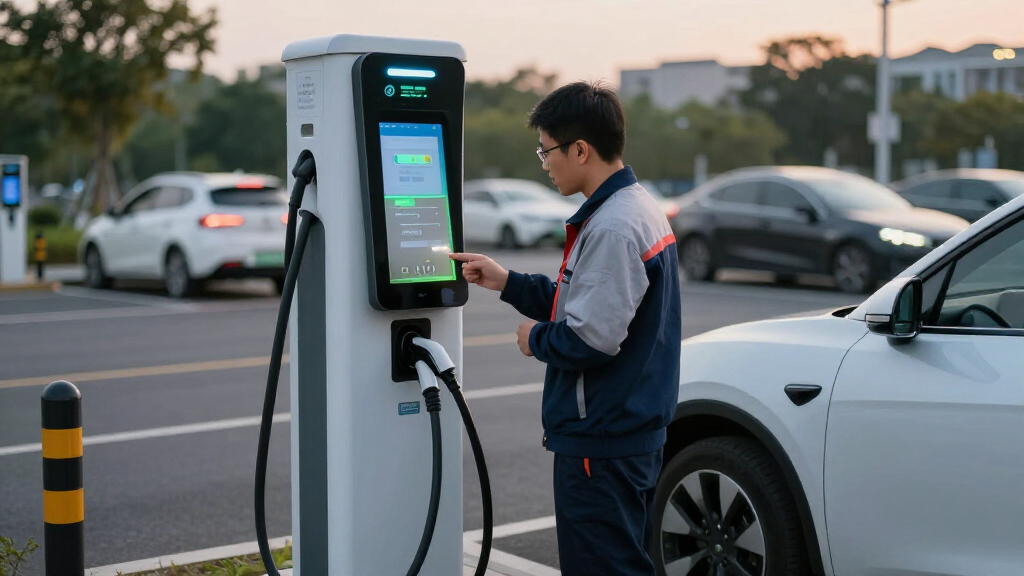
Ionna CEO Seth Cutler said public EV charging infrastructure must become a profitable business if it is to survive, arguing that the long-term viability of electric vehicles depends in part on charging networks that can support themselves financially. In an interview with The Drivecast, Cutler described Ionna as a for-profit business and said the company is working to expand its network while concentrating on reliable charging for drivers.

Get business pricing on garage and car supplies
- Business-only prices and quantity discounts
- Tax-exempt purchasing
- Multiple users, one account, clear invoices
Cutler said Ionna needs to achieve financial independence and profitability over time. The company currently operates with investment from its automaker joint-venture partners: BMW, Mercedes-Benz, General Motors, Honda, Hyundai, Kia and Stellantis. Toyota joined the venture a year after its formation, according to The Drive. The amount invested has not been disclosed. Cutler said the company understands that ongoing support from its owners cannot be treated as a permanent substitute for a sustainable business.
Ionna’s expansion strategy includes partnerships with retailers and convenience-store operators, including Circle K, Wawa, Sheetz and Casey’s. Cutler also described land purchases and ground leases at several dozen sites, along with some locations where Ionna has built amenities such as bathrooms and vending machines. He said the company has installed technology including Amazon Just Walk Out at some facilities, but emphasized that these amenities and other potential revenue sources are not its current priority.
Instead, Cutler said Ionna is focused on charging quality and driver experience at scale. He said the company may put resources into additional ways to generate revenue or provide value at its sites in 2027, 2028 or later. Cutler also gave a network growth target: he said Ionna began the year with 80 sites and aimed to triple the network’s size during the year. The source does not give an interview date or verify how many sites are operating now, so the target should not be read as a confirmed current total.
Profitability Behind Ionna’s Expansion
The comments make clear that building charging stations is not only a matter of adding hardware and locations. A network also needs a path to paying its operating and expansion costs, whether through charging revenue, partnerships, or other site-based services. Cutler’s remarks frame commercial sustainability as a condition for keeping infrastructure available over the long term, not simply as a goal for Ionna’s shareholders.
For drivers, the practical stakes are whether a growing network can continue to invest in dependable sites and service. Ionna’s partner-backed launch gives it capital and access to major automakers, but Cutler’s emphasis on eventual financial independence points to the limits of relying on that support indefinitely. His comments are the CEO’s assessment of what the industry needs; they do not establish that every charging company faces the same economics or that EV adoption depends on Ionna specifically.
The company’s choice to defer additional monetization projects also reflects a trade-off: spreading resources across amenities and tenants could create new income, but could distract from delivering consistent charging. Cutler said Ionna is prioritizing the network and the driver experience now, while keeping options open for later.
Products Worth Considering

VIOFO A229 Plus Dual-Channel 2K Dash Cam with Front and Rear HDR

Chemical Guys 14-Piece Arsenal Builder Car Wash Kit with Foam Blaster

Innova 5610 OBD2 Bidirectional Scan Tool
As an affiliate, we earn on qualifying purchases.
An Automaker-Backed Charging Network
Ionna was formed as a joint venture by seven large automakers to build a public fast-charging network in the United States, according to The Drive. Toyota joined a year later, bringing the number of participating automakers to eight. The venture is part of a broader effort to expand charging access beyond networks operated by individual automakers.
The Drive reported that Ionna is competing in a market that includes Tesla’s Supercharger network and the Rivian Adventure Network. Those networks differ in their scale and operating models. The source says Rivian’s network was slightly smaller than Ionna’s in the summer and about 4% the size of Tesla’s Supercharger network, but it does not provide the dates or site-count details needed to treat those comparisons as current.
Ionna’s plans combine partnerships with ownership or control of some sites. Cutler described buying land, taking ground leases and preparing locations for possible future additions such as buildings or co-tenants. He said these projects are being held for later rather than pursued as a central focus today.
Network Count and Profitability Timeline
The interview date, Ionna’s current operating site count and progress toward its stated tripling target are not provided in the source material. It is also unclear when the company expects to reach profitability, what level of investment its automaker partners have supplied, and whether charging fees alone can cover its costs.
Cutler referred to future revenue opportunities from amenities, buildings and co-tenants, but gave no estimates for how much those could contribute or when any such plans would begin. His forecast that EVs depend on sustainable charging infrastructure is a view expressed by the company’s CEO; the source does not provide financial data or independent analysis to quantify that relationship.
Ionna’s Next Network Milestones
The next measurable development is whether Ionna reaches the network growth target Cutler described. The source does not state a reporting date, so the company’s current count and the deadline for evaluating the goal remain unclear. Updates on completed sites and charging performance would show how quickly the venture is turning its expansion plans into operating infrastructure.
For now, Cutler says Ionna will prioritize charging quality and driver experience over additional site monetization. He said investment in other ways to generate revenue or add value could begin in 2027, 2028 or later, but did not give firm dates or a financial plan. The timing of profitability and the role of partner funding remain open questions.
Key Questions
What did Ionna’s CEO say about EV charging profitability?
Seth Cutler said EV charging infrastructure needs to operate as a for-profit business to survive over the long term. He argued that the continued availability of charging infrastructure is linked to the future of EVs.
Who owns or backs Ionna?
Ionna is a joint venture backed by BMW, Mercedes-Benz, General Motors, Honda, Hyundai, Kia and Stellantis. Toyota joined a year after the venture was formed, according to The Drive.
How fast does Ionna plan to expand?
Cutler said Ionna began the year with 80 sites and aimed to triple the network’s size during that year. The source does not give the interview date or confirm the current site count.
Will Ionna make money from amenities at its charging sites?
Cutler described land, buildings, vending machines, bathrooms and possible co-tenants as future opportunities to provide value or generate revenue. He said these plans are not a current focus and could receive more attention in 2027, 2028 or later.
Has Ionna said when it will become profitable?
No specific date or financial target was provided. Cutler said the company needs to reach financial independence and profitability over time, but the source does not detail its costs, revenue or expected timeline.
Source: rss