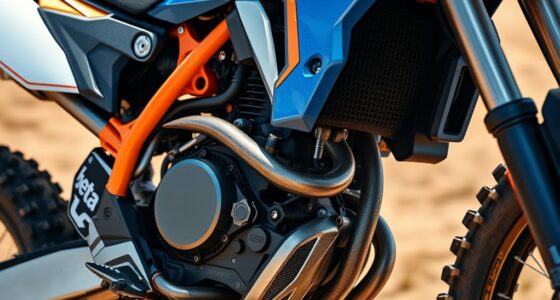

A smaller chassis boosts your driving confidence by making every maneuver feel intuitive and effortless. The nimble design enhances your connection with the road, allowing you to tackle tight corners and navigate urban settings with ease. You’ll feel more in control, as quick reactions to steering foster a stress-free experience. Plus, better visibility reduces anxiety about blind spots. This combination creates a harmonious driving experience that builds your confidence even before speed comes into play. Discover more about the benefits of smaller vehicles.

Get business pricing on garage and car supplies
- Business-only prices and quantity discounts
- Tax-exempt purchasing
- Multiple users, one account, clear invoices
Key Takeaways
- A smaller chassis enhances driving confidence by improving maneuverability and responsiveness to driver input.
- Compact designs foster an intimate connection with the road, encouraging drivers to tackle corners with ease.
- Greater agility and lighter weight contribute to quick reactions, making urban navigation less stressful.
- Improved visibility and awareness from a compact design reduce anxiety, allowing for quicker decision-making on the road.
- Ergonomic layouts ensure driver comfort, prioritizing focus and enhancing the overall driving experience.

When you step into a vehicle with a smaller chassis, you might immediately notice how it enhances your driving confidence. The compact design of these cars allows for a more intimate connection with the road. You feel every curve and bump, which makes you more engaged in your driving experience. Instead of feeling like you’re maneuvering a bulky machine, you sense a nimbleness that encourages you to take on corners and tight spaces with ease. This sense of control isn’t just about speed; it’s about how the vehicle responds to your every input.
The smaller chassis often means lighter weight, which contributes to a more agile feel. You’ll notice how quickly the vehicle reacts to your steering, making it easier to navigate through traffic or find a parking spot. This enhanced maneuverability can greatly reduce stress while driving, especially in urban environments where space is limited. You might find yourself taking routes you’d normally avoid, simply because you know your vehicle can handle it. Vehicle size plays a key role in creating this confidence, as it directly impacts maneuverability and driver comfort. Additionally, the compact design often results in a lower center of gravity, further enhancing stability and driver reassurance. A lighter vehicle with a smaller footprint also tends to be more fuel-efficient, adding to the overall sense of practicality and confidence.
Driver comfort also plays an essential role in building confidence. With the right seating position and ergonomic layout, you’ll feel at ease behind the wheel. Smaller vehicles often prioritize a snug fit, making you feel like a part of the car rather than just a passenger. This intimate driver experience allows you to focus on the road ahead, rather than feeling overwhelmed by the size of your vehicle. The dashboard controls are typically within easy reach, ensuring you can adjust settings without taking your eyes off the road for too long.
Additionally, the compact design of smaller vehicles often leads to better visibility. You can see more of your surroundings, which helps you make quicker decisions while driving. This enhanced awareness not only boosts your confidence but also promotes safer driving habits. You’re less likely to feel anxious about blind spots or large trucks looming beside you. The visibility advantages of smaller cars mean you can anticipate potential hazards sooner, contributing to a safer and more confident driving experience.
The lighter weight and smaller chassis often contribute to a more responsive driving experience, making every maneuver feel more natural and intuitive. Ultimately, the combination of a smaller chassis, driver comfort, and enhanced visibility creates a harmonious driving experience. You’ll find that your confidence builds not just from the car’s performance but from how connected you feel to it. You’re not just driving; you’re engaging with the road in a way that larger vehicles can’t replicate. So, the next time you get behind the wheel of a compact car, embrace that feeling—it’s about more than just speed; it’s about mastery and enjoyment on the road.
Products Worth Considering

Chemical Guys 14-Piece Arsenal Builder Car Wash Kit with Foam Blaster

Innova 5610 OBD2 Bidirectional Scan Tool

Autel MaxiCOM MK808S Bidirectional Automotive Diagnostic Scanner
As an affiliate, we earn on qualifying purchases.
Frequently Asked Questions
What Are the Benefits of a Smaller Chassis in Various Vehicles?
A smaller chassis offers significant maneuverability advantages, especially in urban driving. You’ll find it easier to navigate tight spaces, make quick turns, and park in crowded areas. The reduced size enhances your control, giving you a more responsive driving experience. Additionally, a lighter vehicle often means better fuel efficiency, which can save you money in the long run. Ultimately, you’ll enjoy a more agile and confident ride in various environments.
How Does Weight Distribution Affect Handling in Smaller Chassis?
When you think of handling, it’s like finding the sweet spot in a dance. In smaller chassis, weight distribution plays a vital role in cornering dynamics. Properly balanced weight helps your tires grip the road better, enhancing performance during turns. You can feel the difference as the vehicle responds more agilely, allowing you to navigate corners with confidence. This balance makes every twist and turn feel smoother, giving you a more exhilarating driving experience.
Are There Safety Concerns With Smaller Chassis Designs?
Yes, there are safety concerns with smaller chassis designs. While they can offer agile handling, you need to take into account crash safety and structural integrity. Smaller chassis may compromise crumple zones, affecting how well they absorb impact during a collision. This can increase the risk of injury in accidents. It’s crucial to confirm that any small vehicle you choose meets rigorous safety standards to protect you and your passengers in case of a crash.
Can Smaller Chassis Vehicles Perform Well Off-Road?
Yes, smaller chassis vehicles can perform well off-road. Their compact design often enhances maneuverability, allowing you to navigate tight trails and rugged terrain with ease. With proper engineering, they can boast impressive off-road capabilities, tackling various obstacles and adapting to diverse terrain. Lightweight frames contribute to better traction and stability, helping you tackle challenging conditions confidently. So, whether you’re climbing hills or crossing streams, a smaller chassis can be surprisingly effective.
What Maintenance Challenges Are Common With Smaller Chassis?
You’ll often face maintenance challenges with smaller chassis vehicles, especially regarding brake issues and tire wear. Their lighter weight can lead to uneven tire wear, so you’ll need to regularly check and rotate them. Brake components can wear out faster, too, requiring more frequent inspections and replacements. Staying on top of these issues guarantees your vehicle remains safe and performs well, allowing you to enjoy your rides without unexpected problems.
Conclusion
Just as a young bird flutters its wings in a cozy nest before soaring into the sky, you too find your footing in a smaller chassis. It cradles you, instilling the confidence needed to brave the open road. Each twist and turn becomes a dance, your spirit soaring as you embrace the thrill. Soon, speed isn’t just a number; it’s the expression of newfound freedom. In this compact embrace, you’re ready to take flight.