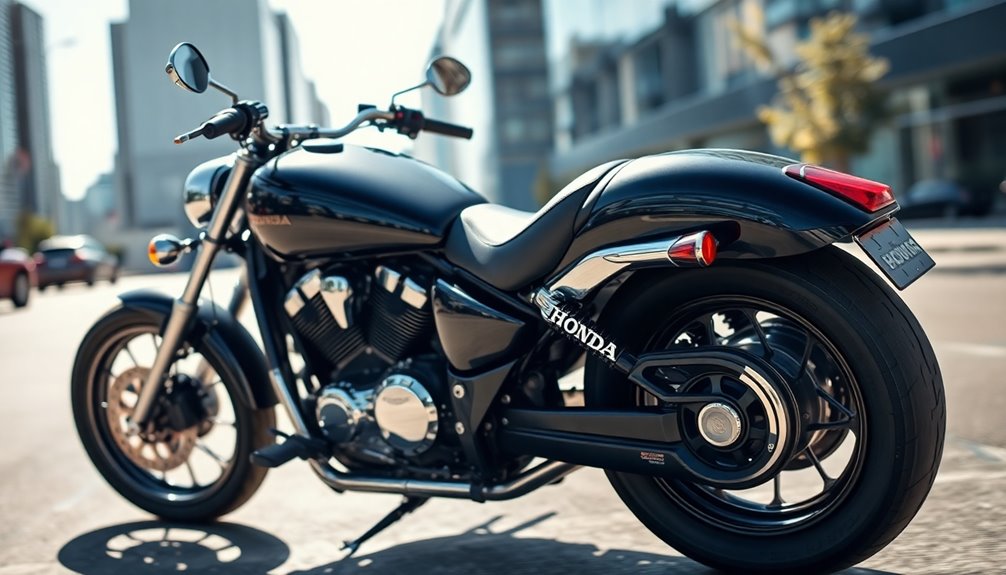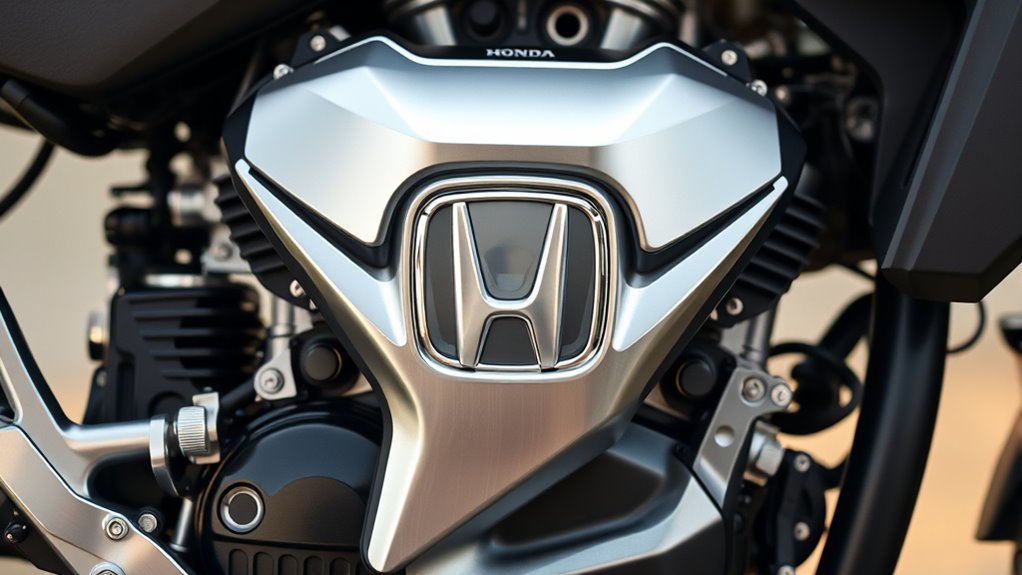

Honda’s cross-over engine design combines innovative internal layouts with advanced materials to boost performance and fuel efficiency. You’ll notice faster, cleaner combustion cycles that deliver more miles per gallon without sacrificing responsiveness. This design optimizes airflow and temperature management while reducing engine weight, which improves overall vehicle efficiency and handling. By integrating multiple functions into a compact package, Honda creates engines that balance power and economy seamlessly. Keep exploring to discover how these innovations make a difference.

Get business pricing on garage and car supplies
- Business-only prices and quantity discounts
- Tax-exempt purchasing
- Multiple users, one account, clear invoices
Key Takeaways
- Reimagines internal layout for improved airflow, combustion, and thermal management.
- Integrates advanced features like variable valve timing and turbocharging in a compact design.
- Uses lightweight, durable materials to reduce engine weight and enhance efficiency.
- Achieves a smaller footprint for better vehicle packaging and increased space efficiency.
- Focuses on continuous innovation to optimize performance, fuel economy, and responsiveness.
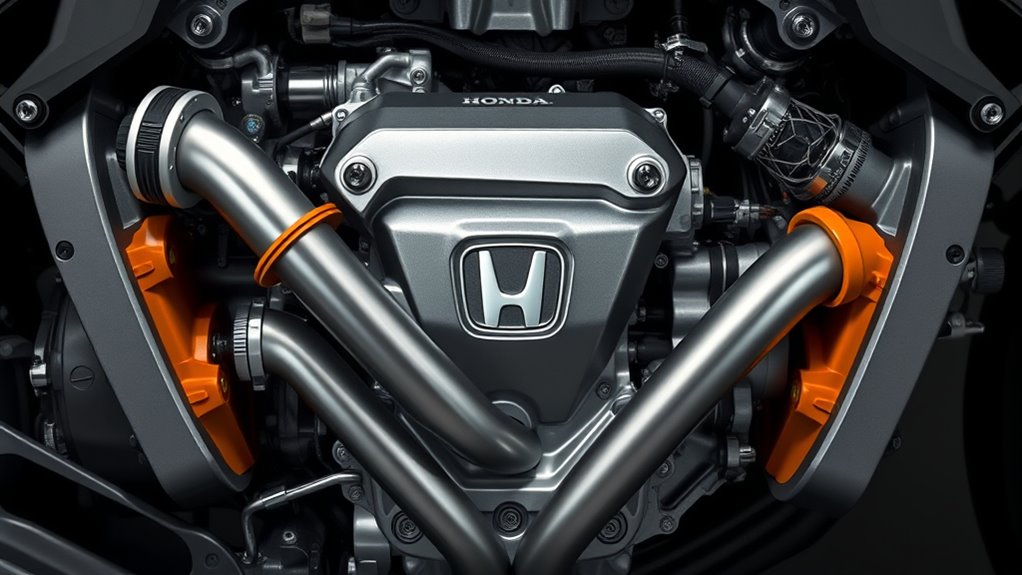
Have you ever wondered how Honda manages to combine efficiency and performance in its engines? The secret lies in their innovative approach to engine design, particularly through their cross-over engine design. Honda’s engineers have pushed the boundaries of traditional engine architecture, focusing on design innovation that maximizes both power output and fuel economy. This approach isn’t just about making engines more powerful; it’s about creating a harmony where efficiency doesn’t have to sacrifice performance.
With their cross-over engine design, Honda reimagines the internal layout to achieve better thermal management and reduced internal friction. Instead of sticking to conventional configurations, Honda integrates components in new ways, improving airflow and combustion efficiency. This meticulous design innovation allows for faster, cleaner combustion cycles, which directly boosts engine efficiency. You’ll notice that Honda’s engines deliver more miles per gallon while still providing the responsive acceleration and torque you expect from a high-performance vehicle.
Honda’s innovative internal layout improves airflow and combustion, boosting efficiency and delivering more miles per gallon.
One of the key aspects of Honda’s design innovation is their use of advanced materials and manufacturing techniques. By employing lightweight yet durable components, they reduce the overall weight of the engine, which translates into better fuel economy and less energy wasted. This careful material selection also supports the durability and longevity of the engine, which means fewer maintenance issues over time. It’s a clever balance—pushing the engine’s capabilities without compromising its reliability.
Honda’s cross-over engine design also emphasizes compactness. By integrating multiple functions into a smaller footprint, they free up space within the engine bay, allowing for more efficient packaging within vehicle designs. This compactness reduces overall vehicle weight, further enhancing fuel efficiency. You’ll feel this in your daily driving, where your vehicle consumes less fuel without losing the power you need for city driving or highway cruising.
Furthermore, Honda’s continuous innovation ensures their engines stay ahead of the curve, incorporating technologies like variable valve timing and turbocharging within their cross-over architecture. These features optimize engine performance across different speeds and loads, ensuring that you get a smooth, responsive driving experience whether you’re accelerating onto the highway or cruising through city streets. The result is an engine that’s both efficient and exhilarating.
In addition, natural language processing plays a crucial role in Honda’s research and development, helping analyze data and optimize engine performance parameters for better efficiency and responsiveness. In essence, Honda’s cross-over engine design exemplifies how strategic design innovation can elevate engine efficiency without sacrificing performance. It’s a tribute to Honda’s commitment to engineering excellence, blending advanced technology, smart design, and practical performance improvements. When you drive a Honda, you’re experiencing the culmination of this innovative engineering—an engine that’s built to perform, built to last, and built with efficiency in mind.
Frequently Asked Questions
How Does Honda’s Cross-Over Engine Improve Fuel Efficiency?
You benefit from Honda’s Cross-Over Engine Design because it enhances fuel efficiency through hybrid technology, blending traditional and electric power sources seamlessly. This design optimizes engine performance while meeting strict emission regulations, reducing your vehicle’s environmental impact. By switching between power modes intelligently, it minimizes fuel consumption during city driving and long trips alike, helping you save money and stay eco-friendly without sacrificing performance.
What Are the Key Materials Used in Honda’s Engine Construction?
Remember when you first drove a Honda, feeling the smooth power? The key materials in Honda’s engine construction include aluminum alloys for lightweight durability and iron for strength. These materials guarantee ideal engine cooling and long-lasting performance. You benefit from their ability to withstand high temperatures and stress, making your ride reliable and efficient. Honda’s choice of durable, heat-resistant materials keeps your engine running smoothly mile after mile.
How Does the Design Impact Engine Maintenance and Durability?
You’ll find that the design improves engine maintenance by providing easier access to critical components, making repairs and inspections quicker. It also boosts durability by enhancing corrosion resistance, protecting parts from rust and wear over time. As a result, you’ll experience fewer breakdowns and longer engine life. This thoughtful design helps you keep your vehicle running smoothly and efficiently, reducing maintenance costs and increasing reliability.
Are There Specific Honda Models That Utilize This Engine Design?
Imagine you’re in the year 2100 with electric vehicles dominating the roads, but Honda still uses its innovative cross-over engine design. Some models like the Honda CR-V Hybrid and Civic Hybrid utilize this design, blending traditional engines with hybrid systems for improved efficiency. This setup helps you enjoy better power delivery and fuel economy, even as the automotive world evolves toward electrification. Honda’s cross-over engine remains a smart choice for hybrid enthusiasts.
What Future Innovations Are Planned for Honda’s Cross-Over Engines?
Honda plans to innovate its cross-over engines by integrating electric conversion and hybrid systems, aiming for greater efficiency and reduced emissions. You can expect future models to feature advanced hybrid integration, blending traditional engines with electric motors seamlessly. These innovations will enhance performance, fuel economy, and environmental friendliness, keeping Honda at the forefront of eco-friendly vehicle technology. By adopting these advancements, Honda guarantees you get smarter, more sustainable driving options ahead.
Conclusion
You can’t deny that Honda’s cross-over engine design is a game-changer in the automotive world. It’s so innovative, it’s practically rewriting the rules of efficiency and performance. By blending the best of both worlds, Honda’s approach not only elevates your driving experience but also sets a new standard for the industry. Once you see what this engine can do, you’ll realize it’s truly a masterpiece—an unstoppable force in automotive engineering!
Evergreen bestsellers Picks
bestsellers
As an affiliate, we earn on qualifying purchases.