Future off-road design is all about incorporating electric propulsion and modular chassis systems. You’ll see more electric motors offering instant torque, quieter rides, and lower emissions, making your adventures cleaner and more responsive. Modular structures let you customize your vehicle for different terrains, swapping parts like suspension or tires easily. This blend of technology makes off-road vehicles lighter, smarter, and more sustainable. Keep exploring how these innovations will shape your rugged explorations even further.
Key Takeaways
- Integration of electric propulsion for enhanced torque, quieter operation, and sustainability in off-road vehicles.
- Adoption of modular chassis systems for customizable, terrain-specific configurations and easy maintenance.
- Use of advanced, lightweight materials to improve durability, reduce weight, and support diverse terrain adaptations.
- Emphasis on smart technology and connectivity for real-time adjustments, navigation, and performance optimization.
- Focus on eco-friendly design principles, promoting reusability, upgrading, and reducing environmental impact.
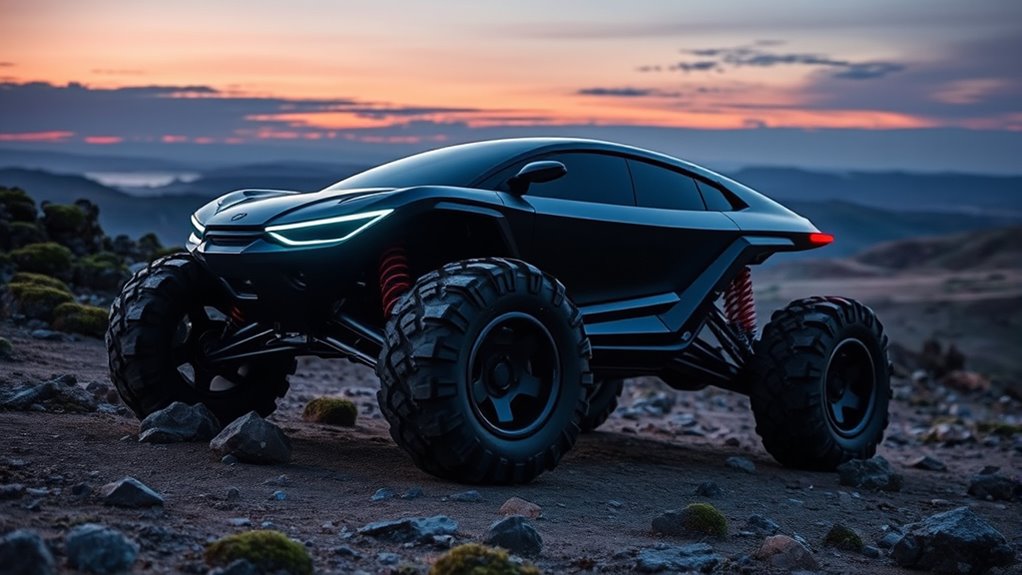
As off-road vehicles continue to evolve, innovative design trends are shaping the future of rugged exploration. One of the most exciting advancements is the shift toward electric propulsion. You’ll notice that more manufacturers are integrating electric motors into their off-road models, offering benefits like instant torque, quieter operation, and reduced emissions. This change isn’t just about environmental friendliness; it markedly enhances performance. Electric motors deliver power smoothly across various terrains, giving you better control and responsiveness. Plus, the decreasing size and cost of batteries mean that off-road vehicles can now be lighter and more agile without sacrificing range. This transition to electric propulsion is opening new doors for adventure, allowing you to tackle challenging trails with fewer concerns about engine noise or fuel availability, especially in remote areas.
Alongside electric powertrains, the development of modular chassis systems is revolutionizing off-road vehicle design. A modular chassis allows you to customize and adapt your vehicle for different terrains and activities by swapping out components or reconfiguring parts quickly and easily. Imagine being able to change your vehicle’s suspension, tires, or even the bodywork to suit a muddy trail, rocky ascent, or desert dune. This flexibility means you can optimize your vehicle for specific adventures without investing in multiple separate rigs. The modular approach also simplifies maintenance and repairs, enabling you to replace damaged parts swiftly and get back on the trail faster. It encourages a more sustainable approach, reducing waste by upgrading or reusing components rather than building entirely new vehicles. Moreover, integrating advanced materials can further improve durability and weight reduction, making your off-road experience even more efficient.
The integration of these trends signals a future where off-road vehicles are smarter, more adaptable, and more environmentally conscious. You’ll find that electric propulsion and modular chassis systems work together to create vehicles that are not only powerful and resilient but also easier to maintain and upgrade. This evolution empowers you to push the boundaries of exploration, knowing your vehicle can be tailored to meet the demands of any terrain. As designers continue to innovate, expect off-road vehicles to become increasingly lightweight, efficient, and versatile. With these advancements, your adventures will be longer, more sustainable, and more exciting—driven by cutting-edge technology that’s redefining what’s possible in rugged exploration.
Frequently Asked Questions
How Will AI Influence Off-Road Vehicle Navigation Systems?
AI will revolutionize off-road navigation by enabling autonomous steering, allowing your vehicle to navigate challenging terrains with precision. Sensor integration plays a vital role, providing real-time data on obstacles, terrain, and environmental conditions. This combination helps your vehicle make smarter decisions, improve safety, and enhance performance. As AI advances, you’ll experience more reliable, intuitive off-road journeys, with systems adapting seamlessly to unpredictable terrains and reducing your need for manual control.
What Materials Are Expected to Dominate Future Off-Road Vehicle Construction?
You’ll see composite materials and lightweight alloys dominate future off-road vehicle construction. These materials reduce weight without sacrificing strength, enhancing performance and fuel efficiency. Composites like carbon fiber and advanced polymers will be common, providing durability and corrosion resistance. Lightweight alloys, such as aluminum and magnesium, will also play a key role in maintaining ruggedness while improving agility. Embracing these materials helps you achieve superior off-road capabilities and longer-lasting vehicles.
Will Off-Road Vehicles Incorporate Renewable Energy Sources?
Sure, off-road vehicles will definitely incorporate renewable energy sources. You’ll see solar power panels capturing sunlight for energy, and hybrid propulsion systems combining traditional engines with electric motors. It’s ironic, really — vehicles built to conquer tough terrains are turning eco-friendly, proving that even rugged machines can embrace sustainability. So, get ready to explore with a vehicle that’s as green as it is capable, blending power with planet-saving tech.
How Will Off-Road Design Address Environmental Sustainability?
You’ll see off-road design prioritize environmental sustainability by using eco-friendly materials that reduce impact and promote recyclability. Manufacturers focus on emission reduction through cleaner engine technologies and lightweight structures, helping vehicles operate more efficiently. These innovations aim to minimize ecological footprints, ensuring off-road adventures stay eco-conscious. As a result, you’ll enjoy durable, eco-friendly vehicles that balance off-road performance with a commitment to protecting the environment.
What Role Will User Experience and Customization Play in Future Designs?
You’ll see user experience and customization become central in future off-road designs. Personalization options will let you tailor your vehicle’s features, while ergonomic enhancements improve comfort and control. These innovations guarantee your off-road adventures are more enjoyable and efficient. As technology advances, your vehicle will adapt to your preferences, offering seamless integration and intuitive controls. Ultimately, your off-road experience will be more immersive, personalized, and comfortable than ever before.
Conclusion
As off-road design evolves with cutting-edge technology and bold innovations, you might expect perfection and ease. Yet, it’s the unpredictable terrain and rugged challenges that truly test your limits. Embracing future trends means balancing sleek advancements with raw, unrefined nature. In this dance between progress and chaos, you’ll find that true mastery comes not just from conquering the trail, but from respecting its wild spirit. Embrace both, and your journey becomes truly transformative.