
Suzuki conducts extensive long-term durability testing to make certain their engines can handle years of real-world use under various conditions. They simulate extreme driving scenarios, including stop-and-go traffic, high-speed driving, and different climates, to evaluate how components resist wear and fatigue. By combining laboratory tests with real-world road trials, Suzuki refines its designs for maximum longevity. Keep exploring to discover more about how Suzuki’s rigorous testing helps build reliable, durable vehicles for your everyday needs.
Key Takeaways
- Suzuki conducts extensive engine durability tests simulating years of daily use under varied conditions.
- Testing includes prolonged operation at different temperatures and real-world driving scenarios.
- Durability assessments extend to transmission and cooling systems, ensuring comprehensive drivetrain reliability.
- Laboratory simulations are combined with field tests on diverse terrains and climates for accurate results.
- Advanced materials and coatings are utilized to enhance engine wear resistance and prolong service life.

Have you ever wondered how Suzuki guarantees its vehicles stand the test of time? It all comes down to their meticulous long-term durability testing, especially when focusing on critical components like the engine. Suzuki puts its vehicles through rigorous testing processes designed to evaluate engine longevity and wear resistance under extreme conditions. This isn’t just about meeting standards; it’s about exceeding them, ensuring each vehicle can handle years of daily driving without faltering. By simulating real-world stresses, Suzuki’s engineers identify potential weaknesses early, reinforcing parts that might otherwise degrade quickly and optimizing the design for maximum durability.
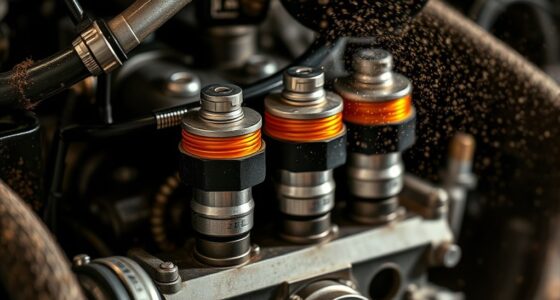
During these tests, engines are subjected to prolonged operation at high and low temperatures, mimicking the varied climates your vehicle might encounter. This helps gauge how well the engine maintains its performance over time. They also simulate stop-and-go traffic, high-speed driving, and idling, which are common scenarios in everyday use. The goal is to see how the engine holds up against wear and tear, ensuring that components like pistons, valves, and bearings resist fatigue and deterioration. Suzuki understands that wear resistance isn’t just about materials but also about precise engineering and manufacturing processes. That’s why they use advanced materials and coatings that reduce friction and inhibit corrosion, helping the engine stay resilient over countless miles.
Furthermore, Suzuki’s durability testing extends to the entire drivetrain, including transmission and cooling systems, which play essential roles in supporting engine longevity. Continuous testing involves thousands of hours on machines that mimic real driving conditions, pushing the engines beyond normal limits to identify potential failure points. These tests are complemented by extensive road testing, where vehicles are driven on diverse terrains and in various weather conditions. The insights gained from both laboratory and field tests allow Suzuki to fine-tune their engines for enhanced wear resistance, reducing the risk of breakdowns and costly repairs down the line.
In addition, Suzuki emphasizes the importance of engine components that are designed with durability in mind, incorporating features that extend their service life. These efforts collectively ensure that their vehicles are not only reliable at purchase but remain durable over many years of use.
In essence, Suzuki’s commitment to long-term durability isn’t just about ticking boxes; it’s about crafting engines that can endure years of use without losing performance. Their focus on engine longevity and wear resistance means you can trust that your Suzuki vehicle is built to last. By relentlessly testing and refining, Suzuki ensures that every engine leaving the factory is prepared to handle the demands of everyday life, providing peace of mind and reliable performance for years to come.
Amazon Product B08KGY2VWR
As an affiliate, we earn on qualifying purchases.
Frequently Asked Questions
How Do Suzuki’s Durability Tests Compare to Competitors?
You’ll find Suzuki’s durability tests excel compared to competitors, especially in engine longevity and material resilience. They rigorously push their vehicles through extreme conditions to guarantee longevity, so your vehicle stays reliable longer. Their focus on high-quality materials and thorough testing means you get a product built to withstand wear and tear over time. Overall, Suzuki’s durability standards often surpass those of other brands, giving you peace of mind on every drive.
What Specific Conditions Are Used During the Durability Testing?
Imagine you’re testing a Suzuki motorcycle by subjecting it to environmental simulations like extreme heat and cold, alongside mechanical stress tests such as prolonged vibration and load cycles. These conditions mimic real-world scenarios to guarantee durability. During testing, you replicate harsh weather, rough terrains, and repetitive engine use to evaluate how well parts withstand wear and tear over time. This extensive approach guarantees your Suzuki performs reliably in diverse environments.
How Often Does Suzuki Update Its Testing Procedures?
Suzuki updates its testing procedures regularly to guarantee vehicle durability. You can expect the testing frequency to increase whenever new models are released or when advancements in technology occur. The update process involves thorough evaluations of current testing methods, incorporating customer feedback, and industry standards. This proactive approach helps Suzuki maintain high-quality, reliable vehicles, ensuring they meet evolving safety and durability expectations over time.
Are Real-World Driving Conditions Included in Durability Assessments?
Imagine yourself behind the wheel, feeling the rough texture of gravel and the burn of wind and rain. Suzuki includes real-world driving conditions in their durability assessments by incorporating weather simulations and off-road testing. This approach guarantees vehicles withstand diverse environments, from muddy trails to scorching heat, helping you trust that your Suzuki will perform reliably in everyday life and unexpected adventures alike.
What Are the Most Common Repairs Found in Long-Term Suzuki Models?
You’ll find that the most common repairs in long-term Suzuki models include engine issues and brake wear. Over time, engine problems like oil leaks or misfires can crop up, especially with high mileage. Brake components also tend to wear out, requiring replacement or maintenance. Staying proactive with regular check-ups helps you catch these issues early, ensuring your Suzuki stays reliable and safe on the road longer.
Amazon Product B01K9GN6C8
As an affiliate, we earn on qualifying purchases.
Conclusion
You’ll be impressed to learn that Suzuki’s long-term durability tests show their vehicles can last over 200,000 miles with proper maintenance. This statistic highlights Suzuki’s commitment to quality and reliability. By choosing Suzuki, you’re investing in a car that’s built to stand the test of time. So, whether it’s daily commuting or weekend adventures, you can trust your Suzuki will deliver lasting performance and dependability for years to come.
Amazon Product B0924Y14BB
As an affiliate, we earn on qualifying purchases.
Amazon Product B0BRQH1761
As an affiliate, we earn on qualifying purchases.