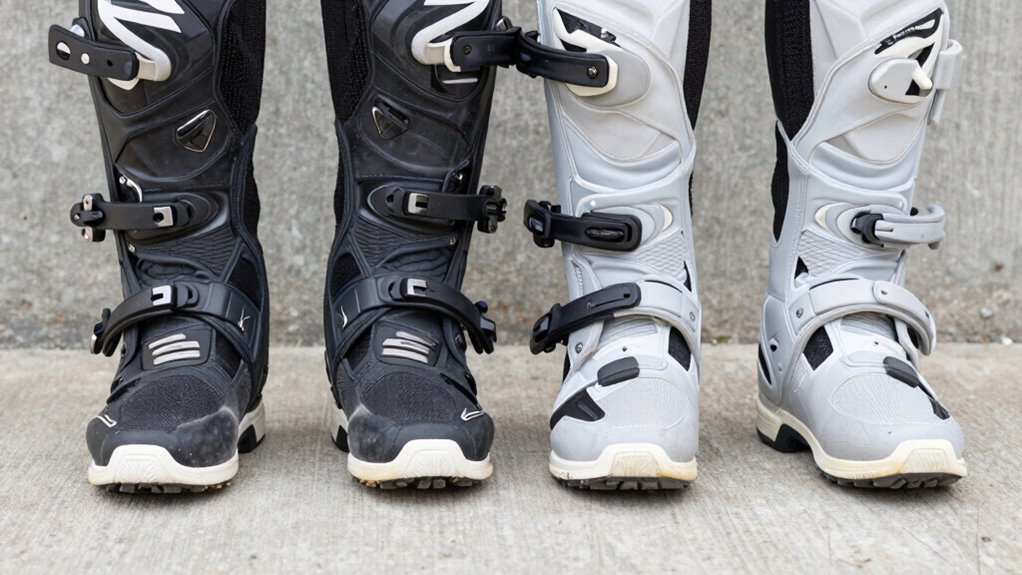

Motocross and enduro boots prioritize different safety features, creating a hidden trade-off. MX boots offer superior impact protection with reinforced panels, covering your shins and knees, but tend to restrict movement. Enduro boots provide more flexibility and waterproofing, making them better for technical trails, but may offer less rigid ankle and shin support. Understanding these differences helps you choose gear aligned with your riding style. If you want to know more about how these trade-offs impact your safety, keep exploring.

Get business pricing on garage and car supplies
- Business-only prices and quantity discounts
- Tax-exempt purchasing
- Multiple users, one account, clear invoices
Key Takeaways
- MX boots offer superior impact resistance with reinforced panels, providing more comprehensive protection against crashes.
- Enduro boots prioritize flexibility and lightweight design, which may reduce ankle stability and impact protection.
- Both boots protect against injuries but are designed for different riding styles, creating a trade-off between mobility and impact resistance.
- Overestimating protection capabilities can lead to complacency, highlighting the need for holistic safety practices beyond gear.
- Design choices, including materials and construction, significantly influence the protection trade-off between MX and enduro boots.
Which Off-Road Boots Keep You Safer: MX or Enduro?
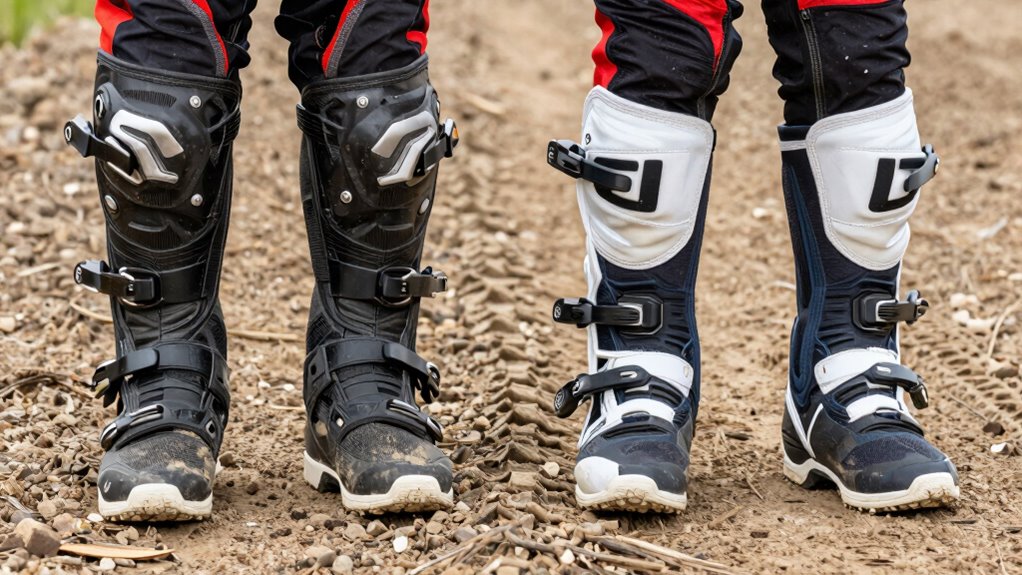
When it comes to safety, motocross (MX) boots generally offer more protection than enduro boots, especially in high-impact crashes. The boot material in MX boots is typically made from durable, stiff plastics and reinforced leather, providing a stronger shield against impacts and abrasions. Additionally, MX boots often feature advanced venting systems designed to keep your feet cool during intense riding, but these systems also help prevent sweat buildup that could compromise grip or cause discomfort. While enduro boots prioritize lighter weight and flexibility, which can slightly reduce overall protection, MX boots focus on rigid construction and secure fit to absorb shocks. This focus on rigid construction makes them better suited for high-impact situations, offering you increased safety during aggressive riding conditions. Moreover, the protective features of MX boots are specifically engineered to withstand the rigors of aggressive off-road riding, further enhancing rider safety. Properly designed support structures in MX boots also help prevent injuries such as twisted ankles during falls.
How Do Support and Flexibility in MX and Enduro Boots Affect Safety?

Support and flexibility are essential factors that directly influence the safety of motocross and enduro boots. When it comes to ankle stability, sturdy support helps prevent twists and sprains during aggressive riding or falls. However, increased support often comes with flexibility trade-offs; too stiff, and your movement becomes restricted, potentially reducing your ability to react quickly. Conversely, more flexible boots offer better mobility but may compromise ankle stability, increasing the risk of injury during sudden impacts. Finding the right balance is critical: if your boots are too rigid, you might sacrifice comfort and agility, but if they’re too flexible, your ankles might not get enough support in risky moments. Your choice impacts how well you’re protected and how confidently you can ride. Free floating design elements can influence both support and flexibility, affecting overall safety and performance. Additionally, understanding how support and flexibility interact helps riders select boots tailored to their specific riding style and safety needs. Moreover, the integration of boot construction techniques can play a significant role in optimizing both support and mobility, enhancing rider safety.
Which Boot Type Offers the Best Protection for Your Ankles and Shins?
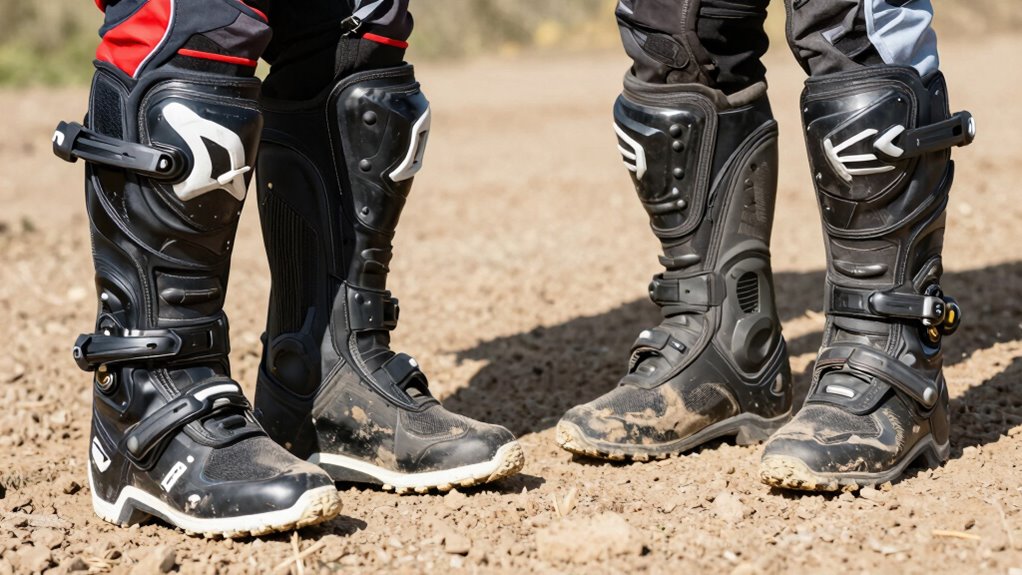
When it comes to protecting your ankles and shins, support and coverage are key factors to contemplate. You’ll want boots that offer solid ankle support without sacrificing flexibility, so you can move confidently while staying safe. Plus, extensive shin protection helps prevent injuries during rough rides or impacts. Ensuring proper safe installation practices can also enhance overall protection during rides. Incorporating connected equipment and safety tech into your gear can provide real-time feedback and further reduce injury risks. Additionally, understanding the types of protective gear available can help you choose the most suitable options for your riding style, especially as innovations in protective technology continue to evolve. Staying informed about latest safety advancements can give you an edge in choosing gear that maximizes protection and safety on the trail.
Ankle Support and Flexibility
Motocross boots generally provide stronger ankle support, thanks to their rigid construction and reinforced side panels, which help prevent hyperextension and twisting injuries. However, this added support can limit ankle mobility, making quick movements more difficult. In contrast, enduro boots offer more flexibility, allowing for better ankle mobility and natural movement, which can be vital on technical trails. When choosing between them, consider your needs:
- Enhanced support for stability during aggressive riding
- Increased flexibility for precise foot placement
- Balance between support versus flexibility based on riding style
- Potential trade-offs between protection and agility
If you prioritize stability and ankle protection, motocross boots are ideal. But if you need more freedom of movement, enduro boots provide greater flexibility without sacrificing basic support. Additionally, proper fit and comfort are essential factors that influence overall performance and safety in both types of boots. Properly designed boots also incorporate impact absorption features, which can significantly reduce injury risk during falls or collisions. Moreover, breathability and ventilation are important to keep feet comfortable during long rides, preventing fatigue and moisture buildup.
Shin Protection and Coverage
Both motocross and enduro boots are designed to protect your ankles and shins, but they differ considerably in coverage. Motocross boots typically offer more extensive shin and knee cap protection, with reinforced panels and rigid shells that shield against impacts. Enduro boots focus on flexibility and waterproof features, providing decent shin coverage but prioritizing comfort for longer rides. Additionally, the level of impact protection varies significantly between the two, influencing how well your legs are safeguarded during falls or collisions.
Do MX or Enduro Boots Provide Better Coverage Against Injuries?

Enduro and motocross boots are designed to protect your feet and ankles during intense riding, but they differ in how much coverage they offer. MX boots generally provide more extensive protection, especially around the ankle and shin, thanks to thicker materials and reinforced areas. Enduro boots prioritize flexibility, but still offer solid coverage with durable boot material and sturdy sole grip. Additionally, understanding credit card terms can help riders manage expenses related to high-quality gear and safety equipment. To compare coverage effectiveness, consider: – The durability of the boot material against impacts – How well the ankle guard prevents twisting injuries – The strength of the shin protection – The grip and traction of the sole for stability. While MX boots excel in injury prevention with reinforced zones, enduro boots balance protection with mobility. Both types aim to minimize injury, but MX boots often offer better overall coverage, especially when considering impact resistance and the design features that protect against common riding injuries. Moreover, examining boot construction can provide insights into how well each boot type withstands harsh riding conditions and impacts. A thorough assessment of impact absorption features within the boots can also help riders choose the best option for their safety needs.
How Does Boot Design Impact Mobility and Injury Prevention?
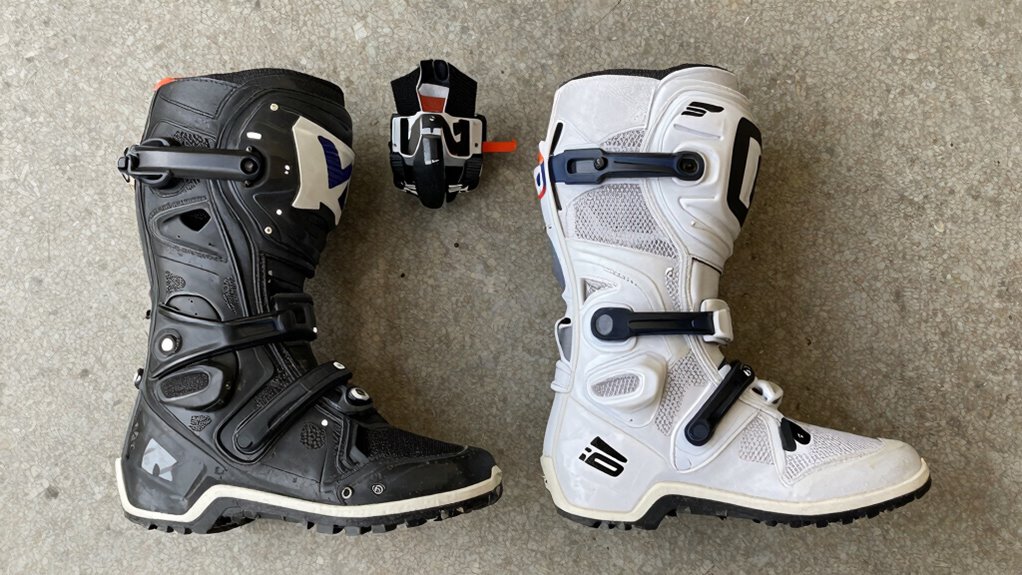
The design of motocross and enduro boots directly influences how easily you can move and how well you stay protected during rides. Lighter boots improve agility, letting you react quickly, but may sacrifice some injury prevention. Heavier boots offer more protection but can restrict movement, making agility a challenge. Your choice affects your safety and comfort. Consider this table:
| Boot Type | Aesthetic Appeal | Impact on Mobility |
|---|---|---|
| MX Boots | Sleek, aggressive look | Reduced agility |
| Enduro Boots | Rugged, versatile style | Easier to maneuver |
| Both | Varies by design | Balance needed |
Ultimately, your priorities—speed, safety, style—dictate how boot design impacts your riding experience. Additionally, understanding the impact on injury prevention can help you make more informed decisions when choosing between these two types of boots. For instance, boot construction plays a crucial role in how well your feet and ankles are protected during falls or impacts.
Common Misconceptions About MX and Enduro Boot Safety
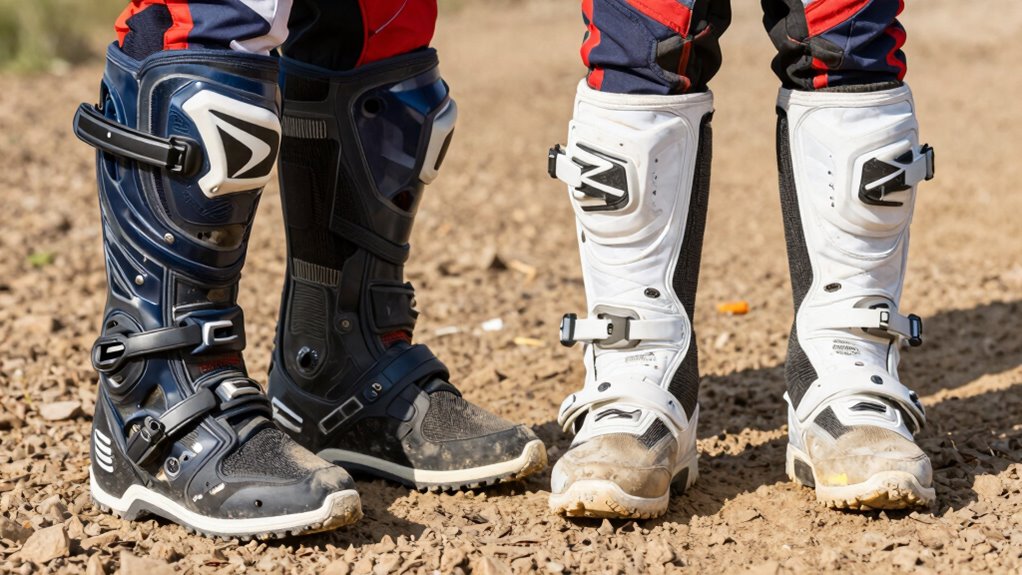
Many riders believe their boots can fully protect them from injuries, but that’s not always the case. It’s easy to overestimate how safe your gear really is and overlook the risks involved in riding. Understanding these misconceptions helps you make smarter choices to stay safer on the trail or track. For example, even high-quality motocross boots may not prevent all injuries if proper piercing care and hygiene are neglected or if the equipment is not used correctly. Additionally, selecting the appropriate style and fit of boots for your specific riding activity can significantly influence your safety and comfort.
Overestimating Boot Safety
It’s common to assume that wearing motocross or enduro boots automatically guarantees full safety, but this overconfidence can be dangerous. No boot, no matter how sturdy, can prevent all injuries. Relying solely on your boots overlooks other critical factors like helmet durability and your riding stance, which influence overall safety.
- Believing your boots can handle any crash without injury
- Ignoring proper riding stance that reduces risk
- Assuming boots protect against impacts beyond their design
- Overestimating the protective limits of your gear in high-impact falls
Even the best boots won’t compensate for poor technique or helmet limitations. Staying safe requires a holistic approach, not just trusting your gear to do all the work. Recognize that overconfidence can lead to unnecessary injuries.
Underestimating Injury Risks
Assuming that motocross and enduro boots provide complete protection can lead you to underestimate the severity of potential injuries. Even the best boots can’t prevent all harm, especially if your helmet fit isn’t secure or your riding posture is off. Poor helmet fit can increase the risk of head injuries, while incorrect posture can lead to falls or strains that boots alone can’t prevent. Many riders believe their gear is enough, but accidents happen quickly and with force. Underestimating these risks might cause you to overlook other safety precautions. Remember, boots are just one part of your protection. Staying alert, maintaining proper riding posture, and ensuring your helmet fits correctly are vital to minimizing injury severity and riding safely. Incorporating protective gear like padded clothing and armor can further reduce injury risks during crashes.
How to Choose the Right Off-Road Boots for Safety and Riding Style

Choosing the right off-road boots depends on both your safety needs and riding style. To do this effectively, consider these factors:
Selecting the right off-road boots ensures safety and complements your riding style effectively.
- Boot material: Leather, synthetic, or hybrid options influence durability and weight.
- Price differences: Higher prices often mean better protection, but find a balance that fits your budget.
- Riding style: Enduro riders may prefer lighter, flexible boots, while motocross riders might prioritize maximum protection.
- Fit and comfort: Guarantee the boots fit well and support your riding position without causing discomfort.
Matching your riding style with the appropriate boot material and safety features is essential. Think about how much protection you need versus comfort and cost. This way, you select boots that keep you safe while enhancing your riding experience.
Future Trends in Off-Road Boot Safety and Protection Features
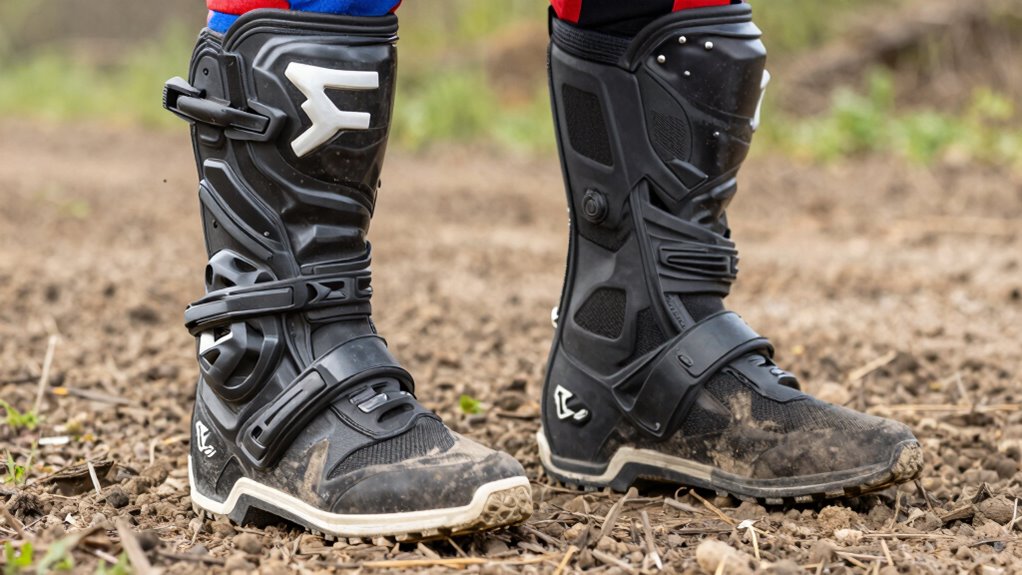
As off-road riding continues to evolve, advancements in safety and protection features are shaping the future of motocross and enduro boots. With the rise of electric bikes, manufacturers are integrating lightweight, high-impact materials to improve protection without sacrificing agility. Expect more customizable options, allowing you to tailor gear to your riding style and terrain. Future boots may feature modular components, so you can adjust ankle support, sole stiffness, or protective plates easily. Smart technology might also play a role, offering enhanced impact sensors or integrated communication systems. These innovations aim to provide better safety while maintaining comfort and flexibility. As gear customization becomes more sophisticated, you’ll have the ability to fine-tune your boots for ideal performance and protection in an ever-changing off-road landscape.
Frequently Asked Questions
Can the Wrong Boots Cause Increased Fatigue During Long Rides?
Yes, choosing the wrong boots can cause increased fatigue during long rides. If your boots lack ergonomic design, they might not support your feet properly, leading to discomfort. Additionally, stiff sole flexibility can make it harder to maneuver and tire your legs faster. Opt for boots with good ergonomic support and flexible soles, as they reduce strain, improve comfort, and help you ride longer without feeling exhausted.
Are There Specific Materials That Improve Impact Absorption in Off-Road Boots?
Yes, certain materials improve impact absorption in off-road boots. Look for boots with impact absorbing materials like EVA foam or gel inserts, which cushion impacts effectively. Protective composites such as carbon fiber or reinforced plastics also enhance impact resistance while keeping the boots lightweight. These materials work together to reduce strain on your feet and ankles during rough rides, offering better protection and comfort on challenging terrains.
How Do Boot Weight Differences Affect Rider Endurance and Safety?
You’ll notice that lighter boots, made from advanced boot material, reduce fatigue and enhance your endurance during long rides. Proper weight distribution helps maintain balance and control, boosting safety. Heavier boots may provide more protection but can tire you faster, risking mistakes or injury. Opt for boots that balance durability and weight, ensuring your ride is both comfortable and secure, so you stay alert and protected throughout your adventure.
Do Custom-Fit Boots Offer Better Protection Than Off-The-Shelf Options?
Yes, custom-fit boots offer better protection than off-the-shelf options because they conform perfectly to your feet, reducing pressure points and increasing injury prevention. When your boots fit well, you gain enhanced support and stability, lowering the risk of sprains and fractures. Custom-fit boots also ensure better control and comfort, helping you stay focused and safe during rides. Overall, investing in custom boots can markedly improve your safety on the trail.
What Are the Environmental Considerations in Boot Safety Features?
In a nutshell, you should consider environmental factors when choosing boots, especially with eco-friendly manufacturing and sustainable materials gaining traction. You’re making a statement about protecting not just your feet but the planet, too. Look for boots made from recycled or biodegradable materials, and brands committed to reducing their ecological footprint. This way, your safety gear aligns with environmentally conscious values, ensuring a greener future while keeping you protected on the trail.
Conclusion
Choosing between MX and Enduro boots is like picking the right glove for your hand—each offers unique protection and comfort suited to different riding styles. While MX boots excel in high-impact protection, Enduro boots prioritize flexibility for longer rides. Think about your riding habits and safety needs carefully. Ultimately, the right boots will shield you like a sturdy shield, keeping you safe while you enjoy the thrill of off-road adventures.
Halloween Picks
halloween
As an affiliate, we earn on qualifying purchases.