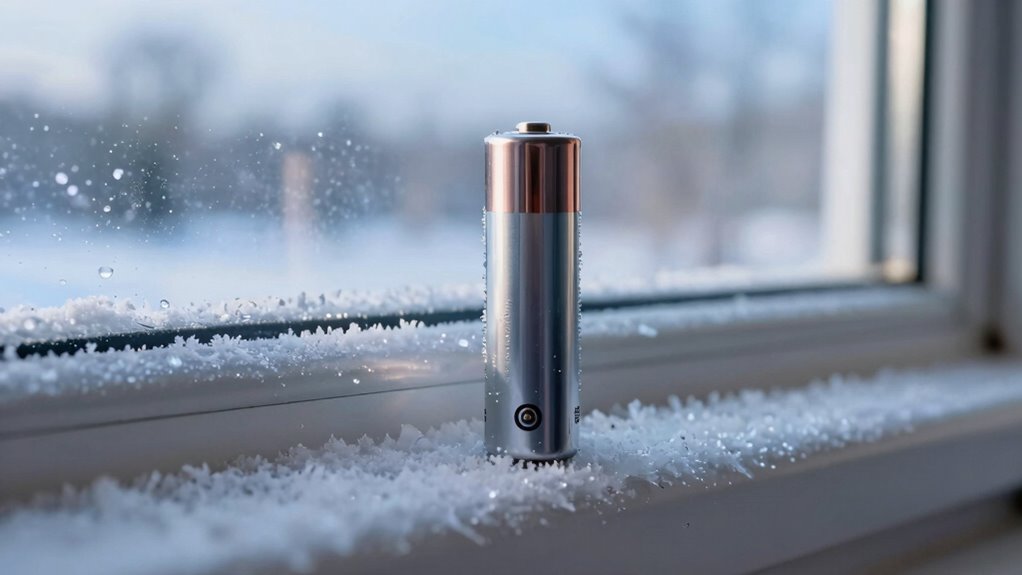

When lithium batteries seem to ‘wake up’ in cold weather, it’s not because the chemistry improves but due to fluctuations in internal resistance. Cold temperatures slow chemical reactions and increase internal resistance, causing devices to appear sluggish or drain faster. Sometimes, a brief performance boost happens because resistance temporarily decreases, giving the illusion of resuming power. If you want to understand exactly why this happens and how to manage it, there’s more to explore below.
Key Takeaways
- The “wake-up” effect is caused by fluctuations in internal resistance, not actual chemical improvements.
- Cold temperatures slow chemical reactions, reducing capacity and power, but resistance changes can temporarily boost performance.
- Internal resistance varies with temperature, affecting ion mobility and electrolyte behavior, leading to brief performance spikes.
- Proper thermal management, like heating or insulation, helps maintain consistent battery performance in cold weather.
- The apparent boost is a short-lived illusion linked to internal resistance dynamics, not an actual enhancement of chemistry.
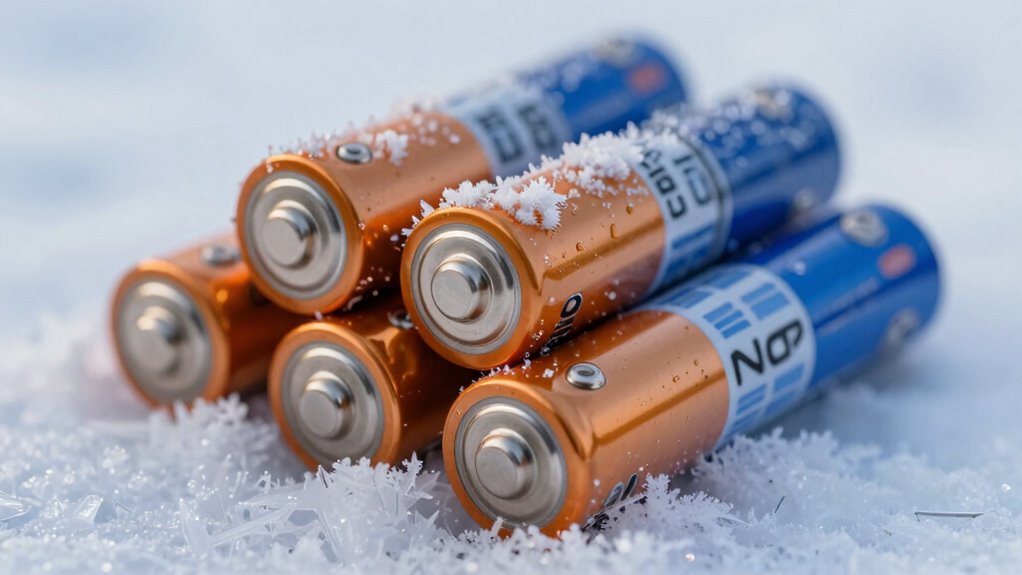
Cold weather can profoundly impact the performance of lithium batteries, causing them to lose capacity and deliver less power. But what’s surprising is that sometimes, in cold conditions, these batteries seem to “wake up” or suddenly perform better—an odd phenomenon that puzzles many. To understand why, you need to look at battery chemistry and thermal management. Lithium batteries rely on chemical reactions within their cells, specifically involving lithium ions moving between electrodes. When the temperature drops, these reactions slow down, reducing the battery’s ability to generate electricity efficiently. That’s why, at first, cold weather makes your device seem sluggish or drains the battery quickly.
However, as the temperature continues to fall, you might notice a brief period where your lithium battery appears to function better. This isn’t because the chemistry suddenly improves—in fact, it’s quite the opposite. What’s happening is that the battery’s internal resistance fluctuates with temperature changes, and in some cases, the initial cold causes the electrolyte and electrode materials to behave differently. This can temporarily improve ion mobility or reduce certain internal losses, giving an illusion of increased performance. But this is usually short-lived, as the cold eventually hampers the chemical reactions needed for sustained power delivery. internal resistance can vary with temperature, influencing how well the battery performs during these fluctuations.
The real key to understanding this “wake-up” effect lies in thermal management. When a battery is kept at a certain favorable temperature, its chemical reactions proceed smoothly, and it performs reliably. In cold conditions, inadequate thermal management allows the battery’s temperature to plummet, hampering its efficiency. Some devices incorporate heating elements or insulation to keep batteries within a more advantageous temperature range. This prevents the internal resistance from spiking and ensures that the battery chemistry remains active and responsive. Without proper thermal management, the battery’s internal processes slow down or become unstable, which explains why performance can seem so unpredictable in cold weather. Ensuring proper thermal regulation can significantly extend battery life and stability in chilly conditions.
In essence, the odd “wake-up” moment occurs because the battery’s internal environment is temporarily altered by temperature changes. When you heat the battery or keep it warm, the chemistry can operate closer to its ideal state, restoring power and capacity. Understanding this connection between battery chemistry and thermal management helps you realize why cold weather impacts performance so dramatically—and why maintaining some warmth can make a big difference. It’s not just about keeping your device warm; it’s about ensuring the chemical reactions inside your lithium battery can keep up, especially in chilly conditions. Additionally, awareness of battery chemistry and how it reacts to temperature shifts can help you better optimize device performance in cold environments.

4PCS 20W 12V Silicone Rubber Heating Pad Flexible Silicone Heater Mat Electric Blanket Mat for Mixing and Thermal Insulation of Industrial Equipment
Compact Design: Measuring just 2"x5.9" (50x150mm) with an 11.8" length, this silicone heating pad fits tightly to pipes,…
As an affiliate, we earn on qualifying purchases.
As an affiliate, we earn on qualifying purchases.
Frequently Asked Questions
Do Lithium Batteries Perform Better in Extreme Cold or Heat?
You’ll find lithium batteries perform better in cold weather when you use proper battery insulation and cold charging techniques. Extreme heat can cause faster deterioration and safety issues, while cold temperatures may temporarily reduce capacity. However, with insulation, you prevent the cold from damaging the battery, and cold charging helps keep performance stable. So, in extreme cold, your lithium battery can actually perform more reliably if managed correctly.
Can Cold Weather Damage Lithium Batteries Permanently?
Cold weather can cause cold induced degradation in lithium batteries, which may lead to permanent damage if you’re exposed to extreme cold for long periods. You might notice a reduced battery lifespan because the cold affects the chemical processes inside, damaging the battery’s health over time. To protect your batteries, keep them warm and avoid prolonged exposure to freezing temperatures, ensuring they stay in good condition longer.
How Quickly Do Lithium Batteries Recover After Warming Up?
When you warm up your lithium battery, it typically recovers within a few minutes, depending on the insulation and thermal management. Proper battery insulation helps retain heat, speeding up recovery, while effective thermal management ensures even warming. As the temperature rises, the battery’s internal chemistry stabilizes, restoring performance. So, if you give your battery a little time and warmth, it’ll bounce back quickly and operate efficiently again.
Are There Specific Lithium Battery Types More Resistant to Cold?
You’re better off with lithium iron phosphate (LiFePO4) batteries if you want resistance to cold. They have a more stable battery chemistry, which makes them less susceptible to temperature drops. Insulation techniques also help, but choosing batteries designed for low temperatures is your best bet. These batteries perform more reliably in cold weather, meaning you won’t have to worry about them waking up slowly or failing unexpectedly.
What Are the Best Practices to Keep Lithium Batteries Warm?
To keep lithium batteries warm, you should use battery insulation to reduce heat loss and portable warmers to maintain a steady temperature. Wrap your batteries with insulating materials like foam or thermal wraps, and consider using heated battery packs or portable electric warmers during extreme cold. These methods help prevent voltage drops and maintain ideal performance, especially in outdoor or cold environments.

Battery Insulation Kit, Car Battery Insulation Blanket ,Car Battery Wrap for Cold Weather, Preserve Against Radiant Heat, Acid Neutralization, and Easy Installation, 40"x7" (Thickness 3mm, 1)
Car Battery Preserve: car batteries are highly susceptible to extreme heat and cold weather, as well as engine…
As an affiliate, we earn on qualifying purchases.
As an affiliate, we earn on qualifying purchases.
Conclusion
So, next time your lithium battery seems to wake up in the cold, remember it’s like a sleeper startled awake—its chemistry shifts unexpectedly. Cold weather may seem harsh, but your battery’s surprising reaction proves it’s more resilient than it appears. With a little warmth and patience, you’ll keep your device humming smoothly. Just like a sunrise chasing away the night, understanding this quirk helps you stay connected, no matter how chilly the day gets.

Eujgoov Space Heater USB Cordless Portable Battery Powered Heater Rechargeable with 2 Temp Settings Double USB Ports for Desk Travel Camping Office Home Car (Battery not included)
2 Temperature Settings: Featuring two adjustable temperature ranges, the first from 30℃ to 50℃ and the second from…
As an affiliate, we earn on qualifying purchases.
As an affiliate, we earn on qualifying purchases.
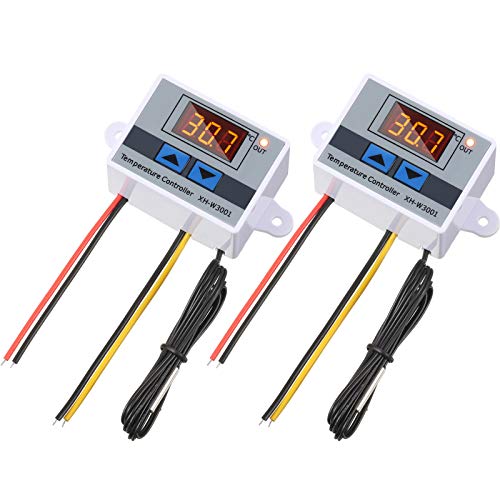
XH-W3001 Digital LED Temperature Controller Module Digital Thermostat Switch with Waterproof Probe Programmable Heating Cooling Electronic Thermostat Range from -50℃ to 110℃ (12V 10A 120W) (2 Pieces)
2 Working modes: this digital LED temperature controller module has 2 working modes, heating mode (start temperature is…
As an affiliate, we earn on qualifying purchases.
As an affiliate, we earn on qualifying purchases.