
TPMS systems often miss slow leaks and punctures that can be dangerous, especially since sensors mainly detect rapid pressure drops. Small punctures or gradual leaks from debris can go unnoticed, increasing your risk of blowouts and loss of control. Temperature changes and sensor drift make detection even harder over time. Relying solely on the system gives a false sense of security. Keep going to discover how to better protect yourself and your tires.
Key Takeaways
- TPMS often fails to detect slow leaks and punctures, which can develop gradually over time.
- Sensors mainly detect rapid pressure drops, missing subtle, incremental tire pressure loss.
- Environmental factors and sensor calibration drift reduce the system’s ability to identify early tire issues.
- Visual inspections are essential, as TPMS cannot reliably detect damage or slow leaks.
- Relying solely on TPMS may provide a false sense of security, risking undetected tire problems.
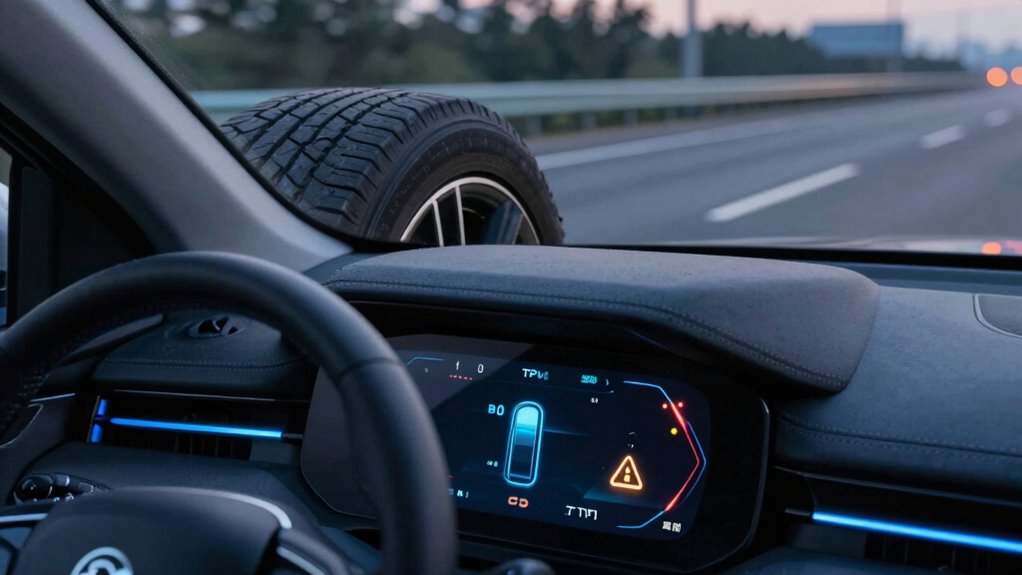
Many drivers rely on Tire Pressure Monitoring Systems (TPMS) to alert them to low tire pressure, but these systems often fall short of detecting the most common and dangerous tire problems—slow leaks and punctures. While TPMS can quickly notify you when a tire’s pressure drops below a set threshold, they don’t always catch the subtle, gradual loss of air caused by tiny leaks or punctures. This oversight stems from limitations in their design, specifically sensor limitations, which prevent them from sensing gradual changes or punctures that don’t immediately cause a significant pressure drop. As a result, you might continue driving with a compromised tire without realizing it until a sudden flat or dangerous blowout occurs.
TPMS often misses slow leaks and punctures, risking unsafe driving conditions without early warning.
Tire pressure is the key focus of most TPMS, but these sensors are primarily calibrated to detect rapid pressure drops rather than slow leaks. For instance, if you develop a small puncture from a nail or debris, the pressure decrease may happen gradually over days or weeks. The TPMS might not alert you until the pressure reaches an extremely low level, which could be too late to prevent a dangerous situation. This is especially problematic because slow leaks often go unnoticed, yet they weaken the tire’s structure and increase the risk of a blowout or loss of control. The sensors’ inability to detect these subtle changes leaves you vulnerable during everyday driving, especially in conditions where you’re less likely to notice a gradual decline in tire pressure. Recognizing the sensor limitations can help you understand why manual inspections are still necessary. Additionally, sensor accuracy can vary depending on environmental factors and wear, further emphasizing the importance of regular checks.
Sensor limitations also mean that TPMS may not accurately measure tire pressure in all situations. Variations in temperature, tire wear, or sensor calibration issues can affect readings, making it harder for the system to provide reliable alerts. Additionally, some TPMS rely solely on indirect methods—like monitoring wheel rotational speed differences—rather than direct pressure measurements. These indirect systems are more prone to inaccuracies and can miss slow leaks altogether. Moreover, sensor calibration can drift over time, further reducing the system’s reliability. As a driver, you need to understand that while TPMS offers valuable safety alerts, it isn’t a foolproof system. Regular manual inspections and visual checks remain essential for detecting slow leaks, punctures, or other tire damage that sensors might overlook.
Furthermore, advancements in sensor technology are ongoing, but current systems still have limitations that require drivers to stay vigilant. In the end, relying solely on TPMS can create a false sense of security. You’re better off combining the system’s alerts with routine tire checks, especially before long trips or when you notice any irregularities. Remember, tire pressure isn’t just about fuel efficiency or tire longevity—it’s a critical safety factor. Don’t assume your TPMS will catch every problem. Stay vigilant, perform regular inspections, and be aware of its sensor limitations to keep yourself safe on the road.
As an affiliate, we earn on qualifying purchases.
Frequently Asked Questions
How Do TPMS Systems Detect Slow Leaks or Tire Punctures?
You might wonder how TPMS systems detect slow leaks or punctures. They use tire pressure monitoring with leak detection technology to constantly check each tire’s pressure. When pressure drops below the set threshold, the system alerts you. While they’re great for rapid issues, slow leaks can sometimes evade detection if the pressure decline is gradual. Still, TPMS helps you catch many problems early, preventing dangerous driving situations.
Can TPMS Systems Differentiate Between Tire Wear and Actual Damage?
Like a detective analyzing clues, TPMS systems can’t always tell tire wear from damage. They mainly monitor air pressure and temperature, so during tire rotation, changes might be normal wear or damage. If you notice irregular readings, it’s essential to inspect the tire for damage or wear. While TPMS alerts you to pressure drops, you still need to manually assess the tire’s condition to differentiate between wear and actual damage.
Are There Limitations to TPMS Accuracy in Different Driving Conditions?
Yes, TPMS accuracy can vary in different driving conditions, and you might encounter some limitations. Tire pressure myths sometimes lead you to overestimate sensor reliability, but advances in sensor technology have improved precision. However, extreme temperatures, heavy loads, or rapid altitude changes can affect readings. Staying aware of these factors helps you better interpret TPMS alerts and maintain ideal tire health, avoiding false alarms or overlooked issues.
How Often Should I Calibrate or Service My TPMS System?
You should calibrate your TPMS sensor and check tire pressure monthly. Imagine your tires as the heartbeat of your ride—keeping them in tune guarantees smooth, safe journeys. Regularly servicing the system helps catch sensor drift or errors before they cause trouble. When you monitor and calibrate your TPMS, you’re safeguarding your tires’ health, avoiding surprises, and maintaining peak performance on every mile.
What Are Common Signs That TPMS Might Be Malfunctioning?
If your TPMS light stays on or flashes unexpectedly, it’s a sign something’s wrong. You might notice inconsistent tire pressure readings, or the system may fail to alert you when tires are underinflated. Don’t buy into Tire pressure myths that TPMS always detects every problem—technology isn’t perfect. Regularly calibrate and service your system to guarantee it functions correctly and keeps you safe on the road.
Conclusion
While TPMS systems are handy, they might not catch every subtle shift in your tire’s health, leaving you to rely on intuition and regular checks. Think of it as a gentle nudge rather than a full warning—sometimes, trusting your senses keeps you ahead of the curve. Stay attentive and proactive; after all, a well-tuned rider like you knows that a little extra care can prevent bigger surprises down the road.