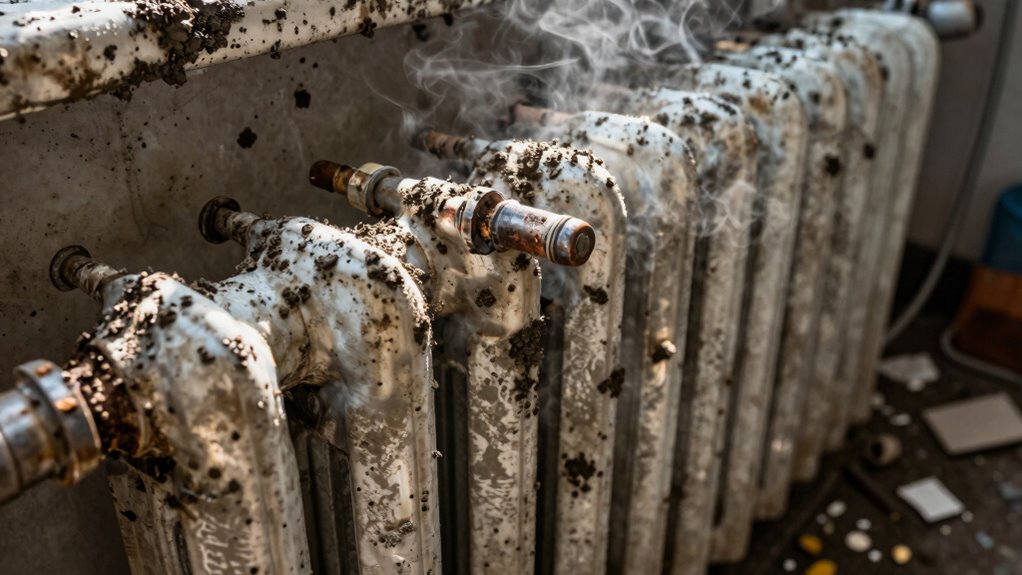

Mud-caked radiators can create more overheating problems than broken parts can. When dirt restricts coolant flow, your engine struggles to maintain a safe temperature. It leads to higher operating temperatures and risks severe engine damage. Regular cleaning guarantees your radiator operates efficiently, avoiding costly repairs. Plus, consistent maintenance catches issues early, preventing significant overheating. If you want to know the best ways to keep your radiator in top shape, there’s more to explore about effective care techniques.
Key Takeaways
- Mud-caked radiators restrict coolant flow, leading to overheating more than broken parts might cause.
- Clogged radiators diminish heat dissipation, intensifying engine temperature issues.
- Dirty radiators raise engine operating temperatures, increasing the likelihood of overheating.
- Regular maintenance can prevent mud accumulation and ensure effective radiator performance.
- Ignoring radiator cleanliness can result in costly repairs compared to addressing broken components.
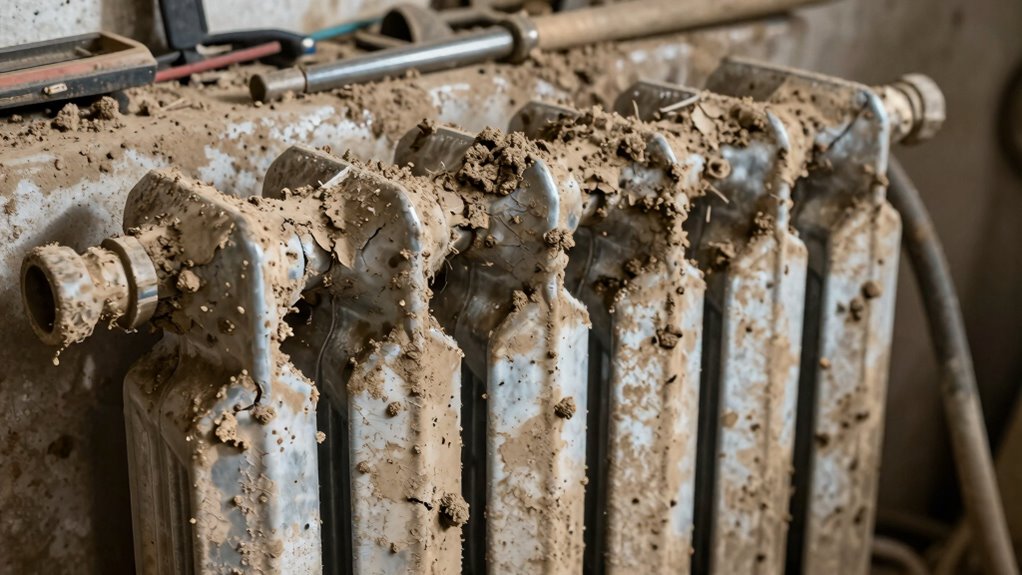
When your radiator starts to overheat, it can lead to a host of problems that you won’t want to ignore. You might think the issue lies with broken parts, but often, it’s something as simple as a mud-caked radiator that’s causing major headaches. A radiator that’s clogged with dirt and debris can severely limit coolant flow, which is vital for maintaining the engine’s temperature. If you don’t address this issue promptly, you could end up with more extensive damage that’s both costly and time-consuming to fix.
You might be surprised to find out how a little mud can wreak havoc on your vehicle. When the radiator gets covered in grime, it can’t dissipate heat effectively. As a result, your engine runs hotter than it should, leading to potential overheating. You’ll want to keep an eye on your radiator, especially if you notice the temperature gauge creeping into the red zone. Regular radiator maintenance is critical to prevent these situations. It’s not just about fixing broken parts; it’s about guaranteeing that your radiator operates efficiently. Proper radiator care is essential for avoiding preventable overheating issues.
One of the best ways to maintain your radiator is by regularly cleaning it. You can use a simple garden hose to flush out debris and mud. Make sure to direct the water from the back of the radiator to push out any buildup. This simple step can greatly improve coolant flow, allowing your engine to operate at its ideal temperature. You wouldn’t ignore a dirty air filter, so don’t let a dirty radiator fall off your radar. Additionally, understanding the importance of coolant flow is essential for preventing overheating issues. Regularly inspecting and maintaining coolant levels can also prevent overheating caused by low fluid levels. Proper radiator maintenance can extend the lifespan of your vehicle and improve overall engine efficiency. Staying vigilant about radiator cleanliness can help identify early signs of clogging before more serious problems develop.
In addition to cleaning, keep an eye on your coolant levels. Low coolant can cause overheating, even if your radiator is in good shape. Make it a habit to check the coolant periodically, and top it off as needed. If you notice that your coolant is disappearing faster than usual, it might be time to investigate for leaks or other issues. Regular checks can help you catch problems early before they become costly repairs.
Ultimately, understanding that a mud-caked radiator can create more overheating problems than broken parts will save you time, money, and frustration. By prioritizing radiator maintenance, you’ll guarantee that your vehicle runs smoothly and efficiently. So, take a moment to inspect your radiator regularly. With a little attention, you can prevent considerable issues and enjoy a more reliable driving experience.
As an affiliate, we earn on qualifying purchases.
Frequently Asked Questions
How Do Mud-Caked Radiators Affect Fuel Efficiency?
Mud-caked radiators can greatly affect your fuel efficiency. When mud clogs the radiator, it restricts coolant flow, causing your engine to overheat. An overheating engine can lead to poor performance, making it work harder to maintain power. This extra effort reduces fuel efficiency, as the engine consumes more fuel to compensate for the lack of ideal cooling. Keeping your radiator clean guarantees better coolant flow and enhances overall engine performance, improving your fuel economy.
Can Regular Cleaning Prevent Radiator Overheating Issues?
Yes, regular cleaning can prevent radiator overheating issues. Imagine your radiator, once gleaming, now cloaked in grime. By keeping it clean through routine radiator maintenance, you allow it to breathe freely. This reduces heat buildup and enhances cooling efficiency, ensuring your engine runs smoothly. You’ll notice improved performance and less risk of overheating. So grab that hose and scrub away; it’s a simple step toward overheating prevention and a healthier vehicle.
What Signs Indicate Radiator Cleaning Is Necessary?
If you notice your engine overheating, decreased radiator performance, or a sweet smell of coolant, it’s time to clean your radiator. Regular coolant maintenance helps prevent these issues, but dirt and debris can build up over time. Look for corrosion or rust on the radiator surface, or check for leaks around the hoses. Keeping an eye on these signs guarantees your radiator functions properly and extends its lifespan.
Are There Specific Cleaning Products Recommended for Radiators?
When you notice your engine overheating, consider using a product like Prestone Radiator Cleaner. It’s designed to remove deposits and improve radiator maintenance. For effective cleaning techniques, mix it with water and run your engine for a specified time, allowing it to circulate. Afterward, flush the system thoroughly. Regularly using this cleaner can help prevent future issues and keep your vehicle running smoothly, ensuring you avoid costly repairs down the line.
How Often Should I Inspect My Radiator for Mud Buildup?
You should inspect your radiator for mud accumulation at least once a month, especially if you drive in dusty or off-road conditions. Regular radiator maintenance helps prevent overheating issues. Look for visible dirt or mud buildup, and clean it as needed. If you notice significant buildup, consider a more thorough inspection every few months. Staying proactive will guarantee your radiator functions efficiently and keeps your engine running smoothly.
Conclusion
In the end, keeping your radiators clean can save you from a world of overheating headaches. Remember, “an ounce of prevention is worth a pound of cure.” By regularly checking for mud and debris, you can prevent more serious issues down the road. Don’t wait for a breakdown to take action; a little maintenance goes a long way in ensuring your vehicle runs smoothly. Stay proactive, and your engine will thank you!