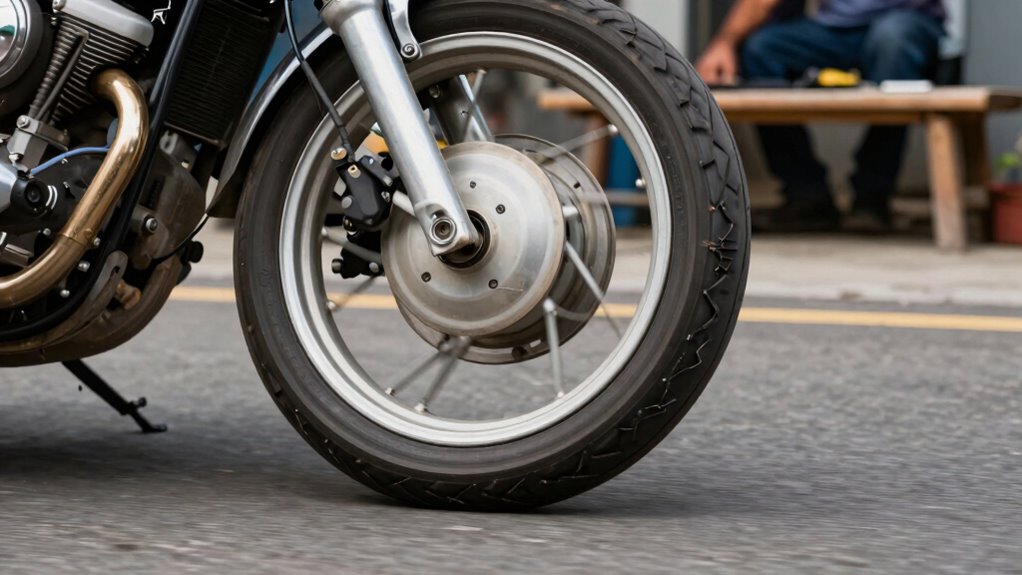

Steering head wobble usually starts when you ignore tire maintenance. Neglected tires with uneven wear or improper pressure can disrupt your bike’s balance, leading to that unsettling shake in the handlebars. If you notice a wobble, check your tire condition first. Also, ensuring your handlebars are tight and the frame is aligned can make a big difference. Taking care of these issues will enhance your riding experience, and there’s more to learn on maintaining a smooth ride.
Key Takeaways
- Steering head wobble often begins with worn tires, which riders frequently overlook during maintenance checks.
- Uneven tire tread can disrupt balance, leading to noticeable handling issues.
- Loose handlebars or improper steering adjustments are commonly ignored but can trigger wobble.
- A misaligned frame, often due to minor impacts, is another critical wear point that affects stability.
- Regular inspections of tires, handlebars, and frame alignment can prevent steering head wobble.
When you’re riding, you might notice a sudden shake in the handlebars, which is often referred to as steering head wobble. This unsettling phenomenon can happen unexpectedly and typically points to underlying issues that you might have overlooked. Ignoring these signs can lead to more serious problems down the line, so it’s essential to address them early.
One of the common culprits behind steering head wobble is improper tire maintenance. Worn-out tires or uneven tread can throw your bike off balance, leading to instability. Regularly checking your tire pressure and confirming even wear can make a significant difference. If your tires are out of balance, it can cause vibrations that translate directly to the handlebars, prompting that dreaded wobble.
Improper tire maintenance, like worn or uneven tread, can lead to instability and that unsettling steering head wobble. Regular checks are essential.
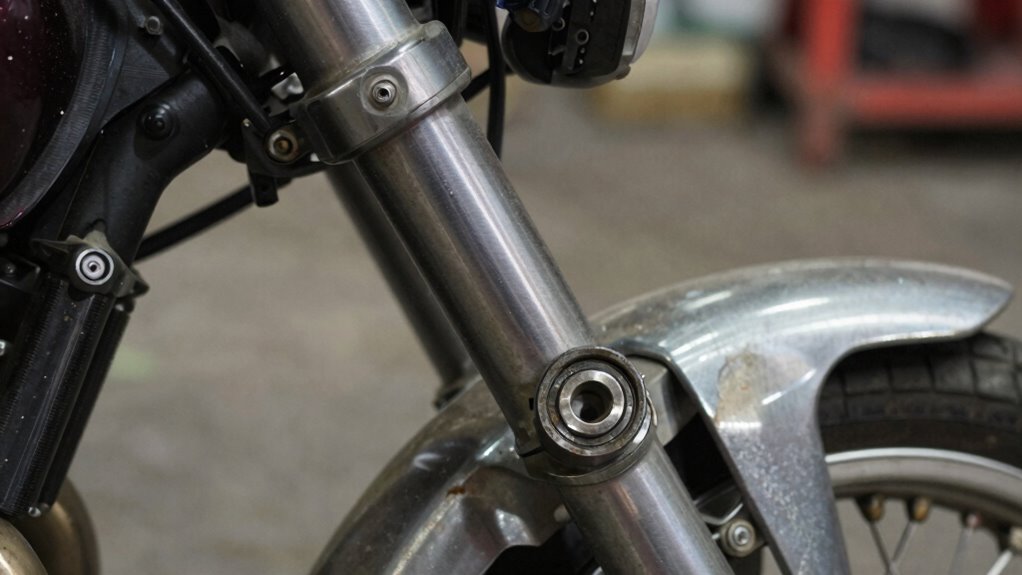
Another factor to take into account is steering adjustments. If your handlebars feel loose or if you notice any play in the steering head, it’s time to tighten those components. A simple adjustment can often eliminate the wobble altogether. Make sure you’re familiar with the torque specifications for your bike to avoid overtightening. Ensuring proper steering head adjustment is crucial for a smooth ride.
Frame alignment is another area that shouldn’t be ignored. If your bike’s frame is misaligned, it can cause handling issues that lead to wobbling. Regularly inspecting the frame can help catch any issues before they escalate into a more significant problem. Sometimes, a quick trip to a professional can confirm everything is in line. Additionally, frame alignment can be affected by minor impacts or wear over time, making regular checks important. Maintaining correct frame geometry can help prevent handling issues caused by misalignment.
Suspension tuning can also play a vital role in stability. If your suspension is too soft or too stiff, it can affect how your bike handles at different speeds. A well-tuned suspension allows for better absorption of bumps and irregularities in the road, contributing to a smoother ride without the wobbles.
Additionally, your riding techniques can impact how your bike performs. If you’re gripping the handlebars too tightly or shifting your weight improperly, it can induce unwanted vibrations. Focusing on maintaining a relaxed grip and distributing your weight evenly can help minimize steering head wobble.
Finally, ensuring your wheel balancing is up to date can significantly improve stability. Unbalanced wheels can lead to vibrations that resonate throughout the bike, making the handlebars feel shaky. Confirming your wheels are properly balanced can be a game changer in achieving a stable ride.
motorcycle steering head bearing kit
As an affiliate, we earn on qualifying purchases.
As an affiliate, we earn on qualifying purchases.
Frequently Asked Questions
How Can I Prevent Steering Head Wobble Before It Starts?
To prevent steering head wobble before it starts, focus on regular preventive maintenance. Check for wear indicators on your bike’s steering components, like bearings and bushings. Inspect them frequently for signs of wear and replace them as needed. Keep your suspension in top shape, and make sure your tire pressure is ideal. By staying proactive and addressing any issues early, you’ll enhance your riding experience and maintain better control.
What Tools Do I Need to Check for Wear Points?
To check for wear points, you’ll need a few essential tools. Start with a torque wrench for accurate adjustments, then grab a set of calipers to measure any wear. A socket set will help disassemble parts, and a feeler gauge can check clearances. Curiously, about 80% of riders overlook wear point inspection, leading to bigger issues. Keep these tool recommendations handy, and you’ll stay ahead of potential problems!
Is Steering Head Wobble Dangerous While Riding?
Yes, steering head wobble can be dangerous while riding. If you notice wobble symptoms, it’s vital to address them immediately. A wobbling bike can lead to loss of control, increasing the risk of accidents. Prioritizing riding safety means regularly checking your motorcycle for wear points and ensuring everything’s in good condition. Don’t ignore any signs; taking action can help you avoid a serious mishap on the road. Ride smart, stay safe!
How Often Should I Inspect My Motorcycle’s Steering Components?
You should inspect your motorcycle’s steering components every few months, or more frequently if you ride hard. Imagine hitting a bump and feeling that unsettling wobble! Regular checks on steering alignment and bearing maintenance can prevent surprises like that. Look for wear and tear, and don’t ignore any unusual noises. Keeping your steering components in top shape not only guarantees a smooth ride but also keeps you safe on the road.
Can Modifications to My Bike Affect Steering Stability?
Yes, modifications to your bike can definitely affect steering stability. Handlebar adjustments, for instance, might change your riding position and how your bike feels at high speeds. If you’ve altered your suspension or added weight, that can also impact stability. Don’t forget to check your tire pressure; incorrect levels can lead to wobbling or uneven handling. Regularly reviewing these factors helps guarantee a smooth and safe ride.
Conclusion
If you notice that unsettling wobble in your steering head, don’t just brush it off. That tiny wear point could lead to a much bigger problem, potentially putting your safety at risk. You might think it’s just a minor annoyance, but ignoring it could spell disaster on your next ride. So, before you hit the road again, take a closer look. What if that slight shake is a warning sign? You don’t want to find out the hard way.