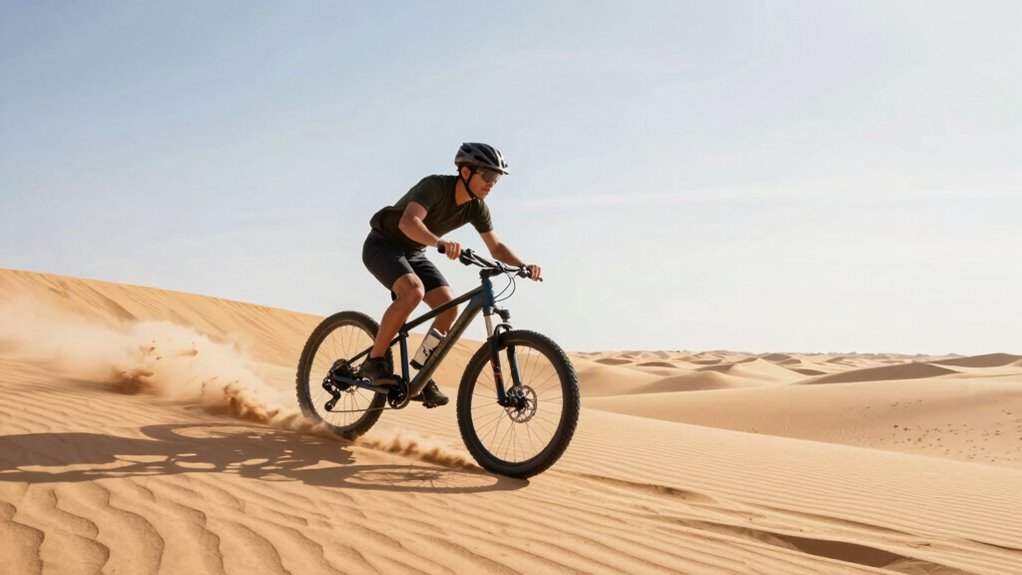
Sand riding gets a lot easier when you stop fighting the front wheel. Instead of battling, let your bike glide over the surface. Keep your weight centered and slightly forward to help the front wheel float rather than dig in. Maintain smooth throttle control to avoid sudden lifts. Staying focused on the terrain around you will keep you in sync with your ride. Master these techniques, and you’ll see a noticeable improvement in your sand riding skills. There’s more to discover!

Get business pricing on garage and car supplies
- Business-only prices and quantity discounts
- Tax-exempt purchasing
- Multiple users, one account, clear invoices
Key Takeaways
- Adjust your body position to keep weight centered and slightly forward, preventing the front wheel from digging into the sand.
- Lower tire pressure to enhance traction and create a larger footprint, improving stability on soft surfaces.
- Apply throttle smoothly and gradually to maintain momentum without risking front wheel lift.
- Stay mentally focused and aware of surroundings, allowing for quick adjustments to changing terrain.
- Practice consistent techniques to build muscle memory and confidence, making sand riding more intuitive.
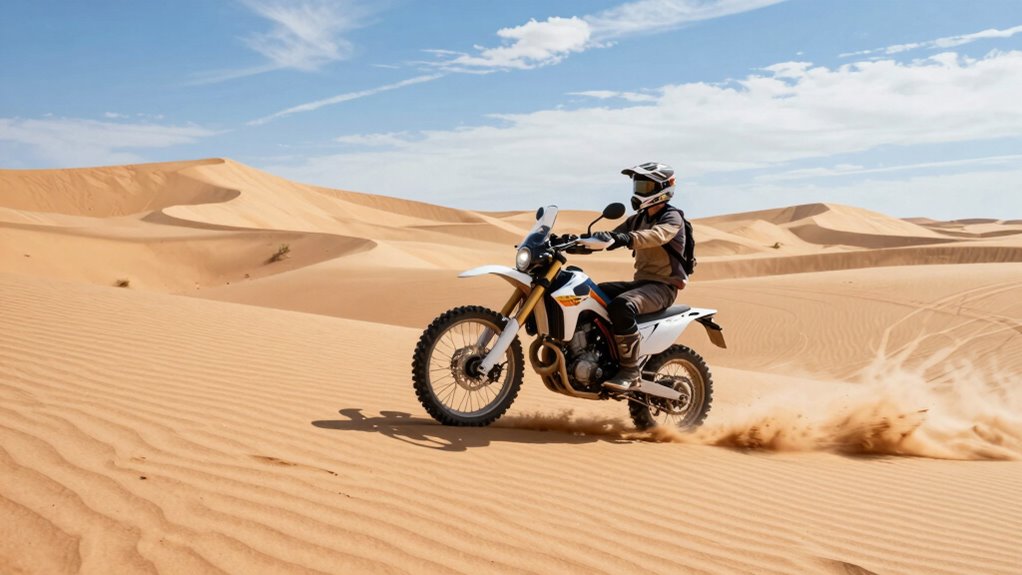
Sand riding can be be a thrilling adventure, but it also comes with unique challenges. If you’re new to it, you might find that the front wheel tends to fight against you, creating a frustrating experience. The key to making sand riding easier lies in understanding how to adjust your approach. When you stop battling the front wheel, everything shifts into smoother territory.
First, you’ll want to pay attention to your tire pressure. Lowering it can increase your tire’s footprint on soft surfaces, giving you better traction. Ideally, you should aim for a tire pressure that balances grip with stability. Finding that sweet spot may take some experimentation, but it’s worth it when you feel the difference as you glide over the sand.
Paying attention to tire pressure is crucial; lower it for better traction and a smoother ride over sandy terrain.
Next, let’s talk about body positioning. Keep your weight centered and slightly forward on the bike. This helps keep the front wheel from digging too deep into the sand. If you lean back too much, you’ll lose control, and that front wheel will start to feel like it’s fighting you. By shifting your weight forward, you can effectively guide the bike through the sandy terrain, allowing it to float rather than sink. **Proper body positioning is essential for controlling the bike on loose surfaces.** Developing a good riding technique can make a significant difference in your confidence and stability. Practicing consistent technique can help you develop muscle memory, making it easier to stay relaxed and in control. Additionally, understanding how to manage your momentum is crucial for maintaining stability on loose terrain. Building your sand riding skills through focused practice can also help you respond more instinctively to changing conditions.
Throttle control is another vital aspect. Instead of gunning the throttle, which can cause the front wheel to lift and lose contact with the ground, focus on a smoother, more controlled application. Gradually increasing the throttle allows you to maintain momentum without overpowering the bike. This approach helps you navigate through tricky patches without getting stuck or losing control.
Lastly, mental focus plays an essential role in your success. Sand riding requires constant adjustments, and you need to stay aware of your surroundings. Keep your eyes ahead, anticipating changes in the terrain. If you find your mind wandering, it can lead to mistakes that put you back in the struggle with the front wheel. Staying mentally engaged helps you respond quickly to obstacles, making the ride more enjoyable.
mountain bike tires low pressure
As an affiliate, we earn on qualifying purchases.
As an affiliate, we earn on qualifying purchases.
Frequently Asked Questions
What Type of Bike Is Best for Sand Riding?
For sand riding, you’ll want a bike with good stability and traction. Dirt bikes and dual-sport bikes are often the best choices due to their lightweight frames and powerful engines. Look for wider tires with a knobby tread pattern; these tire options help you float over the sand rather than sink in. Additionally, bikes with lower gearing allow for better control in soft terrain, making your ride smoother and more enjoyable.
How Do I Prepare My Bike for Sandy Terrains?
To prepare your bike for sandy terrains, start by adjusting your tire pressure; lower it to increase traction and stability. Next, check your bike suspension—consider softening it to absorb bumps and maintain control. Verify your tires are suitable for sand, with a wider profile for better floatation. Finally, clean and lubricate your chain and gears to keep everything running smoothly. With these tweaks, you’ll handle the sand like a pro!
Can I Ride in Deep Sand With a Standard Tire?
You can ride in deep sand with a standard tire, but it’s like trying to run in flip-flops—challenging! To improve your experience, lower your tire pressure for better traction, allowing the tire to float over the sand. Also, engage your bike’s traction control if it has one; it helps manage power delivery. Just remember, practice makes perfect, so don’t hesitate to explore different techniques for handling sandy terrains!
What Gear Should I Wear for Sand Riding?
For sand riding, you should wear sturdy protective gear like a helmet, gloves, and padded riding suit to keep safe from falls and abrasions. Consider knee and elbow guards, too. Proper riding techniques, such as shifting your weight back and maintaining a loose grip on the handlebars, can enhance your control. Always prioritize comfort and protection, as it lets you focus on mastering the sandy terrain without worrying about injuries. Stay safe and enjoy the ride!
How Does Sand Riding Differ From Riding on Other Surfaces?
Sand riding differs from other surfaces mainly in tire pressure and riding techniques. You’ll need to lower your tire pressure for better traction, allowing the tires to float over the sand instead of digging in. This means you should lean back, maintain a steady throttle, and avoid sudden movements. Unlike riding on hard surfaces, where grip is consistent, sand challenges your balance and control, so adapting your technique is essential for a smoother experience.
Conclusion
Embracing the dance with your front wheel can transform your sandy escapades. By letting go of the urge to wrestle control, you’ll discover a smoother ride and a deeper connection with the terrain beneath you. Instead of battling the elements, think of it as a gentle waltz, where balance and flow prevail. So, trust the process, and let the rhythm of the sand guide you; you just might find yourself gliding with grace and ease.
Halloween Picks
halloween
As an affiliate, we earn on qualifying purchases.