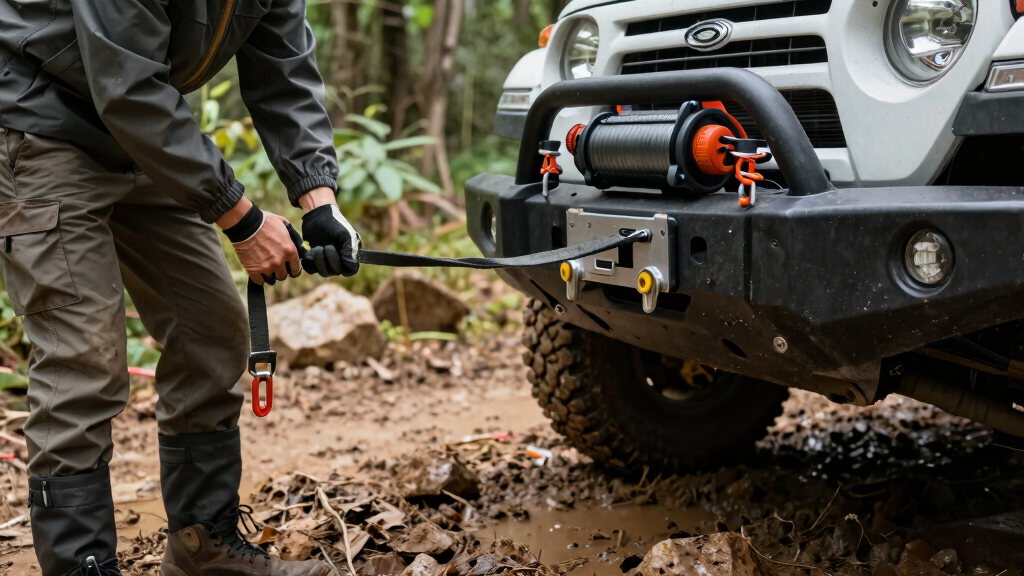

The best off-road vehicle recovery gear depends on whether I need a full starter kit, a kinetic pull setup, or a winch-support system. My best overall pick is the ALL-TOP Recovery Pack Pro 11-in-1 because it gives most trail drivers the broadest mix of straps, shackles, gloves, and storage without feeling too narrow. The BUNKER INDUST Off-Road Recovery Kit stands out for kinetic recoveries, while the Deadman Off-Road V2 is the specialty choice when there is no tree, boulder, or second vehicle nearby. The main tradeoffs are kit completeness, rated strength, storage bulk, ease of use, and whether the gear supports towing, winching, or both. Continue reading for the full breakdown of which setup fits each kind of off-road recovery plan.
Key Takeaways
- Complete kits ranked higher when they covered multiple recovery scenarios instead of only one pull method.
- Kinetic rope setups are better for stuck vehicles with another vehicle available, but they are less useful for solo winching.
- Snatch blocks and tree savers separated the winch-ready kits from basic tow-strap bundles.
- ARB and ALL-TOP make the most sense for buyers who want organized, trail-ready gear rather than piecing parts together.
- Deadman Off-Road V2 is the most specialized pick because it solves solo anchor problems that ordinary strap kits cannot.




More Details on Our Top Picks
Off Road Recovery Gold Kit
I rank the Off Road Recovery Gold Kit high for buyers who want a classic strap-based recovery setup with more reach than the Rhino USA Heavy-Duty Recovery Gear Combo. Its 3-inch x 30-foot strap gives more distance between vehicles, which can matter when mud, snow, or uneven ground leaves little room to line up cleanly. Compared with the BUNKER INDUST kit, though, this is less complete: it covers strap, shackles, hitch receiver, isolator, and bag, but skips gloves, dampener, and kinetic-rope behavior. The tradeoff is simplicity and strength over a full recovery system. I would pick it for a truck or Jeep owner who already understands safe recovery angles, but its bulk and shackle handling make it a poor starter kit for casual trail use.
Pros:- Long 30-foot strap gives more spacing during difficult recoveries
- High 35,000 lb break strength suits heavier off-road vehicles
- Includes hitch receiver, shackles, isolator, and storage bag
- Can work as a tow strap, recovery strap, or winch extension
Cons:- Heavier and bulkier than shorter strap kits
- Requires safe shackle and strap technique to avoid dangerous misuse
- Less complete than kits that include gloves, dampeners, or kinetic rope
Best for: Truck and Jeep owners who want a strong, longer strap kit for regular trail recoveries and already know basic rigging safety
Not ideal for: Solo beginners who want a complete safety-focused kit, because it lacks items like gloves, a dampener, and step-by-step recovery aids
- Strap Length:30 feet
- Strap Width:3 inches
- Break Strength:35,000 lbs
- Material:UV water-resistant polyester webbing
- Shackle Hitch Receiver:2 inches
- Shackle Type:3/4-inch shackles
- Included Accessories:Storage bag, shackles, and isolator
Bottom line: This is the pick I would choose for strength and reach when a basic 20-foot strap kit feels too limited.
Rhino USA Heavy-Duty Recovery Gear Combo
The Rhino USA Heavy-Duty Recovery Gear Combo makes the most sense as a compact, straightforward entry point. Compared with the Off Road Recovery Gold Kit, its 20-foot strap is easier to pack and handle, but it gives up working distance when a stuck vehicle sits off-angle or farther from firm ground. The included hitch-focused setup keeps the kit simple, while the lifetime warranty helps it stand out from more anonymous recovery bundles. I would not treat it as a full trail recovery system next to the BUNKER INDUST kit, which adds kinetic rope, soft shackles, dampener, gloves, and a recovery ring. This Rhino set is better for drivers who want reliable basics in the vehicle, not those building a full winch-support kit for frequent hard recoveries.
Pros:- Compact 20-foot strap is easier to store than larger 30-foot kits
- 31,518 lb strap break strength covers many basic recovery situations
- Heavy-duty D-ring shackles are rated at 41,850 lbs
- Backed by an unlimited lifetime warranty
Cons:- Shorter strap offers less flexibility than 30-foot recovery kits
- Less complete than multi-piece kits with dampeners, gloves, and recovery rings
- Better suited to basic recoveries than advanced winching setups
Best for: New off-roaders who want a compact basic recovery combo for light to moderate trail use
Not ideal for: Drivers of very large rigs or people who often recover from awkward distances, because the 20-foot strap can feel limiting
- Brand:Rhino USA
- Strap Length:20 feet
- Strap Break Strength:31,518 lbs
- Shackle Capacity:41,850 lbs
- Weight:14 pounds
- Warranty:Unlimited lifetime warranty
- Model Number:20-30
- UPC:712038636167
Bottom line: This is my value pick for drivers who want dependable recovery basics without filling the cargo area.
Heavy Duty Snatch Block with 66,000 lbs Break Strength
I see the Heavy Duty Snatch Block as a specialist pick rather than a general recovery kit. It does not replace the Rhino USA Heavy-Duty Recovery Gear Combo or the Off Road Recovery Gold Kit, because it has no strap, shackles, hitch receiver, or bag. Its purpose is different: with a winch, it can redirect the pull angle or double line capacity, which helps when a straight pull is unsafe or impossible. Compared with the Deadman Off-Road V2, this snatch block depends on having a fixed anchor point, while the Deadman can help create one. The downside is that it adds weight, rigging steps, and safety risk if used carelessly. I would add it after the basics, especially for winch-equipped trucks that see tougher trails.
Pros:- 66,000 lb break strength supports demanding recoveries
- Can redirect winch pulls when a straight line is not practical
- Compatible with synthetic rope and steel cable up to 5/8 inch
- Useful across trucks, SUVs, ATVs, and UTVs
Cons:- Not a stand-alone recovery kit
- Adds rigging complexity and requires careful handling
- At nearly 6 pounds, it is heavier than compact soft recovery accessories
Best for: Winch-equipped truck, SUV, ATV, and UTV owners who need angle control or extra pulling efficiency
Not ideal for: Drivers without a winch or recovery rope system, because this tool is only useful as part of a larger rigging setup
- Break Strength:66,000 lbs
- Maximum Rope Diameter:5/8 inch
- Maximum Rope Diameter:15.8 mm
- Cable Compatibility:Synthetic rope and steel cable
- Item Weight:5.94 pounds
- Dimensions:8 x 5 x 2 inches
- Vehicle Fit:Trucks, SUVs, ATVs, and UTVs
Bottom line: This is the add-on I would choose once a winch owner needs better control over pull direction and load management.
BUNKER INDUST Off-Road Recovery Kit
The BUNKER INDUST Off-Road Recovery Kit earns its place as the most complete option in this batch. Compared with the Off Road Recovery Gold Kit, it moves beyond a static strap setup by adding a 30-foot kinetic recovery rope, soft shackles, a shackle hitch receiver, recovery ring, winch dampener, gloves, and a carry bag. That broader parts list matters because off-road recovery is rarely one clean pull; mud, sand, and poor anchor angles often call for different connection methods. Against the Rhino USA combo, this kit is better prepared for serious trail use, but it is also heavier, bulkier, and less appealing for someone who only wants emergency basics. I would choose it for a built-out 4×4, not for a driver who wants the smallest kit behind the seat.
Pros:- Nine-piece kit covers more recovery scenarios than basic strap combos
- 30-foot kinetic rope helps with stuck vehicles in mud, sand, and snow
- Includes safety-focused items such as gloves and winch dampener
- High-strength shackles and recovery ring broaden rigging options
Cons:- Bulkier and heavier than simpler recovery kits
- More components mean more learning before safe use
- Focused on off-road recovery rather than general towing utility
Best for: 4×4 owners who want one organized kit covering kinetic pulls, soft connections, winch safety, and storage
Not ideal for: Minimalists or occasional dirt-road drivers, because the nine-piece setup adds bulk and more gear than they may use
- Recovery Rope Length:30 feet
- Recovery Rope Strength:34,000 lbs
- Shackle Load Limit:19T
- Shackle Breaking Strength:66,000 lbs
- Recovery Ring Load Limit:33,000 lbs
- Number of Pieces:9
- Brand:BUNKER INDUST
- Model Number:BI-RECOVERY-KIT-A-FRD
Bottom line: This is my pick for buyers who want a fuller recovery system instead of assembling pieces one at a time.
Deadman Off-Road V2 Recovery Ground Anchor
The Deadman Off-Road V2 Recovery Ground Anchor fills a role the other picks do not: it helps when there is no convenient tree, rock, or vehicle to pull from. Compared with the Heavy Duty Snatch Block, it is not about multiplying winch power; it is about creating or adapting an anchor point. That makes it valuable for solo travel in sand, snow, or open terrain where a standard strap kit like the Rhino USA combo cannot solve the missing-anchor problem. Its 66,000 lb breaking strength and 8-pound weight are strong selling points, especially since it can also work as a tree saver, rock anchor, or tow strap. The tradeoff is setup labor: burying it or rigging it correctly takes time, and it only makes sense for winch-equipped vehicles.
Pros:- Creates an anchor point in terrain where natural anchors may be absent
- 66,000 lb breaking strength supports serious recovery loads
- 8-pound weight is light for such a versatile anchor tool
- Can function as a ground anchor, tree saver, rock anchor, or tow strap
Cons:- Requires correct burying or sling setup to work well
- Needs a winch-equipped vehicle to be useful for its main purpose
- Can be less effective in extremely rocky or uneven ground
Best for: Solo overlanders and remote-trail drivers with winches who may need an anchor where trees or other vehicles are unavailable
Not ideal for: Drivers without a winch, because the anchor is built around winch-based recovery rather than simple towing
- Breaking Strength:66,000 lbs
- Weight:8 lbs
- Material:Premium polyester webbing
- Made In:USA
- Dimensions:180 x 28 inches
- Anchor Uses:Ground anchor, tree saver, rock anchor, and tow strap
- Primary Recovery Type:Winch anchor
Bottom line: This is the specialty pick I would pack for solo winch recoveries where the biggest problem may be finding an anchor.
Kinetic Recovery Tow Rope: 1.26″ x 30ft Snatch Strap with Soft Shackles Heavy Duty Offroad Towing Straps Kit
I rank this as the best kinetic rope kit here because the 1.26-inch nylon rope is built for stretch and impact absorption, which matters when a stuck truck needs a controlled pull rather than a hard yank. Compared with the Rhino USA Recovery Tow Strap, this option is better suited to mud, sand, and snow recoveries where stored energy can help move a buried vehicle. It also includes soft shackles, giving it a lighter contact point than steel hardware in the Off-Road Recovery Kit. The tradeoff is size and skill: it is bulkier than a flat strap, costs more than basic tow gear, and recovery technique matters because kinetic pulls can create serious loads.
Pros:- Nylon construction provides stretch for smoother stuck-vehicle recovery
- Includes two high-strength soft shackles and a storage bag
- Long 30-foot reach gives safer spacing between vehicles
- Wide temperature range supports cold and hot trail conditions
Cons:- Bulkier and heavier to store than a flat recovery strap
- Kinetic recovery requires proper technique and rated anchor points
- Higher cost than simpler tow straps
Best for: Drivers of trucks, Jeeps, and SUVs who need a kinetic pull setup for mud, snow, or sand recoveries.
Not ideal for: Small vehicle owners with tight cargo space or buyers who want a simple flat tow strap for occasional light pulls.
- Diameter:1.26 inches
- Length:30 feet
- Material:100% nylon 66
- Shackle Max Breaking Strength:48,500 lbs
- Temperature Resistance:-40°F to 215°F
- Included Shackles:2 soft shackles
- Storage:Storage bag included
Bottom line: I would pick this for heavier trail rigs where controlled kinetic recovery matters more than compact storage.
Off-Road Recovery Kit with Tree Saver Strap, Snatch Block, D-Ring Shackles, and Storage Bag
This kit earns the best winch support role because it focuses on the hardware that makes a winch pull safer and more adaptable: a tree saver strap, snatch block, and forged D-ring shackles. Compared with the Kinetic Recovery Tow Rope, it is less about a dynamic vehicle-to-vehicle pull and more about building a rigging setup around a winch anchor. The 8.8-ton snatch block can change pull direction or add mechanical advantage, which gives it more recovery flexibility than the Rhino USA strap alone. I would not call it beginner-light, though. Steel hardware adds weight, and buyers need to understand load ratings, angles, and anchor selection before using it under tension.
Pros:- Includes tree saver, snatch block, shackles, and storage bag
- Strong forged components suit serious winch rigging
- Tree saver helps protect anchor points during recovery
- Snatch block adds pull direction and mechanical advantage options
Cons:- Heavier than strap-only or rope-only setups
- Requires winch rigging knowledge for safe use
- Less useful for simple vehicle-to-vehicle kinetic pulls
Best for: Winch-equipped Jeep, truck, and SUV owners who need rigging gear for trees, redirects, and heavier recoveries.
Not ideal for: Beginners without a winch or drivers who only want a quick strap-and-shackle setup for mild trails.
- Tree Saver Strap:3 inches x 8 feet
- Tree Saver Breaking Strength:31,518 lb
- Tree Saver Working Load Limit:13,300 lb
- Snatch Block Rating:8.8T
- Snatch Block Breaking Strength:26,500 lb
- Snatch Block Working Load Limit:19,400 lb
- D-Ring Shackles:3/4 inch forged shackles
- D-Ring Breaking Strength:45,000 lb
- Included Components:Tree saver strap, snatch block, shackles, storage bag
Bottom line: I would choose this for a winch-equipped rig that needs real recovery rigging rather than just a tow strap.
Rhino USA Recovery Tow Strap (2″ x 20′) – 20,024lb Break Strength for Offroad Vehicles
The Rhino USA Recovery Tow Strap is my pick for buyers who want a straightforward recovery strap without a full bag of rigging hardware. Its 20,024 lb break strength and triple-reinforced ends make it a more confidence-building choice than the Reindeer Off-Road Recovery Set, which does not list strap dimensions or ratings. Compared with the Kinetic Recovery Tow Rope, though, this polyester strap is less suited to energy-stretch recoveries; it is better for controlled pulls where the vehicles are already aligned and the stuck vehicle is not deeply buried. The lifetime replacement warranty is a real plus, but buyers still need separate shackles or a receiver hitch mount, and the 20-foot length gives less working distance than 30-foot rope kits.
Pros:- Rated 20,024 lb break strength for light-to-midweight off-road vehicles
- Weather-resistant polyester suits trail storage and wet conditions
- Triple-reinforced ends improve wear resistance at connection points
- Lifetime replacement warranty adds buyer protection
Cons:- Does not include shackles or a hitch receiver mount
- Shorter 20-foot length gives less spacing than 30-foot recovery ropes
- Polyester construction is less dynamic than nylon kinetic rope
Best for: UTV, ATV, and light 4×4 owners who want a rated strap for straightforward trail recoveries.
Not ideal for: Drivers who need a complete kit with shackles, snatch block, or kinetic rope for severe mud and sand recoveries.
- Brand:Rhino USA
- Size:2 inches x 20 feet
- Break Strength:20,024 lbs
- Material:Polyester
- Color:Yellow
- End Construction:Triple-reinforced ends
- Warranty:Lifetime replacement
Bottom line: I would buy this as a dependable baseline strap, especially when a full recovery kit would be overkill.
Reindeer Off-Road Recovery Set with Tow Strap, Survival Shovel, and Soft Shackles
I would frame the Reindeer Off-Road Recovery Set as an emergency pack rather than a heavy-duty recovery system. Its appeal is the mix of a tow strap, survival shovel, and soft shackles, which makes sense for drivers who want one compact kit for surprise trail trouble. Against the Off-Road Recovery Kit with Tree Saver Strap and Snatch Block, this set is easier to stash and faster to grab, but it gives up the rigging control that a snatch block and rated tree saver provide. It also trails the Rhino USA strap on buyer clarity because key details such as strap size, break strength, and warranty are not listed. I like the role it plays, but I would not make it my only recovery gear for a heavy truck.
Pros:- Combines tow strap, soft shackles, and shovel in one trail pack
- Compact storage is easier for daily drivers and smaller SUVs
- Soft shackles reduce metal-on-metal connection points
- Quick-deployment design suits roadside or trail emergencies
Cons:- No listed strap dimensions or break strength
- Warranty information is limited
- Less capable for winch-based recoveries than kits with snatch blocks
Best for: Occasional trail drivers who want a compact emergency kit with basic recovery gear and a shovel.
Not ideal for: Heavy 4×4 owners who need published load ratings, winch rigging hardware, and detailed warranty coverage.
- Contents:Tow strap, survival shovel, soft shackles
- Material:High-strength materials
- Application:Off-road vehicle recovery
- Storage:Compact
- Vehicle Fit:Trucks, SUVs, and 4x4s
- Deployment Style:Quick deployment
Bottom line: I would pick this as a compact backup kit, not as the main recovery setup for a heavy off-road build.
ELITEWILL Offroad Recovery Gear Kit 4×4 with Tree Saver, Synthetic Soft Shackle, and Snatch Block Pulley
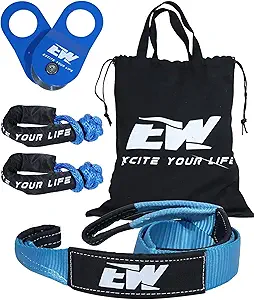
The ELITEWILL Offroad Recovery Gear Kit gets the multi-piece role because it bundles a broader recovery setup into a 10-piece kit with a tree saver, synthetic soft shackle, and snatch block pulley. Compared with the simpler Rhino USA Recovery Tow Strap, this gives a buyer more ways to deal with awkward pulls, anchor protection, and winch-assisted recovery. It also has a higher listed 56,000 lb shackle breaking strength than the soft shackles in the Kinetic Recovery Tow Rope kit. The compromise is clarity and portability: the listed shackle length and diameter can be confusing, instructions are limited, and heavyweight components may feel excessive for ATV or light SUV owners who just need a basic strap.
Pros:- 10-piece kit covers more recovery scenarios than strap-only options
- Includes tree saver, synthetic soft shackle, and snatch block pulley
- High listed shackle breaking strength suits heavier recovery planning
- Compatible with ATVs, UTVs, trucks, SUVs, and Jeeps
Cons:- Limited instructions may slow down newer buyers
- Heavy components can be cumbersome to carry
- Warranty coverage is not clearly detailed
Best for: 4×4 owners building a fuller recovery bag for winching, anchor protection, and mixed trail recoveries.
Not ideal for: Light-duty ATV or casual SUV drivers who want a small, simple strap kit with clear setup guidance.
- Brand:ELITEWILL
- Model Number:EW-C1523
- Number of Pieces:10
- Item Type:Offroad recovery kit
- Shackle Breaking Strength:56,000 lbs
- Tree Saver Length:8 feet
- Shackle Diameter:1/2 inch
- Shackle Length:22 feet
- Included Components:Tree saver, synthetic soft shackle, snatch block pulley
Bottom line: I would choose this for a more complete recovery bag when versatility matters more than minimal weight.
Kinetic Recovery Rope 1″ x 30ft, 48,800 lbs Break Strength with Soft Shackles
Kinetic Recovery Rope 1″ x 30ft earns its place because it focuses on one job: controlled snatch recoveries when a stuck vehicle needs momentum rather than a static pull. Its 35% elasticity gives it a softer hit than strap-based kits such as the ARB RK12A Weekender Recovery Kit, which matters when pulling from sand, mud, or loose ground. It also has more break strength than many basic tow-strap setups, making it better suited to heavier trucks and loaded rigs. The tradeoff is scope: unlike the ALL-TOP Recovery Pack Pro, this is not a full recovery station in a bag. It also demands careful rigging, clear communication, and enough room for a safe pull. I would rank it high for kinetic recoveries, but lower for buyers who need winch accessories too.
Pros:- High 48,800 lb break strength suits heavier trail vehicles
- 35% elasticity helps soften shock loads during snatch recoveries
- Includes two soft shackles for lighter, safer rigging than steel D-rings
- UV and abrasion resistance helps with repeated outdoor use
Cons:- Bulkier than a basic recovery strap and harder to pack in small vehicles
- High-tension kinetic pulls require careful technique and safe recovery points
- Less versatile than multi-piece kits with winch accessories
Best for: Truck, Jeep, and SUV owners who already have recovery points and want a strong kinetic rope for mud, sand, and trail pull-outs.
Not ideal for: New off-roaders building a first kit from scratch, since it lacks winch support gear like a tree saver strap or snatch block.
- Break Strength:48,800 lbs
- Working Load Limit:16,000 lbs
- Length:30 ft
- Diameter:1 in
- Elasticity:35%
- Included Shackles:2 soft shackles
- Storage:Compact storage bag included
- Vehicle Fit:Jeeps, trucks, SUVs, ATVs, and UTVs
Bottom line: This is the pick I would choose for strong kinetic pulls when the buyer already owns the rest of the recovery basics.
NIXFACE Offroad Recovery Kit with 10-Ton Snatch Block, Tree Saver, Soft Shackles, and Storage Bag
NIXFACE Offroad Recovery Kit is the more practical choice for drivers who already have a winch and need the supporting pieces to use it well. Compared with the Kinetic Recovery Rope 1″ x 30ft, this kit is less about momentum pulls and more about redirecting load, protecting trees, and setting cleaner pull angles. The 10-ton snatch block gives it a serious mechanical advantage role, while the soft shackles keep weight and rust down versus traditional steel hardware. Against the LLCC Off Road Recovery Kit, though, NIXFACE feels more moderate: easier to justify for many SUV and truck owners, but not as overbuilt for very heavy rigs. The main drawback is that it is not beginner-proof; buyers need to know how pulley angles, strap placement, and winch line limits work.
Pros:- 10-ton snatch block helps redirect winch pulls and reduce load strain
- Tree saver strap supports anchor-based recoveries without using a bare winch line
- Soft shackles cut weight and resist rust compared with steel shackles
- Storage bag keeps recovery hardware grouped and trail-ready
Cons:- Requires winch knowledge and safe rigging habits
- Maximum rope compatibility is limited to 7/32 in to 3/8 in lines
- Less useful for kinetic snatch recoveries than rope-focused kits
Best for: Winch-equipped 4×4 owners who need a tree saver, pulley, and soft shackles for safer angled recoveries.
Not ideal for: Casual drivers without a winch, because the snatch block and tree saver offer limited value without a pulling system.
- Tree Saver Strap:3 in x 8 ft
- Soft Shackles:2 x 1/2 in x 22 in
- Snatch Block Load Capacity:10 tons / 22,000 lbs
- Materials:Heavy-duty steel and UHMWPE
- Rope Compatibility:7/32 in to 3/8 in
- Included Storage:Portable storage bag
- Recovery Style:Winch-assisted recovery
- Vehicle Fit:Trucks, SUVs, and boats
Bottom line: This kit makes the most sense for winch users who want better pull angles and anchor protection without buying every piece separately.
LLCC Off Road Recovery Kit: 35000lb Tree Saver Strap with 68000lb D Ring Shackles & 25T Snatch Block
LLCC Off Road Recovery Kit is the brute-force option in this group. The 25T snatch block, 68,000 lb D-ring shackles, and 35,000 lb tree saver strap give it a heavier hardware bias than the NIXFACE Offroad Recovery Kit. That makes it better matched to larger 4x4s, loaded trucks, and recovery plans where winch loads may climb fast. Compared with the ARB RK12A Weekender Recovery Kit, LLCC is more specialized and more capable for pulley-based winching, but it is also heavier and less friendly for quick roadside organization. I would not place it first for beginners because steel shackles, big load ratings, and snatch-block setup leave more room for mistakes. Its strength is real, but so is the handling burden.
Pros:- 25T snatch block gives the kit serious winch recovery capacity
- 68,000 lb break strength D-ring shackles suit heavy rigging demands
- 35,000 lb tree saver strap supports anchor-based recovery setups
- Rust-resistant materials help the kit survive harsh trail conditions
Cons:- Heavy components can be tiring to carry and slower to deploy
- Steel D-ring shackles add more weight than soft-shackle kits
- Best used by buyers who already understand winch rigging
Best for: Experienced off-roaders with heavier 4x4s who want stout winch hardware for tough recoveries and angled pulls.
Not ideal for: Light SUV owners and first-time trail drivers who would be better served by a lighter, simpler recovery bag.
- Tree Saver Strap Break Strength:35,000 lbs
- Tree Saver Strap Working Load:12,000 lbs
- D Ring Shackle Break Strength:68,000 lbs
- D Ring Shackle Working Load:8T
- Snatch Block Break Strength:25T
- Snatch Block Working Load:10T
- Included Storage:Storage bag included
- Intended Use:4×4 off-road recovery
Bottom line: This is the kit I would put with a heavier trail rig when recovery capacity matters more than compact storage.
ARB RK12A Weekender Recovery Offroad Accessory Kit with Snatch Tow Strap, Shackles, Gloves, and Organizer Bag
ARB RK12A Weekender Recovery Kit is the cleanest choice here for buyers who want a proven, tidy kit without stepping into pulley-heavy winch setups. Compared with the LLCC Off Road Recovery Kit, ARB is less about maximum load ratings and more about simple strap recovery, hand protection, and organized storage. The 17,500 lb recovery strap is enough for many recreational 4×4 situations, and the leather gloves are a practical inclusion that some cheaper kits treat as an afterthought. It does give up range versus the ALL-TOP Recovery Pack Pro, which includes more straps and accessories in one bag. It also lacks the kinetic cushioning of the Kinetic Recovery Rope 1″ x 30ft. I would rank it for weekend reliability, not for extreme or highly customized recovery plans.
Pros:- Straightforward strap-and-shackle layout is easier to manage on the trail
- 17,500 lb recovery strap fits many recreational 4×4 recoveries
- Leather gloves add real hand protection during rigging
- PU coated cotton canvas organizer helps keep the kit contained
Cons:- Less recovery range than larger multi-piece kits
- No snatch block or tree saver strap for advanced winch setups
- 12 lb weight may feel high for a fairly simple kit
Best for: Weekend trail drivers who want a compact strap-and-shackle kit from a known off-road accessory brand.
Not ideal for: Drivers who need winch pulleys, soft shackles, or multiple strap lengths for complex recoveries.
- Kit Weight:12 lbs
- Recovery Strap Capacity:17,500 lbs
- Shackle Capacity:4.75 tons
- Gloves:Leather with cow split leather back
- Organizer Bag:PU coated cotton canvas
- Included Strap:Snatch tow strap
- Included Hardware:Shackles included
- Use Case:Off-road vehicle recovery
Bottom line: This is the kit I would choose for a weekend 4×4 driver who wants dependable basics in one organized bag.
ALL-TOP Recovery Pack Pro 11-in-1 Offroad Gear Bag with Recovery Strap Kit
ALL-TOP Recovery Pack Pro ranks as the best all-in-one choice because it covers more recovery scenarios in one organized package than the ARB RK12A Weekender Recovery Kit. The mix of a recovery strap, tree saver strap, extension strap, soft shackles, damper, and gloves gives a buyer more flexibility for trail pulls, winch support, and longer reach setups. Compared with the NIXFACE Offroad Recovery Kit, ALL-TOP is broader for general off-road preparation, though NIXFACE is more focused if a snatch block is the missing piece. The water-resistant bag and 50 lb capacity help keep the kit ready for dirty trail use, but this is not the smallest or lightest route. Some buyers may still need extra hardware to match their exact vehicle weight, recovery points, or winch line.
Pros:- 11-in-1 layout covers more recovery needs than simpler strap kits
- Includes recovery, tree saver, and extension straps for varied pull setups
- Soft shackles and damper improve the safety profile of trail rigging
- Water-resistant bag helps protect gear from mud and weather
Cons:- Bulkier than single-purpose rope or strap options
- May include pieces casual users rarely deploy
- Some vehicle-specific recovery setups may still need extra hardware
Best for: Off-roaders building one organized recovery bag for mixed trail use, from strap pulls to winch support.
Not ideal for: Minimalist drivers with small cargo areas who only want a single strap or one kinetic rope.
- Kit Type:11-in-1 recovery pack
- Recovery Strap:3 in x 20 ft
- Tree Saver Strap:3 in x 8 ft
- Extension Strap:2 in x 65.6 ft
- Soft Shackles:2 included
- Work Gloves:2 pairs
- Recovery Bag Capacity:Up to 50 lbs
- Water Resistance:Water-resistant bag
- Warranty:2 years / 24 months
Bottom line: This is the strongest pick for buyers who want one packed bag that covers most common off-road recovery needs.
How We Picked
I ranked this roundup around real recovery usefulness, not the longest parts list. The strongest picks had a clear role in off-road vehicle recovery: vehicle-to-vehicle pulls, winch line redirects, anchor creation, tree protection, or a balanced mix of those jobs. I gave extra weight to rated strength, gear variety, recovery method coverage, storage quality, and whether the kit would help a driver make fewer rushed choices under trail pressure. A basic tow strap can be useful, but it ranked below kits that include shackles, dampeners, gloves, snatch blocks, or tree savers because those extras change what a driver can safely attempt.
The order also reflects who gets the most value from each product. The ALL-TOP kit leads because it covers the widest range of common recoveries, while ARB earns a premium role for buyers who value established accessory quality and a cleaner organizer layout. Kinetic ropes and snatch blocks rank by how well they fill a specific gap rather than by how many pieces they include. Single-purpose gear, like the Deadman anchor, scores highly only when it solves a hard problem better than the broader kits.
Factors to Consider When Choosing Off-road Vehicle Recovery Gear
Choosing off-road recovery gear is less about buying the biggest advertised rating and more about matching the tool to the recovery problem. I would start by deciding whether my trips usually involve another vehicle, a winch, trees or rocks for anchors, and how much space I can spare in the cargo area.Match the Gear to the Recovery Method
The first split is between vehicle-to-vehicle recovery and winch-based recovery. A kinetic rope or snatch strap makes sense when another capable vehicle can pull with controlled momentum, which is why the BUNKER INDUST kit and the 1-inch kinetic rope have a different purpose than the NIXFACE or ELITEWILL winch-support kits. A snatch block changes winch direction and can increase mechanical advantage, but it does little if there is no anchor point. A tree saver protects both the tree and the winch line, while a hitch receiver shackle creates a cleaner rear recovery point than hooking to weak factory tie-downs. Buyers who mostly travel alone should give more weight to anchors, snatch blocks, and winch accessories. Buyers who travel in groups can prioritize kinetic ropes, soft shackles, and rated straps.
Do Not Buy by Break Strength Alone
High break-strength numbers look reassuring, but they are only part of the decision. A 66,000-pound snatch block and a 35,000-pound strap solve different problems, so comparing them as if they are interchangeable leads to poor kit choices. Break strength is not the same as the load a recovery should routinely apply, and every connection point in the system matters. The weakest part may be the vehicle recovery point, the shackle, the hitch insert, or the line angle rather than the strap itself. I prefer a balanced kit where the strap, shackles, pulley, and anchor method all make sense together. Oversized gear can also become bulky, harder to store, and less pleasant to handle on a muddy trail.
Decide Between Soft Shackles and Steel Shackles
Soft shackles are lighter, quieter, and easier to pack than steel D-rings, which makes them appealing in kits like the BUNKER INDUST, ELITEWILL, and kinetic rope bundles. They are also less likely to damage bumpers or recovery points during handling. Steel shackles still have a place because they are familiar, durable, and often included with traditional strap kits such as the Off Road Recovery Gold Kit and LLCC kit. The tradeoff is weight, noise, and the need to manage metal hardware carefully around loaded lines. I would favor soft shackles for a compact trail bag and steel shackles for buyers who want a more conventional setup. Either way, the shackle only belongs on a rated recovery point, not a random tow hook or suspension part.
Think About Storage Before the Trail Gets Messy
A recovery kit that is hard to find, tangled, or scattered across the cargo area loses value fast. That is where organized bags and complete packs make the ALL-TOP, ARB, and BUNKER INDUST options more appealing than loose single items. Gloves, dampeners, and labeled storage are not glamorous, but they make the recovery process calmer and faster. Wet straps and ropes also need room to dry, so a sealed bag can become a mildew trap if the gear is packed away dirty. Compact kits are easier to carry in smaller SUVs and UTVs, while larger kits suit trucks with permanent recovery storage. I would pay more for storage when the kit will live in the vehicle year-round.
Know When a Specialty Tool Is Worth It
Some gear should not be judged like a general-purpose kit. The Deadman Off-Road V2, for example, is not the best first purchase for every driver, but it can be the missing piece for solo travel in open terrain. A standalone snatch block is similar: it may look less complete than a recovery bag, yet it can change the geometry of a winch pull in a way no tow strap can. The Reindeer set, by contrast, adds a shovel and soft shackles, which may appeal to buyers who want recovery plus trail utility. Specialty tools make sense after the basic recovery chain is covered. I would buy them when my usual terrain creates a repeated problem, not just because the product has the highest rating on the page.
Frequently Asked Questions
Should I Buy a Full Recovery Kit or Build My Own Piece by Piece?
A full recovery kit is usually the better starting point because it reduces the chance of missing a key part, especially gloves, shackles, or a storage bag. The ALL-TOP, ARB, and BUNKER INDUST kits are stronger choices for buyers who want a ready trail setup. Building piece by piece can make sense if I already own a winch, know my vehicle’s recovery points, and want specific ratings or hardware types. The risk is ending up with mismatched gear, such as a strong strap paired with weak connection hardware. I would start with a complete kit, then add specialty tools like a Deadman anchor or heavier snatch block later.
Is a Kinetic Rope Better Than a Traditional Tow Strap for Off-Road Recovery?
A kinetic rope is better when a second vehicle can help pull a stuck vehicle with controlled stretch and rebound. That stretch can reduce harsh shock compared with a static tow strap, which is why the BUNKER INDUST kit and 1-inch kinetic rope stand out for group trail rides. A traditional tow strap is simpler, usually cheaper, and still useful for steady pulls, but it is less forgiving in dynamic recoveries. Kinetic ropes also cost more and need proper storage away from abrasion and grit. I would choose kinetic gear for mud, sand, and snow recoveries with another vehicle nearby, and a winch-support kit for slower solo recoveries.
What Recovery Gear Should a Beginner Prioritize First?
A beginner should prioritize a rated strap or kinetic rope, rated shackles, gloves, a hitch receiver recovery point, and a bag that keeps everything together. That is why the ALL-TOP and ARB kits are easier to recommend than buying a single snatch block first. Beginners should also confirm that the vehicle has real recovery points before buying more gear. A winch kit with a tree saver and snatch block becomes more useful once the driver has a winch and knows how to rig it. I would avoid overly specialized anchors as a first purchase unless solo travel is already part of the plan.
When Is a Snatch Block Worth Adding to a Recovery Kit?
A snatch block is worth adding when winch recoveries are likely, especially on heavier vehicles or trails where straight-line pulls are rare. It can redirect a winch line around an obstacle or help create a more controlled pull angle. Kits from NIXFACE, ELITEWILL, LLCC, and similar winch-focused sets gain value because they include this tool alongside tree savers or shackles. A snatch block is less useful for drivers who do not have a winch or who mainly rely on another vehicle for kinetic pulls. I would add one after the basic recovery points and line protection are already sorted.
Is Premium Recovery Gear Like ARB Worth the Extra Money?
Premium recovery gear is worth paying for when organization, consistency, and long-term trail use matter more than the lowest kit price. The ARB RK12A Weekender kit is not the biggest bundle here, but it has a focused layout that suits buyers who prefer a cleaner, established accessory setup. Budget-friendly kits can still be smart if they include the right pieces and the ratings match the vehicle. The tradeoff is that cheaper kits may lean on high part counts while leaving out refinements like better bags, dampeners, or more confidence-inspiring hardware. I would pay more for premium gear if the vehicle sees frequent trips, remote routes, or recoveries involving other people’s rigs.
Conclusion
For most buyers, I would start with the ALL-TOP Recovery Pack Pro 11-in-1 as the best overall choice because it covers the widest range of common trail recovery needs. The Rhino USA Heavy-Duty Recovery Gear Combo is my best value pick for drivers who want a simpler strap-and-hitch setup without paying for a larger bag of gear. The ARB RK12A Weekender is the best premium option for buyers who care about a tidy, trail-ready kit from a known off-road brand. For beginners, I would choose a complete pack like ALL-TOP or BUNKER INDUST over a single-purpose tool. For specific needs, the Deadman Off-Road V2 is the pick for solo anchoring, while the Heavy Duty Snatch Block makes the most sense for winch owners upgrading an existing kit.