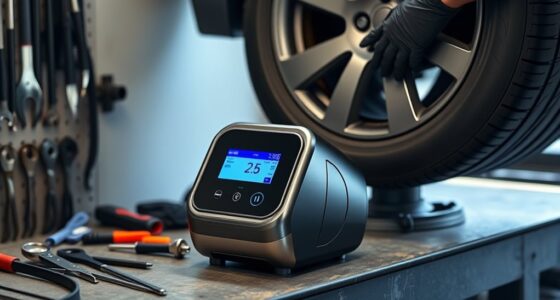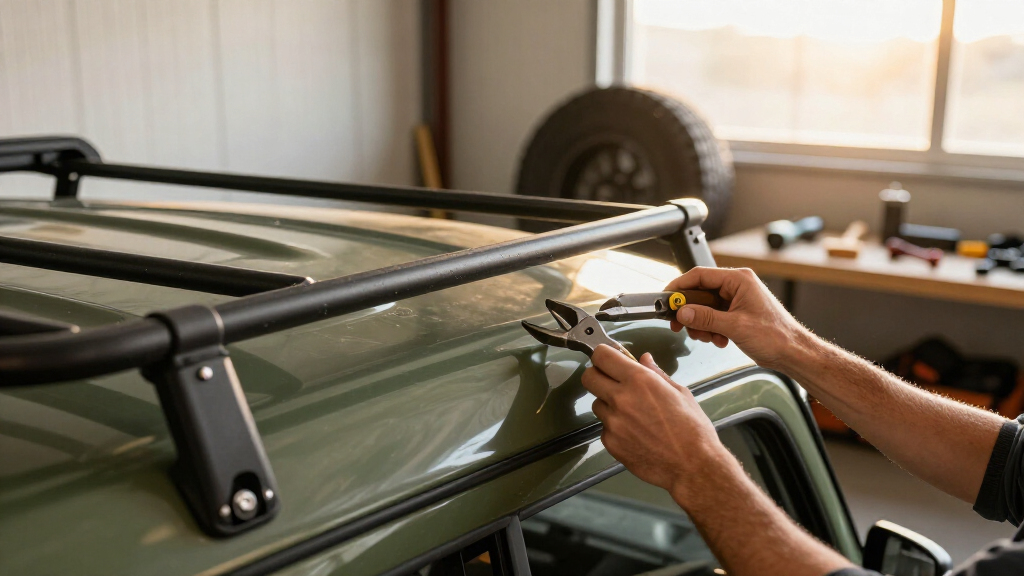
The right off-road vehicle accessories turn a bad trail day into a good story, and the wrong ones just take up cargo space. After comparing this lineup, I rank the Rhino USA Tire Repair Kit (86-Piece) as the best overall pick because it handles the most common trip-ending problem — a punctured tire — across nearly every vehicle type. The Rhino USA Heavy Duty Tow Strap stands out for recovery duty with a 31,518lb break strength, while the Rhino USA Adjustable Tire Deflator Kit is the most refined option for airing down. The main tradeoffs in this category are build quality versus price, brand warranty versus budget function, and flood versus spot beam patterns. Keep reading for the full breakdown of all seven picks, how I ranked them, and which ones belong on your rig.
Complete the kit


Key Takeaways
- Rhino USA swept the top three spots in this roundup — its repair kit, tow strap, and deflators separated themselves on build quality, warranty backing, and trail-specific design rather than price.
- Three of the seven picks are tire deflators, and auto-stop accuracy was the dividing line: the Rhino USA set justified its premium, while the budget 4-pack matched the core function for less.
- The two Nilight 18W pods are identical except for beam pattern — flood for camp and slow technical sections, spot for distance — so the choice is about where you drive, not which light is better.
- The 86-piece repair kit is the single most versatile accessory in the lineup, covering cars, motorcycles, ATVs, UTVs, RVs, and trailers in one case.
- None of these picks air your tires back up — every deflator on this list assumes you own or plan to buy a compressor, which changes the real cost of airing down.
| Nilight Led Pods 2-Pack 18W Flood Off Road Lights |  | Best Budget Lighting | Wattage: 18W per pod | Brightness: 1,260 lumens | Beam pattern: Flood | VIEW LATEST PRICE | See Our Full Breakdown |
| Rhino USA Adjustable Tire Deflator Kit (4-Pack) |  | Best Overall Tire Deflators | Pressure range: 10-30 PSI | Deflators included: 4 | Adjustment: Individually preset per deflator | VIEW LATEST PRICE | See Our Full Breakdown |
| SAMOUT Adjustable Auto-Stop Tire Air Down Kit |  | Best Value Tire Deflators | Pressure range: 10-30 PSI | Deflator valves: 4 | Calibration accuracy: ±2 PSI | VIEW LATEST PRICE | See Our Full Breakdown |
| Rhino USA Heavy Duty Tow Strap (3in x 20ft) |  | Best for Vehicle Recovery | Length: 20 ft | Width: 3 in | Break strength: 31,518 lb | VIEW LATEST PRICE | See Our Full Breakdown |
| Rhino USA Tire Repair Kit (86-Piece) |  | Best for Trailside Repairs | Kit size: 86 pieces | Repair capacity: Up to 60 repairs | Core tools: Reamer, plug insertion tool, needle-nose pliers, tire pressure gauge | VIEW LATEST PRICE | See Our Full Breakdown |
| Tire Deflator Kit, 4 Pack Auto-Stop Tire Deflators with Storage Case |  | Best Value Air-Down Kit | Preset PSI Range: 10-30 PSI | Material: Nickel-plated brass | Number of Deflators: 4 | VIEW LATEST PRICE | See Our Full Breakdown |
| Nilight 2-Pack 18W LED Off Road Lights – Bright Spot Beam for Trucks, Vans, Boats, and More |  | Best Budget Lighting | Wattage: 18W per light | Brightness: 1260 lumens | Beam Type: Spot | VIEW LATEST PRICE | See Our Full Breakdown |
More Details on Our Top Picks
Nilight Led Pods 2-Pack 18W Flood Off Road Lights
If I were building an off-road lighting setup on a tight budget, this is where I’d start. The Nilight 18W flood pods throw a wide 1,260-lumen spread that fills in the area immediately around the vehicle — exactly what you want when picking a line over rocks at walking pace. Compared with Nilight’s own spot-beam 2-pack elsewhere in this roundup, these trade reach for breadth, so they work better as ditch or camp lights than as long-range driving lights. The IP67 rating and aluminum housing mean rain crossings and dust won’t kill them, and the 45-degree adjustable bracket aims light where stock headlights can’t. The honest tradeoff: 18W per pod won’t replace a light bar, and the mounting hardware is basic, so plan an afternoon for a clean install.
Pros:- Wide flood pattern fills in blind spots around the vehicle at low speed
- IP67 waterproof and dustproof build handles river crossings and trail dust
- 45-degree adjustable bracket aims light where fixed headlights can’t
- Very low cost per pair makes adding multiple pods realistic
Cons:- 18W output per pod is too weak to serve as primary high-speed driving light
- Basic mounting hardware means a clean, rattle-free install takes extra effort
Best for: Budget-conscious truck, SUV, and ATV owners who need wide close-range light for slow trail work, campsites, or work areas
Not ideal for: Drivers who want long-distance, high-speed night visibility — a spot beam or light bar serves that job better
- Wattage:18W per pod
- Brightness:1,260 lumens
- Beam pattern:Flood
- Waterproof rating:IP67
- Housing material:Aluminum alloy with silicone gel
- Adjustment:45-degree adjustable bracket
- Rated lifespan:30,000 hours
- Pack size:2 pods
Our verdict“The cheapest way I’d add genuinely useful trail lighting, as long as you accept its short-range flood role.”
Rhino USA Adjustable Tire Deflator Kit (4-Pack)
Among the air-down tools here, the Rhino USA Adjustable Tire Deflator Kit earns the higher spot on build quality alone. Each of the four deflators sets independently to any pressure between 10 and 30 PSI, so I can run different targets front and rear — something the SAMOUT auto-stop kit also offers in principle, but Rhino’s laser-etched scale and heavier machining inspire more confidence when I’m setting them in the dark or with gloves on. All four tires drop at once, which turns a 15-minute chore into a coffee break. The drawbacks are real: there’s no digital readout, so you’re trusting the etched scale, and the 10-30 PSI window won’t satisfy anyone who airs down to single digits for deep sand.
Pros:- Deflates all four tires simultaneously, cutting air-down time dramatically
- Independent per-tire presets allow different front and rear pressures
- Laser-etched PSI scale stays readable in mud, gloves, and low light
- Storage pouch keeps the four-piece set together in the glovebox
Cons:- No digital gauge, so final pressure still needs a separate check for precision
- 10-30 PSI range excludes extreme sand setups below 10 PSI
- Each deflator must be threaded on by hand before you can walk away
Best for: Committed trail riders who air down every trip and want a set-and-walk-away tool built to survive years of grit
Not ideal for: Sand drivers who run single-digit PSI, and once-a-year users who can get by with a cheap pressure gauge
- Pressure range:10-30 PSI
- Deflators included:4
- Adjustment:Individually preset per deflator
- Pressure scale:Laser-etched PSI markings
- Operation:Simultaneous four-tire deflation
- Construction:Solid metal build for off-road use
- Storage:Keychain-style storage pouch
Our verdict“The deflator kit I’d buy once and keep for the life of the vehicle.”
SAMOUT Adjustable Auto-Stop Tire Air Down Kit
The SAMOUT Auto-Stop kit does roughly the same job as the Rhino USA deflators — screw on all four, walk away, and each valve stops at your preset — for what is typically less money. The tool-free adjustment across 10-30 PSI makes it friendlier for a first-time buyer still learning what pressures their rig likes. Where it falls short of the Rhino set is precision: the stated calibration is ±2 PSI, which is fine for trail use but loose enough that I’d verify with a gauge before a long highway drive home. The zipper pouch is a nice touch, though the one-year warranty covers far less than Rhino’s lifetime backing. For occasional weekend air-downs, that gap matters less than the savings.
Pros:- Auto-stop valves halt deflation at your preset pressure without supervision
- Tool-free adjustment makes changing targets between terrains quick
- Four valves plus zipper pouch included at a budget-friendly price
- Calibrated accuracy is close enough for general trail and beach use
Cons:- ±2 PSI tolerance is too imprecise for exact tuning or highway confidence
- One-year warranty is short compared with lifetime-backed rivals
- Strictly a single-purpose tool with no use beyond airing down
Best for: Newer off-roaders and weekend warriors who want automatic air-downs without paying premium-brand prices
Not ideal for: Drivers chasing exact pressures for competition or technical terrain — the ±2 PSI tolerance is too loose for that
- Pressure range:10-30 PSI
- Deflator valves:4
- Calibration accuracy:±2 PSI
- Adjustment:Tool-free
- Stop function:Automatic shutoff at preset PSI
- Storage:Zipper pouch
- Warranty:1 year (12 months)
Our verdict“A sensible budget alternative to the Rhino kit if you can live with looser accuracy.”
Rhino USA Heavy Duty Tow Strap (3in x 20ft)
Every other product in this roundup helps you avoid getting stuck; the Rhino USA Heavy Duty Tow Strap is what I want within reach when avoidance fails. Its 31,518-pound break strength covers full-size trucks with room to spare, and the triple-reinforced loop ends address the failure point that kills cheap straps. Polyester construction shrugs off water and UV exposure, which matters for gear that lives in a cargo bin for years. Compared with the Rhino tire repair kit, this is the more specialized buy — a strap only earns its keep the day someone needs a pull, but that day it earns all of it. The tradeoffs: at three inches wide and 20 feet long it’s bulky in a small UTV, and polyester’s minimal stretch makes it wrong for kinetic yank-style recoveries.
Pros:- 31,518 lb break strength handles full-size trucks and loaded rigs
- Triple-reinforced loop ends resist the most common strap failure point
- Weather-resistant polyester tolerates years of water, mud, and UV
- Lifetime replacement guarantee removes the risk of a one-time failure
Cons:- Three-inch-wide, 20-foot strap is bulky to stash in small UTVs and ATVs
- Low-stretch polyester is unsuitable for kinetic snatch-style recoveries
- Recovery-only design is unsafe for regular on-road towing
Best for: Truck, Jeep, and UTV owners who ride with others and want a no-drama straight-pull recovery strap permanently in the kit
Not ideal for: Solo riders with no second vehicle to pull them, and anyone who needs a stretchy kinetic rope for snatch recoveries
- Length:20 ft
- Width:3 in
- Break strength:31,518 lb
- Material:Weather-resistant polyester
- End construction:Triple-reinforced loops
- Intended use:Recovery for trucks, UTVs, ATVs, and Jeeps
- Warranty:Lifetime replacement guarantee
Rhino USA Tire Repair Kit (86-Piece)
Airing down with the Rhino or SAMOUT deflators raises the odds of picking up a puncture, which is why I’d pair either one with the Rhino USA 86-Piece Tire Repair Kit. Where the Rhino tow strap needs a second vehicle to be useful, this kit works entirely solo — ream, plug, inflate, and you’re rolling again in minutes. The professional-grade reamer and insertion tools are the difference versus gas-station kits whose T-handles bend on the first truck tire, and with plugs for up to 60 repairs, the kit can outlast the vehicle itself. Honest caveats: plugging a tire is a learned skill, so practice at home before you need it on a trail, and it’s tubeless-only — sidewall gashes and tubed tires still mean calling for help.
Pros:- 86 pieces cover the full repair workflow from reaming to inflation checks
- Heavy-duty T-handle tools survive repeated use on stiff truck tires
- Enough plugs for up to 60 repairs makes the kit effectively multi-vehicle
- High-visibility case is easy to find in a packed cargo area
Cons:- Requires practice to use well — a first attempt on a dark trail is rough
- Tubeless tires only, and it cannot repair sidewall damage
Best for: Self-reliant drivers who venture far from pavement and want to fix flats without waiting hours for a tow
Not ideal for: Anyone running tubed tires, and drivers unwilling to learn basic plug technique before heading out
- Kit size:86 pieces
- Repair capacity:Up to 60 repairs
- Core tools:Reamer, plug insertion tool, needle-nose pliers, tire pressure gauge
- Extras:Valve stems and cores, cutting razor, lubricant, illustrated instructions
- Compatibility:Tubeless tires on cars, trucks, motorcycles, ATVs, UTVs, RVs, and trailers
- Case:High-visibility compact case
- Support:Lifetime replacement
Our verdict“The single most useful piece of solo trailside insurance in this roundup.”
Tire Deflator Kit, 4 Pack Auto-Stop Tire Deflators with Storage Case
Airing down before a trail run is what separates a comfortable ride from a rattling one, and this 4-pack makes the chore nearly hands-free. Each deflator auto-stops at your preset PSI anywhere in the 10-30 range, so all four tires air down at once while you unload gear. Compared with the Rhino USA Adjustable Tire Deflator Kit, this set covers the identical PSI window for less money, though the Rhino option carries stronger brand backing and a more refined fit and finish. The nickel-plated brass construction shrugs off mud, water, and road salt, and the hard storage case keeps the four deflators and spare valve caps in one place. The honest tradeoff: every unit needs manual calibration before it stops accurately, and they only fit standard valve stems, so high-pressure setups are out.
Pros:- Auto-stop deflators halt at your preset PSI for consistent, repeatable air-downs
- Four deflators work simultaneously, cutting trailhead prep time dramatically
- Nickel-plated brass resists corrosion from mud, water, and salt
- Storage case and backup valve caps keep the kit organized in a glove box
Cons:- Each deflator requires manual calibration before it stops accurately
- Only fits standard valve stems, excluding some heavy-duty setups
- Not suitable for digital or high-pressure tire systems
Best for: Weekend trail drivers who want to air down all four tires at once without babysitting each valve stem
Not ideal for: Drivers running high-pressure tires or non-standard valve stems — the 10-30 PSI window and standard-stem fit won’t cover them
- Preset PSI Range:10-30 PSI
- Material:Nickel-plated brass
- Number of Deflators:4
- Operation:Auto-stop at preset PSI
- Compatibility:Standard valve stems
- Includes:Backup valve caps, storage case
Our verdict“The smart pick for 4×4 owners who want Rhino-style auto-stop convenience at a friendlier price.”
Nilight 2-Pack 18W LED Off Road Lights – Bright Spot Beam for Trucks, Vans, Boats, and More
If your rig needs auxiliary light without a triple-digit spend, this Nilight pair is where I’d start. Each 18W pod puts out 1260 lumens through a spot beam, which throws usable light far down a dark trail — the opposite approach of the Nilight 18W Flood pods elsewhere in this roundup, which spread a shorter, wider wash better suited to camp or work areas. Between the two, spot makes more sense for driving, flood for working. The die-cast aluminum housings pull heat away from the LEDs for a rated 30,000-hour life, and the IP67 rating means rain, dust, and shallow crossings won’t kill them. Adjustable brackets aim each pod where you want it. The compromises are real, though: 18 watts per side won’t replace a full-size light bar, there’s no flood option in the box, and you supply your own wiring and switch.
Pros:- Spot beam throws 1260 lumens per pod far down the trail
- IP67 waterproof and dustproof rating handles harsh weather and crossings
- Die-cast aluminum housing dissipates heat for long LED life
- Adjustable brackets let you aim each light precisely
Cons:- Spot-only beam pattern with no flood versatility in the box
- 18W per pod is modest next to a full-size light bar
- No wiring harness or switch included, so installation takes extra parts
Best for: Truck, ATV, or boat owners who want cheap forward-facing trail light and can handle basic wiring themselves
Not ideal for: Buyers who need wide-area work or camp lighting — the spot-only beam is too narrow, and the flood version of these pods suits them better
- Wattage:18W per light
- Brightness:1260 lumens
- Beam Type:Spot
- Waterproof Rating:IP67
- Housing Material:Die-cast aluminum alloy
- LED Lifespan:Over 30,000 hours
- Package Includes:2 LED light bars and mounting brackets
Our verdict“An easy recommendation for drivers who want long-distance trail lighting on a tight budget and don’t mind a DIY install.”
How We Picked
I evaluated each accessory the way a buyer actually would before loading a rig for the trail: does it solve a problem that ends trips, and does it hold up when conditions get ugly? The core criteria were trail relevance (how often the problem it solves actually occurs), build quality of materials and construction, ease of use in dirt, gloves, and low light, and value for money relative to similar options. Versatility across vehicle types mattered too, and brand support plus warranty terms served as tiebreakers between otherwise close products.
That logic explains the ordering. Recovery and tire gear outranks lighting because a puncture or a stuck vehicle ends your day while weak light merely slows it down, which is why the Rhino USA repair kit and tow strap sit at the top. Within the three deflator kits, accuracy, construction, and warranty drove the ranking — the Rhino USA set leads, the SAMOUT kit delivers most of the same function for less, and the generic 4-pack wins on price alone. The two Nilight pods round out the list, ordered by how broadly useful each beam pattern is for the average trail driver.
Factors to Consider When Choosing Off-road Vehicle Accessories
Every pick in this roundup earns its place, but the right mix for your rig depends on how and where you drive. Before you add anything to your cart, work through these factors — they cover the mistakes buyers most often make in this category, and they will help you spend in the right order.
Buy Recovery and Tire Gear Before Lighting
The most common mistake buyers make is spending their first accessory budget on lighting because it looks the part. A light bar never got anyone unstuck, but a punctured tire or a buried axle ends trips every weekend. That is why recovery and tire gear sit at the top of this roundup: the repair kit, tow strap, and deflators all address problems that stop you from moving. Lighting earns its place once the basics are covered, and the two Nilight pods here cost little enough to add afterward. If your budget only covers one purchase, put it toward whatever keeps your tires rolling and your vehicle recoverable. Everything else is comfort.
Match Recovery Gear to Your Vehicle Weight
A recovery strap is only as safe as its rating relative to your rig. The common rule of thumb is a break strength of two to three times your vehicle’s gross weight, which covers the extra load of mud suction and inclines. At 31,518 pounds, the Rhino USA strap in this roundup covers full-size trucks and heavily built overland rigs with room to spare — but it is overkill, and awkwardly stiff, for a lightweight ATV or side-by-side. Buyers with smaller machines should look for a lighter strap rather than defaulting to the biggest number. Also note the difference between a static tow strap and a kinetic recovery rope: the strap here is built for steady pulls, not the snatch-style yanks that ropes are designed to absorb. Using the wrong one is how recovery points get torn off frames.
Flood vs. Spot: Beam Pattern Matters More Than Brightness
Both Nilight pods in this lineup put out the same 18 watts, so brightness is not the decision — beam pattern is. Flood beams throw light wide and close, which suits slow technical crawling, camp setup, and work areas where you need to see obstacles near the vehicle. Spot beams punch a narrow column much farther down the trail, which matters on faster forest roads where braking distance depends on seeing well ahead. Many experienced builders run one of each pattern rather than choosing sides, mounting floods low or rear-facing and spots up high. Since the two-pack pricing is nearly identical, the real question is where you drive after dark. Buy the pattern that matches your terrain, not the one with the bigger marketing number.
Deflators Save Time, but Only Half the Job
Auto-stop deflators like the three kits here are genuinely useful because they let you air down all four tires at once instead of kneeling beside each valve with a gauge. The catch is that their set screws can drift, so verify each deflator against a trusted pressure gauge before your first trip and recheck them every few months. Brass bodies and knurled grips — present on the Rhino USA and SAMOUT kits — hold up better to grit and gloved hands than thin stamped metal. The bigger trap is forgetting the other half of the equation: deflators only get air out. If you cannot reinflate before the pavement, you will chew up tires and sidewalls on the drive home, so budget for a portable compressor alongside whichever kit you pick. That pairing is the real purchase; the deflator is just the convenient half.
Pay for Warranty Where Failure Hurts
Off-road gear lives a hard life: it gets dragged through mud, left in hot truck beds, and abused exactly when you need it most. That is where the gap between branded gear and generic equivalents shows up, and it explains most of the price spread in this roundup. Rhino USA backs its products with strong warranty support and accessible customer service, which matters on a strap or deflator set you expect to own for years. The generic deflator kit wins on sticker price, but if a valve corrodes or a spring fails, you are buying another set rather than filing a claim. My rule of thumb: pay the brand premium on safety-adjacent gear like recovery straps, where a failure can hurt someone, and save money on items where a failure is merely annoying. Lighting and budget deflators fall in the second camp; recovery gear never does.
Know the Limits of a Plug Kit
A plug kit is the best trail insurance per dollar in this entire lineup, but it has hard limits worth understanding before you rely on one. Plugs work on tread-area punctures from nails, thorns, and sharp rocks — the most common trail flats by far. They do not safely fix sidewall gashes, bead damage, or large tears, which is why a full-size spare still matters. Treat every plug as a get-you-home repair and have the tire properly patched from the inside at a shop afterward. Piece count also deserves scrutiny: the 86-piece Rhino USA kit includes reamers, insertion tools, and plugs for multiple repairs, while smaller kits can leave you one puncture away from walking. For multi-day trips far from pavement, pack more plugs than you think you need.
Frequently Asked Questions
What off-road vehicle accessories should I buy first?
Start with anything that keeps you moving: a tire repair kit, a recovery strap, and a way to air down and reinflate your tires. In this roundup that means the Rhino USA Tire Repair Kit and Rhino USA Heavy Duty Tow Strap before any of the lighting. Punctures and stuck vehicles are the two problems that most often end trail days, and both fixes are inexpensive compared with a tow bill from a remote trailhead. Lighting upgrades are worthwhile, but they solve a comfort problem rather than a trip-ending one. Once the recovery basics live permanently in your cargo area, add the Nilight pods that match your terrain. Spending in that order covers the highest-risk problems first.
Do I really need to air down my tires off-road, and what PSI should I run?
Yes, on anything rougher than a graded dirt road. Dropping pressure lengthens the tire’s contact patch, which improves grip on rocks and sand and softens the ride over washboard. Most of the deflators in this roundup adjust across a 10 to 30 PSI range, which covers the useful window for the majority of trucks and SUVs: roughly 15 to 20 PSI for rocks and general trails, and closer to 10 to 12 for soft sand. Heavier vehicles and those without beadlock wheels should stay toward the higher end to avoid debeading a tire. Whatever you choose, reinflate before highway speeds — low pressures at speed generate heat that destroys tires. A deflator kit plus a portable compressor is the complete setup.
Should I buy a tow strap or a kinetic recovery rope?
It depends on the kind of pull you expect to make. A static tow strap like the Rhino USA strap in this roundup has minimal stretch, which makes it right for steady, controlled pulls — dragging a vehicle up a ledge, flat-towing a short distance, or repositioning a trailer. A kinetic rope stretches under load and uses that stored energy for snatch-style recoveries, which is the better tool when a vehicle is buried in mud or sand and needs a running start to break free. Many trail veterans carry both, but if you only carry one, match it to your terrain: rocks and ledges favor the strap, deep mud and dunes favor the rope. Never use a static strap for a yank-style recovery, since the shock load can snap attachment points or the strap itself. Whichever you buy, pair it with rated shackles rather than looping it over a hitch ball.
Are budget LED pods like the Nilight kits worth buying, or should I pay for premium brands?
For most weekend trail drivers, budget pods are a rational buy. The Nilight kits here deliver usable light at a price where replacing a drowned or rock-cracked pod hurts far less than killing a premium unit costing ten times more. Where premium brands justify themselves is in waterproofing, optics, and warranty support — cleaner beam patterns with less scatter, better sealing against pressure washing and river crossings, and multi-year replacement policies. If you drive trails a few times a season, the budget pods will likely outlast your interest in the hobby. If you run night trails weekly or depend on your lights for work, the upgrade pays for itself in reliability. A reasonable middle path is buying budget pods now and upgrading the pair you actually use most once you know your patterns.
Can I keep driving on a plugged tire after a trail repair?
You can drive home on it, but you should not treat it as permanent. A properly installed plug in the tread area will reliably get you off the trail and to a tire shop, which is exactly what the Rhino USA kit in this roundup is built for. What plugs cannot safely address are sidewall punctures, shoulder gashes, or holes larger than about a quarter inch — those tires need replacement or a full-size spare. Have any plugged tire inspected and patched from the inside soon after, since plugs alone can work loose over time, especially under repeated airing down and reinflation. Keep monitoring the pressure for a few days after the repair to catch a slow leak early. Think of a plug as the fix that saves your trip, not the fix that ends the story.
Conclusion
Every pick here earns its spot, but the right choice depends on what kind of buyer you are. If you want the single best overall accessory, get the Rhino USA Tire Repair Kit — it covers the most common trail failure across nearly every vehicle type and costs less than one tow. If value drives the decision, the SAMOUT Auto-Stop Deflator Kit delivers most of the premium deflator experience at a mid-range price, and the budget 4-pack deflator kit undercuts everything when price is the only filter. Premium buyers should go straight to the Rhino USA deflators and the 31,518lb tow strap, where the extra money buys warranty backing and materials that survive years of abuse. Beginners building a first kit should start with the repair kit and one deflator set, then add recovery gear once they know their terrain. And if your trails run after dark, pick your Nilight pods by beam pattern — flood for slow technical ground, spot for distance — rather than by price, since the two cost about the same. Build the kit in that order and you will have covered the problems that actually end trips.