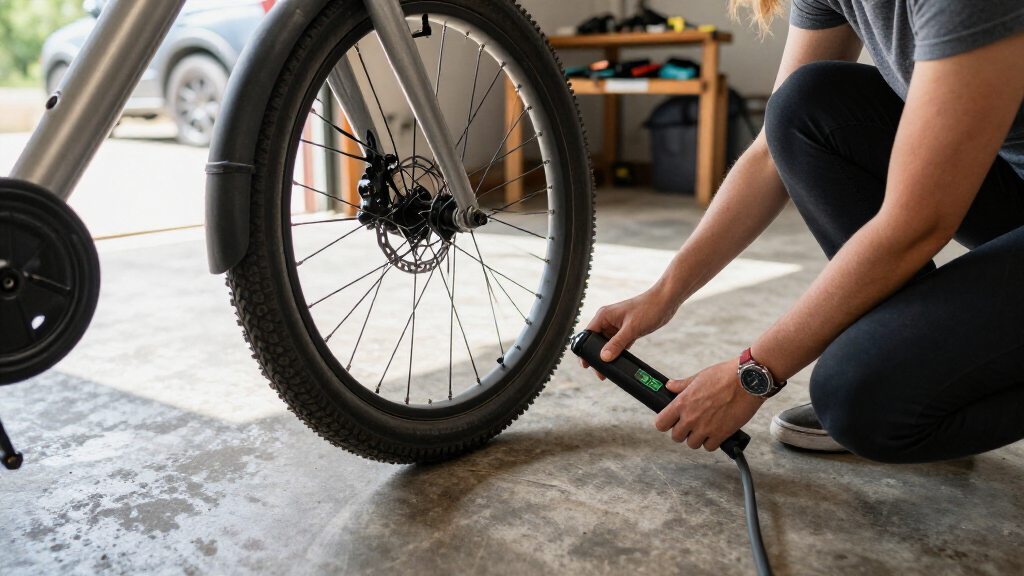
The best electric bike pump for most riders is the CYCPLUS AS2Ultra, a compact option for carrying on rides, while the Fanttik X9 Ace stands out for riders who want a higher-pressure, more feature-rich inflator. The GPUTEK Portable Electric Bike Pump is another practical pick for its stated 120 PSI capacity. Choosing among these pumps means weighing size and carry convenience against inflation speed, battery capacity, pressure needs, and ease of reading the gauge. A compact pump can be easier to pack but may need more time or battery for a tire, while a larger inflator can add capability at the cost of bulk. Continue reading for the full breakdown and guidance on matching a pump to your bike and riding habits.

Get garage and car supplies delivered free — and shop member deals
- Fast, free delivery on millions of items
- Access to Prime Big Deal Days deals on October 6–7
- Prime Video, Amazon Music and more included
Complete the kit


Key Takeaways
- The CYCPLUS AS2Ultra is the roundup’s best overall direction for ride carry: prioritize its compact design when space matters more than inflating several tires in one session.
- Maximum PSI alone does not determine usefulness. Several listed models advertise 120–150 PSI, but riders should match the pump’s usable pressure and inflation behavior to their tire type.
- Digital gauges and auto shut-off can reduce guesswork, but they do not replace checking that the displayed pressure is accurate enough for your preferred tire pressure.
- Valve compatibility is a practical dividing line. Pumps explicitly supporting Presta and Schrader, such as the GPUTEK Mini and Calmara MY20, suit households or riders with more than one valve standard.
- The lineup spans ride-ready minis and more general-purpose inflators. Models such as the AstroAI L10 and OlarHike may suit broader inflation needs, while compact bike-focused picks are easier to carry but less suited to repeated jobs.
| DSUY Mini Electric Bike Tire Pump with Digital Gauge |  | Best for Lightweight Carrying | Maximum pressure: 120 PSI | Pressure range: 2–120 PSI | Airflow capacity: 27 L/min | VIEW LATEST PRICE | See Our Full Breakdown |
| GPUTEK Portable Electric Bike Pump, 120 PSI |  | Best for Roadside Speed | Model: BL06 | Maximum pressure: 120 PSI | Pressure range: 2–120 PSI | VIEW LATEST PRICE | See Our Full Breakdown |
| ETENWOLF S0 Mini Electric Bike Pump with Gauge |  | Best for Fast High-Pressure Inflation | Maximum pressure: 150 PSI | Airflow: 18 L/min | Battery: 2400 mAh lithium-ion | VIEW LATEST PRICE | See Our Full Breakdown |
| TOPUMP TB2PRO Mini Electric Bike Pump, 120 PSI |  | Best for Careful Valve Handling | Maximum pressure: 120 PSI | Airflow capacity: 15 L/min | Weight: 130 g (0.29 lb) | VIEW LATEST PRICE | See Our Full Breakdown |
| ETENWOLF S0 Mini Electric Bike Pump with Gauge |  | Best for Multi-Use Inflation | Maximum pressure: 150 PSI | Airflow: 18 L/min | Battery: 2400 mAh lithium | VIEW LATEST PRICE | See Our Full Breakdown |
| HYVOHEX Mini Cordless Tire Inflator with Digital Gauge, 150 PSI |  | Best Multi-Purpose Pick | Maximum pressure: 150 PSI | Battery capacity: 4000 mAh | Airflow: 19 liters per minute | VIEW LATEST PRICE | See Our Full Breakdown |
| CYCPLUS AS2Ultra Mini Electric Bike Pump |  | Best for Ride-Day Carry | Weight: 90 g (3.17 oz) | Dimensions: 2.55 × 1.10 × 1.87 in | Maximum pressure: 120 PSI | VIEW LATEST PRICE | See Our Full Breakdown |
| CYCPLUS Portable Electric Tire Inflator, 150 PSI |  | Best Bottle-Cage Carry | Model: A2 | Maximum pressure: 150 PSI | Airflow: 12 liters per minute | VIEW LATEST PRICE | See Our Full Breakdown |
| Fanttik X9 Ace Mini Electric Bike Pump, 150 PSI | 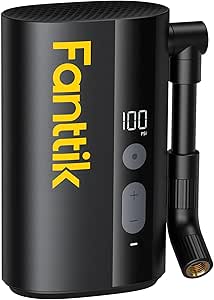 | Best for Repeated Tire Top-Ups | Maximum pressure: 150 PSI | Battery capacity: 5000 mAh | Airflow: 10 liters per minute | VIEW LATEST PRICE | See Our Full Breakdown |
| AstroAI L10 Mini Portable Tire Inflator |  | Best for Preset Simplicity | Maximum pressure: 150 PSI | Airflow: 13 liters per minute | Weight: 447 g | VIEW LATEST PRICE | See Our Full Breakdown |
| VEEAPE Tiny Pump Portable Electric Tire Inflator |  | Best for Multi-Vehicle Use | Power source: Battery powered | Maximum pressure: 150 PSI listed in description and specs; title states 120 PSI | Battery type: Rechargeable | VIEW LATEST PRICE | See Our Full Breakdown |
| GPUTEK Mini Electric Bike Pump for Presta and Schrader Valves |  | Best Compact Ride-Carry Pick | Dimensions: 2.81 × 1.77 × 1.25 inches | Weight: 0.23 lb | Maximum pressure: 120 PSI | VIEW LATEST PRICE | See Our Full Breakdown |
| OlarHike Cordless Portable Tire Inflator |  | Best for Bike-and-Car Backup | Maximum pressure: 160 PSI | Battery: Lithium-ion, 2000 mAh × 2 | Weight: 15.68 ounces | VIEW LATEST PRICE | See Our Full Breakdown |
| Calmara MY20 Portable Electric Bike Pump with Digital Gauge, 130 PSI, Auto Shut-Off, Presta and Schrader Valves |  | Best for Accurate Road-Tire Inflation | Maximum pressure: 130 PSI | Air flow capacity: 12 liters per minute | Pressure accuracy: ±1 PSI | VIEW LATEST PRICE | See Our Full Breakdown |
| electric bike pump | Maximum pressure | Weight | Warranty | Dimensions |
|---|---|---|---|---|
| DSUY Mini Electric Bike Tire P | 120 PSI | 136 g | 24 months | 1.98 × 1.98 × 1.35 in |
| GPUTEK Portable Electric Bike | 120 PSI | 0.23 lb | 1 year | — |
| ETENWOLF S0 Mini Electric Bike | 150 PSI | 0.54 lb (8.64 oz) | 2 years | — |
| TOPUMP TB2PRO Mini Electric Bi | 120 PSI | 130 g (0.29 lb) | 2 years | 2.09 × 1.26 × 3.03 in |
| ETENWOLF S0 Mini Electric Bike | 150 PSI | 0.34 kg (0.75 lb) | 2 years | — |
| HYVOHEX Mini Cordless Tire Inf | 150 PSI | 0.53 kg | — | — |
| CYCPLUS AS2Ultra Mini Electric | 120 PSI | 90 g (3.17 oz) | Two years | 2.55 × 1.10 × 1.87 in |
| CYCPLUS Portable Electric Tire | 150 PSI | 380 g (13.28 oz) | — | 2.09 × 2.09 × 7.09 in |
| Fanttik X9 Ace Mini Electric B | 150 PSI | 384 g | One year | — |
| AstroAI L10 Mini Portable Tire | 150 PSI | 447 g | Two years | 3.9 × 2.6 × 1.8 in |
| VEEAPE Tiny Pump Portable Elec | 150 PSI listed in description and specs; title states 120 PSI | 0.73 kg | 2 years | — |
| GPUTEK Mini Electric Bike Pump | 120 PSI | 0.23 lb | — | 2.81 × 1.77 × 1.25 inches |
| OlarHike Cordless Portable Tir | 160 PSI | 15.68 ounces | — | 5.91 × 2.76 × 1.97 inches |
| Calmara MY20 Portable Electric | 130 PSI | 0.38 lb in description; 9.76 ounces in specifications | — | 3.07 × 2.36 × 1.46 inches in description; 3.11 × 1.57 × 3.11 inches in specifications |
More Details on Our Top Picks
DSUY Mini Electric Bike Tire Pump with Digital Gauge
At 136 g and just under two inches across, the DSUY is the lightest-feeling choice in this group for riders who want electric inflation without much bulk in a jersey pocket or saddle bag. Its 27 L/min airflow is higher than the ETENWOLF S0 Mini’s listed 18 L/min, which may help when topping up tires, while its 120 PSI ceiling suits many road and hybrid setups. A digital gauge with auto-stop takes guesswork out of reaching a preset pressure, and the pump handles both Presta and Schrader valves. The tradeoff is that the product data gives no inflation-time or battery-capacity figure, so I can’t compare its charge endurance as confidently as the ETENWOLF. Expect noise and heat during operation, too.
Pros:- Very low listed weight of 136 g and compact dimensions
- 27 L/min listed airflow
- Digital gauge shows preset and real-time pressure with automatic shutoff
- Includes adapters for Presta and Schrader valves
Cons:- Motor may produce noticeable noise and heat during use
- No battery capacity or inflation-time figure is provided
- 120 PSI maximum is lower than the ETENWOLF S0 Mini’s 150 PSI ceiling
Best for: Road and hybrid riders who prioritize a very light, compact pump for occasional roadside top-ups.
Not ideal for: Riders who need documented inflation times or battery capacity before choosing a pump, or who want a quiet inflator.
- Maximum pressure:120 PSI
- Pressure range:2–120 PSI
- Airflow capacity:27 L/min
- Pressure accuracy:±1 PSI
- Valve compatibility:Presta and Schrader
- Weight:136 g
- Dimensions:1.98 × 1.98 × 1.35 in
- Charging connector:Type-C
- Warranty:24 months
Our verdict“Choose the DSUY if carrying weight matters more than having published battery-endurance details or a higher pressure ceiling.”
GPUTEK Portable Electric Bike Pump, 120 PSI
The GPUTEK stands out for riders who want a clear estimate of how quickly a pump can bring a road tire back up: its stated time is about 80 seconds from 0 to 100 PSI for a 70×23C tire. That makes it easier to judge against the TOPUMP TB2PRO, which lists about 50 seconds to 80 PSI but does not give the same starting pressure or tire specification. The GPUTEK’s digital gauge and automatic shutoff support repeatable pressure settings, and its 120 PSI range covers typical road-bike needs. At 0.23 lb, it remains easy to carry, with a hose, ball needle, and both valve adapters included. Its compromises are a limited number of inflations per charge and possible motor heat and noise; the one-year warranty is also shorter than the two-year coverage listed for the ETENWOLF and TOPUMP.
Pros:- Lists an inflation time of about 80 seconds from 0 to 100 PSI for a 70×23C tire
- Digital pressure gauge and automatic shutoff support controlled inflation
- Lightweight, compact body with a short 4.4-inch hose
- Includes Presta and Schrader adapters plus a ball needle
Cons:- Battery provides a limited number of inflations per charge
- Motor may become noisy and hot during use
- One-year warranty is shorter than the two-year coverage listed for several alternatives
Best for: Road cyclists who want a portable pump with a stated inflation time and a gauge that stops at a chosen pressure.
Not ideal for: Riders who need to inflate several fully flat tires on one charge or prefer a longer listed warranty.
- Model:BL06
- Maximum pressure:120 PSI
- Pressure range:2–120 PSI
- Battery:2 × 500 mAh rechargeable batteries
- Inflation time:About 80 seconds for a 70×23C tire from 0 to 100 PSI
- Valve compatibility:Presta and Schrader
- Weight:0.23 lb
- Hose length:4.4 in
- Warranty:1 year
Our verdict“Pick the GPUTEK if its stated road-tire inflation time is more useful to you than longer battery endurance or warranty coverage.”
ETENWOLF S0 Mini Electric Bike Pump with Gauge
For riders who put speed and headroom ahead of the smallest possible pack size, this ETENWOLF S0 Mini is the standout in the batch. Its listed time of about 20 seconds to bring a 700×23C tire to 80–100 PSI is far faster than the GPUTEK’s stated 80 seconds from flat to 100 PSI, though those figures use different starting conditions and should not be read as a direct test comparison. A 150 PSI ceiling, memory function, digital gauge, and auto-stop make it a strong fit for high-pressure road tires and other inflatables. The 2400 mAh battery is specified to handle about eight fully flat tires per charge, giving buyers more endurance information than the DSUY listing provides. It is heavier than the 136 g DSUY, and road riders must attach the separate Presta adapter before use.
Pros:- Listed inflation time of about 20 seconds for a 700×23C tire to 80–100 PSI
- 150 PSI maximum pressure exceeds the 120 PSI ceiling of the DSUY and GPUTEK
- Digital gauge, automatic shutoff, and memory function
- 2400 mAh battery with a stated estimate of about eight fully flat tires per charge
Cons:- Presta adapter must be attached separately for road-bike tires
- At 0.54 lb, it is heavier than the DSUY and TOPUMP TB2PRO
- A finite number of full-tire inflations per charge may not suit riders carrying multiple bikes
Best for: Road cyclists who value quick high-pressure inflation, a 150 PSI ceiling, and a stated battery estimate.
Not ideal for: Weight-conscious riders seeking the lightest pocket pump, or anyone who wants a Presta connection without attaching an adapter.
- Maximum pressure:150 PSI
- Airflow:18 L/min
- Battery:2400 mAh lithium-ion
- Inflation time:About 20 seconds for a 700×23C tire to 80–100 PSI
- Valve compatibility:Presta and Schrader
- Weight:0.54 lb (8.64 oz)
- Features:Digital pressure gauge, automatic shutoff, memory function, 360° rotation hose
- Warranty:2 years
Our verdict“Choose this ETENWOLF if fast inflation and a higher pressure ceiling matter more than minimizing carry weight.”
TOPUMP TB2PRO Mini Electric Bike Pump, 120 PSI
The TOPUMP TB2PRO makes the most sense for riders who want a compact pump but are prepared to follow a couple of hose and valve precautions. At 130 g, it is close in carry weight to the DSUY, and its digital gauge with automatic shutoff removes the need to watch pressure continuously. The stated 80 PSI inflation time of about 50 seconds gives a useful reference, although it is not directly comparable to the GPUTEK’s 0–100 PSI figure. Its 120 PSI ceiling suits many bike tires, while a metal-and-plastic body and two-year warranty give it a different appeal from the lighter-feeling plastic DSUY. The main limitation is setup: the included hose is recommended above 100 PSI to help reduce air leakage, and TPU tubes with resin valves need an extension hose to avoid overheating. That makes it less carefree than the ETENWOLF for mixed use.
Pros:- Light 130 g body with compact dimensions
- Digital pressure gauge and automatic shutoff
- Supports Presta and Schrader valves
- Type-C charging and a two-year warranty
Cons:- Included hose is recommended above 100 PSI to help prevent air leakage
- TPU inner tubes with resin valves require an extension hose to avoid overheating
- 120 PSI maximum is below the ETENWOLF S0 Mini’s 150 PSI rating
Best for: Riders with standard Presta or Schrader setups who want a light pump and are comfortable using the hose guidance.
Not ideal for: Cyclists using TPU inner tubes with resin valves who do not want to add an extension hose, or riders seeking a 150 PSI ceiling.
- Maximum pressure:120 PSI
- Airflow capacity:15 L/min
- Weight:130 g (0.29 lb)
- Dimensions:2.09 × 1.26 × 3.03 in
- Compatible valves:Presta and Schrader
- Charging connector:Type-C USB
- Operation mode:Semi-automatic
- Material:Metal and plastic
- Warranty:2 years
Our verdict“Pick the TB2PRO if you want a light, auto-stop pump and your valve setup is compatible with its hose precautions.”
ETENWOLF S0 Mini Electric Bike Pump with Gauge
This S0 Mini listing suits riders who want one compact inflator for bike tires and smaller jobs beyond cycling. It includes adapters for tires, balls, and balloons, while the 150 PSI ceiling and ±1 PSI gauge precision match the high-pressure focus of the other ETENWOLF S0 listing. Like that version, it offers a 2400 mAh battery, automatic shutoff, and a 360° hose; the stated fast inflation time of about 20 seconds for a 700×23C tire to 80–100 PSI is a stronger speed claim than the GPUTEK provides, though the measurement conditions differ. This listing gives a higher weight of 0.75 lb than the other S0’s 0.54 lb, so buyers should check which package details apply to the exact version they are ordering. Its Presta adapter also requires separate attachment, and battery capacity limits tire count per charge.
Pros:- 150 PSI maximum pressure with ±1 PSI gauge precision
- Automatic shutoff helps stop inflation at the selected pressure
- Includes adapters and accessories for tires, balls, and balloons
- 360° hose supports flexible positioning around the valve
Cons:- Listed weight of 0.75 lb is higher than the other ETENWOLF S0 listing at 0.54 lb
- Presta adapter must be attached separately
- Battery capacity limits the number of tires inflated per charge
Best for: Cyclists who also want a portable inflator for sports balls and balloons and value high-pressure capability.
Not ideal for: Riders focused on the lowest possible carry weight or who need a Presta-ready connection without attaching an adapter.
- Maximum pressure:150 PSI
- Airflow:18 L/min
- Battery:2400 mAh lithium
- Gauge precision:±1 PSI
- Valve compatibility:Schrader and Presta
- Weight:0.34 kg (0.75 lb)
- Features:LED pressure gauge, automatic shutoff, 360° hose
- Warranty:2 years
Our verdict“Choose this S0 Mini listing if you want one high-pressure pump for bike tires and occasional ball or balloon inflation, and confirm the package weight before buying.”
HYVOHEX Mini Cordless Tire Inflator with Digital Gauge, 150 PSI
The HYVOHEX suits riders who want one inflator for bikes and other gear, rather than a pump dedicated to ride-day repairs. Its four inflation modes cover bicycles, cars, motorcycles, and balls, while the digital display and automatic shutoff make it easier to set a target without watching pressure continuously. Compared with the CYCPLUS AS2Ultra, it is heavier and less bike-specific, but its 4000mAh battery and broader use cases make it a more flexible household tool. The tradeoff is that its 0.53 kg weight is less appealing to carry on a ride, and the 20-minute continuous-operation limit and 78 dB noise level matter during longer sessions. I’d choose it for mixed-use convenience, not the lightest cycling kit.
Pros:- Four modes support bicycles, cars, motorcycles, and balls
- Digital pressure display and automatic shutoff simplify target inflation
- 4000mAh battery supports cordless use
- Built-in LED light helps in dim conditions
Cons:- At 0.53 kg, it is heavier than bike-focused mini pumps such as the CYCPLUS AS2Ultra
- Continuous operation is limited to 20 minutes
- 78 dB operating noise may be distracting
Best for: Cyclists who also want a cordless inflator for household cars, motorcycles, and sports balls.
Not ideal for: Road riders who prioritize a low-weight emergency pump to carry on every ride.
- Maximum pressure:150 PSI
- Battery capacity:4000 mAh
- Airflow:19 liters per minute
- Weight:0.53 kg
- Noise level:78 dB
- Inflation modes:Car, bicycle, ball, and custom
- Features:Automatic shutoff, digital pressure display, and LED light
Our verdict“Choose the HYVOHEX if you want one cordless inflator for bikes and several other tasks, but skip it for a minimalist ride kit.”
CYCPLUS AS2Ultra Mini Electric Bike Pump
At just 90 g, the AS2Ultra is the clearest choice here for riders who want an electric pump in their kit without carrying a car-style inflator. It supports Presta and Schrader valves, offers a pressure gauge and automatic shutoff, and the listed 52-second inflation time for a 700 × 25C tire from 0 to 80 PSI gives a useful sense of its intended road-bike role. Compared with the Fanttik X9 Ace, it is far lighter and smaller, but its 120 PSI ceiling is lower and its charge is specified to inflate at least two tires from 0 to 110 PSI. That capacity may be enough for roadside fixes, but it leaves less margin for group rides or repeated top-ups. Its narrow bicycle focus is the main compromise; this is not the all-purpose pick like the HYVOHEX.
Pros:- Very light at 90 g and compact enough for ride-day carry
- Supports both Presta and Schrader valves
- Pressure gauge and automatic shutoff help control inflation
- USB-C charging and included carrying accessories
Cons:- 120 PSI maximum is below the 150 PSI ceiling of the Fanttik X9 Ace and several other picks
- A full charge is specified for at least two 700 × 25 tires from 0 to 110 PSI, limiting repeated use
- Designed mainly for bicycle tires rather than general-purpose inflation
Best for: Road cyclists and commuters who want a very light electric backup pump for Presta or Schrader tires.
Not ideal for: Riders seeking a multi-purpose inflator for car tires or frequent multi-bike maintenance.
- Weight:90 g (3.17 oz)
- Dimensions:2.55 × 1.10 × 1.87 in
- Maximum pressure:120 PSI
- Charging:USB-C rechargeable
- Inflation time:52 seconds for a 700 × 25C tire from 0 to 80 PSI
- Pressure accuracy:±1 PSI
- Valve compatibility:Presta and Schrader
- Warranty:Two years
Our verdict“Pick the AS2Ultra if minimum carry weight matters more than broad compatibility or a larger inflation reserve.”
CYCPLUS Portable Electric Tire Inflator, 150 PSI
The CYCPLUS A2 is aimed at riders who want a portable pump that can stay mounted on the bike, with a bottle-cage-compatible shape and included bike mount. Its 150 PSI maximum gives it more headroom than the 120 PSI CYCPLUS AS2Ultra, while the Presta and Schrader adapters and ball needle make it useful beyond bicycle tires. Automatic operation, a built-in hose, and an LED light cover the practical basics for roadside inflation. The compromise is its 380 g weight: it is much more substantial than the AS2Ultra, so the mountable format does not make it a featherweight choice. Its 2600mAh battery also gives less capacity on paper than the Fanttik X9 Ace’s 5000mAh pack. I’d favor the A2 when convenient bike mounting and mixed valve support matter more than minimizing weight or maximizing battery reserve.
Pros:- Bottle-cage-compatible design and included bike mount
- 150 PSI maximum exceeds the CYCPLUS AS2Ultra’s 120 PSI limit
- Adapters and ball needle support several inflation tasks
- Built-in hose, automatic operation, and LED light add roadside convenience
Cons:- At 380 g, it is considerably heavier than the 90 g CYCPLUS AS2Ultra
- 2600mAh battery capacity is lower than the Fanttik X9 Ace’s 5000mAh pack
- The product data does not specify noise level or inflation count per charge
Best for: Cyclists who want a pump mounted in a bottle cage and occasional flexibility for balls or other tires.
Not ideal for: Weight-conscious road riders or anyone who needs a clearly stated high number of inflations per charge.
- Model:A2
- Maximum pressure:150 PSI
- Airflow:12 liters per minute
- Battery capacity:2600 mAh
- Weight:380 g (13.28 oz)
- Dimensions:2.09 × 2.09 × 7.09 in
- Charging connector:Type-C
- Included components:Air inflator, bike mount, nozzles, and Presta adapter
Our verdict“Choose the CYCPLUS A2 if you value a mounted, multi-use pump more than a very light carry weight or a larger battery.”
Fanttik X9 Ace Mini Electric Bike Pump, 150 PSI
The Fanttik X9 Ace pairs a 5000mAh battery with a 150 PSI maximum, making it a stronger fit than the CYCPLUS A2 for riders who expect to inflate several tires or handle frequent top-ups between charges. Its rotating hose works with Presta and Schrader valves, and automatic shutoff stops inflation at the set pressure. The listed 32-second time for a 700 × 23C tire rising from 80 to 100 PSI also speaks to quick road-tire adjustments, though that example should not be read as a full-tire inflation time. Compared with the CYCPLUS AS2Ultra, the X9 Ace weighs 384 g rather than 90 g, so the larger battery comes with a clear portability penalty. Its 25-minute continuous-operation limit and one-year warranty are further tradeoffs for a capable but bulkier bike pump.
Pros:- 5000mAh battery provides a larger stated capacity than the CYCPLUS A2
- 150 PSI maximum suits high-pressure bicycle tires
- Rotating hose supports Presta and Schrader valves
- Automatic shutoff stops at the selected pressure
Cons:- At 384 g, it is far heavier than the 90 g CYCPLUS AS2Ultra
- Continuous operation is limited to 25 minutes
- One-year warranty is shorter than the two-year coverage listed for both CYCPLUS pumps
Best for: Cyclists who regularly top up multiple tires and prefer a larger battery over the lightest possible ride kit.
Not ideal for: Riders who want a tiny emergency pump or a longer warranty than one year.
- Maximum pressure:150 PSI
- Battery capacity:5000 mAh
- Airflow:10 liters per minute
- Weight:384 g
- Valve types:Presta and Schrader
- Continuous operation:Up to 25 minutes
- Inflation example:700 × 23C tire from 80 to 100 PSI in about 32 seconds
- Warranty:One year
Our verdict“The X9 Ace makes sense for riders who want more battery reserve for repeated bike-tire inflation and accept the added weight.”
AstroAI L10 Mini Portable Tire Inflator
The AstroAI L10 Mini is the most mode-driven option in this group: its five presets cover cars, motorcycles, bicycles, and balls, while automatic shutoff and a revolving hose make setup less fiddly. That breadth is useful for a household pump, but it is less tailored to cycling than the CYCPLUS AS2Ultra, which is dramatically lighter and explicitly supports Presta and Schrader valves. The L10’s 150 PSI maximum offers plenty of stated pressure headroom, yet its 447 g weight and 85 dB noise level make it a less attractive ride companion. The three-mode LED light helps in dim settings, though the product data does not identify dedicated Presta or Schrader compatibility. I’d place it with general-use inflators first and choose a bike-specific model for regular roadside carry.
Pros:- Five presets cover cars, motorcycles, bicycles, and balls
- Automatic shutoff helps stop inflation at the selected target
- 360° revolving hose offers flexible positioning
- Three-mode LED light supports use in dim conditions
Cons:- At 447 g, it is much heavier than the 90 g CYCPLUS AS2Ultra
- 85 dB noise level may be intrusive
- Product data does not specify Presta or Schrader valve compatibility
Best for: Riders who want preset controls for bicycle tires and other household inflation jobs, with an LED light for dim conditions.
Not ideal for: Road cyclists seeking a low-weight pump with clearly specified Presta and Schrader compatibility.
- Maximum pressure:150 PSI
- Airflow:13 liters per minute
- Weight:447 g
- Dimensions:3.9 × 2.6 × 1.8 in
- Voltage:7.4 V DC
- Inflation speed:195/65 R15 tire from 30 to 36 PSI in 70 seconds
- Features:Automatic shutoff, three-mode LED light, 360° revolving hose, and five presets
- Warranty:Two years
Our verdict“Choose the L10 Mini for preset, mixed-use convenience rather than as a lightweight, bike-specific pump for regular rides.”
VEEAPE Tiny Pump Portable Electric Tire Inflator
The VEEAPE stands out for riders who want one cordless inflator to cover more than bicycle tires. Its included adapters support car, motorcycle, and bicycle tires, along with balls and other inflatables, while the digital display, preset pressure, and auto shut-off reduce guesswork during inflation. Compared with the bike-focused GPUTEK Mini, this is the more versatile choice for a household kit, though its listed 0.73 kg weight makes it less appealing to carry on every ride. There is also a specification conflict: the title gives a 120 PSI maximum, while the description and specs say 150 PSI, so I would not choose it based on the higher figure alone. The built-in LED is useful for roadside visibility, but this broad-use design is less clearly tailored to cyclists than the GPUTEK or Calmara.
Pros:- Cordless rechargeable design supports portable use
- Digital pressure display, preset pressure, and automatic shut-off simplify inflation
- Adapters cover bicycles, cars, motorcycles, balls, and other inflatables
- Built-in LED emergency light can help in low-light roadside situations
Cons:- Maximum pressure is inconsistent: the title says 120 PSI, while the description and specs say 150 PSI
- At 0.73 kg, it is heavier than the GPUTEK Mini for ride carry
- Broad vehicle compatibility makes it less specifically bike-focused than the Calmara MY20
Best for: Riders who also want a rechargeable inflator for a car, motorcycle, balls, and household inflatables
Not ideal for: Cyclists seeking the lightest pump for a jersey pocket or a clearly verified maximum-pressure rating
- Power source:Battery powered
- Maximum pressure:150 PSI listed in description and specs; title states 120 PSI
- Battery type:Rechargeable
- Weight:0.73 kg
- Material:Plastic
- Included component:LP21 tire pump
- Warranty:2 years
- Brand:VEEAPE
Our verdict“Choose the VEEAPE if you want one cordless pump for bikes and other inflatables, but skip it if low carry weight or a consistent pressure rating matters most.”
GPUTEK Mini Electric Bike Pump for Presta and Schrader Valves
At just 0.23 lb and 2.81 inches long, the GPUTEK Mini is the clearest choice here for riders who want an electric pump they can carry without giving up much space. Its adjustable 2–120 PSI range, digital gauge, and automatic inflation suit both pressure checks and topping up Presta or Schrader tires. Compared with the heavier VEEAPE, it is much more practical for ride carry, and its bike-specific valve support is more focused than the OlarHike’s car-and-bike setup. The tradeoff is endurance: the 1,000 mAh battery is rated for only two to three full inflations of a 700c23 tire from 0 to 100 PSI per charge. The motor can also become hot and noisy, so I’d favor it for occasional roadside repairs rather than repeated inflations or a quiet workshop routine.
Pros:- Very light at 0.23 lb and compact enough for ride carry
- Adjustable 2–120 PSI range with a digital pressure gauge
- Supports both Presta and Schrader valves
- Automatic inflation and pause functions reduce hands-on monitoring
Cons:- Battery is rated for only two to three full 700c23 inflations from 0 to 100 PSI per charge
- Motor may become noisy and hot during use
- Short 4.4-inch hose may limit handling flexibility
Best for: Road and commuter cyclists who want a very small rechargeable pump for carrying on rides and handling occasional flats
Not ideal for: Riders who regularly inflate several tires in one session or want a pump with a larger stated battery capacity
- Dimensions:2.81 × 1.77 × 1.25 inches
- Weight:0.23 lb
- Maximum pressure:120 PSI
- Adjustable pressure range:2–120 PSI
- Air flow capacity:40 liters per minute
- Battery capacity:1,000 mAh
- Battery type:Lithium-ion
- Valve compatibility:Presta and Schrader
- Hose length:4.4 inches
Our verdict“Pick the GPUTEK Mini if minimum carry weight matters more than battery capacity or quiet operation.”
OlarHike Cordless Portable Tire Inflator
The OlarHike makes more sense as a shared bike-and-car inflator than as a dedicated pump for every ride. Its 160 PSI maximum, digital display, and preset automatic shutoff cover bicycle inflation, while the supplied Presta adapter and other nozzles extend its use to car tires and inflatables. The product states that it can raise a 195/65R15 car tire from 30 to 35 PSI in about a minute, a practical advantage over the more cycling-focused GPUTEK Mini if you want one device for the glove box and bike gear. It also weighs under a pound and can provide USB output for other devices. The compromise is its bulk compared with the tiny GPUTEK, and the maker advises against large commercial truck tires and large pool toys. Its broader vehicle role is useful, but less specialized for cyclists than the Calmara MY20.
Pros:- 160 PSI maximum with a digital pressure display and automatic shutoff
- Presta adapter and additional nozzles support bicycles, cars, and other inflatables
- Under-one-pound weight and compact listed dimensions suit vehicle storage
- USB output can provide power to other devices
Cons:- Larger and heavier than the 0.23 lb GPUTEK Mini for regular ride carry
- Not recommended for large commercial truck tires or large pool toys
- Its car-and-bike versatility is less focused on cycling than the Calmara MY20
Best for: Cyclists who want a portable pump for bicycle tires plus occasional car-tire top-ups and device charging
Not ideal for: Riders prioritizing the smallest ride-carry pump or users needing to inflate commercial truck tires or large pool toys
- Maximum pressure:160 PSI
- Battery:Lithium-ion, 2000 mAh × 2
- Weight:15.68 ounces
- Dimensions:5.91 × 2.76 × 1.97 inches
- Charging connector:USB Type-C
- Pressure units:PSI, BAR, KPA, kg/cm²
- Power source:Battery powered
- Included accessories:Air hose, Type-C cable, long nozzle, needle adapter, Presta valve adapter, storage bag
Our verdict“Choose the OlarHike if you want one portable inflator for bike use and car-tire backup, rather than the smallest pump for your rides.”
Calmara MY20 Portable Electric Bike Pump with Digital Gauge, 130 PSI, Auto Shut-Off, Presta and Schrader Valves
The Calmara MY20 is the most bike-specific option in this group for riders who value a clear pressure target and quick road-tire inflation. It lists ±1 PSI accuracy, automatic shutoff, and a stated time of under a minute to inflate a 700×23C tire from 0 to 80 PSI. That makes it a more focused choice for road cyclists than the multi-vehicle VEEAPE or OlarHike, while its Presta and Schrader compatibility keeps it useful across common bike setups. The 2,000 mAh battery and USB-C charging add convenience, and the included heat sleeve and carrying accessories support portable use. Its limits are a modest two to three tires per charge and motor noise and heat during operation. Compared with the lighter GPUTEK Mini, it offers a larger stated battery but weighs more.
Pros:- Digital gauge lists ±1 PSI pressure accuracy
- Automatic shutoff helps stop inflation at the selected target
- Stated to inflate a 700×23C tire from 0 to 80 PSI in under a minute
- USB-C charging, Presta and Schrader support, and carrying accessories aid portable use
Cons:- Battery is stated to inflate only two to three tires per charge
- Motor may be noisy and become hot during use
- Listed dimensions and weights conflict between the description and specifications
Best for: Road cyclists who want a compact pump with a precise digital target, automatic shutoff, and support for both common valve types
Not ideal for: Riders who need to inflate many tires per charge or want the lightest possible pump for a ride
- Maximum pressure:130 PSI
- Air flow capacity:12 liters per minute
- Pressure accuracy:±1 PSI
- Battery capacity:2000 mAh
- Charging time:55 minutes
- Charging connector:USB Type-C
- Valve compatibility:Presta and Schrader
- Weight:0.38 lb in description; 9.76 ounces in specifications
- Dimensions:3.07 × 2.36 × 1.46 inches in description; 3.11 × 1.57 × 3.11 inches in specifications
Our verdict“Choose the Calmara MY20 for accurate, automatic road-tire inflation if its limited per-charge capacity and motor heat are acceptable.”

How We Picked
I compared these 14 electric bike pumps around the problems riders need them to solve: bringing a pump on a ride, setting pressure reliably, and getting a tire back to a usable state without adding needless bulk. The main criteria were stated pressure capacity, portability, gauge and auto-stop features, valve compatibility, likely ease of operation, and whether a model appears focused on bicycle tires or broader inflation tasks. I treated advertised PSI as a ceiling rather than proof of fast or efficient inflation, since tire volume, starting pressure, and battery condition all affect the job.
The ranking favors a useful balance for cycling over the longest specification list. Compact bike-oriented models rank higher for riders who need a dependable emergency tool; higher-capacity or broader-use inflators make more sense when home versatility matters more than pocketability. Where product names or listed specifications do not establish performance details, I avoid treating those details as proven advantages. The duplicate ETENWOLF S0 listing is treated as one distinct model, so it does not count as a separate recommendation.
| electric bike pump | Valve compatibility |
|---|---|
| DSUY Mini Electric Bike Tire P | Presta and Schrader |
| GPUTEK Portable Electric Bike | Presta and Schrader |
| ETENWOLF S0 Mini Electric Bike | Presta and Schrader |
| TOPUMP TB2PRO Mini Electric Bi | — |
| ETENWOLF S0 Mini Electric Bike | Schrader and Presta |
| HYVOHEX Mini Cordless Tire Inf | — |
| CYCPLUS AS2Ultra Mini Electric | Presta and Schrader |
| CYCPLUS Portable Electric Tire | — |
| Fanttik X9 Ace Mini Electric B | — |
| AstroAI L10 Mini Portable Tire | — |
| VEEAPE Tiny Pump Portable Elec | — |
| GPUTEK Mini Electric Bike Pump | Presta and Schrader |
| OlarHike Cordless Portable Tir | — |
| Calmara MY20 Portable Electric | Presta and Schrader |
Factors to Consider When Choosing Best Electric Bike Pumps
Picking a pump is less about choosing the biggest PSI number and more about deciding where and how you will inflate. These factors help separate a ride-carry backup from a home inflator and prevent common mismatches between the pump and your tires.
Match Pressure Range to Your Tires
Start with the pressure range printed on your tire or specified by the bike maker, then choose a pump that can reach the range you actually use. A high advertised maximum does not tell you how quickly the pump reaches it or how much battery remains afterward. Many mountain bike and wide-tire setups need less pressure than narrow road tires, so a 150 PSI label may add little for some riders. Avoid inflating to the tire’s maximum just because the pump can reach it; the correct pressure depends on tire width, rider weight, terrain, and the manufacturer’s guidance. If you ride more than one bike, check the pressure needs of each rather than buying around the highest number alone.
Decide Whether It Travels or Stays at Home
A pump carried on every ride has a different job from one kept in a garage. For ride carry, weigh the unit and check its dimensions alongside the space available in your bag or jersey pocket; a pump that is technically portable can still be awkward to bring. A larger unit may be easier to handle and more useful for several tires, but the extra capacity is less valuable if it rarely leaves home. Riders who want one pump for commuting and home maintenance should decide which use matters more, since trying to split the difference can lead to an inflator that is neither especially compact nor especially capable. Also plan where it will live between rides so its battery is charged when needed.
Check Valve Support and Connection Style
Confirm that the pump works with your valve type before comparing secondary features. Presta valves are common on road and many performance bikes, while Schrader valves appear on many other bicycles and vehicles; mixed-bike households benefit from clearly stated support for both. A compatible valve head or adapter is only useful if it can be attached securely without stressing a delicate valve stem. If you use a removable-core or tubeless setup, check how the pump connects and whether its instructions address that configuration. Do not assume that a general-purpose tire inflator will include the right bicycle fittings just because it can inflate tires.
Treat the Gauge as a Control, Not a Guarantee
A digital display and auto shut-off can make repeat inflation easier, especially when you need a consistent target across several rides. Still, a screen can show a reading that differs from a trusted gauge, so compare it with your preferred pressure tool before relying on it for fine adjustments. This matters more for narrow tires, where a small pressure difference can noticeably change ride feel. Set a target below the tire’s stated limit and avoid leaving the pump unattended if the manual does not describe how its shut-off works. If you mainly need an emergency top-up, a simple readable gauge may matter more than extra display modes.
Think About Battery Capacity and Repeat Jobs
Battery claims are most meaningful when tied to a specific tire size and starting pressure, and those details are not always available. A small pump may handle a quick roadside top-up well but struggle to serve as the only inflator for several bikes or repeated full fills. Ask how often you expect to inflate from flat, how many tires you maintain, and whether you can recharge between uses. Cold weather, an aging battery, and high starting pressure can all reduce practical performance. If you regularly service multiple bikes, favor a model intended for broader or repeated use rather than assuming every mini pump can replace a workshop pump.
Pay for Features You Will Use
Useful features solve a recurring problem: auto shut-off reduces the chance of overshooting a target, a clear display helps with repeat settings, and compact construction makes ride carry realistic. Extra modes or a higher pressure ceiling are less valuable if your bike never needs them. A premium pump can make sense for frequent riders who want one dependable tool for regular checks and roadside repairs, while occasional riders may get more from a simpler, compatible model. Before buying, check what accessories are included and whether charging hardware or adapters are required. The best value is the pump that fits your actual routine, not the one with the longest feature list.
Frequently Asked Questions
Can a mini electric pump replace my floor pump?
It can, but that depends on how often you inflate tires and how many you service at once. Mini pumps are easier to carry and can handle roadside needs, while a floor pump is usually more comfortable for routine inflation at home. A compact electric model may take longer to fill a tire from flat and can use a substantial portion of its battery during repeated jobs. If you maintain several bikes, keeping a floor pump for home and an electric mini for rides is often the more practical setup. Check the pump’s instructions and stated use before treating it as your only inflator.
Is a 150 PSI pump better than a 120 PSI pump for every bike?
No. The pressure your tire needs matters more than the pump’s maximum rating, and many bicycle tires operate well below either advertised ceiling. A higher maximum can be useful for riders with high-pressure tires, but it does not by itself prove faster inflation or better battery life. Use the pressure guidance for your tire and bike, and leave room for the pump to reach that target without running at its limit. For wide or lower-pressure tires, portability, valve fit, and battery capacity may matter more than extra PSI headroom.
Should I choose a pump with auto shut-off?
Auto shut-off is useful when you want a repeatable target or prefer not to watch the display throughout inflation. It is still sensible to confirm the pressure with a trusted gauge until you know how the pump’s reading compares, particularly if you run narrow tires. Check that the controls make it easy to set the target and that the pump supports your valve type. Riders who only need occasional emergency top-ups may value a compact design more than automation. For regular pressure checks, a clear display and reliable target setting can make the extra feature worthwhile.
How do I know whether a pump will work with my Presta valve?
Look for explicit Presta support in the product details or instructions rather than relying on the phrase “tire inflator.” Some pumps use a compatible head directly, while others require an adapter that may or may not be included. Check whether your bike has a removable valve core or a particularly short valve stem, since connection style can affect fit. When inflating, attach the pump carefully and avoid twisting or bending the stem. If you also maintain bikes with Schrader valves, choose a model that clearly supports both standards.
What should I prioritize for a pump I carry on every ride?
Start with dimensions and weight, since a pump that stays at home cannot help during a puncture. Then check whether it fits your tire’s pressure needs, attaches securely to your valve, and has enough battery for the kind of top-up you expect. A readable display can reduce guesswork, but it should not outweigh compatibility or carry comfort. Think about charging habits too: a pump with an empty battery is only extra weight on a ride. If you often ride far from support, consider carrying a backup method such as a compact hand pump or CO₂ inflator.
Conclusion
For most riders who want an electric pump they can carry, I’d start with the CYCPLUS AS2Ultra as the best overall fit in this lineup. Riders prioritizing a portable option with a stated 120 PSI capacity can look at the GPUTEK Portable Electric Bike Pump as the best value direction, while the Fanttik X9 Ace is the best premium-style pick for shoppers drawn to a higher-pressure, feature-forward model. Beginners may prefer the Calmara MY20 for its stated digital gauge, auto shut-off, and Presta/Schrader support. For mixed-bike or mixed-valve needs, compare the GPUTEK Mini and Calmara; for broader non-bike inflation tasks, consider general-purpose options such as the AstroAI L10 or OlarHike. Choose by intended use, valve fit, and pressure needs first, then use size and extra features to settle the final decision.
Fall Picks
fall essentials
As an affiliate, we earn on qualifying purchases.