TL;DR
Ford has filed a patent application for roof rails that retract into a vehicle roof and include a power interface when raised. The drawings describe charging an e-bike or electronic components from the vehicle, but the application does not confirm that Ford will build or sell the system.
Ford has filed a patent application describing roof rails that rise from and retract into a vehicle roof, with a power interface for charging carried equipment such as an e-bike battery or electronic shifting components while driving. The proposal could combine a stowable roof rack with a way to supply power up top, but it is a patent concept, not a confirmed vehicle feature.

Get business pricing on garage and car supplies
- Business-only prices and quantity discounts
- Tax-exempt purchasing
- Multiple users, one account, clear invoices
The application, titled “Selectively deployable vehicle roof rail assembly having power delivery interface,” describes roof rails that sit flush with the vehicle roof when not in use. According to road.cc, which reported on the filing after it was first covered by Patentlyze, retracting the rails is intended to reduce their aerodynamic effect when drivers do not need them.
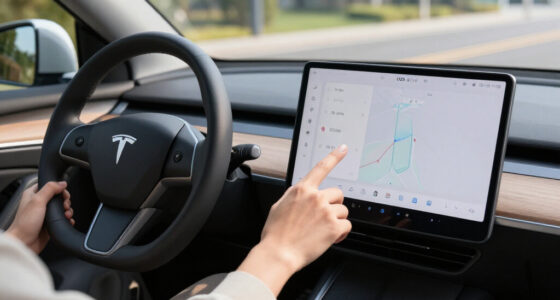
The rails would be raised and lowered electrically. The application describes possible controls including a key fob, smartphone, vehicle button or in-car touchscreen. The front and rear bars could move together, and the assembly could stop at intermediate heights. At least one light and a power delivery interface are also proposed for the deployed rack.
Ford’s application describes the power interface as potentially taking the form of a socket, port or inductive charging surface. It illustrates an electric bike connected to an outlet, with power coming from the vehicle’s battery. The filing also points to smaller electronics, such as an electronic bicycle shifting system, as possible equipment to charge. The interface is described as being within a roof-rail support pillar, making it inaccessible when the assembly is retracted.
A Rack That Could Supply Power
For cyclists who carry an e-bike or other equipment, the proposal addresses two practical needs at once: a roof rack that can be stowed when it is not required and a way to power devices during a journey. If developed into a production system, a charging interface could let drivers replenish compatible equipment from the vehicle rather than rely on a separate charger at a stop. The filing, however, does not establish how much power would be available, which devices would work with it, or whether charging would be practical during everyday driving.
The retractable design also targets a familiar trade-off with roof bars. Keeping them fitted can add aerodynamic drag when they are not carrying a load; removing and reinstalling them takes time and storage space. A rack that sits flush when unused could avoid some of that inconvenience. Any real-world benefit would depend on the vehicle, the rack’s design and the effect of the mechanism on the roof, none of which can be measured from the patent description alone.
The concept would add moving parts, electrical connections and controls in an exposed location. Those features would have to work alongside the rack’s basic job of carrying cargo securely. The patent does not provide enough detail to judge durability, maintenance needs, charging performance or how the system would handle weather and road conditions.
Products Worth Considering

Milwaukee M18 FUEL 2-Tool Combo Kit (Impact Driver & Hammer Drill)

NOCO Boost GBX45 12V Lithium Jump Starter, 1,250A

Chemical Guys 16-Piece Ceramic Car Wash and Protection Kit with Big Mouth Foam Cannon
As an affiliate, we earn on qualifying purchases.
How Ford Describes the Assembly
The design is set out in a patent application, rather than a product announcement. Road.cc reported that Patentlyze first brought attention to the filing. Patent documents describe proposed inventions and their possible arrangements; they do not, by themselves, show that a company has decided to manufacture or sell them.
In this proposal, the rails retract into the roof instead of remaining in place as conventional fixed roof bars do. When raised, support pillars would hold the rack and provide a location for at least one power interface. The filing’s example of an electric bike being connected to the vehicle illustrates a possible use, but does not confirm a finished charging system or compatibility with any particular e-bike.
The source report does not specify a planned vehicle, production schedule or commercial launch. It also does not give technical figures for the charging output or the rack’s load capacity. Those details would be needed to compare the idea with existing roof-rack and vehicle-powered charging options.
“Selectively deployable vehicle roof rail assembly having power delivery interface”
— Ford, in the patent application title
Questions the Filing Leaves Open
The application does not confirm that Ford will put the design into production. It is also unclear whether a patent will be granted, what vehicle might use the system, or whether Ford is developing a working prototype. No launch timing, price or target market is provided in the source report.
Important engineering details are also absent from the reported description. It does not state the interface’s power output, charging speed or device compatibility, nor explain how the electrical connections and moving parts would be protected from water, dirt, temperature changes and vibration. The source material gives no figures for roof-rail load limits or any impact the retracted assembly could have on vehicle design and efficiency.
Those gaps mean the proposed benefits remain potential rather than demonstrated. The patent does not report testing, measured aerodynamic improvements, charging results or durability data. Whether the system can meet vehicle and rack safety requirements is also not established by the available information.
Whether Ford Develops the Concept
The next meaningful development would be evidence that Ford is moving beyond the patent filing, such as a prototype, a vehicle announcement or technical information about testing and intended use. Until then, the application should be treated as a description of a possible design, not a confirmed product plan.
If Ford does disclose further details, the main points to watch will be how the rack is secured and operated, what equipment can draw power, and how the system performs in real conditions. The available report does not identify a timetable for any such announcement, so it remains unclear when or whether more information will emerge.
Key Questions
Has Ford announced a production roof rack?
No. The development reported is a patent application describing a proposed design. The filing does not confirm that Ford will build or sell it.
What could the roof rack charge?
The application describes charging equipment carried on the vehicle, including an e-bike battery and electronic bicycle components such as a shifting system. The source report does not specify compatible products or charging performance.
How would the rack be raised and lowered?
The design describes an electrically operated assembly controlled through options such as a key fob, smartphone, vehicle button or in-car touchscreen. The front and rear bars could move together, with possible intermediate positions.
Would the rack reduce drag?
The rails are designed to retract flush into the roof when unused, which Ford’s proposal presents as a way to reduce their aerodynamic effect. The reported material provides no measured efficiency or drag results.
When could the system be available?
No release date or vehicle application is provided. The source report does not say whether Ford has built a prototype, so availability is unknown.
Source: road.cc