
The science of suspension in dirt bikes involves shock absorbers and damping systems that absorb impacts from rough terrain, preventing jarring for you and your bike. When your wheels hit obstacles, the suspension compresses and converts impact energy into heat, controlling movement and keeping your tires in contact with the ground. Properly tuned suspension improves stability, reduces fatigue, and boosts your confidence. Keep exploring to learn how these systems work together for a smoother, safer ride.

Get business pricing on garage and car supplies
- Business-only prices and quantity discounts
- Tax-exempt purchasing
- Multiple users, one account, clear invoices
Key Takeaways
- Shock absorbers convert impact energy into heat, cushioning rough terrain impacts for rider comfort and control.
- Damping systems regulate suspension movement, preventing excessive bouncing and ensuring smooth handling.
- Energy dissipation occurs as hydraulic fluid or gas absorbs impact forces, reducing stress on the rider and bike frame.
- Proper suspension tuning balances stiffness and softness, optimizing traction and preventing bottoming out on varied terrains.
- Overall, suspension protects the bike, reduces rider fatigue, and enhances confidence by maintaining tire-ground contact.
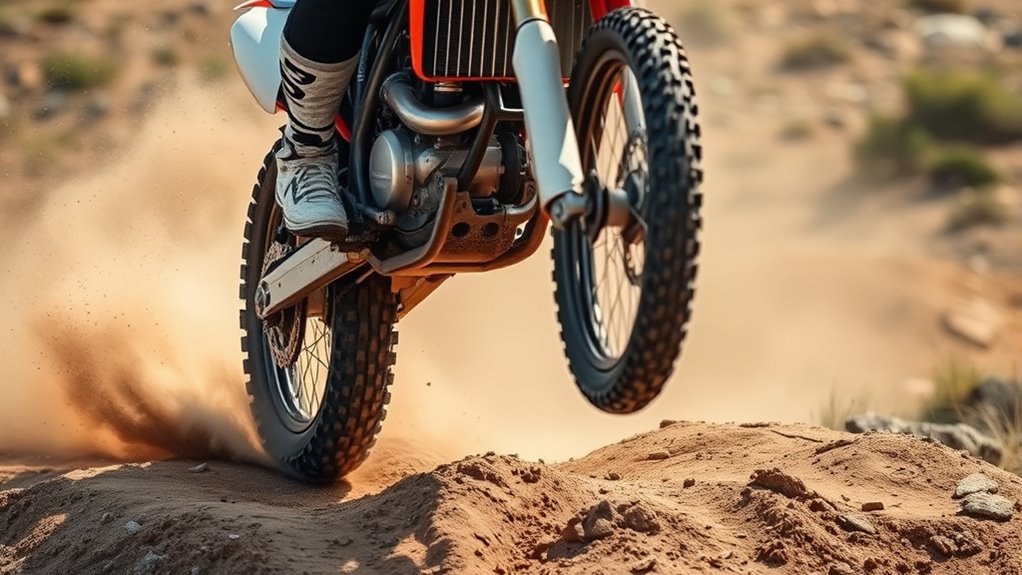
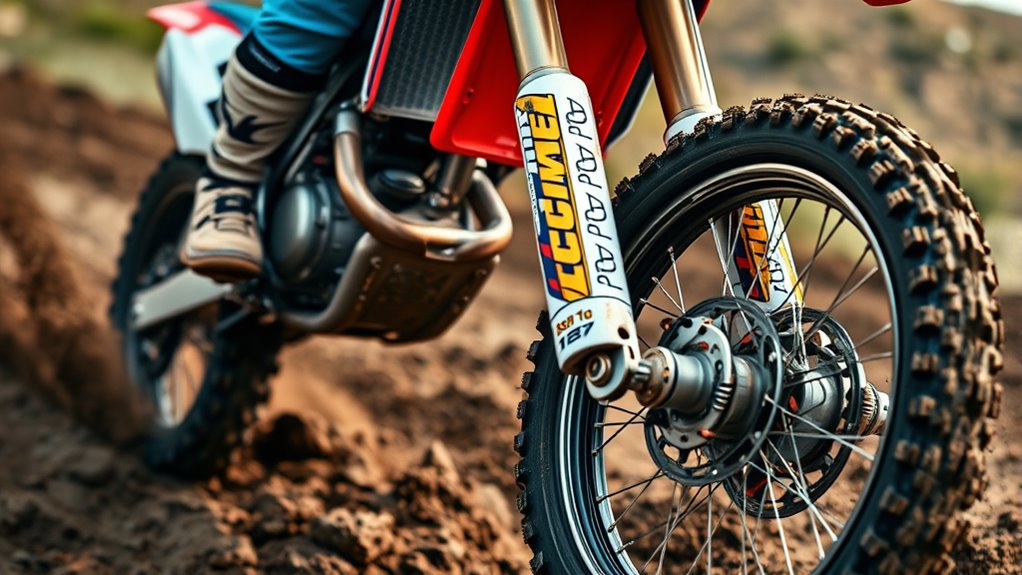
Have you ever wondered how dirt bikes smoothly navigate rough terrain? The secret lies in their sophisticated suspension systems, which absorb shocks and keep you stable amid uneven surfaces. At the heart of this system is the shock absorber, a vital component designed to dampen the impact of bumps, rocks, and jumps. Think of it as the bike’s cushion, preventing every jarring jolt from transferring directly to you. The shock absorber works in tandem with a damping system, which controls how quickly the suspension compresses and rebounds. This damping system ensures that the suspension doesn’t bounce excessively after hitting a bump, providing a smoother ride and better handling.
When you ride over rough ground, your dirt bike’s suspension compresses as the wheels hit obstacles. The shock absorber absorbs this energy, converting it into heat through hydraulic fluid or gas, which then gets dissipated. This process reduces the amount of force transmitted to you and the bike’s frame, giving you more control. Without a well-functioning shock absorber and damping system, every bump would feel like a jarring shock, making it nearly impossible to maintain speed or control. Instead, the suspension allows you to stay seated, maintain balance, and react more effectively to the terrain. Additionally, many dirt bikes utilize advanced suspension technology to further enhance ride quality and durability.
The damping system plays an essential role in tuning how the suspension responds. It’s adjustable in many bikes, letting you modify how stiff or soft the ride feels depending on terrain and riding style. A stiffer damping setting improves stability on flat, fast sections, while a softer setting absorbs more impact on rocky or uneven terrain. This fine-tuning helps prevent the suspension from bottoming out or rebounding too quickly, which could throw you off balance. By controlling the rate at which the shock absorber compresses and extends, the damping system maintains consistent contact between the tires and ground, maximizing traction.
In essence, the shock absorber and damping system work together to create a suspension that adapts to whatever terrain you encounter. They protect your bike’s frame, reduce rider fatigue, and enhance your ability to stay confident and in control. Properly maintained and tuned suspension makes the difference between a bumpy, uncomfortable ride and one where you feel connected to the trail. So next time you hit a rough patch, remember that behind the scenes, your bike’s suspension is working tirelessly to keep you stable, smooth, and ready for the next challenge.
Frequently Asked Questions
How Does Suspension Affect Dirt Bike Handling on Different Terrains?
Your suspension greatly impacts dirt bike handling across various terrains. Proper suspension geometry ensures stability and control, while damping adjustment helps absorb shocks and maintain traction. When riding on rocky surfaces, softer damping improves comfort, whereas firmer settings work better on smooth trails for precision. Adjusting suspension geometry and damping based on terrain allows you to handle obstacles confidently, enhancing safety and performance on every ride.
What Are the Signs of Worn-Out Dirt Bike Suspension Components?
You’ll notice your suspension feels less responsive, your shock absorber leaks oil, or your fork seals leak or become sticky. You might experience increased vibrations, uneven handling, or a rough ride. Worn-out components, like shock absorbers and fork seals, compromise your bike’s stability and control. If you see visible damage, hear unusual noises, or feel your ride is inconsistent, it’s time to inspect and replace those suspension parts to stay safe and perform well.
Can Suspension Tuning Improve Dirt Bike Performance for Beginners?
Yes, suspension tuning can definitely improve your beginner performance. By adjusting your dirt bike’s suspension settings, you’ll gain better control, comfort, and confidence on different terrains. Start with simple tweaks like preload and damping adjustments, which help you respond more quickly to obstacles. Proper suspension tuning makes riding smoother and safer, allowing you to learn faster and enjoy dirt biking more as a beginner.
How Often Should Dirt Bike Suspension Be Serviced or Replaced?
Think of your dirt bike’s suspension as the backbone of your ride; it needs care to perform its best. You should service your suspension every 20-30 hours of riding, and replace components when they show signs of wear or damage. Following a regular maintenance schedule keeps your suspension in top shape, preventing costly suspension replacement down the line, and guarantees you stay confident and in control on every trail.
What Is the Impact of Suspension Settings on Rider Comfort and Safety?
You’ll notice that proper suspension settings greatly improve your comfort and safety. When your suspension is well-tuned, your rider posture stays balanced, reducing fatigue and the risk of injury. It also minimizes suspension noise, which can distract and cause discomfort. Adjusting your suspension to match your riding style ensures smoother handling, better control, and a safer experience on rough terrains. Proper settings keep you confident and in control.
Conclusion
Remember, when it comes to dirt biking, your suspension is your best friend on rough terrain. It absorbs shocks, keeps you stable, and lets you push your limits. Proper maintenance and understanding of your suspension can turn a challenging ride into an exhilarating adventure. As the saying goes, “A smooth sea never made a skilled sailor.” So, respect your equipment, stay prepared, and enjoy every ride with confidence and control.
Halloween Picks
halloween
As an affiliate, we earn on qualifying purchases.