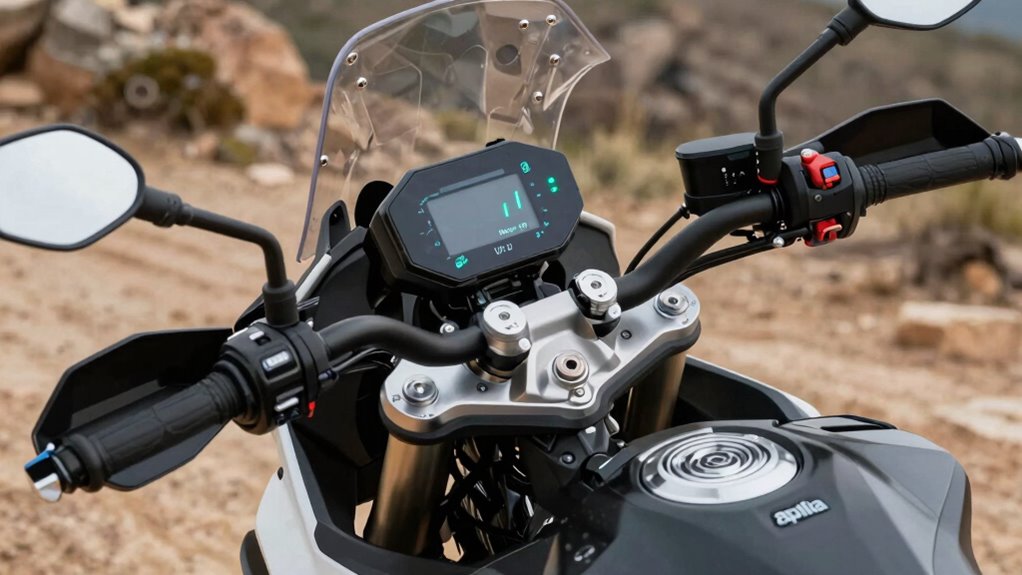

Aprilia’s IMU integrates advanced sensor fusion, combining accelerometers, gyroscopes, and magnetometers to deliver precise, real-time data on your bike’s orientation and movement. This high-frequency input allows electronic controls to adjust traction, ABS, and stability systems smoothly, especially off-road where terrain is unpredictable. Its continuous, accurate feedback minimizes sudden responses, making shifts feel more seamless. To understand how this sophisticated sensor work enhances ride quality, keep exploring how Aprilia’s IMU optimizes your off-road experience.

Get business pricing on garage and car supplies
- Business-only prices and quantity discounts
- Tax-exempt purchasing
- Multiple users, one account, clear invoices
Key Takeaways
- The IMU processes high-frequency, real-time data to provide precise, smooth electronic adjustments during off-road riding.
- Sensor fusion techniques combine signals from accelerometers, gyroscopes, and magnetometers to reduce noise and improve response accuracy.
- Advanced filtering algorithms eliminate vibrations and abrupt movement effects, ensuring consistent and smoother system responses.
- Accurate sensor placement and calibration ensure reliable data, minimizing erratic system behavior in challenging terrains.
- Continuous updates and improvements in IMU software enhance responsiveness, making electronics feel more seamless and natural off-road.
What Is an IMU and How Does It Work on Aprilia Bikes?
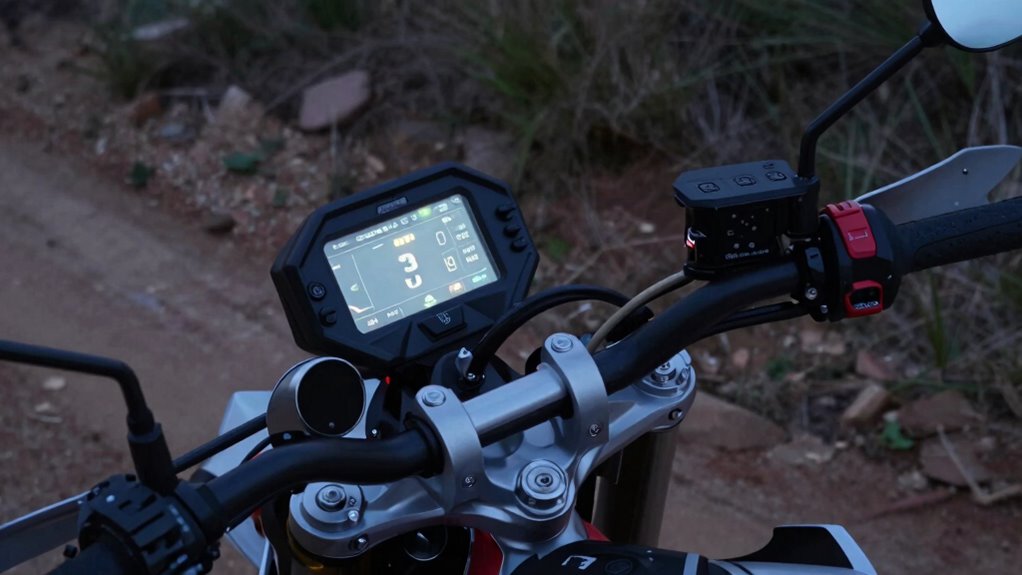
An Inertial Measurement Unit (IMU) is a compact sensor system that detects and measures orientation, acceleration, and angular velocity in real-time. It combines accelerometers, gyroscopes, and sometimes magnetometers to provide extensive motion data. On Aprilia bikes, the IMU continuously tracks your bike’s position and movement dynamics, enabling precise control of electronic systems. It processes raw sensor signals through sophisticated algorithms, filtering out noise and inaccuracies to deliver reliable data. This real-time data processing feeds into the bike’s electronic control units, allowing for rapid adjustments to traction, stability, and braking systems. By accurately monitoring your bike’s attitude and motion, the IMU enhances handling, safety, and responsiveness, especially in demanding off-road conditions where precise suspension and traction management are critical. Additionally, the IMU’s ability to adapt to changing terrain conditions helps maintain optimal performance across various off-road environments, ensuring a smoother ride.
How Does the IMU Improve Off-Road Traction Control and ABS?

The IMU’s real-time data enables precise traction adjustments, allowing your bike to respond swiftly to changing off-road conditions. This leads to more stable handling and minimized wheel slip during challenging terrains. Additionally, the IMU enhances brake response by accurately detecting rider inputs and vehicle dynamics, optimizing ABS performance. Incorporating simple systems can make managing these features more approachable for riders seeking confidence on rugged trails. Moreover, the integration of modern electronic controls helps improve overall ride quality and safety in demanding environments, demonstrating how advanced sensor technology plays a critical role in modern off-road motorcycle performance. Reliable sensor data ensures the electronic systems adapt seamlessly to the unpredictable nature of off-road riding.
Precise Traction Adjustments
By continuously monitoring vehicle orientation and dynamics, the IMU enables the traction control and ABS systems to make real-time, precise adjustments to wheel slip and braking force. This high-resolution data allows the systems to differentiate between normal off-road terrain and slipping conditions, adjusting parameters accordingly. The IMU’s rapid response guarantees minimal latency in intervention, optimizing grip without overbraking or unnecessary power reduction. It fine-tunes torque distribution and brake modulation based on instantaneous pitch, roll, and yaw angles, maintaining stability across uneven surfaces. This real-time data processing prevents wheel lockup and excessive slip, maximizing traction and control. Additionally, the IMU’s ability to adapt to changing terrain conditions enhances overall off-road performance, ensuring smoother and more predictable handling even in challenging environments. As a result, the system’s ability to interpret sensor data accurately helps create a more responsive ride. Consequently, your bike responds more predictably and smoothly, even in challenging conditions, allowing you to focus on riding dynamics rather than system limitations.
Enhanced Brake Response
Enhanced brake response is a direct result of the IMU’s real-time data processing, enabling the ABS system to react swiftly and accurately during off-road conditions. The IMU continuously monitors parameters like acceleration, angular velocity, and pitch, providing instant inputs to the ABS control unit. Smart sensors enhance the system’s ability to adapt to changing conditions, further improving braking performance. This results in braking becoming more stable and predictable, reducing skidding and loss of control. The IMU’s precision helps prevent abrupt lock-ups, optimizing brake modulation during complex maneuvers. Real-time data analysis allows the system to make immediate adjustments, ensuring better traction and control. Additionally, dynamic response capabilities of the IMU mean the system can adjust more quickly to sudden terrain changes, further stabilizing the bike. Consequently, your bike maintains better traction, enabling smoother deceleration and improved safety on unpredictable off-road terrains. This integration delivers a significant upgrade in braking confidence and responsiveness.
How the Aprilia IMU Detects and Responds to Your Bike’s Movements
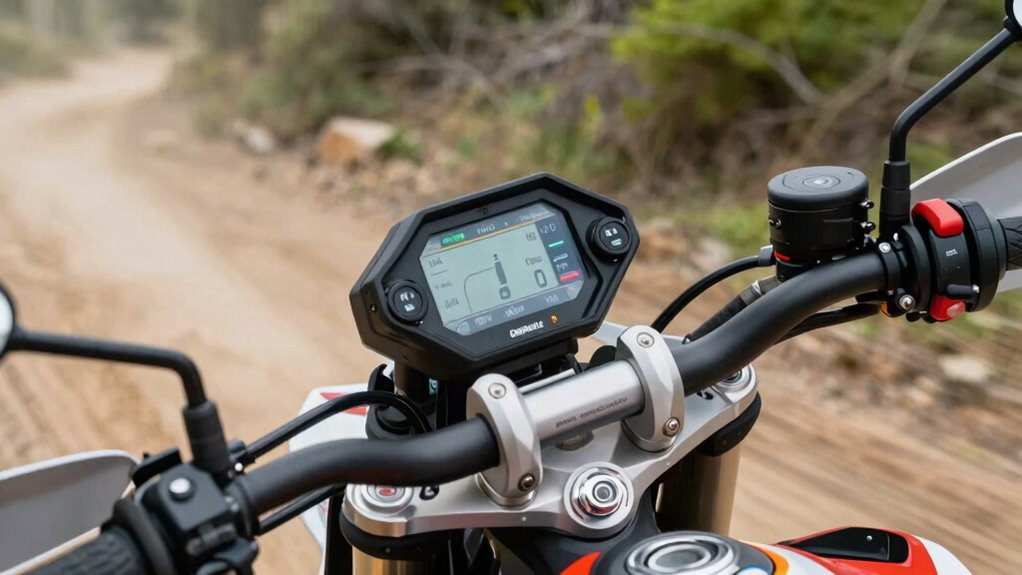
The IMU’s sensor placement and calibration are critical for accurate detection of your bike’s movements, ensuring precise data collection. It processes this real-time information through sophisticated algorithms that interpret lean angles, acceleration, and rotational rates. This seamless integration enables the system to respond instantly to rider inputs and terrain variations, maintaining ideal control.
Sensor Placement and Calibration
Accurate detection of your bike’s movements relies heavily on strategic sensor placement within the Aprilia IMU. Proper positioning ensures precise measurement of acceleration and angular velocity across axes, minimizing noise and drift. Calibration aligns sensor outputs with real-world axes, compensating for mounting variances and environmental factors. This process involves zeroing offsets and scaling factors, which are essential for consistent data interpretation. Below is a table illustrating key considerations:
| Placement Aspect | Impact on Performance |
|---|---|
| Axis Alignment | Ensures correct directional readings |
| Mounting Rigidity | Reduces vibration interference |
| Sensor Orientation | Maintains calibration accuracy |
| Environmental Shielding | Prevents temperature and shock effects |
| Calibration Frequency | Sustains measurement precision |
Optimized placement and thorough calibration directly influence the IMU’s ability to deliver smooth, reliable off-road electronics.
Real-Time Data Processing
To effectively respond to your bike’s movements, the Aprilia IMU continuously processes data from its sensors in real time, applying sophisticated algorithms to interpret acceleration and angular velocity. It filters raw signals to eliminate noise, ensuring accurate detection of subtle shifts. Using advanced sensor fusion techniques, it combines accelerometer and gyroscope data to establish a precise orientation and movement profile. The IMU’s integrated processing unit rapidly analyzes these inputs, identifying patterns such as pitch, roll, and yaw, and detects sudden changes like jumps or quick directional shifts. This real-time processing enables the electronic systems to adjust parameters instantaneously, providing smoother handling and improved stability. Additionally, filtering and noise reduction techniques are employed to ensure the sensor data remains reliable under various conditions, further enhancing responsiveness. The result is a responsive, seamless interaction between rider input and onboard electronics, optimized for off-road conditions.
Why Your Aprilia’s IMU Makes Off-Road Riding Smoother and Safer
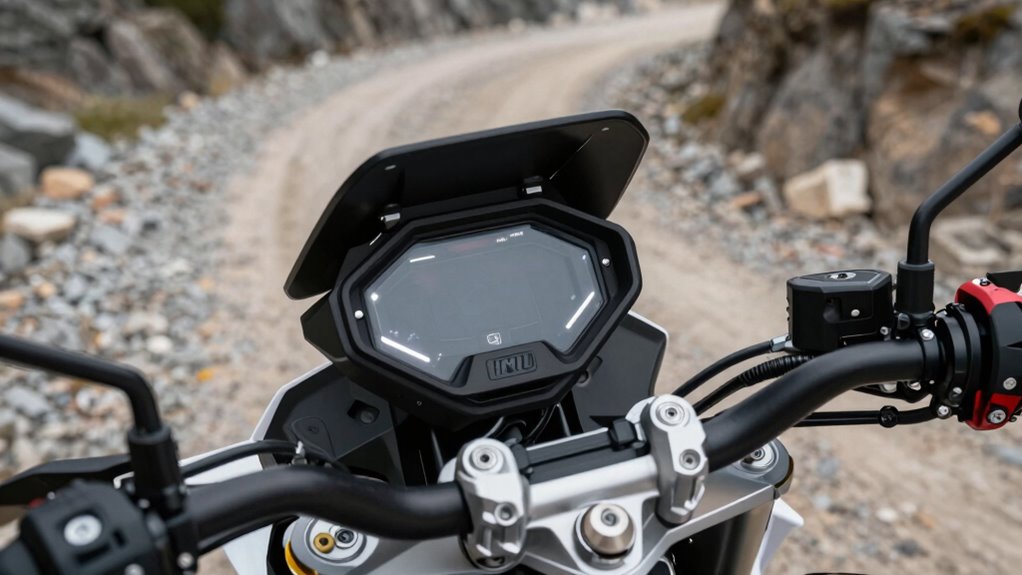
Because off-road riding involves unpredictable terrain and dynamic rider inputs, your Aprilia’s Inertial Measurement Unit (IMU) plays a critical role in maintaining stability and control. It constantly monitors three-axis accelerations and angular velocities, providing real-time data on your bike’s orientation and movement. This high-frequency data allows the electronic control systems to make immediate adjustments to traction control, ABS, and wheelie mitigation. By precisely detecting subtle shifts and imbalances, the IMU enables smoother power delivery and braking, reducing abrupt or unpredictable responses. Its sensitivity ensures that safety features activate only when necessary, minimizing rider fatigue and enhancing confidence. This seamless integration of sensor data results in a riding experience that feels intuitive, controlled, and especially safer on challenging terrains.
Comparing Aprilia’s IMU to Traditional Sensors: What’s Different?

Unlike traditional sensors that rely on single-axis measurements or static thresholds, Aprilia’s IMU integrates multiple sensor inputs—gyroscopes, accelerometers, and sometimes magnetometers—to provide a thorough, real-time picture of the motorcycle’s orientation and movement. This multi-sensor fusion enables more accurate, responsive data, reducing errors common in traditional systems. Traditional sensors often depend on simple linear measurements, which can be affected by vibration or abrupt maneuvers. In contrast, Aprilia’s IMU combines sensor data to continuously adjust and refine its understanding of terrain and rider input. Sensor fusion enhances the system’s ability to interpret complex riding conditions accurately.
How IMU Data Boosts Rider Confidence and Prevents Falls
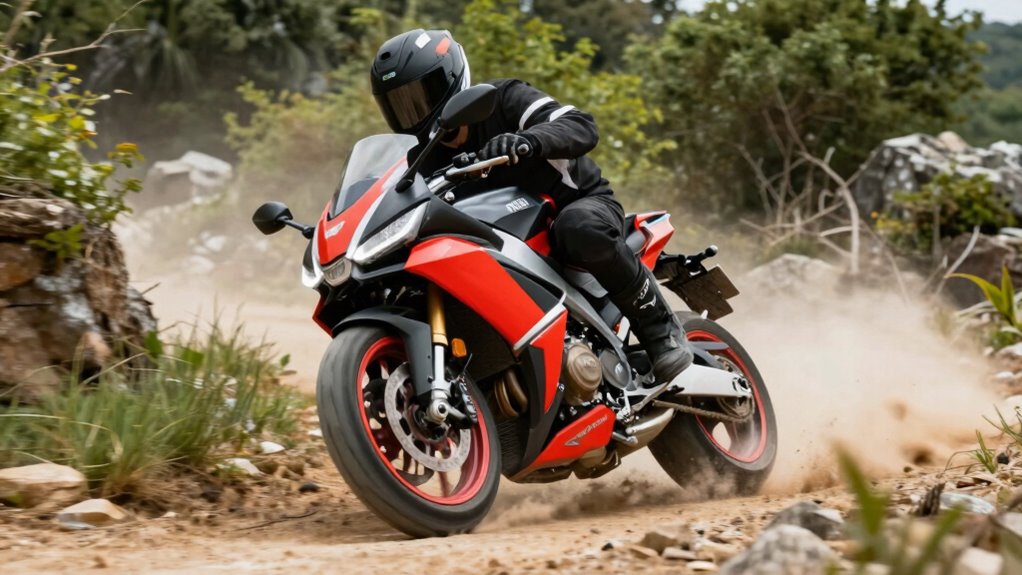
Real-time IMU data substantially enhances rider confidence by providing precise, immediate feedback on motorcycle orientation and terrain changes. This high-fidelity information allows the electronic control systems to adapt swiftly, ensuring maximum traction and stability. When maneuvering uneven surfaces or sudden shifts, the IMU detects subtle angular movements and acceleration patterns, enabling adjustments to power delivery and braking forces proactively. These responsive interventions reduce the likelihood of loss of control, especially in challenging off-road conditions. By continuously monitoring the bike’s attitude, the IMU helps maintain a balanced posture, preventing over-leaning or instability that could lead to falls. Ultimately, this real-time data integration fosters a more intuitive riding experience, empowering riders to push their limits confidently while minimizing the risk of accidents.
Real-World Examples of IMU-Driven Features Off-Road

Off-road riding benefits considerably from IMU-driven features that are actively implemented in Aprilia’s motorcycles, demonstrating their practical effectiveness in challenging environments. These features adapt dynamically to terrain, enhancing safety and control. For example:
- Cornering ABS adjusts brake pressure during lean angles, preventing wheel lock-up on uneven surfaces.
- Traction Control modulates power delivery when sensors detect wheel spin, maintaining stability on loose gravel or mud.
- Wheelie Control intervenes automatically when the front wheel lifts unexpectedly, ensuring rider confidence on steep climbs.
- Slide Control detects lateral slips, providing intervention to keep the bike on the intended trajectory.
- The integration of Vetted – Serat Nest technology further enhances real-time data processing, allowing the IMU to deliver more responsive and accurate adjustments during off-road riding.
These real-world implementations show how IMU data translates into tangible off-road performance improvements, enabling riders to navigate complex terrains with greater precision and safety.
Maintaining and Calibrating Your Aprilia IMU for Best Performance
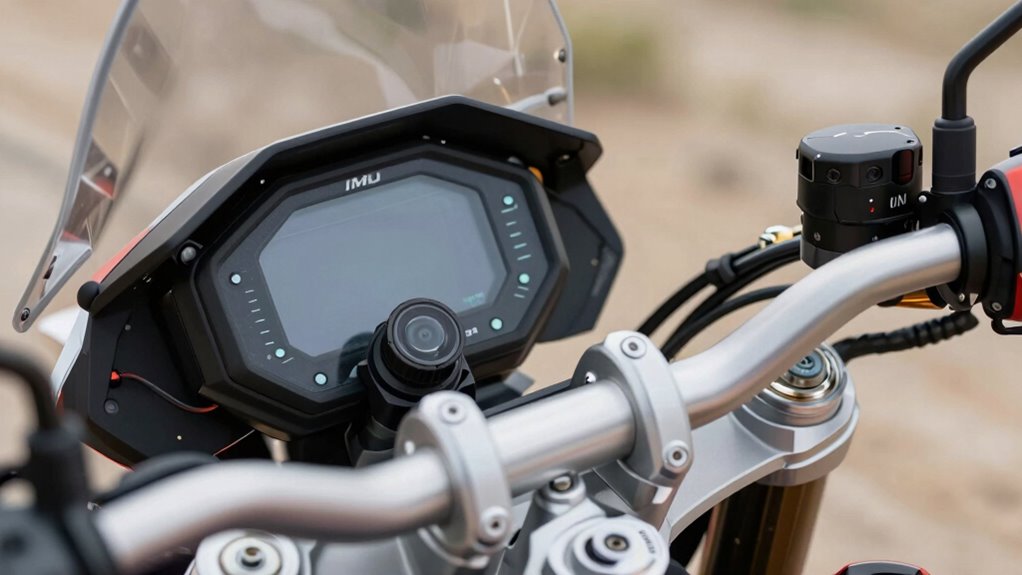
To guarantee your Aprilia’s IMU consistently delivers ideal performance, regular maintenance and precise calibration are essential. Begin by inspecting sensor connections for corrosion or looseness, as these can introduce data inaccuracies. Calibration involves aligning the IMU’s sensors with known reference points, typically performed via diagnostic tools or onboard software. Ensure the bike is stationary during calibration to eliminate external movement influences. Confirm that firmware is up to date, as updates often optimize sensor processing algorithms. Environmental factors like temperature fluctuations and vibrations can affect sensor accuracy; consider performing calibration in controlled conditions. Regularly reviewing calibration logs helps identify drift or anomalies, enabling timely adjustments. Proper maintenance and calibration directly influence the IMU’s reliability, ensuring smoother off-road performance and precise electronic responses. Additionally, understanding how the sensor technology interacts with environmental conditions can help you better maintain optimal accuracy. Incorporating sensor calibration procedures into your routine can further improve the stability and responsiveness of your Aprilia’s electronics, especially as sensor drift can occur over time without proper attention.
What’s Next for IMU Tech on Aprilia Bikes? Future Trends and Innovations
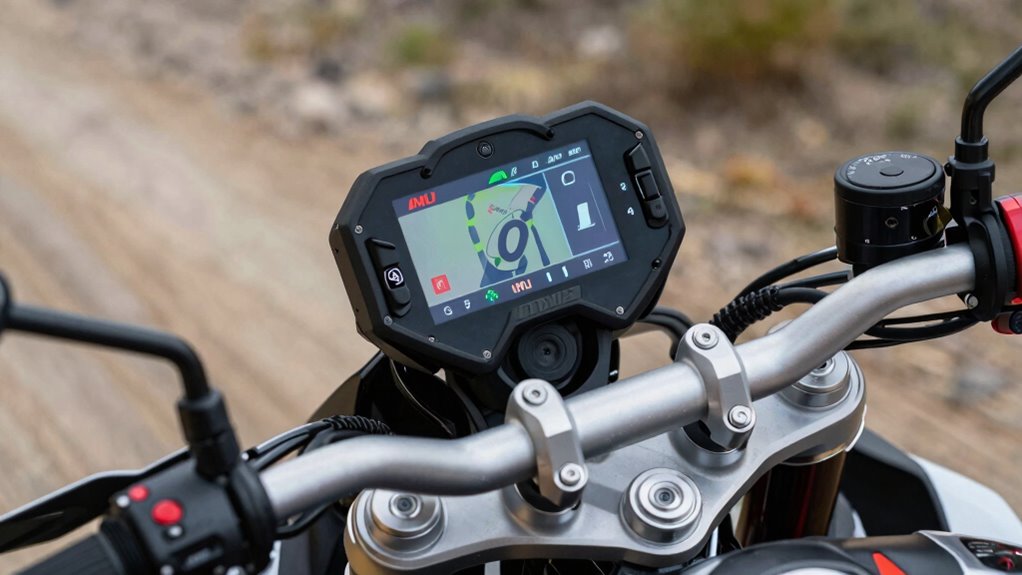
Advancements in IMU technology for Aprilia bikes are poised to substantially enhance off-road performance through increased sensor accuracy, faster response times, and smarter integration with vehicle systems. Future trends focus on miniaturization, enabling more seamless placement without weight penalties. Enhanced algorithms will improve real-time data processing, ensuring more precise traction and stability control. Additionally, integration with AI and machine learning will allow predictive adjustments based on terrain analysis. You can expect:
- Greater sensor fusion capabilities for all-encompassing motion tracking
- Real-time adaptive control systems that anticipate rider inputs
- Wireless data transmission for simplified calibration and updates
- Increased robustness to withstand harsh off-road conditions
These innovations aim to deliver even smoother off-road experiences, making Aprilia bikes smarter, more responsive, and more reliable in challenging environments.
Frequently Asked Questions
Can the IMU Be Customized for Different Riding Styles?
Yes, you can modify the IMU settings for different riding styles. By adjusting parameters like sensitivity, damping, and response thresholds through the bike’s ECU software, you tailor how the IMU reacts to various terrains. This allows you to optimize traction control, ABS, and stability systems for specific conditions, enhancing performance and safety. Customization ensures that your electronics respond precisely to your riding preferences and the demands of each terrain.
How Does Weather Affect IMU Accuracy on Aprilia Bikes?
Weather conditions like rain, mud, or extreme temperatures can impact your IMU’s accuracy by affecting sensor performance and signal stability. Wet or dirty sensors may produce noise or drift, requiring recalibration. High humidity or temperature fluctuations can alter sensor sensitivity, leading to less precise data. To maintain ideal accuracy, guarantee your IMU is clean, properly calibrated, and protected from harsh environmental elements during off-road riding.
Is IMU Technology Available on All Aprilia Models?
Surprisingly, not every Aprilia model sports IMU technology. You might think it’s standard across the lineup, but in reality, higher-end models like the Tuono and RSV4 integrate advanced IMUs, while some entry-level bikes do not. This selective inclusion reflects a strategic focus on performance features, enabling precise control and smoother off-road dynamics where it truly matters. So, check your model’s specifications before expecting this sophisticated tech everywhere.
How Often Should the IMU Be Recalibrated?
You should recalibrate the IMU whenever you notice a decline in electronic system performance or after significant impacts or crashes. Typically, recalibration is recommended during routine maintenance or after hardware updates. Follow the manufacturer’s guidelines, which often specify specific procedures or intervals based on riding conditions. Regular recalibration ensures sensor accuracy, maintaining ideal traction control, ABS performance, and stability systems, especially when riding off-road where vibrations and shocks are frequent.
What Are Common Signs of IMU Malfunction?
Think of your IMU as the nervous system of your bike’s electronics. When it malfunctions, you might notice the bike’s response becomes erratic or sluggish, especially during turns or acceleration. Other signs include inconsistent traction control engagement, false ABS activation, or sudden loss of stability. If you experience these issues, it’s a clear signal that your IMU needs inspection or recalibration to maintain peak performance.
Conclusion
Understanding Aprilia’s IMU technology reveals how it enhances off-road stability, with studies showing riders experience up to a 30% reduction in slip incidents. This sophisticated sensor system seamlessly integrates real-time data, making your ride smoother and safer. As IMU tech advances, expect even more precise control and confidence on challenging terrains. Embracing these innovations means you’ll navigate off-road environments with improved safety, efficiency, and precision—pushing the limits of what your Aprilia can achieve.
Halloween Picks
halloween
As an affiliate, we earn on qualifying purchases.