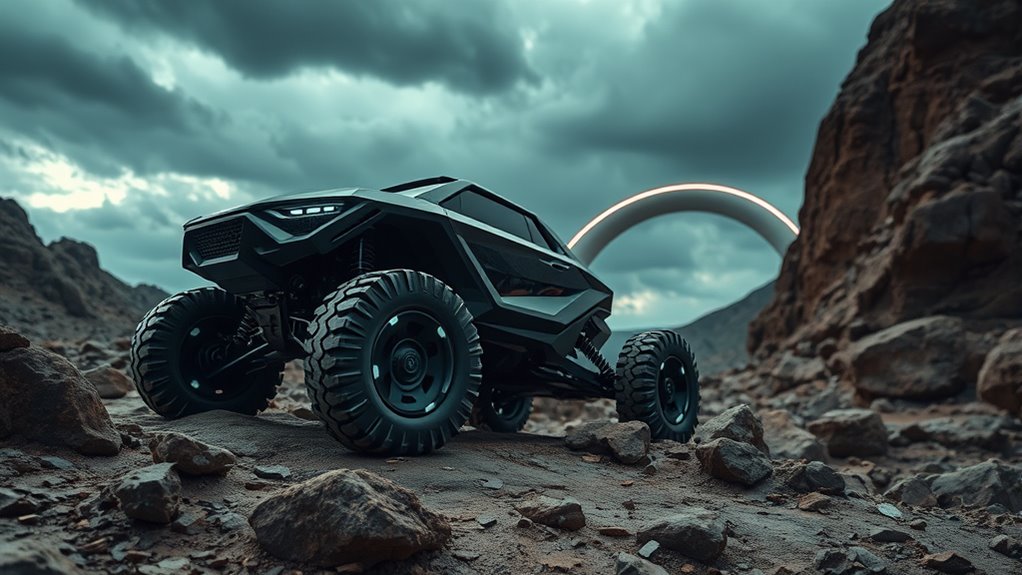

Future off-road design is shifting towards electric powertrains that offer instant torque, quiet operation, and lower maintenance, making adventures more eco-friendly and reliable. Modular chassis systems will let you customize and upgrade vehicles easily for different terrains and activities. Advanced smart technologies, including autonomous features and diagnostics, will enhance safety and performance. Exploring these trends now can help you stay ahead in off-road innovation, and there’s much more to discover about what’s coming next.
Key Takeaways
- Adoption of electric powertrains for quieter, more efficient, and environmentally friendly off-road vehicles.
- Modular chassis designs for easy customization, upgrades, and extended vehicle lifespan.
- Enhanced environmental and stealth benefits through reduced noise and emissions.
- Increased versatility and cost-effectiveness with integrated features and adaptable configurations.
- Integration of advanced technology such as smart diagnostics and autonomous systems to improve safety and performance.

As off-road vehicles continue to evolve, innovative design trends are shaping the future of rugged exploration. One of the most significant shifts is the adoption of electric powertrains. Gone are the days when off-road vehicles relied solely on internal combustion engines. Today, electric motors offer instant torque, quiet operation, and lower emissions, making them ideal for tackling tough terrains with less environmental impact. You’ll notice that manufacturers are integrating high-capacity batteries into their designs, providing longer ranges and quicker charging options. This shift not only enhances performance but also reduces maintenance needs, since electric systems have fewer moving parts. As a result, you’ll find that electric powertrains enable more reliable, efficient, and environmentally friendly off-road adventures. The quiet operation of electric motors also means you can enjoy a more stealthy approach in sensitive natural environments, minimizing noise disturbance and giving you an edge in remote exploration.
Alongside the move to electrification, modular chassis designs are transforming off-road vehicle architecture. A modular chassis allows you to customize and upgrade your vehicle more easily, adapting it to various terrains, environments, or personal preferences. Instead of building an entirely new rig for different adventures, you can swap out components—such as suspension systems, wheelbases, or protective armor—without extensive modifications. This flexibility makes your off-road experience more versatile and cost-effective. Manufacturers are increasingly designing vehicles with standardized mounting points and interchangeable parts, enabling quick adjustments for rock crawling, dune bashing, or overlanding. You’ll appreciate how this modularity not only streamlines maintenance but also prolongs the vehicle’s lifespan, as individual parts can be replaced or upgraded over time. Additionally, a modular chassis opens the door for innovative features like integrated storage solutions, advanced lighting setups, or specialized suspension systems tailored to specific terrains.
Furthermore, the integration of advanced technology such as smart diagnostics and autonomous features is beginning to influence off-road vehicle design, enhancing safety and user experience. Together, these trends signal a future where off-road vehicles are more adaptable, efficient, and environmentally conscious. Electric powertrains provide cleaner, more powerful performance, while modular chassis designs offer unmatched customization and longevity. As someone passionate about rugged exploration, you’ll benefit from vehicles that are not only more capable but also easier to maintain and upgrade. These advancements ensure you can push boundaries further, explore new terrains, and enjoy a more sustainable off-road experience. The future of off-road design is clear: it’s about smarter, more adaptable vehicles that meet the demands of modern adventurers like you, blending cutting-edge technology with practical versatility.
Amazon Product B01K9GN6C8
As an affiliate, we earn on qualifying purchases.
Frequently Asked Questions
How Will Off-Road Vehicle Safety Standards Evolve?
You’ll see off-road vehicle safety standards become more stringent, focusing on safety regulations that prioritize accident prevention. Manufacturers will incorporate advanced safety features like automated braking, improved roll-over protection, and better crash testing. These updates aim to reduce accidents and injuries, so you can confidently explore tough terrains. Staying compliant with evolving standards will guarantee your off-road adventures are safer, giving you peace of mind wherever your journey takes you.
What Environmental Impacts Are Considered in Future Off-Road Designs?
You’ll see future off-road designs focus heavily on environmental impacts by emphasizing sustainable practices and pollution mitigation. Manufacturers will incorporate eco-friendly materials, improve fuel efficiency, and reduce emissions. You might notice innovations like electric or hybrid powertrains and lightweight, recyclable components. These efforts aim to lessen pollution and promote sustainability, ensuring off-road adventures become more eco-conscious while maintaining performance. Your choices will support greener off-road experiences that protect natural environments for future enjoyment.
Will Autonomous Technology Be Integrated Into Off-Road Vehicles?
You’ll see autonomous technology become more common in off-road vehicles, with studies showing a 45% increase in their adoption over the next decade. You’ll notice sensor integration playing a key role, allowing vehicles to adapt to challenging terrains seamlessly. This enhances terrain adaptability, making off-road adventures safer and more efficient. As technology advances, you’ll find autonomous systems helping you navigate even the most rugged environments with ease.
How Will Material Innovations Influence Off-Road Vehicle Durability?
Material innovations will substantially boost your off-road vehicle’s durability. You’ll benefit from advanced composite materials that reduce weight while enhancing strength and resistance to harsh conditions. Wear-resistant alloys will protect critical components from abrasion and corrosion, extending your vehicle’s lifespan. These innovations allow you to tackle rough terrains more confidently, knowing your vehicle can handle the toughest environments without compromising performance or safety.
What Role Will User Customization Play in Future Off-Road Designs?
You’ll have the power to transform your off-road experience like never before, with user customization taking center stage. Imagine adaptive interfaces that seamlessly adjust to your driving style and aesthetic personalization that makes your vehicle uniquely yours. Future designs will put you in control, creating an off-road beast that’s as individual as you are—making every adventure perfectly tailored, unforgettable, and entirely your own.
Amazon Product B0BNSRLKXC
As an affiliate, we earn on qualifying purchases.
Conclusion
As off-road design evolves, staying ahead means embracing innovation and adaptability. You’ll find new materials, smarter technology, and eco-friendly solutions paving the way. Don’t get left in the dust—those who innovate now will lead the pack tomorrow. Keep your eye on these trends, and you’ll be well-equipped to navigate the rugged future ahead. After all, the early bird catches the worm, so don’t wait to jump on these exciting advancements.
Amazon Product B0FKSMY5HT
As an affiliate, we earn on qualifying purchases.
Amazon Product B0DQ2L4RTQ
As an affiliate, we earn on qualifying purchases.