
Choosing the wrong battery tender for your high-end motorcycle can cause severe damage, such as overcharging or inadequate charging, which shortens your battery’s lifespan and risks costly repairs. Many tenders lack safety features or compatibility, leading to overheating, sparks, or fire hazards. To avoid these pitfalls and protect your investment, it’s essential to pick a compatible, high-quality tender with safety features. Keep your system maintained—continue exploring to learn how to prevent these costly mistakes.
Key Takeaways
- Using an incompatible or low-quality tender can damage your bike’s battery and reduce its lifespan.
- Overcharging with a non-automatic or improper charger risks battery overheating or fires.
- Neglecting regular maintenance and connection checks can lead to corrosion and poor electrical performance.
- Failing to follow manufacturer instructions may cause improper charging, harming sensitive electronics.
- Ignoring system issues or prolonging inadequate charging can result in costly repairs or replacement.
Why Choosing the Right Battery Tender Matters for Your Bike
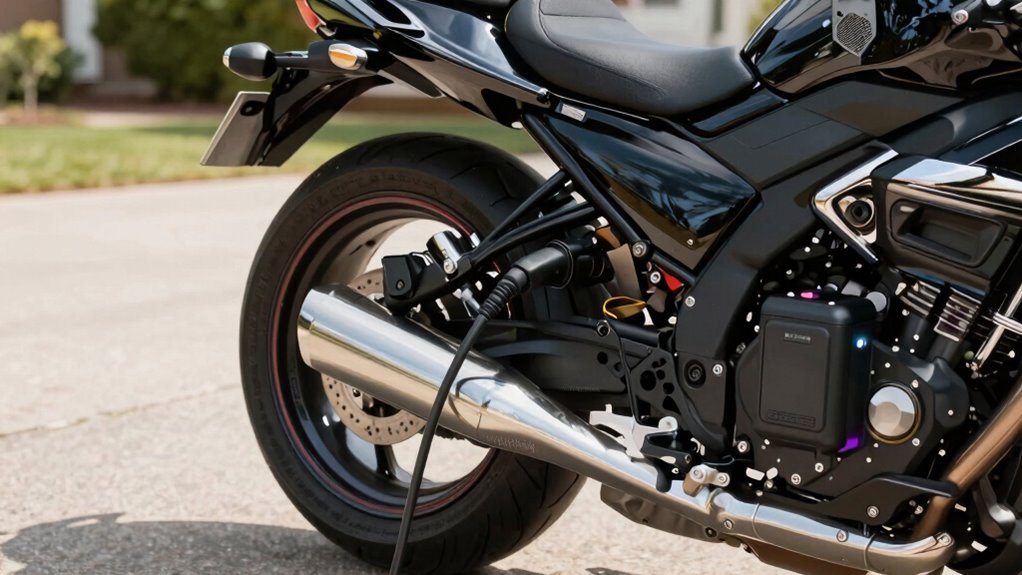
Choosing the right battery tender is crucial because using the wrong one can lead to battery damage or reduced lifespan. Confirming proper battery compatibility is essential; a tender that doesn’t match your bike’s specifications may undercharge or overcharge, harming the battery. Tender safety is equally important—using an incompatible or faulty charger can cause overheating, sparks, or even fires. When selecting a tender, double-check that it’s suited for your bike’s battery type and voltage. A well-matched, safe tender maintains ideal charge levels and protects your investment. Proper battery maintenance can extend the life of your battery significantly. Additionally, understanding battery chemistry helps in choosing the optimal tender for your specific battery type. Ensuring your charger has the proper safety features can prevent accidents and damage. Regularly inspecting your charger and following manufacturer instructions enhances charger longevity, reducing risks of malfunction. Skipping this step might seem minor, but it can lead to costly replacements or early battery failure. Prioritizing appropriate battery compatibility and tender safety ensures your bike stays reliable and ready to ride whenever you are. Properly charging practices also play a vital role in maintaining battery health over time.
How to Pick the Best Battery Tender for Your High-End Motorcycle
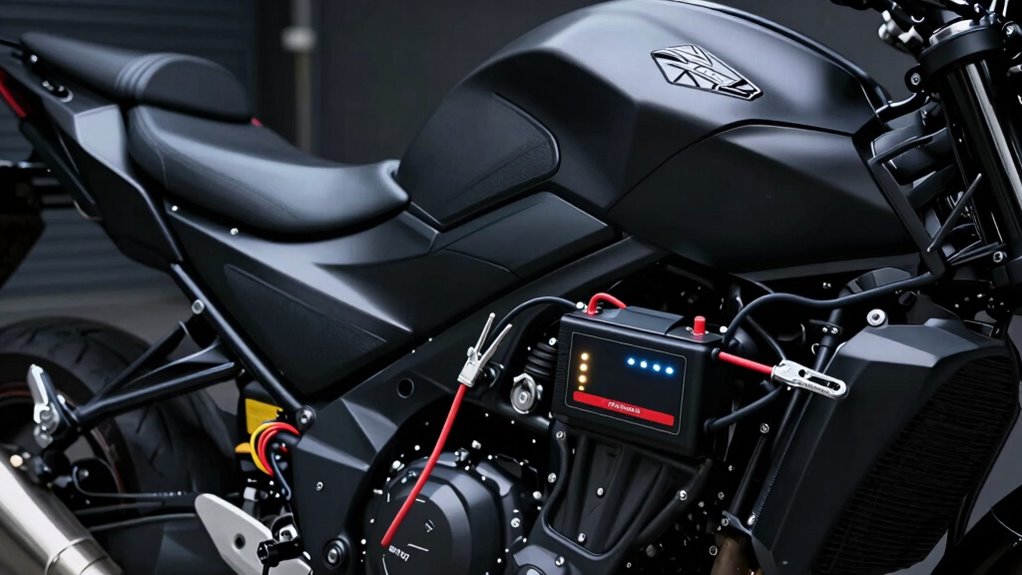
When selecting a battery tender for your high-end motorcycle, it is vital to prioritize compatibility and quality. A good tender ensures battery safety and works seamlessly with your bike’s electrical system. To find the best match, consider these factors:
- Verify charger compatibility with your motorcycle’s battery type
- Choose a tender with built-in safety features to prevent overcharging
- Make certain it provides reliable, consistent charging without damaging sensitive electronics
- Ensure the charger has clear user instructions to prevent improper connections that could damage your bike or battery
- Additionally, selecting a charger with automatic shut-off can help avoid overcharging and extend your battery’s lifespan
- Proper maintenance routines can also enhance battery performance and longevity
- Researching charger specifications helps ensure you select a device that meets your motorcycle’s unique electrical demands.
- Awareness of battery types and their specific charging needs can further improve your maintenance routine.
These points help you avoid costly mistakes that could harm your bike’s battery or electrical system. Proper compatibility guarantees safe operation, while high-quality construction minimizes the risk of overcharging or sparks. Remember, investing in a reputable, compatible charger protects your high-end motorcycle and extends its lifespan. Making an informed choice helps you maintain peak performance and avoid preventable issues.
Common Charging Mistakes and How to Avoid Them
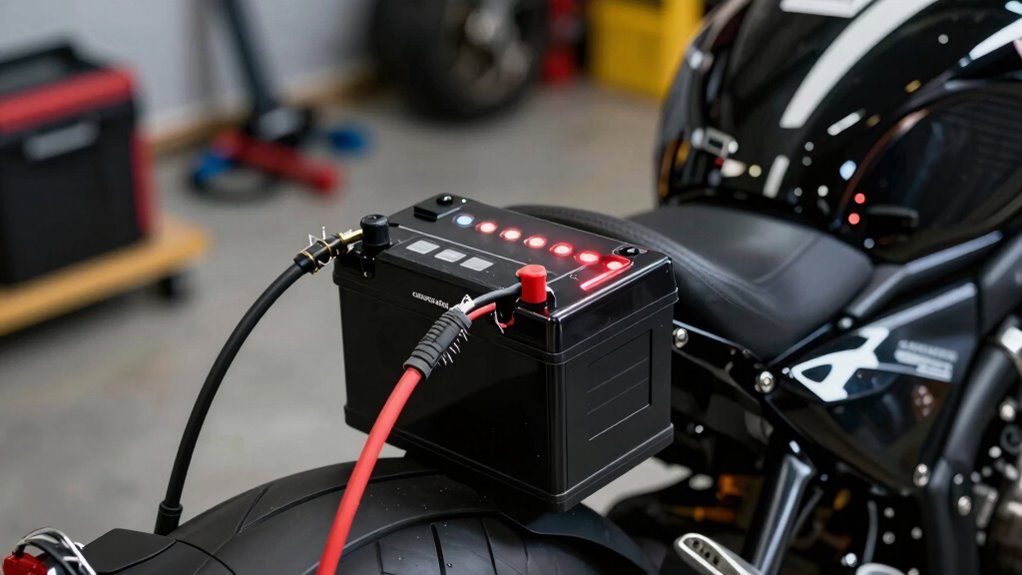
Many riders make simple but costly mistakes when charging their motorcycle batteries, which can lead to reduced battery life or even damage to the electrical system. One common error is neglecting proper battery maintenance, such as overcharging or undercharging, which shortens battery lifespan. To avoid this, always use a compatible charger and follow the manufacturer’s instructions. Charging safety is vital—never leave your battery unattended while charging, and avoid sparks or open flames nearby. Also, verify your charger has automatic shut-off or float mode to prevent overcharging. Ignoring these simple precautions can compromise your battery’s health and safety. Proper battery maintenance and routine checks can significantly extend your battery’s lifespan and performance. Incorporating simple systems into your routine can help ensure consistent and safe charging habits, ultimately extending your battery’s lifespan. Additionally, understanding your battery type and its specific requirements can make a significant difference in maintaining optimal performance. Regularly inspecting your connections and keeping your battery terminals clean can further enhance battery efficiency, ensuring reliable starting power. Implementing proper charging procedures is essential for safeguarding your investment and maintaining peak bike performance.
Easy Tips to Maintain Your Battery and Extend Its Life
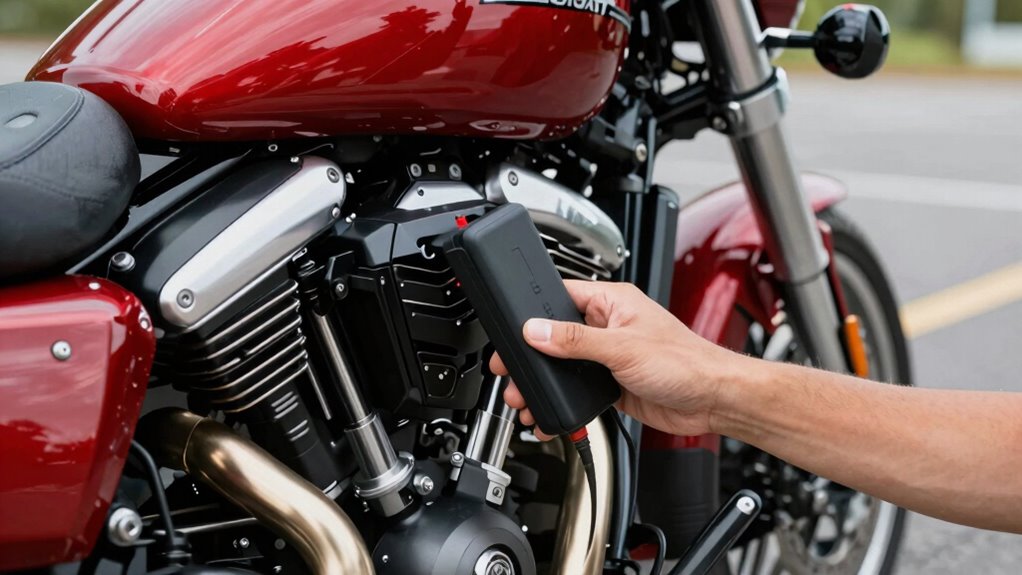
Proper battery maintenance can substantially extend the lifespan of your motorcycle’s battery, saving you money and hassle in the long run. To do this, focus on regular battery maintenance and practicing charging safety. Keep your terminals clean and tight to prevent corrosion and ensure good connections. Use a quality battery tender when your bike is not in use for extended periods, but always follow the manufacturer’s instructions for safe charging. Here are some easy tips:
- Check and top off electrolyte levels if applicable
- Keep your battery charged and avoid deep discharges
- Store your bike in a cool, dry place to prevent battery deterioration
- Regularly inspect the battery condition to catch potential issues early, and stay informed about industry transformations that could impact your equipment.
- Additionally, consider implementing encryption solutions to protect your digital data, especially if you use onboard electronics or connected devices that can be vulnerable to cyber threats.
- Incorporating a glycolic acid skincare routine can also help in maintaining your skin’s health, especially if you experience dry or oily skin due to environmental changes. Staying updated on AI detection methods can also help in safeguarding your digital systems from misinformation.
Troubleshooting Charging Problems : When to Call a Pro
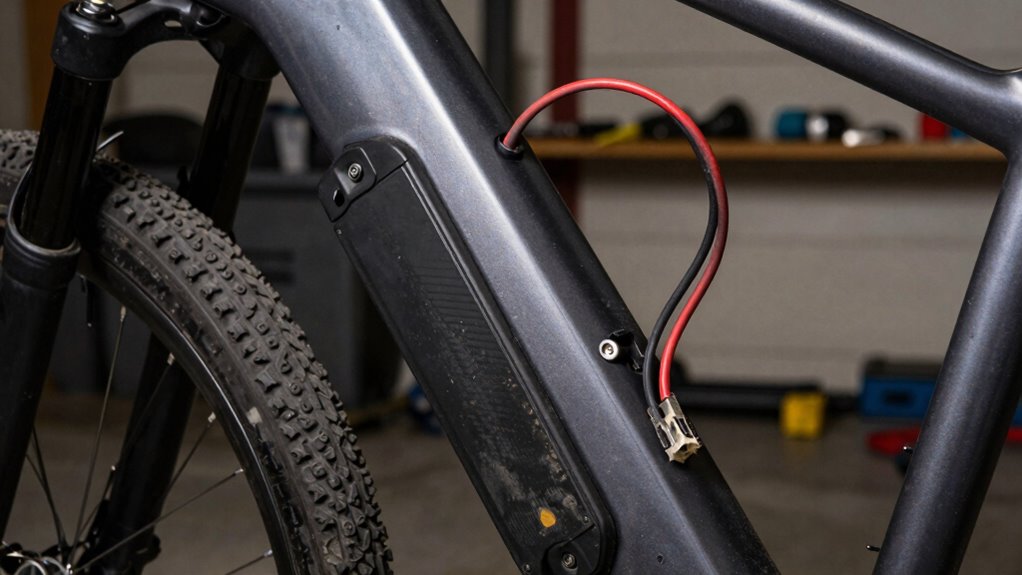
If your motorcycle’s battery isn’t charging properly despite your efforts, it might be time to call in a professional. Charging issues often stem from problems like battery corrosion or faulty voltage regulation. Corrosion on terminals can disrupt current flow, while voltage regulation issues can cause inconsistent charging. Before calling a pro, check these factors:
| Issue | Symptoms | Solution |
|---|---|---|
| Battery corrosion | Visible buildup on terminals | Clean terminals thoroughly |
| Voltage regulation | Inconsistent battery voltage | Professional diagnosis needed |
| Charging system | Battery not holding charge | Seek expert repair |
| Faulty wiring | Intermittent charging | Replace damaged wiring |
| Battery age | Reduced capacity | Replace if necessary |
Regularly inspecting and maintaining your motorcycle’s electrical system can help prevent these issues from occurring unexpectedly. Proper battery maintenance techniques are essential for keeping your charging system in optimal condition. Additionally, ensuring that connections are secure and free of corrosion can help maintain proper electrical flow. Being aware of proper maintenance techniques can help extend the lifespan of your battery and prevent future issues. When in doubt, a professional can accurately diagnose and fix complex issues safely.
Frequently Asked Questions
Can Using a Lower-Cost Charger Damage My High-End Bike’s Battery?
Using a lower-cost charger can damage your high-end bike’s battery if it doesn’t guarantee proper battery compatibility and charger safety. Cheaper chargers often lack the necessary features to regulate voltage and current properly, risking overcharging or undercharging. Always choose a quality charger designed for your bike’s battery specifications to protect its lifespan. Investing in a reliable charger helps prevent costly damage and keeps your high-end bike running smoothly.
How Often Should I Check My Battery’s Health During Off-Season Storage?
You should check your battery’s health monthly during off-season storage. Look for signs of battery corrosion and guarantee voltage stability. Corrosion can lead to poor connections, while voltage fluctuations indicate potential issues. Regular checks help catch problems early, preventing damage. Keep the battery clean, maintain proper charge levels, and monitor its condition to assure it stays in prime shape until you’re ready to ride again.
Are There Specific Indicators That Show My Battery Is Overcharged?
You’ll notice signs of a battery overcharge through indicators overvoltage, such as swelling, excessive heat, or a foul smell. If your battery’s voltage exceeds recommended levels, it’s a clear sign of overcharge. Keep an eye on your battery’s condition and use a multimeter to check voltage regularly, especially during charging. Address overvoltage issues promptly to prevent damage, and avoid overcharging by using a smart battery tender.
What’s the Best Way to Store My Bike’s Battery Long-Term?
To store your bike’s battery long-term, focus on proper battery maintenance and storage solutions. Keep the battery in a cool, dry place away from direct sunlight, and guarantee it’s fully charged before storage. Use a quality trickle charger or battery tender periodically to maintain its health. Remove the battery if possible, and check on it every few months, recharging as needed. This approach helps prevent sulfation and prolongs battery life.
How Do Temperature Changes Affect My Bike Battery’s Charging Process?
Imagine your battery as a delicate dancer, responding to temperature fluctuations like a stage performer adjusting to the spotlight. When temperatures drop, your battery’s efficiency wanes, making charging sluggish and less effective. Conversely, high heat can overheat and damage it. These fluctuations hinder ideal charging, so keep your bike in a stable environment. Proper care ensures your battery performs gracefully, maintaining peak efficiency regardless of the weather’s unpredictable rhythm.
Conclusion
Think of your high-end bike’s battery like a delicate racehorse—requiring the right care to perform at its best. I once saw a rider neglect their tender, and their bike sat dead after a long ride. Don’t let that be you. Choosing the right charger and avoiding common mistakes can keep your bike humming smoothly, just like a well-trained steed. Invest in proper maintenance now, and your bike will thank you with many more thrilling rides ahead.