
TL;DR

Get business pricing on garage and car supplies
- Business-only prices and quantity discounts
- Tax-exempt purchasing
- Multiple users, one account, clear invoices
Nissan has detailed its third-generation e-POWER hybrid system, which pairs a ‘5-in-1’ modular electric drive unit with purpose-built gasoline engines dedicated to power generation. Nissan says the design significantly improves fuel efficiency, output and quietness compared with the second-generation system.
Nissan has detailed the third generation of its e-POWER powertrain, a hybrid system in which the wheels are driven entirely by an electric motor while a purpose-built gasoline engine serves only to generate electricity. According to Nissan’s official technical description, the new system introduces a “5-in-1” modular electric unit and newly designed generator-focused engines, delivering what the company describes as significantly improved fuel efficiency, output and quietness compared with the second-generation system fitted to the Qashqai.
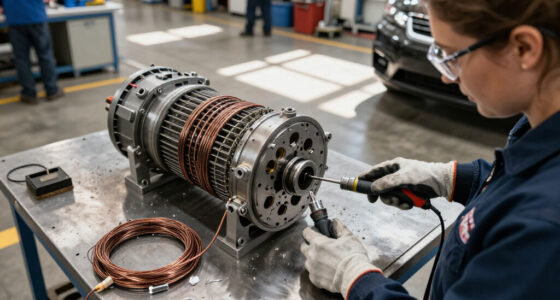
The core of the update is integration. The 5-in-1 approach combines five major components — the motor, reducer, inverter, increaser and generator — into a single optimized package. Nissan says this increases current flow for greater output while reducing energy loss. The motor uses flat wire coils that can be packed with minimal gaps, allowing higher electrical flow, while the inverter uses a latest-generation power module with double-sided cooling to dissipate heat efficiently, particularly at high speeds.
Some models go further with silicon carbide (SiC) power semiconductors in the inverter, which Nissan says reduce power loss compared with conventional silicon components. The practical effect, according to the company, is that more of the generated electricity reaches the wheels, reducing how much electricity the engine must produce and improving fuel economy.
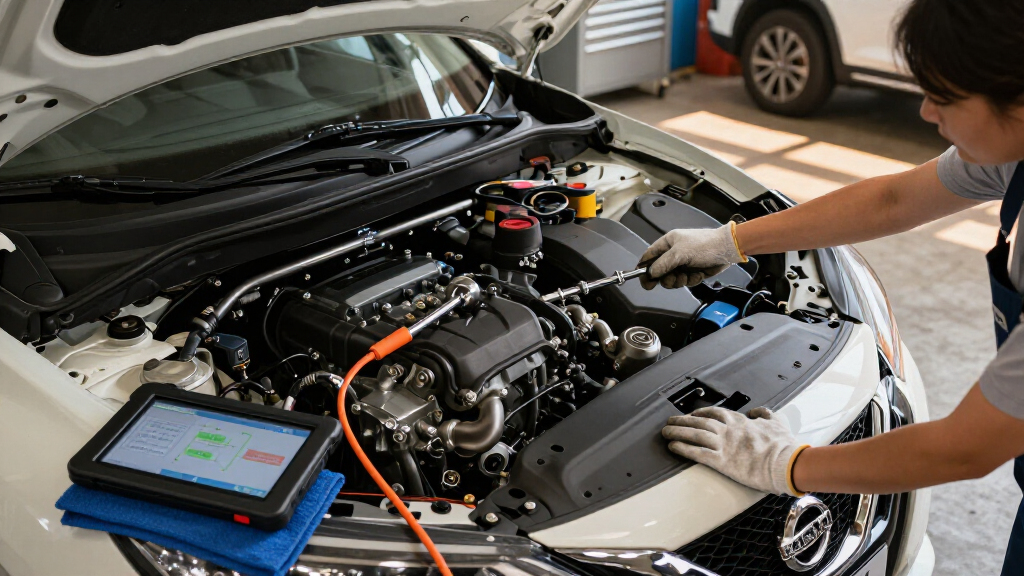
The engine side has also been reworked. Two purpose-built engines are available: the naturally aspirated HR14DDe and the turbocharged ZR15DDTe. Because these engines are not connected to the wheels, they can run at constant, optimized speeds. Nissan says their long-stroke design creates a strong in-cylinder tumble flow, enabling stable combustion even at high compression ratios and high exhaust gas recirculation (EGR) rates — conditions that improve efficiency but are normally difficult to sustain across a wide RPM range. The turbo engine adds Nissan’s STARC combustion concept, first announced in 2021, which controls airflow around the spark plug to keep ignition stable, along with a large turbocharger that raises output and thermal efficiency.
Structural rigidity gains from the integrated 5-in-1 unit also play a quietness role. Nissan says the design avoids interference between the resonance points of the vehicle body and enables high-precision assembly with tighter tolerances on rotating shafts, suppressing vibration.
Why the Redesign Matters for Buyers
e-POWER occupies a distinctive position in the hybrid market: unlike Toyota’s or Honda’s hybrids, the gasoline engine never drives the wheels, so the car behaves like an electric vehicle while avoiding the need to plug in. The trade-off has historically been fuel economy that lags the best full hybrids, since energy passes through a generation-and-drive chain. Nissan’s claim that the third generation significantly improves fuel efficiency addresses that weakness directly.
Cost is the other battleground. Nissan states that by sharing the 3-in-1 EV powertrain’s components with the e-POWER system, it reduces both the number of parts and production investment — supporting a stated company goal of bringing e-POWER costs down to the level of internal combustion vehicles by 2026. For buyers, component sharing between EV and hybrid lines could translate into more competitive pricing across Nissan’s electrified range.
From Note to Qashqai: e-POWER’s Path
e-POWER debuted in 2016 on the Japanese-market Nissan Note and has since spread across models including the Qashqai and X-Trail. The second generation, introduced on the Qashqai, was Nissan’s baseline for the current comparison. Nissan has previously highlighted the system’s dedicated-generator engine achieving roughly 50% thermal efficiency — far above typical road engines — because fixed-point operation lets engineers tune combustion narrowly for efficiency rather than across a full RPM band.
Technologies carried into the third generation include the cold spray valve seat, which Nissan describes as a world-first structure that integrates the valve seat into the intake port, enabling the ideal port shape for strong tumble flow, and the STARC combustion concept announced in 2021. Nissan also references a next-generation “X-in-1” powertrain strategy that further commonizes EV and e-POWER components.
“The third-generation e-POWER system combines a purpose-built engine designed specifically for e-POWER applications.”
— Nissan technical overview (nissan-global.com)
Claims Awaiting Independent Numbers
Nissan’s report describes improvements qualitatively — “significantly improving fuel efficiency and quietness” — but the overview does not provide specific comparative figures for fuel consumption, output or CO2 emissions against the second-generation Qashqai system. Independent test data has not been cited. It is also unclear exactly which models receive the SiC power semiconductors, since Nissan says only “some models” use them, and no market-by-market rollout schedule is given in the technical description.
Rollout and the 2026 Cost Target
Watch for official fuel economy and output specifications as the third-generation system appears in production models, which will allow direct comparison with the second-generation Qashqai e-POWER and rival hybrids. Nissan’s stated 2026 goal of matching ICE vehicle costs for e-POWER is the key milestone on the cost side, alongside the broader “X-in-1” strategy of commonizing EV and hybrid components. Further model announcements carrying the HR14DDe and ZR15DDTe engines are expected as Nissan expands its electrified lineup.
Key Questions
What is e-POWER and how does it differ from a normal hybrid?
e-POWER is a series hybrid: the wheels are always driven by an electric motor, and the gasoline engine exists only to generate electricity for the battery and motor. In most competing hybrids, the engine can also drive the wheels directly. The result is EV-like driving behavior without plugging in.
What is new in the third-generation system?
Two main changes: a 5-in-1 modular electric unit that integrates the motor, reducer, inverter, increaser and generator for higher output and lower losses, and purpose-built generator engines (HR14DDe and turbocharged ZR15DDTe) tuned for stable, efficient fixed-point operation rather than across a wide RPM range.
How much better is the fuel economy?
Nissan says fuel efficiency is significantly improved over the second-generation system, but the technical overview does not publish specific comparative figures. Official homologation numbers for individual models will provide the concrete comparison.
Which models get silicon carbide (SiC) semiconductors?
Nissan says only that “some models” use SiC power semiconductors in the inverter, which cut power loss versus conventional silicon. The company has not listed which specific models or markets receive them.
Why does the engine only generate electricity?
Because the engine is decoupled from the wheels, it can run at a constant, optimized speed. Nissan says this allows stable combustion at high compression ratios and high EGR rates, achieving thermal efficiency — around 50% in Nissan’s earlier dedicated-generator engine — that a conventional engine operating across a wide RPM range cannot match.
Source: hn
Fall Picks
fall essentials
As an affiliate, we earn on qualifying purchases.