TL;DR

Get business pricing on garage and car supplies
- Business-only prices and quantity discounts
- Tax-exempt purchasing
- Multiple users, one account, clear invoices
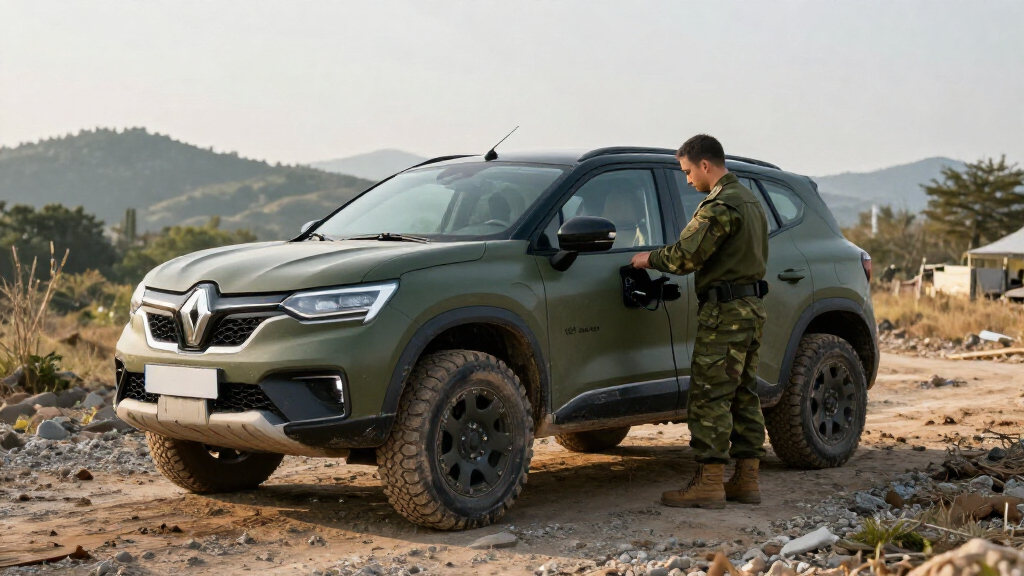
Renault Group has developed the Forefront Concept, a cab-less, remotely operated electric vehicle intended for military and civilian use. French armed forces are due to evaluate it in exercises and trials in the coming weeks; Renault says it will refine the concept using operational feedback.
Renault Group has developed the Forefront Concept, a cab-less, remotely operated electric vehicle intended for military operations and civilian work in dangerous locations. French armed forces are expected to put the prototype through exercises and trials in the coming weeks, after which Renault says it will use operational feedback to refine the design.
The Forefront is an all-electric, all-wheel-drive field vehicle built by Renault Group. Defense company John Cockerill developed its remote-operation and autonomous-driving functions, with input from the French armed forces. It can be controlled remotely by a human operator or sent into areas that are difficult to reach using its autonomous capabilities, according to the report.
Renault lists dual electric motors, four-wheel steering and a projected range of about 250 miles (400 kilometers). The company says an optional range extender could increase that distance, but has not disclosed the battery’s energy capacity or the extender’s specifications. The vehicle is designed to carry a 2,200-pound (one-tonne) payload.
Potential tasks named for the platform include logistics support, anti-drone operations, fire support and evacuation. Renault also presents it as suitable for civilian organizations needing access to hazardous sites. The vehicle is still a concept: the source report gives no price, production date or confirmation of a production order.
Testing a Vehicle Without a Crew
The Forefront is part of a broader shift toward using uncrewed ground vehicles for tasks that could put personnel at risk. A remotely operated vehicle may allow operators to move supplies or approach hazardous areas without placing a driver inside the vehicle. The source report describes that as a potential way to reduce exposure to danger, not as a verified outcome from Forefront trials.
Its intended range of missions also makes the concept relevant beyond combat roles. Evacuation and logistics could require a vehicle to travel into places where access is difficult or unsafe, while civilian users could apply similar capabilities at dangerous industrial or emergency sites. Whether the prototype can perform these roles reliably will depend on testing, including how its remote and autonomous functions work in operating conditions.
Renault says it is using proven automotive components to help control costs and speed production. That approach could matter if the vehicle advances beyond the prototype stage, but no price, manufacturing plan or production commitment has been announced.
Products Worth Considering

NOCO Boost GBX45 12V Lithium Jump Starter, 1,250A

VIOFO A229 Plus Dual-Channel 2K Dash Cam with Front and Rear HDR

Milwaukee M18 FUEL 1/2-Inch High Torque Impact Wrench with Friction Ring Kit
As an affiliate, we earn on qualifying purchases.
From Prototype to Field Trials
The Forefront combines Renault’s vehicle development with John Cockerill’s remote-operation and autonomy systems. The French armed forces provided input during development and are due to assess the vehicle in exercises and trials. Renault’s stated next step is to adjust the concept based on feedback from those tests.
The report places the project among other efforts to develop uncrewed military vehicles. It cites Ukrainian companies producing remotely controlled ground robots for the war against Russia and a U.S. Army contract with American Rheinmetall to develop and deliver a next generation of uncrewed ground vehicles over 18 months. Those programs differ in design and status; they do not establish that Forefront has been selected for service.
The report also compares Forefront with a UGV platform based on Harbinger’s extended-range electric vehicle system. That vehicle uses a gas engine as a generator and is described as having a longer range and a substantially higher payload capacity. Those figures concern the separate Harbinger-based platform, not Renault’s electric concept.
Range, Cost and Production Remain Open
Forefront’s performance has not yet been established in the reported trials. The roughly 250-mile range is a Renault projection, and no test results, battery capacity or range-extender specifications are provided. It is also unclear how the vehicle’s range may change with different payloads, terrain or operating conditions.
Renault has not announced a price, production timeline, order or military service decision. The report says the French armed forces will conduct exercises and trials in the coming weeks, but does not identify their dates, duration, evaluation criteria or whether any other forces will take part. The effectiveness of its remote and autonomous functions in operational settings also remains unconfirmed.
French Forces Begin Field Evaluation
The next reported milestone is the French armed forces’ exercises and trials, scheduled for the coming weeks. Renault says it will use feedback from those evaluations to refine the concept. The source material does not specify when testing results will be released or when Renault might decide whether to pursue production.
Readers should look for updates on trial outcomes, changes to the vehicle’s capabilities and any announcement about manufacturing or procurement. Until Renault or the armed forces provide those details, Forefront remains a development concept rather than a confirmed service vehicle.
Key Questions
What is Renault’s Forefront Concept?
It is a cab-less, all-electric field vehicle designed for remote operation and autonomous driving, with military and civilian uses proposed.
How far can the Forefront travel?
Renault gives a projected range of about 250 miles (400 kilometers) on a full charge. The company says an optional range extender could increase that range, but its specifications and the battery capacity have not been disclosed.
What can the vehicle carry and do?
The reported payload is 2,200 pounds (one tonne). Proposed tasks include logistics support, anti-drone operations, fire support and evacuation; these are intended uses, not confirmed trial results.
Has the Forefront entered production?
No production commitment has been reported. The concept is due for evaluation by French armed forces, and Renault says it will refine the design based on feedback.
Source: insideevs.com