
TL;DR

Get business pricing on garage and car supplies
- Business-only prices and quantity discounts
- Tax-exempt purchasing
- Multiple users, one account, clear invoices
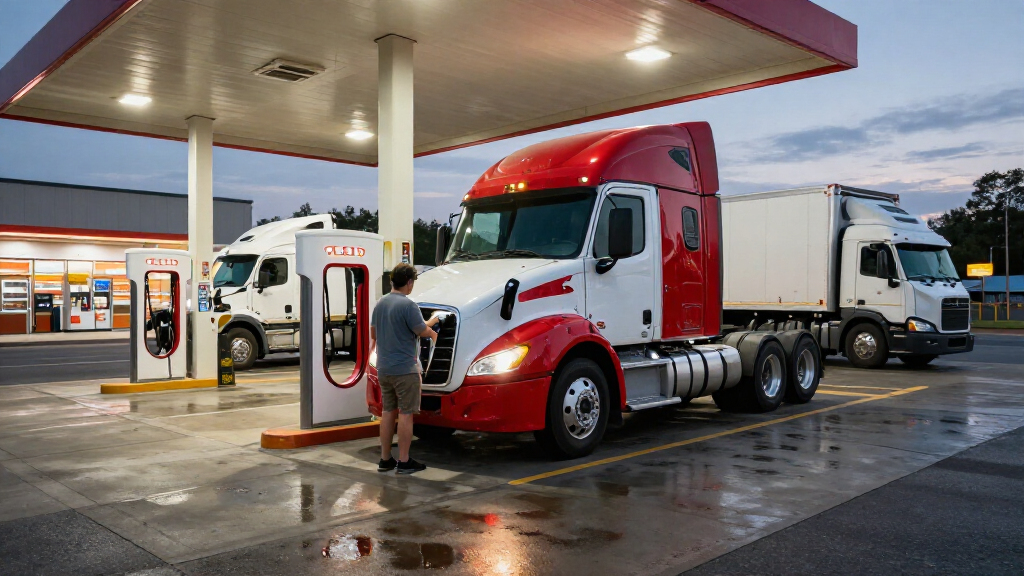
Pilot has opened its first Megachargers for Tesla Semi trucks at a Georgia truck stop and a California Flying J. The six stalls in Ellabell can deliver up to 1.2 megawatts each, but currently accept only Tesla trucks; more Pilot sites are planned, while opening dates and access for other brands remain unannounced.
Pilot has opened its first Tesla Semi Megacharger locations at mainstream truck stops, bringing high-power charging to a Georgia Pilot site and a California Flying J. The openings extend Tesla truck charging beyond the company’s own facilities and California, though the stalls currently serve Tesla Semis only.
The Ellabell, Georgia, Pilot location has six stalls rated at 1.2 megawatts each, according to The Drive’s report. A Flying J in Tulare, California, came online the following day. Sites in Fort Stockton, Texas, and North Las Vegas are next, though the report does not give opening dates for either location. Pilot operates more than 900 locations across the United States and Canada.
Tesla says a 1.2-megawatt stall can restore 60% of a Semi’s charge in 30 minutes. That duration matches the break federal rules require after eight hours of driving, making the stated charging time relevant to long-haul operations. The figure is Tesla’s claim; the report does not provide independent testing or details on the conditions under which a truck would achieve it.
The new sites are part of a still-small network. Electrek counted four customer-facing locations and 26 stalls after Ellabell opened. The Drive reported that Pilot had 12 additional Megacharger sites under construction. Tesla had said it planned about 37 sites for 2026, while Semi program lead Dan Priestley has described a goal of 46 by early 2027. Those are plans and targets, not confirmation that all sites are open or operational.
Truck-Stop Access Could Broaden Routes
Putting chargers at established truck stops addresses a practical obstacle for electric freight: trucks need places to recharge along the routes fleets already use. A network confined to Tesla facilities or a few California locations offers fewer options for operators considering longer or more varied runs. Pilot’s nationwide footprint could give Tesla a route to add charging at familiar stops, if more locations open as planned.
The openings do not by themselves establish that electric trucks can replace diesel operations across those routes. There are still few Semis available to use the network, and the stalls are not currently open to other manufacturers. For fleet managers, the value will depend on charger coverage, truck availability, charging performance in real operating conditions and whether the equipment can eventually serve trucks from other makers.
Products Worth Considering

DEWALT 20V MAX Drill/Driver and Impact Driver Combo Kit (DCK240C2)

DEWALT 20V MAX 1/4-Inch Impact Driver Kit with Battery and Charger (DCF787D1)

DEWALT 20V MAX Cordless 1/2-Inch Impact Wrench Kit (DCF900P1)
As an affiliate, we earn on qualifying purchases.
From Tesla Sites to Public Stops
Until these openings, Semi charging was concentrated at Tesla facilities such as Giga Nevada and a fleet depot near the Port of Long Beach, along with a small number of customer-facing sites in Southern California. A charger at a TA truck stop in Ontario, California, has been open since March, but its reported maximum output is 750 kilowatts. Ellabell and a separate eight-stall Megacharger near Atlanta brought public charging outside California for the first time, according to the report.
The Pilot openings came later than expected: the chargers had been scheduled to open in summer. Tesla’s February map showed 64 more sites marked “coming soon” across 15 states, including 19 in Texas and 17 in California. Those map listings indicate proposed or planned locations; they do not confirm construction completion, operating status or a launch schedule.
“The 1.2-megawatt stalls can restore 60% of a Semi’s charge in 30 minutes.”
— Tesla
Access and Opening Dates Remain Open
When other truck brands can charge at Tesla’s Megachargers has not been announced by Tesla or Pilot. The stalls use the Megawatt Charging System connector, a standard other manufacturers including Daimler and Volvo are building electric trucks around. Priestley has said other trucks will eventually be able to use Tesla’s equipment, but no timetable or access terms have been disclosed.
It is also unclear when the planned Texas and Nevada locations will open, how quickly Pilot’s 12 sites under construction will become operational, and whether Tesla will meet its network targets. The report gives no detailed operating data for the new chargers, such as utilization, actual truck charging times or how many Semis are using them. The total number of Semis on the road remains limited, adding uncertainty about near-term demand.
More Pilot Sites Await Opening
The near-term development to watch is the opening of the announced sites in Fort Stockton and North Las Vegas, followed by progress at Pilot’s other locations under construction. Tesla’s stated targets—about 37 sites for 2026 and 46 by early 2027—provide benchmarks, but the source report does not specify a firm schedule for each location.
Fleet operators and other truck makers will also be watching for a policy or timetable on non-Tesla access. Until that is clarified, the Pilot network’s immediate benefit is limited to Tesla Semis. Further openings and published operating details will show whether the planned expansion becomes useful coverage for freight routes rather than a small set of isolated charging points.
Key Questions
Where have Pilot’s Tesla Semi chargers opened?
The reported locations are a Pilot truck stop in Ellabell, Georgia, and a Flying J in Tulare, California. More sites are planned in Fort Stockton, Texas, and North Las Vegas.
How powerful are the new Megachargers?
The six Ellabell stalls are rated at 1.2 megawatts each. Tesla says that output can restore 60% of a Semi’s charge in 30 minutes, but the report does not include independent performance testing.
Can electric trucks from other manufacturers use them?
Not currently, according to the report. The chargers use the Megawatt Charging System connector, but Tesla and Pilot have not announced when access might extend to other brands.
How many Tesla Semi charging sites are planned?
Tesla has said it planned about 37 Megacharger sites for 2026, and Semi program lead Dan Priestley has set a goal of 46 by early 2027. These are targets, not confirmed counts of operating sites.
Source: thedrive.com