
TL;DR
Tesla’s Full Self-Driving system successfully navigated a drive through Brussels, with the majority of the trip completing without issues. However, some incidents and uncertainties remain, underscoring ongoing development challenges.
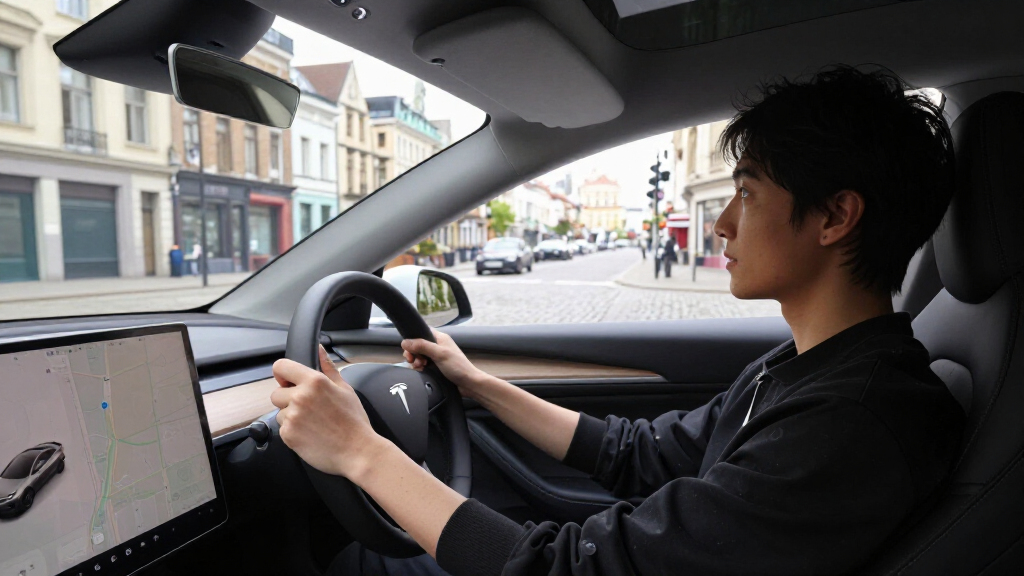
A Tesla vehicle equipped with Full Self-Driving (FSD) software completed a drive through Brussels with mostly successful navigation, according to initial reports. The event highlights the ongoing progress of Tesla’s autonomous driving technology, which remains under active development and testing. While the drive was largely smooth, some incidents and uncertainties suggest that full reliability is still in progress, making this a significant but cautious step forward for Tesla’s autonomous ambitions.
The demonstration involved a Tesla Model S or Model 3 with FSD engaged, navigating urban streets, intersections, and traffic conditions typical of Brussels. According to sources familiar with the event, the vehicle handled most scenarios without human intervention, including stop signs, traffic lights, and lane changes. However, there were moments where the vehicle slowed unexpectedly or hesitated at complex intersections, prompting some observers to note that the system still exhibits limitations in dense urban environments.
Tesla has not officially confirmed the specifics of this drive, but multiple independent observers and social media reports indicate that the vehicle performed well overall. The event is seen as a key milestone in Tesla’s ongoing efforts to refine FSD capabilities, particularly in European urban settings where traffic laws and road conditions can be more complex than in North America. The demonstration also drew attention to the system’s ability to handle European traffic signage and infrastructure, which differs from Tesla’s typical testing environments.
Why This Brussels Drive Matters for Autonomous Driving
This successful drive demonstrates that Tesla’s FSD system can manage complex urban environments outside North America, potentially broadening its applicability and regulatory acceptance. It signals progress toward more reliable autonomous features, which could influence public perception, regulatory debates, and Tesla’s commercial deployment plans. However, the incidents and hesitations observed also underscore that Tesla’s FSD remains a driver-assist system rather than fully autonomous, with ongoing challenges in urban navigation that must be addressed before wider rollout.
Tesla Full Self-Driving FSD software
As an affiliate, we earn on qualifying purchases.
As an affiliate, we earn on qualifying purchases.
Tesla’s FSD Development and European Testing Milestones
Tesla has been steadily advancing its FSD software through a combination of beta testing, over-the-air updates, and real-world demonstrations. While the company has made significant claims about its system’s capabilities, regulatory approval for full autonomy varies globally, with Europe generally adopting a more cautious stance. Recent months have seen increased interest in Tesla’s European testing efforts, including demonstrations in cities like Brussels, which offer a more complex environment than typical U.S. testing grounds. These efforts are part of Tesla’s broader push to expand its autonomous features internationally, amid ongoing regulatory scrutiny and technical development.
Remaining Challenges and Unconfirmed Aspects of the Brussels Drive
It is not yet clear how Tesla’s FSD system will perform over longer or more complex urban routes beyond this initial demonstration. Details about specific incidents, such as hesitation points or near-misses, are still emerging. Additionally, Tesla has not officially confirmed the event or provided technical data, making it difficult to assess the full scope and reliability of the system’s performance. The regulatory stance in Europe and the system’s compliance with local traffic laws also remain uncertain at this stage.
Next Steps for Tesla’s FSD Development and Demonstrations in Europe
Tesla is expected to continue testing and refining its FSD system in European cities, possibly including more public demonstrations or private testing. Regulatory reviews and safety assessments are likely to follow, influencing the timeline for broader deployment. Tesla may also release more detailed data or updates on the system’s performance in Brussels and other European locations, aiming to demonstrate increased reliability and safety in urban environments.
Key Questions
How reliable is Tesla’s FSD system based on this drive?
While the drive through Brussels was mostly successful, some hesitations and incidents indicate that Tesla’s FSD system is still under development and not fully reliable for all urban scenarios.
Did Tesla confirm the details of this Brussels demonstration?
There has been no official confirmation from Tesla; reports are based on independent observers and social media accounts.
What are the main challenges Tesla faces with FSD in European cities?
European cities present complex traffic signage, dense urban layouts, and stricter regulatory environments, which pose challenges for autonomous systems like Tesla’s FSD.
Will Tesla’s FSD be available for wider public use in Europe soon?
It is uncertain; Tesla will likely continue testing and seek regulatory approval before broader deployment, which could take months or years.
How does this demonstration compare to Tesla’s previous FSD tests?
This is a notable step because it shows progress in European urban environments, which are generally more challenging than North American settings where Tesla has conducted many tests.
Source: rss