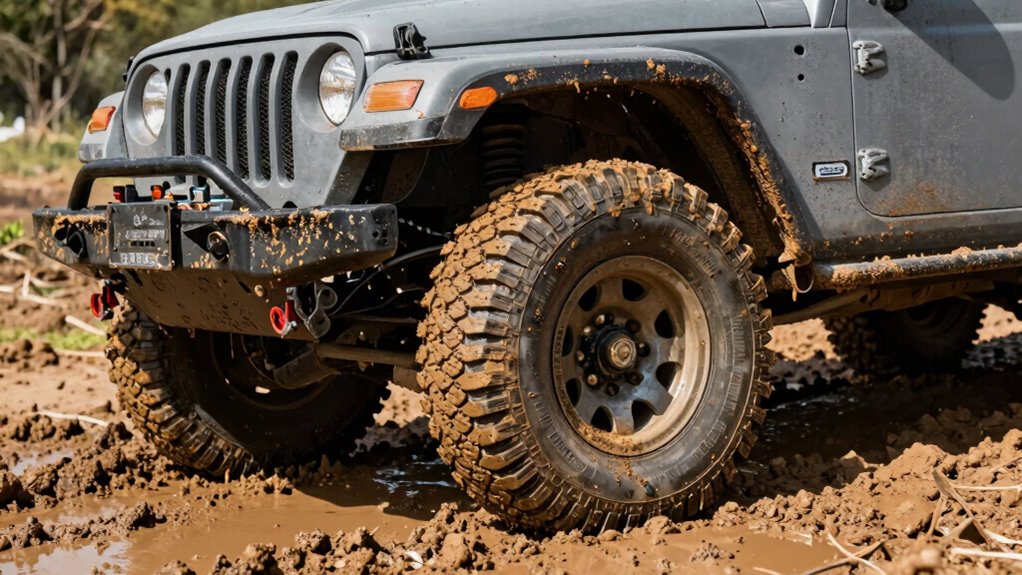

When you engage 4×4, your vehicle sends power to all four wheels equally, giving you better traction on muddy trails. AWD automatically adjusts power between front and rear wheels to prevent slipping and keep you stable. Diff lock locks the differentials, forcing both wheels on an axle to turn together, which is essential in deep mud or ruts. Understanding when and how to use these modes can help you confidently tackle muddy terrains, and you’ll find more tips below.

Get business pricing on garage and car supplies
- Business-only prices and quantity discounts
- Tax-exempt purchasing
- Multiple users, one account, clear invoices
Key Takeaways
- 4×4 engages all wheels simultaneously, providing maximum traction in deep, muddy terrain.
- AWD automatically adjusts power between front and rear wheels to maintain stability on slippery surfaces.
- Diff lock forces both wheels on an axle to turn together, improving grip in rutted or uneven muddy conditions.
- Using diff lock prevents wheel spin and helps push through deep mud when standard systems struggle.
- Properly selecting drivetrain modes and tire pressure optimizes traction and prevents getting stuck in muddy environments.
4×4 off-road vehicle accessories
As an affiliate, we earn on qualifying purchases.
As an affiliate, we earn on qualifying purchases.
What Are 4×4, AWD, and Diff Lock: And How Do They Help in Mud?
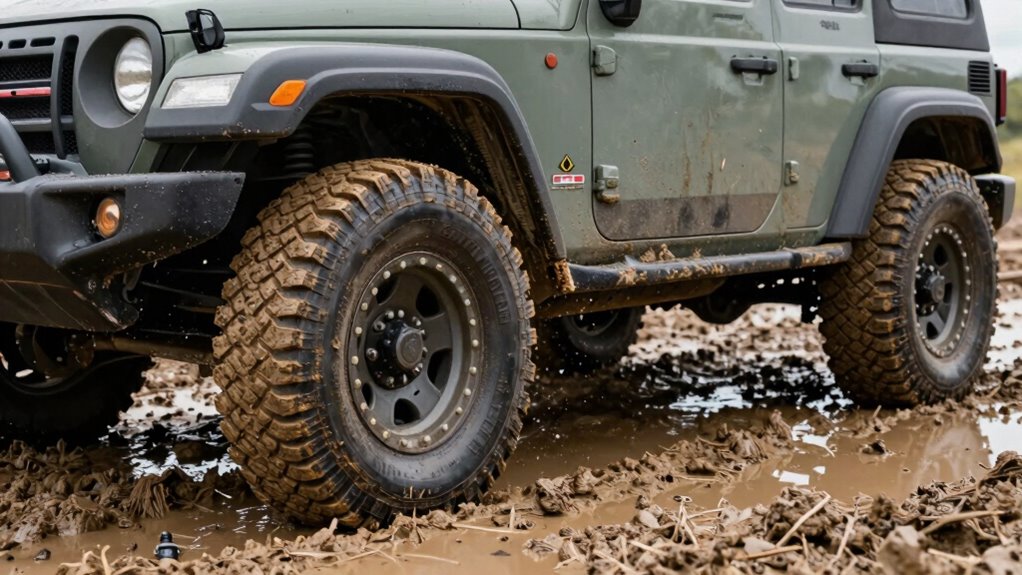
Have you ever wondered how certain vehicles tackle muddy terrain with ease? It all comes down to systems like 4×4, AWD, and diff lock. 4×4 engages all four wheels, distributing power evenly to improve traction, especially in slippery conditions. All-Wheel Drive (AWD) continuously monitors wheel slip and adjusts power delivery automatically, helping you maintain control. Diff lock is a feature that locks the differential, forcing both wheels on an axle to turn at the same speed, preventing wheel spin in deep mud. Proper traction control is essential; it prevents wheels from slipping excessively. Additionally, maintaining the right tire pressure increases the contact patch, boosting grip. When these systems work together, they give you better stability and confidence in muddy terrains. Traction control systems are crucial for preventing wheel slip and maintaining optimal grip during challenging driving conditions. Regular maintenance of these systems ensures they operate effectively when needed.
How Does 4×4 Power Your Vehicle Through Muddy Trails
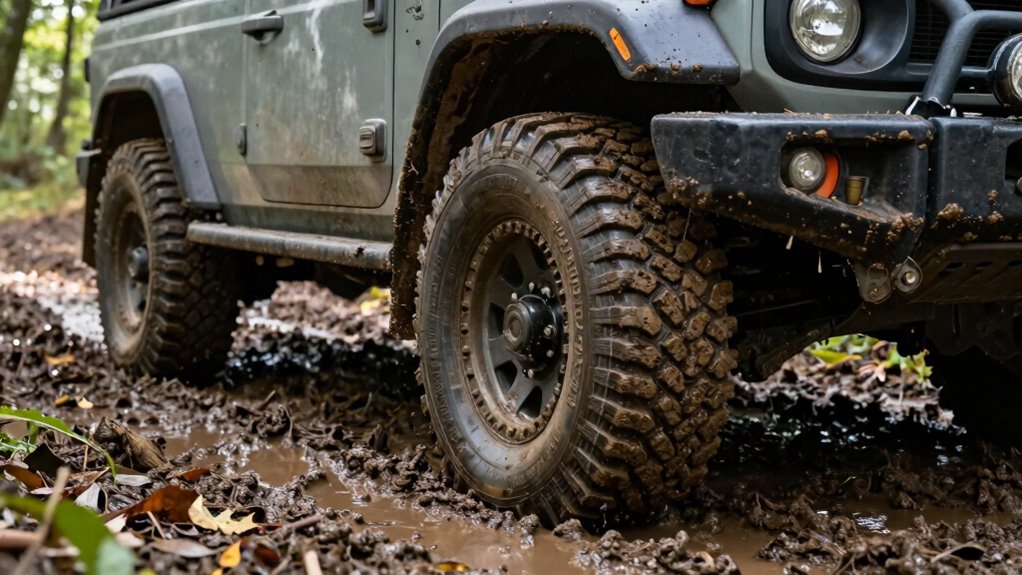
When you activate 4×4, your vehicle distributes power to all four wheels simultaneously, giving you improved traction and control in muddy trails. This helps you push through slick, uneven terrain more confidently. With 4×4 engaged, your vehicle’s tire traction increases because power is evenly spread, reducing wheel spin. Additionally, suspension flexibility adapts to rough, muddy surfaces, absorbing shocks and maintaining stability. Visualize this:
- Your tires grip muddy patches, preventing slipping.
- The suspension flexes over rocks and ruts, keeping wheels in contact.
- Power is transferred efficiently to wheels with the most grip.
- Your vehicle maintains momentum, avoiding getting stuck.
A high contrast ratio in your vehicle’s lighting and display systems can also improve visibility in challenging off-road conditions.
Furthermore, understanding the off-road capabilities of your vehicle can enhance your confidence when tackling muddy trails, especially when combined with proper traction control techniques.
What Does AWD Do in Muddy Conditions: And When Should You Use It?
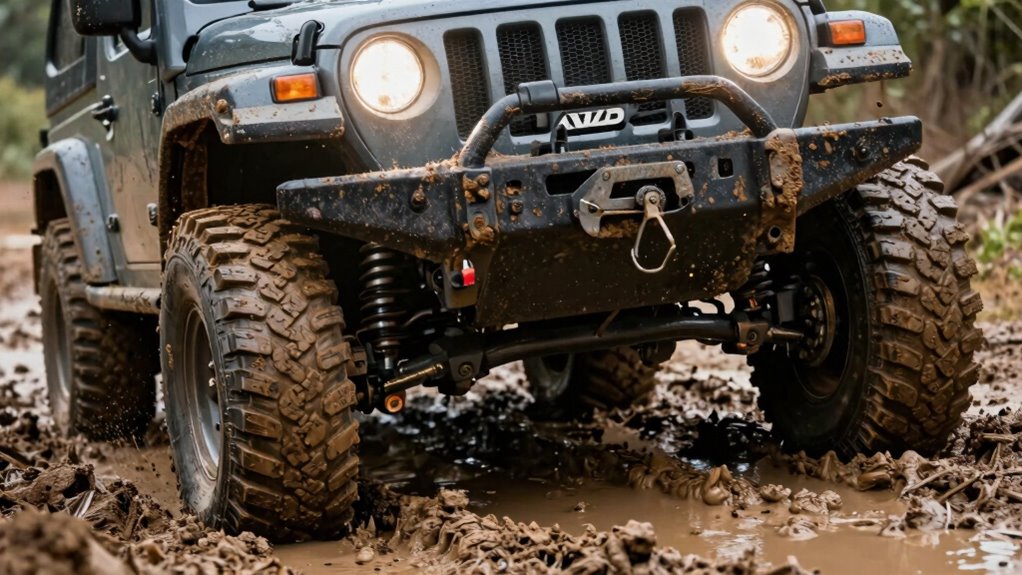
In muddy conditions, AWD automatically distributes power between the front and rear wheels to maintain traction and stability. This system helps prevent wheel spin by adjusting torque, allowing you to keep moving forward. To optimize AWD effectiveness, make certain your tires have proper pressure—overinflated tires reduce grip, while underinflated tires improve traction in mud. Traction control systems complement AWD by preventing wheel slip, but they work best when tire pressure is correct. You should use AWD when you encounter slippery, muddy terrain that challenges your tires’ grip, especially on uneven surfaces. Engaging AWD early, before wheels start slipping excessively, helps you maintain control and avoid getting stuck. Remember, AWD doesn’t replace careful driving but enhances your vehicle’s ability to handle tricky mud conditions. Proper maintenance and understanding your vehicle’s drivetrain modes can further improve your off-road performance. Additionally, familiarizing yourself with the advanced off-road features of your vehicle can provide better control in challenging conditions. Using traction management systems effectively can further enhance your ability to navigate difficult terrain. Being aware of your vehicle’s limited slip differentials can also make a significant difference in maintaining traction during severe off-road situations. Recognizing the importance of safety precautions helps ensure your off-road adventures remain both enjoyable and secure.
When and Why Should You Engage Diff Lock on Muddy Trails

Engaging the diff lock becomes essential when you face particularly challenging muddy trails where standard traction systems can’t keep your wheels turning. You should activate it in situations like these:
Engage the diff lock on muddy trails when standard traction fails to keep your wheels turning.
- When you’re stuck with wheels spinning but no forward movement.
- Maneuvering deep ruts where tires need to turn together for traction.
- Crossing slick, uneven patches that demand equal wheel power.
- After adjusting tire pressure for better grip, when extra traction is still needed.
- Ensuring the proper fundamental techniques are used to maximize traction and control. Using trail navigation techniques like steady throttle and avoiding sudden steering helps. Remember, engaging diff lock on muddy trails improves your chances of moving forward, especially when tire pressure adjustments alone aren’t enough. It’s a critical tool for overcoming severe mud obstacles and maintaining vehicle stability on slippery terrain.
Choosing the Best Drivetrain Mode for Different Muddy Scenarios
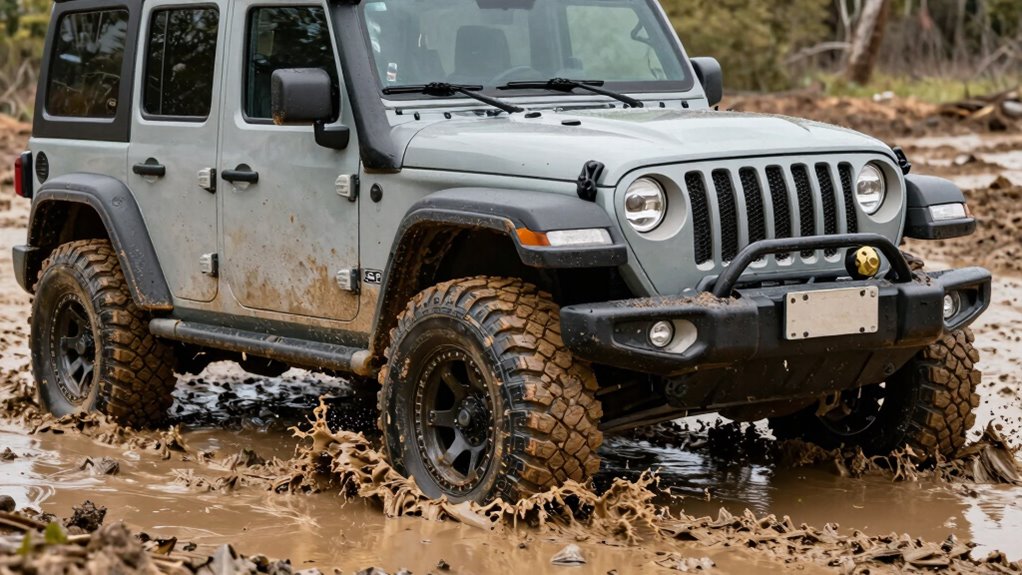
Choosing the right drivetrain mode can make all the difference when tackling different muddy conditions. If the mud is deep and sticky, engaging 4×4 with diff lock and lowering tire pressure improves traction and prevents wheel spin. For shallow mud or wet surfaces, AWD with moderate tire pressure works well, maintaining good ground clearance without risking getting stuck. Always adjust ground clearance based on terrain; higher clearance helps avoid getting bogged down. Additionally, understanding how drivetrain modes distribute power is key to selecting the best option for each muddy scenario.
Frequently Asked Questions
Can I Switch Between 4×4, AWD, and Diff Lock While Driving?
You can usually switch between 4×4, AWD, and diff lock modes while driving, but it depends on your vehicle. Check your owner’s manual for proper procedures to avoid damage. Remember, maintaining your vehicle properly and selecting the right tires are vital for effective performance in mud. Switching modes at the right time helps you stay in control, especially in challenging terrain. Always drive carefully when adjusting drive modes on the go.
How Do I Know When to Engage Diff Lock in Muddy Conditions?
You should engage the diff lock when you notice wheel slip or lose traction on muddy terrain. When your wheels spin freely but your vehicle doesn’t move forward, it’s time to lock the differential. Engage it to distribute power evenly to both wheels, helping you gain grip. Keep an eye on traction control indicators, and don’t hesitate to activate diff lock early if mud gets particularly slick or deep.
Are There Risks to Using Diff Lock on Slippery Surfaces?
Using diff lock on slippery surfaces can risk drivetrain failure because it forces both wheels on an axle to turn at the same speed, even if one slips. This increases tire slippage and stress on drivetrain components, potentially causing damage. Only engage diff lock when necessary, such as when wheel slippage occurs, and disengage as soon as traction improves to avoid unnecessary wear or failure.
Do All Vehicles With 4×4 or AWD Have Diff Lock Features?
Not all vehicles with 4×4 or AWD have diff lock features. Vehicle compatibility depends on the model and differential types, like open, limited-slip, or locking differentials. Some trucks and off-road vehicles include diff lock for better traction, but many on-road vehicles don’t. If you’re considering one, check your vehicle’s specifications to see if it offers a diff lock option, especially if you plan to tackle challenging terrains.
How Does Terrain Type Affect the Choice of Drivetrain Mode?
You should choose your drivetrain mode based on terrain type to maximize traction and control. For muddy conditions, switch to 4×4 or engage diff lock if available, which helps prevent wheel spin. Also, prioritize drivetrain maintenance and select tires suited for mud to improve grip. On rocky or uneven terrain, use low-range modes, while on pavement, switch back to two-wheel drive for better efficiency.
Conclusion
Now that you know how 4×4, AWD, and diff lock work in mud, you’re ready to tackle those tricky trails. But remember, the right mode at the right moment can make all the difference—yet, sometimes, the terrain will surprise you. Will your vehicle handle it, or will you need to switch gears on the fly? Stay sharp and keep your options open—your next muddy adventure might just test your skills when you least expect it.
Halloween Picks
halloween
As an affiliate, we earn on qualifying purchases.