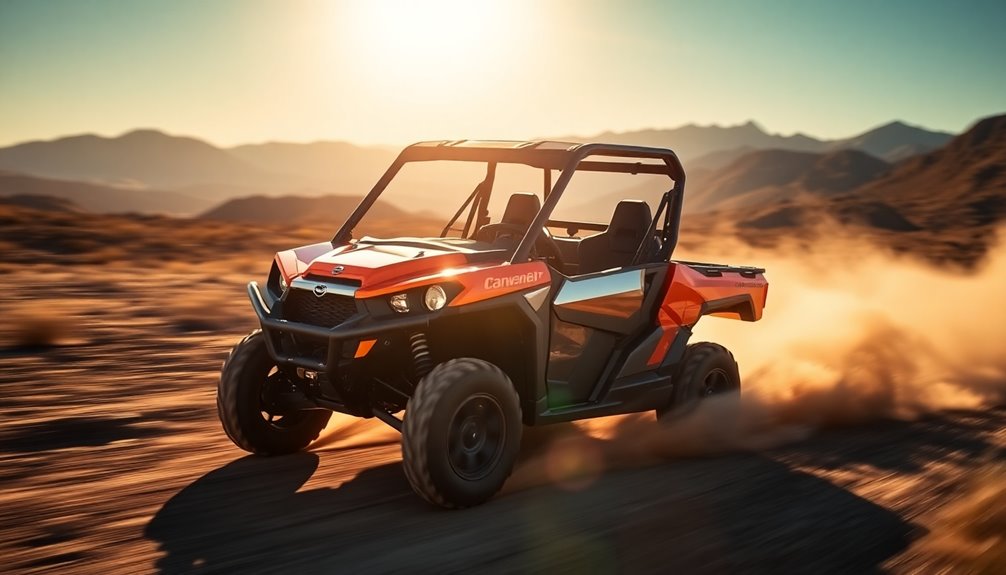
Can-Am’s Traction Vectoring actively manages power distribution to each wheel, boosting your off-road stability and grip on tough terrains like mud and steep inclines. It detects wheel slip instantly and shifts torque to the wheels with better traction, helping you stay in control. This system works seamlessly in the background, improving handling without uncomfortable interruptions. If you want to discover how this innovative technology can enhance your adventures, there’s more to explore below.
Key Takeaways
- Can-Am’s Traction Vectoring system actively manages power distribution to improve off-road stability.
- It detects wheel slip and instantly redirects torque to wheels with better grip.
- The system enhances vehicle control on challenging terrains like mud, gravel, and steep inclines.
- It operates seamlessly in the background, ensuring smoother handling and safety.
- Traction Vectoring boosts off-road performance, allowing for more confident exploration of rugged environments.

Can-Am Traction Vectoring is a cutting-edge technology designed to enhance your off-road experience by improving vehicle stability and grip. When you’re tackling challenging terrains, having superior off-road capabilities makes all the difference, and this system plays a key role in delivering that. By actively managing power distribution to each wheel, Traction Vectoring helps guarantee you maintain control, even on the most uneven or slippery surfaces. This means you can push your vehicle further into rugged environments without fearing loss of traction or stability.
Can-Am Traction Vectoring enhances off-road stability by intelligently managing power to each wheel for better control and grip.
As you ride through mud, loose gravel, or steep inclines, Traction Vectoring adjusts dynamically to the terrain’s demands. Instead of relying solely on the driver’s skill, this system responds instantly to changing conditions, directing torque where it’s needed most. If one wheel begins to slip, the system detects it and shifts power to the wheel with better grip. This targeted approach not only keeps you moving forward but also enhances your vehicle’s stability, preventing unwanted skidding or rolling over. It’s like having an extra set of eyes and hands working to keep your ride on course.
The benefit of this technology extends beyond just maintaining momentum. With improved off-road capabilities, you gain confidence to explore more challenging trails, knowing your vehicle can adapt and respond in real-time. Whether you’re navigating rocky paths or soft sand, Traction Vectoring ensures that your vehicle’s stability remains uncompromised. This responsiveness means you can focus more on the trail ahead rather than worrying about losing control, making your adventures safer and more enjoyable.
Furthermore, the seamless integration of Traction Vectoring with other vehicle systems means it operates smoothly without interrupting your ride. It works quietly in the background, constantly analyzing wheel traction and adjusting torque distribution accordingly. This proactive management results in better handling, reduced tire slip, and a more composed ride under demanding conditions. Over time, you’ll notice how much more predictable and confident your vehicle feels, even when faced with unpredictable terrain.
In essence, Can-Am’s Traction Vectoring transforms your off-road experience by combining advanced technology with practical performance benefits. It gives you the tools to conquer tough terrains with greater stability, control, and peace of mind. When you’re out exploring remote trails or pushing your limits, this system ensures that your vehicle’s off-road capabilities are maximized, making every adventure safer and more exhilarating. Additionally, understanding personality traits of your vehicle’s systems can help you better optimize their use for different terrains and conditions.
Frequently Asked Questions
How Does Traction Vectoring Improve Off-Road Performance?
Traction vectoring boosts your off-road performance by enhancing cornering stability and terrain adaptability. It actively adjusts power distribution to each wheel, helping you navigate sharp turns and uneven surfaces with ease. This technology keeps your vehicle balanced, reduces slipping, and maintains traction, so you can confidently tackle challenging terrains. With better control and stability, you’ll experience smoother rides and improved handling in all off-road conditions.
Is Traction Vectoring Available on All Can-Am Models?
Traction vectoring isn’t available on all Can-Am models; its system availability depends on the specific model you’re interested in. You’ll find it on select high-performance models designed for off-road adventures, where it enhances traction and handling. To determine compatibility, check the specifications of each model, as some are equipped with this advanced feature while others aren’t. Always confirm with your dealer to ensure the model meets your performance needs.
What Maintenance Is Required for Traction Vectoring Systems?
You might wonder if your traction vectoring system needs special care. It does—regular system calibration ensures it performs at its best, and software updates are vital to keep everything running smoothly. Keep an eye on your vehicle’s manual for specific instructions, but generally, schedule these checks with your dealer. Proper maintenance not only prolongs system life but also guarantees your safety and confidence on the trail.
Does Traction Vectoring Affect Fuel Efficiency?
Traction vectoring can impact fuel efficiency, but the effect is usually minimal. When you activate this system, it improves handling and stability, which can lead to better control and possibly more efficient driving. However, it requires additional energy, slightly increasing fuel consumption. Overall, the efficiency impact is small, and the benefits of enhanced traction often outweigh any minor increase in fuel usage, especially during challenging driving conditions.
Can Traction Vectoring Be Turned off or Adjusted Manually?
You can definitely adjust or turn off traction vectoring manually. Think of it as having your cake and eating it too—you get control over the system adjustment. Most Can-Am models feature a manual control option, allowing you to customize the traction vectoring settings based on your riding conditions. Always check your user manual for precise steps, but generally, you can access the control panel to toggle or fine-tune the system easily.
Conclusion
With Can-Am’s traction vectoring, you gain unmatched control and confidence on any terrain. It’s like having a personal assistant that keeps you steady and secure, no matter how tough the trail gets. Can you imagine the freedom you’ll feel knowing you can tackle any challenge with ease? This technology isn’t just about performance; it’s about transforming your adventure experience. So, are you ready to take your rides to the next level and conquer every obstacle in your path?