
Using a narrow spray angle during pressure washing can severely damage bearings by stripping away lubrication layers and eroding protective coatings. This concentrated spray forces water directly onto delicate surfaces, increasing wear and exposing metal to corrosion. Over time, this accelerates bearing failure and leads to costly repairs. If you want to know how to prevent this kind of damage and protect your equipment, keep looking for the key details that can save you money and downtime.

Get business pricing on garage and car supplies
- Business-only prices and quantity discounts
- Tax-exempt purchasing
- Multiple users, one account, clear invoices
Key Takeaways
- Narrow spray angles focus force, increasing the risk of removing lubrication and damaging bearing surfaces.
- High-pressure jets can strip protective coatings, exposing bearings to corrosion and environmental damage.
- Improper spray angles can erode lubrication layers, accelerating wear and failure.
- Focused water jets can cause surface erosion and damage delicate bearing components.
- Using wide spray angles helps distribute force, minimizing damage to bearings during cleaning.
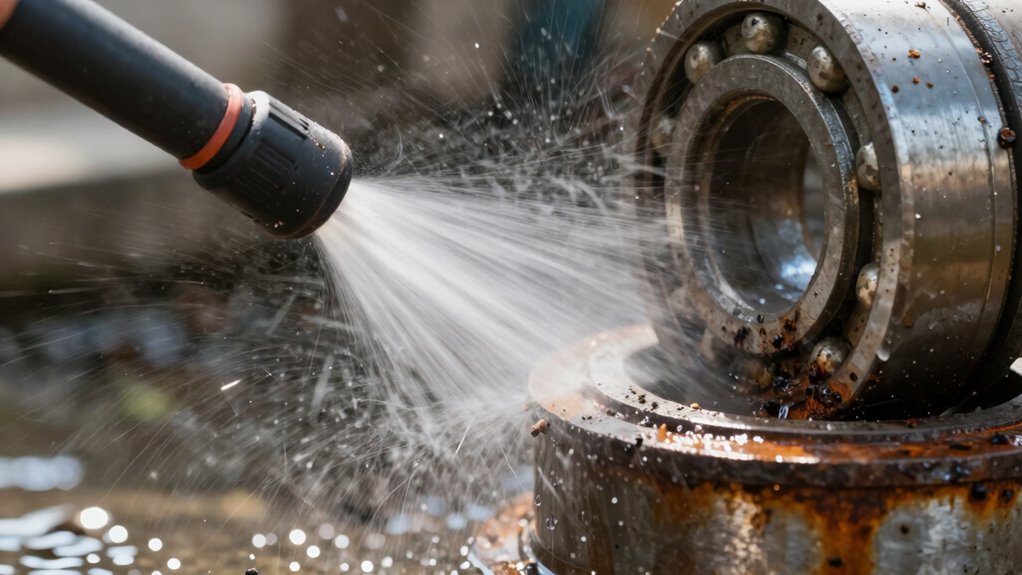
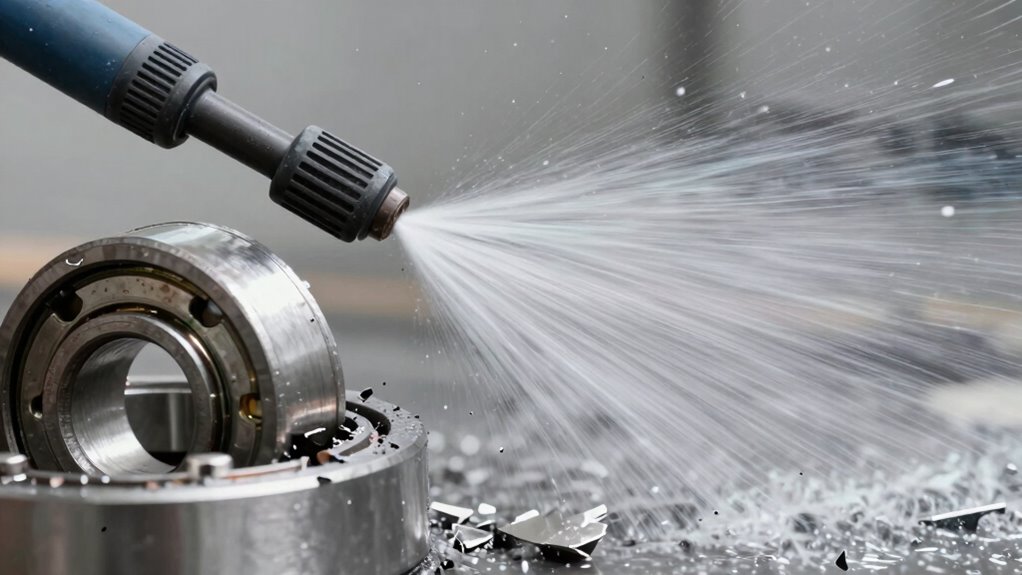
Have you ever wondered how pressure washers can damage bearings? It’s more common than you might think, especially when using certain spray angles. Bearings rely on proper lubrication to function smoothly, and a high-pressure spray can strip away this essential lubrication layer. When bearing lubrication gets compromised, the metal surfaces start grinding against each other, causing increased wear and, eventually, failure. The force of a pressure washer can displace or wash out the grease or oil that keeps the bearing operating silently. Once lubrication is lost, the bearing becomes vulnerable to damage from even minor contaminants, accelerating wear and leading to costly repairs.
High-pressure sprays can strip bearing lubrication, causing increased wear, contamination entry, and premature failure.
Another way pressure washers harm bearings is through surface corrosion. When a high-pressure jet hits exposed metal parts, it can strip away protective coatings or paint, leaving metal surfaces exposed to moisture and environmental elements. Over time, this exposure promotes surface corrosion, which weakens the bearing’s structural integrity. Corrosion creates rough patches on the bearing’s surface, making it more susceptible to friction and further degradation. When combined with inadequate lubrication, corrosion can rapidly deteriorate the bearing, causing it to seize or fail prematurely. Additionally, improper spray angles can increase the risk of surface erosion, which further accelerates damage. Using incorrect spray angles can also disturb the lubrication layer, compounding the risk of damage.
The spray angle of your pressure washer plays a critical role in how much damage it inflicts. A common mistake is using a wide spray angle, which disperses water over a broad area but reduces precision. Conversely, a narrow spray angle concentrates the pressure into a tight jet, increasing the risk of damaging delicate components like bearings. When you aim a narrow spray directly at bearings, the force can erode lubrication layers and accelerate surface corrosion. This focused jet can also chip away protective coatings, exposing bare metal to corrosion-causing elements. In essence, a small change in spray angle can mean the difference between safe cleaning and costly damage. Proper pressure washer techniques can significantly reduce the risk of bearing damage, saving you money and repairs in the long run.
To avoid these issues, you need to be mindful of your spray angle and distance. Keep the spray at a safe distance and use a wider angle when cleaning around bearings, so you minimize direct impact. Regularly inspect bearings for signs of corrosion or lubrication loss, especially after pressure washing. If you notice surface corrosion or dry, gritty bearings, it’s time to re-lubricate or replace them. Recognizing how pressure washers affect bearings helps you prevent damage and extend the life of your equipment. Remember, proper technique combined with understanding the impact of spray angles can save you money and frustration in the long run.
pressure washer bearing protection
As an affiliate, we earn on qualifying purchases.
As an affiliate, we earn on qualifying purchases.
Frequently Asked Questions
Can Adjustable Spray Angles Prevent Bearing Damage?
Yes, adjusting the spray angle can improve bearing safety. A narrower spray angle directs water pressure more precisely, reducing the risk of damaging bearings. By choosing the right spray angle, you avoid excessive force on delicate components, preventing wear and tear. Always use a safer spray angle for bearing maintenance or cleaning, and avoid high-pressure, wide-angle sprays that can cause unnecessary damage. Proper adjustments help extend bearing lifespan and maintain equipment integrity.
What Pressure Setting Is Safe for Bearing Maintenance?
For bearing maintenance, keep your pressure washer set below 1,500 PSI—anything higher risks stripping bearing lubrication and causing damage. Ironically, the very tool meant to clean can ruin bearings if misused. Always use gentle pressure, and avoid aggressive spray angles during pressure washer maintenance. Maintaining a safe pressure guarantees your bearings stay lubricated and functional, prolonging their lifespan and preventing costly repairs.
Are There Specific Nozzles Designed for Delicate Parts?
Yes, there are nozzles designed for delicate parts. You should look for nozzles with softer materials like plastic or rubber, which reduce impact. These nozzles typically have a wider spray pattern, distributing water more gently. Avoid metal nozzles with narrow spray angles, as they can damage sensitive components. Using the right nozzle material and spray pattern helps prevent harm to delicate parts while still cleaning effectively.
How Often Should Bearings Be Inspected After Pressure Washing?
You should inspect bearings after pressure washing at least once every few months, especially if they’ve been exposed to high-pressure spray angles that can damage them. Regular inspections help you check the lubrication importance and identify wear early, which can extend bearing lifespan. If you notice any noise, roughness, or play, it’s time to re-lubricate or replace the bearings to prevent costly failures and maintain ideal equipment performance.
Does Water Temperature Affect Bearing Damage Risk?
Yes, water temperature affects bearing damage risk. Hot water can cause the lubricant inside bearings to break down, leading to increased friction and wear. Conversely, cold water might make bearings more brittle and susceptible to cracking. When pressure washing, you should be cautious with water temperature, especially around bearings. Using moderate, tepid water minimizes the risk of water temperature-related bearing damage, helping to prolong their lifespan and maintain ideal performance.
Conclusion
Think of your bearings as delicate dancers in a grand performance, perfectly balanced and graceful. When you use a pressure washer at the wrong spray angle, it’s like a sudden gust of wind that disrupts their rhythm, causing chaos and damage. To keep this dance smooth, choose the right spray angle and treat your equipment with care. Otherwise, you risk turning a graceful performance into a destructive storm, ending the show too soon.
Fall Picks
fall essentials
As an affiliate, we earn on qualifying purchases.