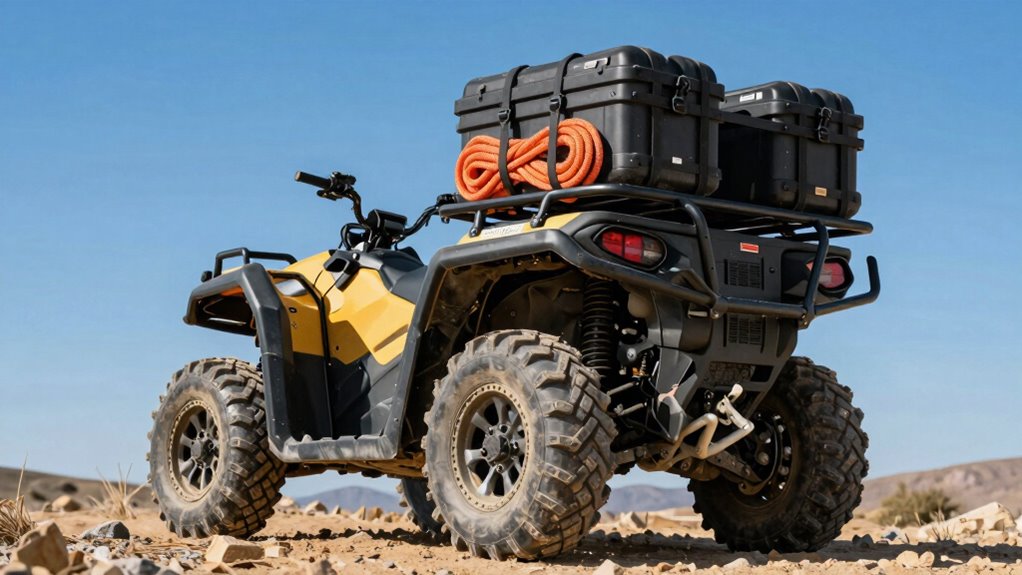

To prevent rollovers, it’s essential to stay within your UTV’s roof rack load limits. Overloading can cause instability, damage, and even accidents. Always check your vehicle’s manual or rack manufacturer’s specifications for the maximum weight you can carry. Properly secure your gear, distribute load evenly, and avoid placing heavy items too high or off-center. If you keep within these limits, you’ll maintain safety and vehicle balance — learn more about how to do it right.

Get business pricing on garage and car supplies
- Business-only prices and quantity discounts
- Tax-exempt purchasing
- Multiple users, one account, clear invoices
Key Takeaways
- Always check the manufacturer’s specified load limits for your UTV roof rack before loading gear.
- Distribute weight evenly and keep heavier items low and centered to maintain vehicle stability.
- Properly secure all cargo to prevent shifting that could cause imbalance or overload.
- Avoid exceeding the rack’s maximum weight capacity to prevent damage and reduce rollover risk.
- Regularly inspect roof rack and cargo to ensure secure attachment and identify potential overload signs.
As an affiliate, we earn on qualifying purchases.
Why Load Limits Are Critical for UTV Roof Rack Safety
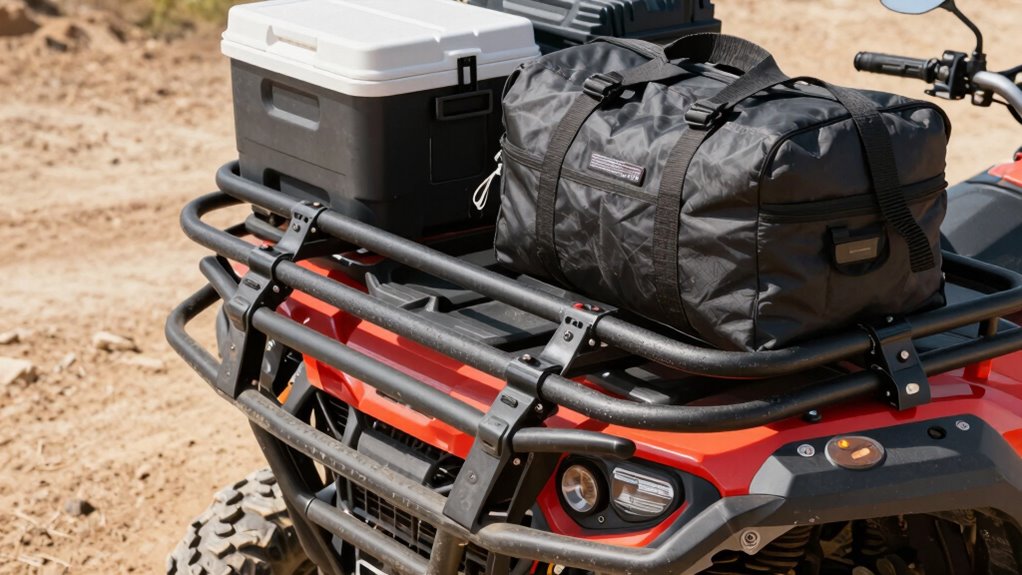
Understanding why load limits are critical for UTV roof rack safety is essential because exceeding them can lead to serious accidents or damage. Your roof rack’s load capacity determines how much weight it can safely hold, ensuring the vehicle remains stable. When you overload the rack, you disrupt proper weight distribution, which can cause the UTV to become unbalanced. Poor weight distribution increases the risk of rollovers, especially on uneven terrain. Always check your roof rack’s specified load capacity before adding gear or cargo. Staying within these limits helps maintain Proper weight distribution and keeps your vehicle safe and functional. Ignoring load limits compromises the integrity of the roof rack and your safety, making adherence crucial for a secure ride. Vehicle stability is also vital for maintaining vehicle stability and preventing accidents. Additionally, understanding safety guidelines for your specific rack model can help you avoid potential hazards. Properly securing your cargo and evenly distributing weight further enhances vehicle safety.
How to Find Your UTV’s Roof Rack Weight Capacity
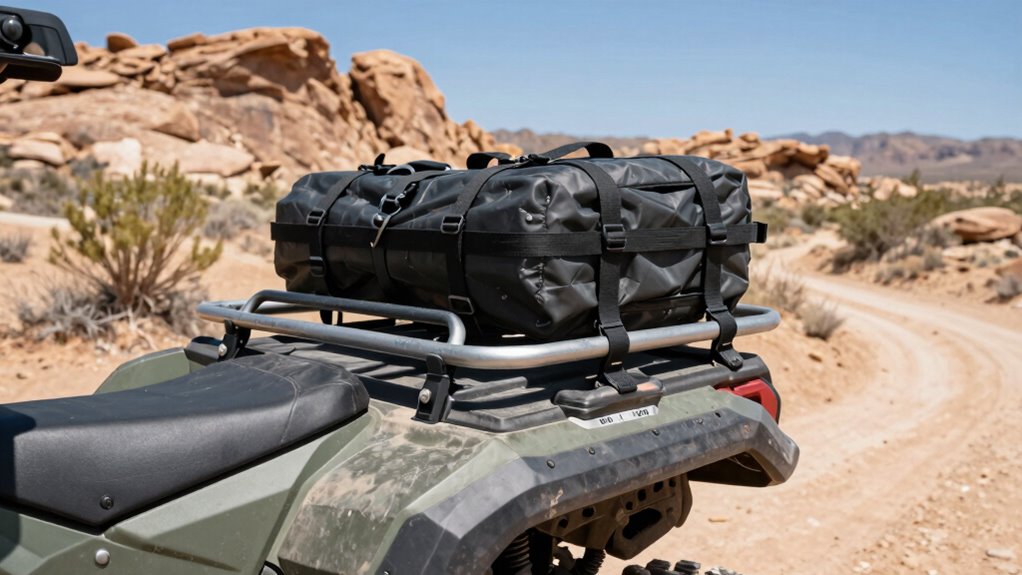
To determine your UTV’s roof rack weight capacity, start by checking the manufacturer’s specifications. This info is usually found in the user manual or on the manufacturer’s website. Knowing your load limit helps prevent overloading during UTV customization projects and guarantees proper roof rack maintenance. Additionally, understanding projector specifications ensures safe and optimal use of your equipment. It’s also important to consider vehicle weight limits to prevent compromising your UTV’s safety and performance. Being aware of load distribution can further improve safety and stability when carrying heavy gear. Properly distributing loads and regularly inspecting your roof rack can help maintain structural integrity and extend its lifespan. For example, selecting an appropriate roof rack design can enhance load management and safety during use. Here’s a quick reference table:
| UTV Model | Max Roof Rack Load | Recommended Maintenance Tips |
|---|---|---|
| Model A | 75 lbs | Regularly inspect for rust |
| Model B | 100 lbs | Tighten bolts periodically |
| Model C | 50 lbs | Clean after off-road use |
| Model D | 80 lbs | Check for corrosion |
Always adhere to these limits to avoid damage and keep your UTV safe.
What Happens When You Overload Your Roof Rack? Risks and Consequences
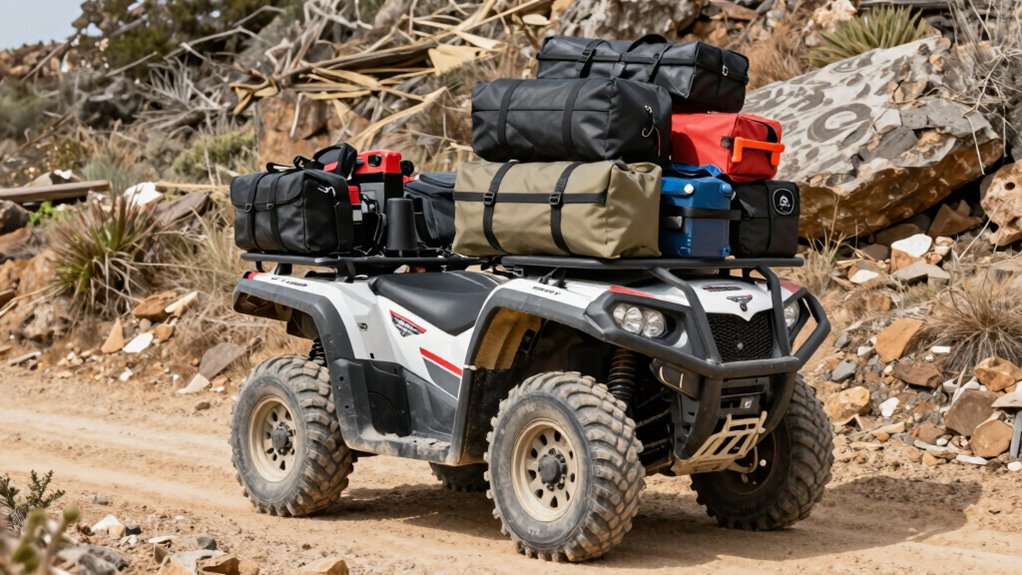
When you overload your roof rack, you risk damaging the rack itself and the vehicle’s structure. It also makes your UTV more likely to roll over, especially on rough terrain. Staying within weight limits is essential to keep you safe and avoid costly repairs. Understanding the load limit rules helps prevent accidents and ensures optimal vehicle performance.
Structural Damage Risks
Overloading your roof rack can lead to serious structural damage that threatens both your vehicle’s integrity and your safety. Excess weight stresses the rack and vehicle frame, causing material degradation over time. This can result in cracks, bends, or breaks that compromise the rack’s load-bearing capacity. Additionally, increased strain accelerates corrosion, especially if protective coatings are worn or compromised, making corrosion prevention essential. Here are the risks involved:
- Weakened welds and joints that may fail unexpectedly.
- Frame distortion or deformation, reducing load stability.
- Accelerated material degradation, increasing corrosion risk.
- Material fatigue from repeated stress can cause sudden failure over time. Proper maintenance and understanding of load limits are essential to prevent such issues. Ignoring recommended weight capacities can exacerbate these problems and lead to costly repairs.
Ignoring load limits can cause long-term damage not only to your roof rack but also to your vehicle’s structure, risking costly repairs and safety hazards. Understanding load limits is crucial for maintaining vehicle safety and longevity.
Increased Rollover Danger
Overloading your roof rack doesn’t just weaken its structure; it considerably raises the risk of a rollover accident. When you carry too much weight, your UTV’s center of gravity shifts higher, making it more unstable during turns or uneven terrain. This imbalance can cause the vehicle to tip easily. Additionally, overloading affects tire pressure and engine cooling, impairing performance and safety. Proper load capacity is essential to maintain vehicle stability and safety. Understanding credit card terms can also help manage expenses related to vehicle maintenance or upgrades.
What Factors Influence How Much Weight Your Roof Rack Can Handle
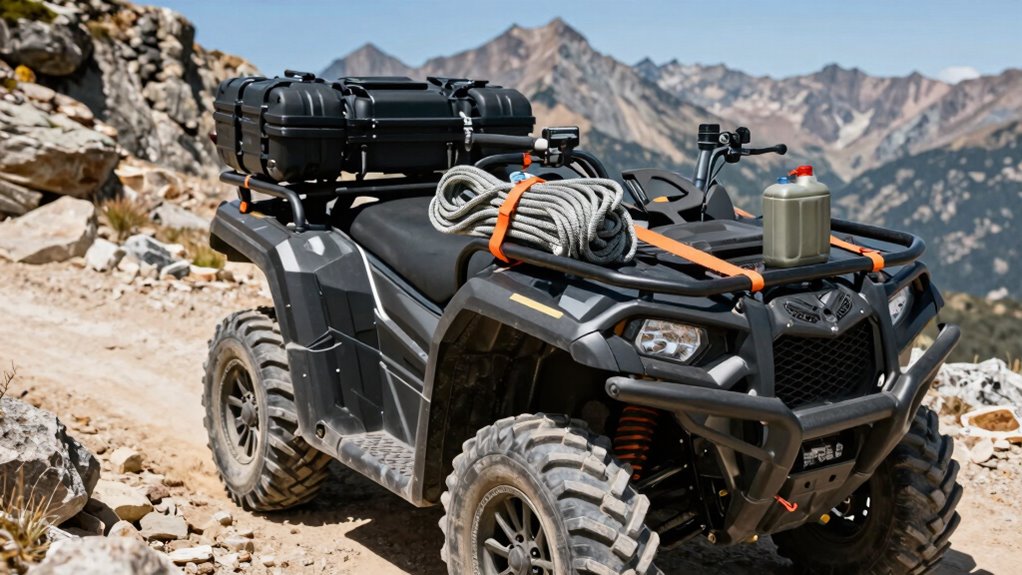
Your roof rack’s weight capacity depends on several key factors. The strength of the rack material, how your vehicle’s roof is built, and how you distribute the load all play vital roles. Understanding these elements helps you load your rack safely and effectively. Additionally, juice extraction techniques and their health benefits can inform how you prepare nutritious drinks for outdoor adventures. Properly securing your cargo and considering the weight distribution further enhance safety and prevent accidents. Recognizing the structural integrity of your vehicle’s roof can also prevent overloading and potential damage. Regular inspection of the filtration system in your setup can help maintain optimal load capacity and safety. Being aware of material strength and its impact on load limits is essential for safe rack use.
Rack Material Strength
The strength of a roof rack’s material directly impacts how much weight it can support, making it a crucial factor to contemplate. Your rack material determines its load capacity and durability under stress. For example:
- Aluminum: Lightweight and corrosion-resistant, but may have lower load limits compared to steel. Proper material selection ensures your rack can withstand the specific environmental conditions you encounter.
- Steel: Stronger and more durable, supporting heavier loads but heavier itself.
- Composite materials: Offer a balance, combining strength and lighter weight, though they can be more expensive.
Choosing the right rack material depends on your load requirements and environmental conditions. Keep in mind that a stronger material typically allows for higher load capacity, reducing the risk of damage or failure. Material quality directly influences your rack’s performance and safety. Material strength plays a pivotal role in ensuring your roof rack can handle the demands placed upon it.
Vehicle Roof Construction
The construction of your vehicle’s roof plays a significant role in determining how much weight the rack can safely support. A roof built with sturdy materials and reinforced structures can typically handle more weight, ensuring safety and durability. Vehicle aerodynamics also matter; a sleek, smooth roof reduces wind resistance and stress on the rack, while a poorly designed or bulky roof may limit load capacity. Additionally, the aesthetics of the roof rack influence its integration with your vehicle’s design; a well-integrated, aerodynamic rack often distributes weight more evenly and enhances safety. Keep in mind that the roof’s overall design, materials, and how it interacts with the rack all impact load limits—so choose a construction that aligns with your hauling needs and safety considerations. Understanding vehicle roof construction can help you select the best rack for your vehicle’s capabilities.
Distribution of Weight
Several factors influence how much weight your roof rack can safely support, and understanding them is key to avoiding damage or safety hazards. First, weight balance is critical; unevenly distributed gear can cause instability. Second, gear placement affects load limits—placing heavier items closer to the center keeps the load stable and reduces rollover risk. Third, your UTV’s roof construction and rated capacity set the maximum weight you should carry. Properly distributing weight involves:
- Centering heavier gear to maintain balance
- Spreading out lighter items evenly across the rack
- Securing all gear tightly to prevent shifting during movement
How to Recognize When Your Roof Rack Is Near Its Load Limit
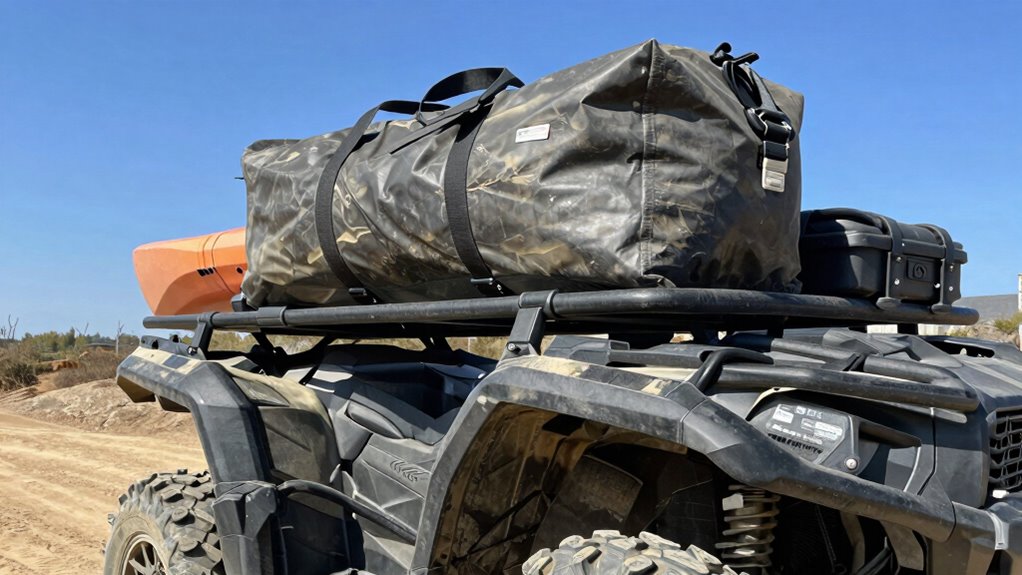
Knowing when your roof rack is nearing its load limit is essential for safe and effective use. You can recognize this by checking for signs like sagging, unusual noises, or decreased vehicle stability. Overloading can strain rack accessories and compromise off-road compatibility, increasing rollover risk. Pay attention to manufacturer weight limits, which are often marked on the rack or in your UTV’s manual. Also, monitor how the load feels during travel—if the rack wobbles or shifts, it may be overloaded. Regularly inspect for cracks or bending. Use the table below to help identify these signs:
| Sign | What to Do |
|---|---|
| Sagging or deformation | Reduce load immediately |
| Noises during travel | Check load and tighten rack |
| Unstable handling | Reassess weight distribution |
| Cracks or bending | Stop use and inspect rack |
| Excessive shifting | Reorganize gear or decrease load |
Best Ways to Distribute Gear on Your Roof Rack for Safety
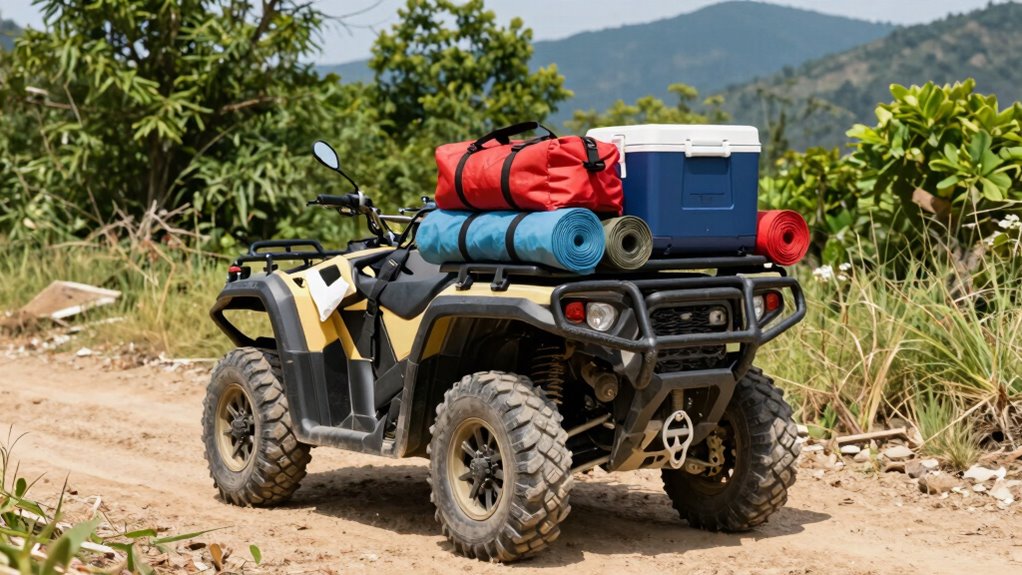
Properly distributing gear on your roof rack helps prevent overloading and maintains vehicle stability. To do this effectively, consider mounting accessories strategically. First, place heavier items low and centered to keep the center of gravity stable. Second, distribute weight evenly across both sides to avoid imbalance. Third, think about aesthetic considerations—keeping gear aligned and secure enhances the rack’s appearance and reduces movement. When choosing mounting accessories, verify they’re compatible with your gear and rack, which helps secure loads firmly. Proper load distribution not only improves safety but also prevents damage to your roof rack and vehicle. By following these steps, you maintain stability and reduce rollover risks, especially when navigating rough terrain or sharp turns.
Tips for Choosing a Roof Rack That Fits Your UTV and Your Load Needs
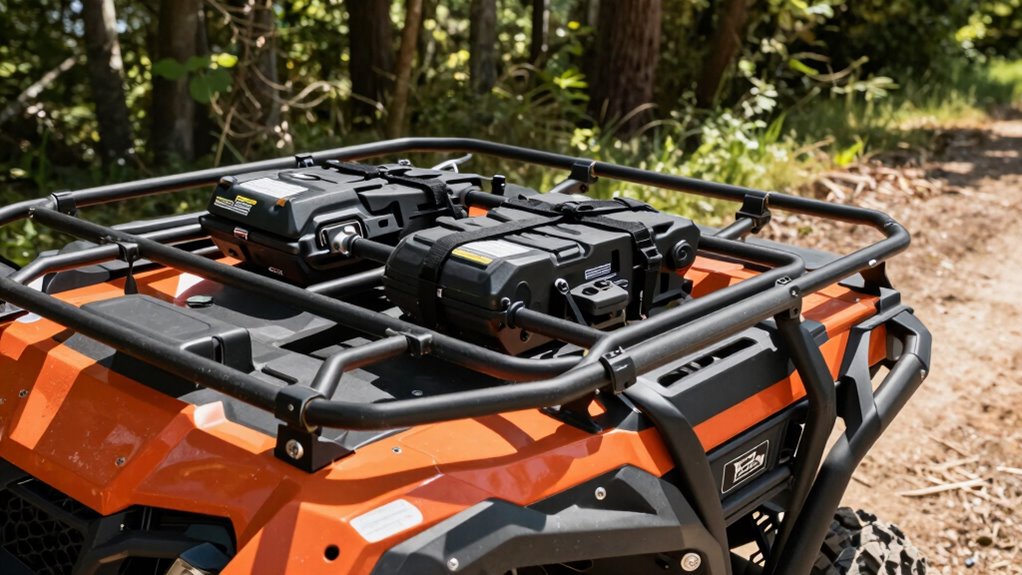
Choosing the right roof rack for your UTV starts with understanding your load needs and the vehicle’s specifications. First, check rack compatibility to ensure the rack fits your UTV’s model and mounting points. Consider the accessory options available, such as baskets, carriers, or mounting rails, to customize your setup. Think about the types of gear you’ll carry — whether lightweight camping gear or heavier equipment — and select a rack that can handle those loads safely. Make sure the rack’s weight capacity aligns with your intended use. By matching your load requirements with a compatible rack and versatile accessories, you’ll optimize safety and functionality, avoiding overloading and ensuring your gear stays secure during your adventures.
What Are the Dangers of Exceeding Load Limits? Real Risks Explained
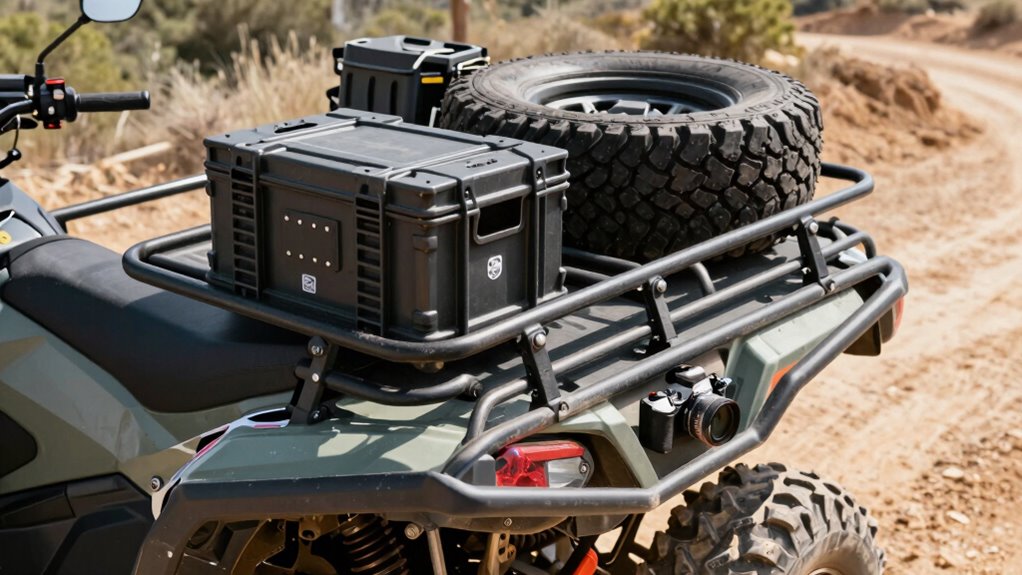
Exceeding your UTV’s load limits can lead to serious safety hazards that put you and your vehicle at risk. When you ignore cargo capacity and improper weight distribution, you compromise stability and control. The dangers include:
- Increased rollover risk due to uneven weight, which can cause the vehicle to tip during sharp turns or on uneven terrain.
- Brake inefficiency, as excess weight hampers stopping power and increases stopping distances.
- Structural damage to the vehicle frame and suspension, which can lead to costly repairs and reduced vehicle lifespan.
How to Load and Secure Gear Properly to Prevent Rollover Risks
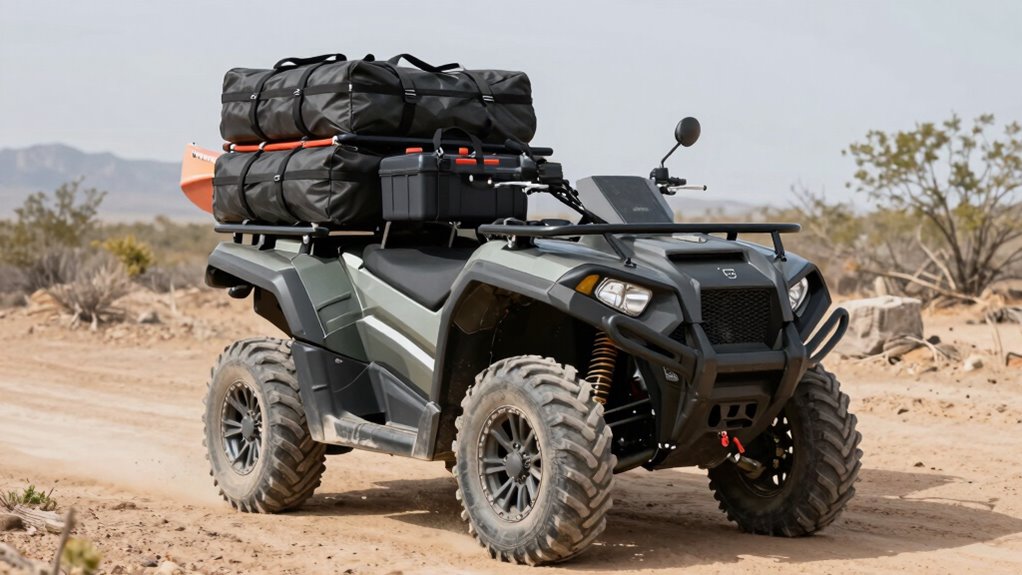
To prevent rollover risks, it is vital to load your UTV carefully and secure your gear firmly. Always respect your vehicle’s cargo capacity to avoid overloading, which can destabilize your UTV. Use proper securing methods such as tie-downs, straps, and nets to keep gear stable during rides. Distribute weight evenly, placing heavier items low and centered to maintain balance. Check your gear regularly to verify it’s tight and hasn’t shifted. Here’s a quick guide:
| Gear Placement | Securing Methods |
|---|---|
| Heavy items low in cargo | Use ratchet straps |
| Light items on top | Secure with bungee cords |
| Centered weight | Attach with cargo nets |
| Avoid overloading edges | Use anchors and tie-downs |
| Check frequently | Tighten as needed |
Proper loading and securing minimize rollover risks and keep your rides safe.
Frequently Asked Questions
Can I Add Extra Accessories to My Roof Rack Without Exceeding Weight Limits?
You can add extra accessories to your roof rack as long as you stay within its weight limit. Always check the maximum load capacity and confirm the accessories are compatible with your rack. Avoid exceeding the recommended additional weight, as too much can compromise stability and increase rollover risk. Distribute the load evenly, and double-check your rack’s specifications to keep your UTV safe and secure on the road.
How Does Terrain Affect the Roof Rack’s Load Capacity?
Terrain considerations directly impact your roof rack’s load capacity. Rough, uneven terrain can shift or jar your gear, affecting rack stability and increasing the risk of overload. You should reduce your load when tackling challenging terrain to maintain stability and prevent damage. Always check your UTV’s load limits and consider how terrain conditions might influence your rack’s performance, ensuring safe and secure transport throughout your adventure.
Are There Legal Regulations Regarding Roof Rack Weights for UTVS?
You might worry about legal issues, but yes, there are regulations you need to adhere to. Regulatory compliance and weight restrictions are in place to keep you safe and prevent rollovers. Always check your UTV’s manual and local laws, as exceeding weight limits can lead to fines or accidents. Staying within the specified load limits ensures you’re riding safely, and your vehicle remains legal on trails and public roads.
How Often Should I Inspect My Roof Rack for Damage or Wear?
You should inspect your roof rack at least once a month for damage signs like cracks, rust, or loose bolts. Regular inspection schedule helps catch issues early, preventing accidents or overloads. After heavy use or off-road adventures, do a quick check to make sure everything’s secure and undamaged. Staying attentive to damage signs and maintaining a consistent inspection routine keeps your UTV safe and compliant with load limits.
What Are the Best Practices for Removing Gear After a Ride?
After your ride, you should carefully remove your gear, starting with safety gear like helmets and gloves. Use gear organization techniques to keep items sorted and avoid clutter. Check that all gear is intact and undamaged before storing it properly. Always remove heavier or bulky items first, then lighter accessories, ensuring your UTV remains balanced and safe. Proper gear removal helps maintain your vehicle’s condition and your safety on future adventures.
Conclusion
Keeping your roof rack within its load limit is like steering a ship through calm waters—stay within safe boundaries, and you’ll avoid dangerous rollovers. Always check your UTV’s capacity, distribute your gear evenly, and secure everything tightly. By respecting these limits, you’ll enjoy your adventure safely and confidently. Remember, pushing past the weight limit is like trying to balance a tower of blocks—it’s only a matter of time before things tumble. Stay safe out there!
Evergreen bestsellers Picks
bestsellers
As an affiliate, we earn on qualifying purchases.