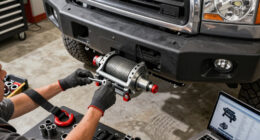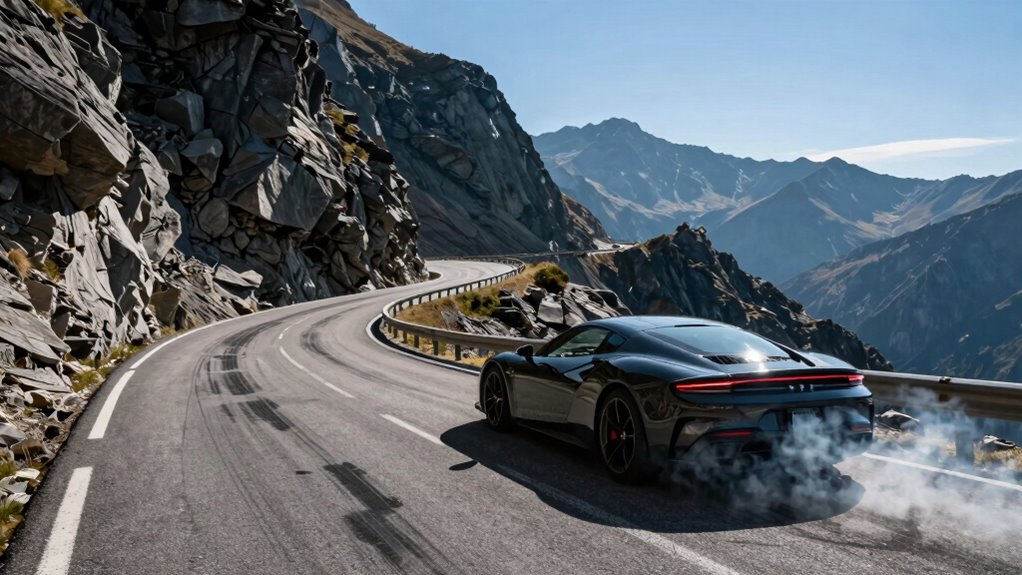

When your brakes fade on descents, excessive heat buildup is the main cause. Friction converts kinetic energy into heat, and if the brakes overheat, it reduces the friction coefficient, causing brake fade. Continuous braking, especially during long hills, raises temperatures in pads, rotors, and calipers, leading to thermal degradation and glazing. Proper heat management, cooling techniques, and brake design help prevent this, and understanding these factors is key to maintaining braking performance if you want to stay safe during steep descents.

Get business pricing on garage and car supplies
- Business-only prices and quantity discounts
- Tax-exempt purchasing
- Multiple users, one account, clear invoices
Key Takeaways
- Brake fade occurs when excessive heat reduces friction between pads and rotors, impairing stopping power during descents.
- Continuous braking generates heat that can lead to thermal expansion, material degradation, and gas bubble formation, causing fade.
- Signs of overheating include a soft brake pedal, burning odors, increased stopping distance, and rotor or pad glazing.
- To prevent brake fade, use engine braking, avoid constant pressure, and ensure proper cooling with ventilated rotors and airflow.
- If brakes overheat, stop braking, shift to a lower gear, and allow brakes to cool in a shaded area to restore performance.
Why Heat Is the Enemy of Effective Braking

Heat buildup in brake components during a descent causes a significant reduction in braking performance. As you apply the brakes, friction converts kinetic energy into heat, which dissipates into brake pads, rotors, and calipers. Continuous braking causes temperature to rise rapidly, leading to thermal expansion of metal parts and degradation of brake pad materials. Elevated temperatures alter the material properties, reducing friction coefficients essential for effective braking. Excessive heat also causes the formation of gas bubbles within brake pad materials, creating a layer that impairs contact with the rotor surface. This thermal stress can weaken structural integrity, leading to warping or cracking of rotors. Proper heat management techniques is essential to prevent thermal damage and maintain optimal braking performance. Implementing smart heat sensors can help monitor temperature levels in real-time, allowing for proactive adjustments and enhanced safety. Additionally, understanding thermal expansion helps in designing brake systems that can better withstand high temperatures without failure.
How Friction and Heat Cause Brake Fade

As you apply the brakes, friction between the brake pads and rotors converts kinetic energy into heat. When this heat accumulates beyond essential levels, it causes the friction coefficient to decrease, impairing braking performance. Understanding this relationship is vital to managing brake fade during prolonged descents. Proper maintenance, including checking brake components regularly, can help prevent excessive heat buildup and ensure consistent braking performance. Brake component maintenance Regular inspection of friction materials and cooling systems can significantly reduce the risk of brake fade during steep descents. Additionally, being aware of the heat buildup in brake components can help drivers adjust their braking techniques to avoid overheating. Recognizing the importance of cooling mechanisms, such as ventilated rotors or proper airflow, can further aid in preventing overheating during demanding drives. Maintaining effective cooling systems is also crucial for optimal brake performance under heavy use.
Friction Generates Heat
When you apply the brakes during a descent, friction between the brake pads and rotors converts the vehicle’s kinetic energy into thermal energy. This process involves microscopic contact points where asperities on both surfaces interact, generating heat through deformation and resistance. The coefficient of friction determines how much energy is converted in this manner; higher friction results in more heat production. As pressure increases, the contact area and force at these asperities grow, intensifying heat generation. The rapid and repeated engagement of brakes causes cumulative heat buildup, especially if cooling is insufficient. This thermal conversion is essential for braking but also triggers the temperature rise that can lead to brake fade if heat dissipation cannot keep pace with heat generation. Regular maintenance of brake components, including proper filtration, helps prevent overheating and ensures optimal performance during descents. Proper ventilation and cooling techniques are also crucial in managing heat buildup and maintaining brake efficiency under stress. Implementing cooling methods such as brake ducts or avoiding continuous brake application can significantly reduce the risk of heat-related fade. Additionally, employing thermal management strategies, like using high-temperature brake pads, can improve heat resistance and prolong brake life under demanding conditions. Understanding the role of heat dissipation is vital for designing effective cooling systems that prevent brake fade during prolonged descents.
Excess Heat Reduces Friction
Excessive heat generated during braking causes the friction coefficient between the brake pads and rotors to decline, directly impairing braking efficiency. As temperatures rise beyond ideal operating ranges, the materials in your brake pads and rotors undergo thermal degradation. This results in a reduction of the microscopic asperities responsible for generating friction. Additionally, high heat can cause brake pad glazing, where the pad surface melts and smooths out, further decreasing grip. Thermal expansion also leads to uneven contact between pads and rotors, disrupting consistent friction. Consequently, the braking system’s ability to convert kinetic energy into heat diminishes, leading to brake fade. This process creates a feedback loop: reduced friction produces more heat, which further degrades friction, ultimately compromising your vehicle’s braking performance during sustained descents. Understanding thermal degradation and its effects on brake components is essential for maintaining optimal braking performance. Recognizing the importance of heat management can help prevent brake fade and ensure safer braking under demanding conditions. Proper brake cooling techniques and regular maintenance can mitigate excessive heat buildup and extend the lifespan of your braking system. Implementing cooling methods such as vented rotors or brake ducts can significantly improve heat dissipation during high-demand situations.
What Causes Brake Fade During Long Hills?

During long descents, brake fade occurs primarily because continuous friction generates excessive heat at the brake interface, causing the brake fluid and brake components to overheat. Prolonged application of brakes leads to sustained high temperatures, which reduce the friction coefficient between brake pads and rotors. This thermal buildup causes brake fluid to vaporize or boil, creating gas pockets that impair hydraulic pressure transfer. Additionally, heat causes brake pad materials to soften or glaze, decreasing their ability to grip the rotor effectively. The combination of these effects results in diminished braking power, making it harder to slow down or stop safely. Without proper modulation or cooling, this cycle accelerates, further compromising brake performance during extended downhill segments. Understanding thermal effects is crucial for maintaining safe braking during long hill descents.
Signs Your Brakes Are Overheating and Fading

You may notice a soft or spongy brake pedal when your brakes are overheating, indicating a loss of hydraulic pressure. An unusual burning smell often signals excessive heat buildup in the brake components, risking damage to pads and rotors. Additionally, increased stopping distances suggest reduced brake effectiveness due to thermal fade affecting friction material. Proper cooling techniques and awareness of brake fade can help prevent further damage and ensure safety during descents. Maintaining proper brake maintenance and inspecting your braking system regularly can also help identify early signs of heat-related issues. Staying informed about signs of heat buildup can also aid in early detection and prompt maintenance to avoid costly repairs. Implementing environmentally conscious driving habits can further reduce brake stress and heat generation.
Soft Brake Feel
A soft brake feel often indicates that your braking system is experiencing overheating and fading, which compromises the hydraulic pressure and friction efficiency. When brakes overheat, the brake pads and rotors can develop thermal deformation or glazing, reducing their ability to generate consistent friction. This results in a spongy or less responsive pedal, as the hydraulic fluid may also become aerated or thermally degraded, impairing pressure transfer. You might notice that applying force yields less braking power or requires more pedal travel. The diminished brake response signals that the friction material’s coefficient has dropped, and heat buildup has compromised the system’s ability to convert pedal input into effective deceleration. Addressing this early prevents further damage and guarantees your braking system maintains ideal performance.
Unusual Smell Emission
Unusual smells emanating from your vehicle are a key indicator that your brakes are overheating and beginning to fade. This odor typically results from brake components, especially the brake pads and rotors, reaching excessive temperatures that cause the materials to off-gas or burn. You might notice a distinct, acrid, or burnt rubber smell, signaling that the friction surfaces are exceeding safe temperature thresholds. The smell may intensify with prolonged braking or sustained downhill descent. The heat causes binder materials in brake pads to decompose, releasing volatile compounds that produce the characteristic odor. Persistent or strong smells warrant immediate inspection, as continued overheating risks brake failure. Monitoring this sensory cue alongside other signs helps you identify overheating early and prevent further damage to your braking system.
Increased Stopping Distance
When your braking system begins to overheat and fade, the most immediate and measurable symptom is an increase in stopping distance. As heat causes brake fluid to vaporize and brake pad friction to diminish, your vehicle requires more space to stop effectively. You may notice that your usual braking effort no longer produces the same deceleration. This delay can be critical, especially on steep descents.
- Longer distance to halt after brake application
- Reduced brake pedal responsiveness and feel
- Need for increased pedal pressure to achieve stopping power
These signs indicate that your brake components are compromised by excessive heat, leading to decreased friction and efficiency. Recognizing these symptoms early allows you to prevent further damage and maintain safety during braking maneuvers.
Tips to Prevent Brake Fade on Steep Hills
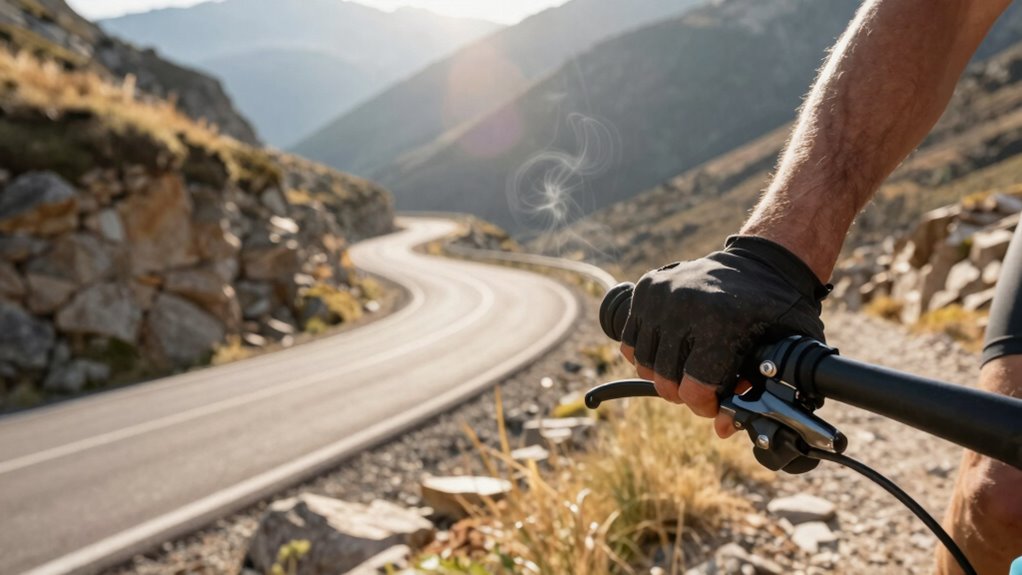
To effectively prevent brake fade on steep hills, you must manage your braking technique and vehicle systems proactively. Use engine braking by downshifting early to reduce reliance on brake pads alone, preventing excessive heat buildup. Apply light, intermittent braking rather than continuous pressure, allowing brakes to cool periodically. Avoid riding the brakes downhill; instead, maintain a steady, controlled speed. Regularly inspect brake components for wear and ensure proper fluid levels and cooling system function.
| Technique | Effectiveness |
|---|---|
| Downshifting early | Reduces brake temperature and prolongs brake life |
| Intermittent braking | Minimizes heat accumulation and prevents overheating |
| Brake system maintenance | Ensures exemplary performance and heat dissipation |
Brake Material and Design for Better Heat Dissipation
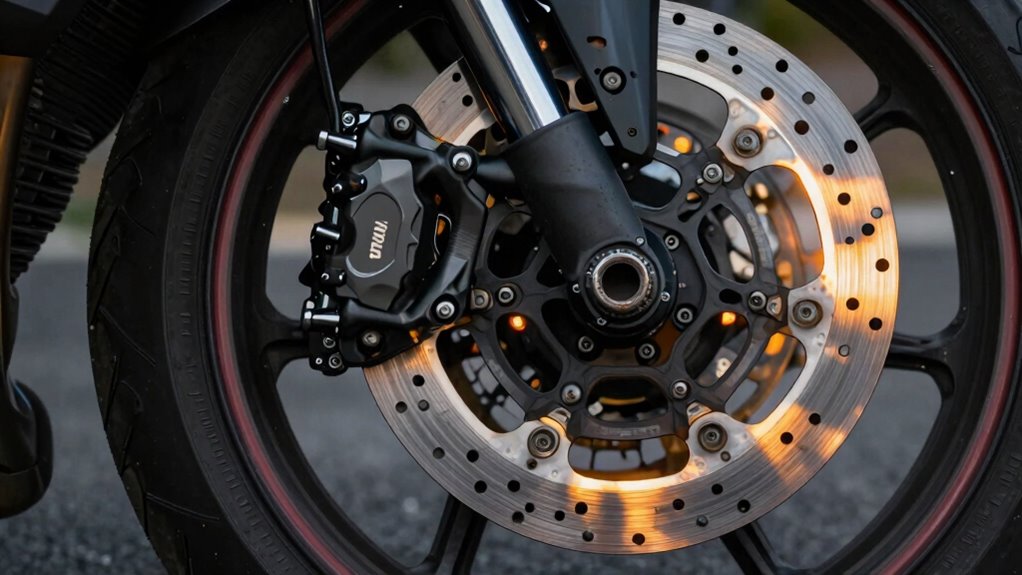
Selecting brake materials with ideal thermal properties is key to managing heat during downhill descents. High-performance brake pads and rotors are engineered to optimize heat dissipation, preventing excessive temperature buildup. Materials like ceramic composites and semi-metallic compounds offer improved thermal conductivity and resistance to brake fade. Design features such as vented rotors increase surface area, accelerating heat transfer away from the braking interface. Additionally, features like drilled or slotted rotors enhance airflow and reduce hot spots. To maximize heat management, focus on these aspects:
- Use of composite materials with high thermal conductivity
- Incorporation of vented, drilled, or slotted rotor designs
- Selection of brake pads engineered for efficient heat transfer
Optimizing these factors ensures your braking system maintains performance during prolonged descents.
How to Cool Overheated Brakes Quickly
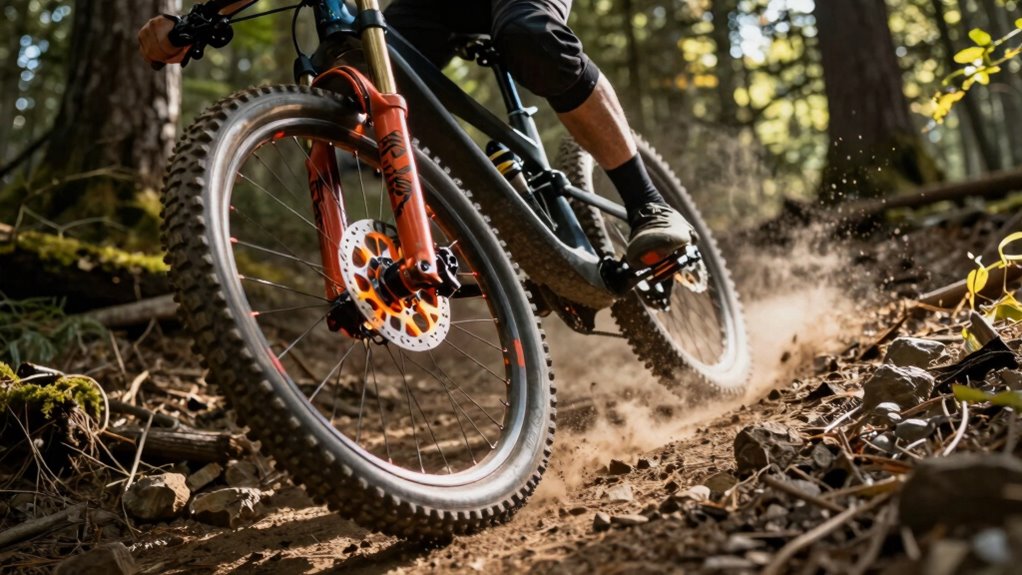
If your brakes overheat during a descent, immediate cooling measures are essential to prevent brake fade and maintain control. To cool overheated brakes rapidly, stop actively applying pressure and shift to a lower gear to reduce heat buildup. Once vehicle speed decreases, cautiously pull over to a safe, shaded area or a cool spot off the road. Use controlled, gentle airflow by opening windows or turning on the vehicle’s ventilation system to dissipate heat effectively. Applying a light, intermittent brake application can help transfer heat away from brake components through controlled contact. Avoid spraying water directly onto hot brake surfaces, as rapid cooling can cause thermal shock and damage. Instead, focus on increasing airflow and allowing natural cooling to restore brake temperature safely.
What to Do If Your Brakes Overheat and Fade
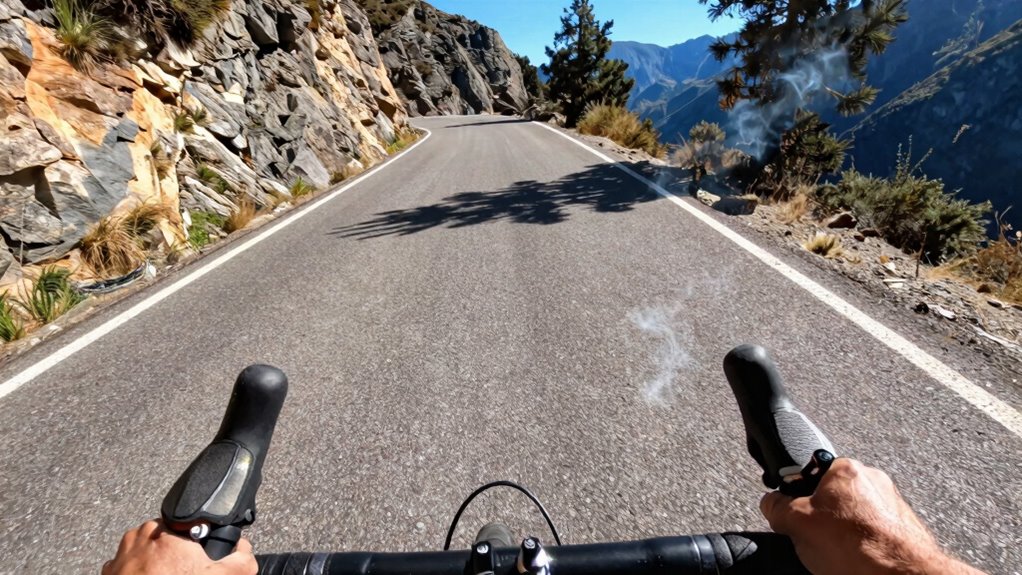
When your brakes overheat and begin to fade, immediate and deliberate action is crucial to regain stopping power and guarantee safety. First, reduce your speed gradually by easing off the brake lever or pedal, avoiding sudden releases that could cause instability. Next, shift to a lower gear to utilize engine braking, which decreases reliance on the brake system. Finally, find a safe, flat area to allow the brakes to cool passively; avoid braking continuously.
Reduce speed gradually, shift to a lower gear, and find a flat area to let brakes cool safely.
- Do not pump the brakes excessively, as it can cause further heat buildup.
- Keep your hands firmly on the handlebars to maintain control.
- Monitor brake performance regularly to assess cooling progress and prevent further overheating.
This precise response minimizes heat transfer, prevents further brake fade, and restores braking efficiency safely.
Frequently Asked Questions
How Does Altitude Affect Brake Heat Dissipation?
Altitude affects brake heat dissipation primarily through air density. At higher elevations, thinner air reduces convective cooling efficiency, causing heat to build up more quickly. You’ll notice brakes may overheat faster on descents because less dense air can’t absorb and carry away heat as effectively. This means you should adjust your braking technique, use engine braking when possible, and monitor brake temperatures closely at higher altitudes to prevent overheating.
Can Weather Conditions Influence Brake Fade Severity?
Weather conditions can dramatically influence brake fade severity, often turning a simple descent into a fiery ordeal. Humidity increases brake pad and rotor temperatures by impeding heat dissipation, while rain creates a slippery surface that causes you to brake harder, generating excessive heat. Cold temperatures, on the other hand, can reduce brake efficiency initially. Wind can either cool brakes or add resistance, affecting heat buildup. Always consider weather to prevent catastrophic brake failure.
Are Ceramic Brake Pads More Heat-Resistant Than Other Types?
Yes, ceramic brake pads are more heat-resistant than other types. They maintain consistent performance at higher temperatures, reducing brake fade during prolonged or steep descents. Their ceramic composition dissipates heat more efficiently, preventing overheating and brake fade. Unlike organic or semi-metallic pads, ceramics generate less brake dust and noise, making them ideal for demanding driving conditions. This enhanced heat resistance helps you maintain braking power and control in extreme conditions.
How Does Vehicle Weight Impact Brake Overheating Risks?
Imagine your vehicle as a blazing forge; its weight intensifies the heat battle. Heavier cars exert greater force on brake components, generating more friction and elevating the risk of overheating. The increased mass means the brakes must absorb and dissipate more energy, pushing their thermal limits. To prevent brake fade, you must account for vehicle weight, ensuring proper cooling and selecting brake systems rated for higher thermal loads.
What Role Does Brake Fluid Play in Heat Management?
Brake fluid acts as a hydraulic medium, transferring force from your pedal to the brake calipers. It must withstand high temperatures without boiling, as vaporized fluid causes brake fade. High-quality, heat-resistant brake fluid maintains consistent pressure and prevents vapor lock during intense braking. Regularly checking and replacing it with specified fluid prevents moisture buildup, which lowers boiling points, ensuring effective heat management and reliable braking performance during steep descents.
Conclusion
Understanding brake fade is essential for safe descents. By recognizing signs of overheating, monitoring brake performance, and employing proper cooling techniques, you can maintain ideal braking efficiency. Preventing heat buildup, choosing appropriate brake materials, and using effective cooling methods ensure your brakes stay responsive under stress. Staying vigilant, managing speed, and applying calculated braking strategies protect both your vehicle and your safety on steep hills, keeping your descent controlled, your brakes cool, and your journey secure.
Fall Picks
fall essentials
As an affiliate, we earn on qualifying purchases.