If your brake pedal feels soft or spongy, or you notice a burning smell after heavy braking, your brake fluid might be overheating or boiling. This vaporizes the fluid, causing brake failure. Regularly check fluid levels and color, and use temperature gauges if possible. Prevent overheating by maintaining proper cooling and using high-temperature brake fluid. If you suspect boiling, stop safely and seek professional help — there’s more to know to stay safe.

Get business pricing on garage and car supplies
- Business-only prices and quantity discounts
- Tax-exempt purchasing
- Multiple users, one account, clear invoices
Key Takeaways
- Watch for a spongy or soft brake pedal, indicating possible brake fluid vaporization.
- Smell burning odors during braking, which signals overheating of brake fluid.
- Monitor for dashboard warning lights related to brake system issues.
- Feel for decreased braking effectiveness or increased pedal travel during stops.
- Regularly check brake fluid color and levels; dark or contaminated fluid suggests boiling risk.
As an affiliate, we earn on qualifying purchases.
What Is Brake Fluid Boiling and Why Is It Dangerous?
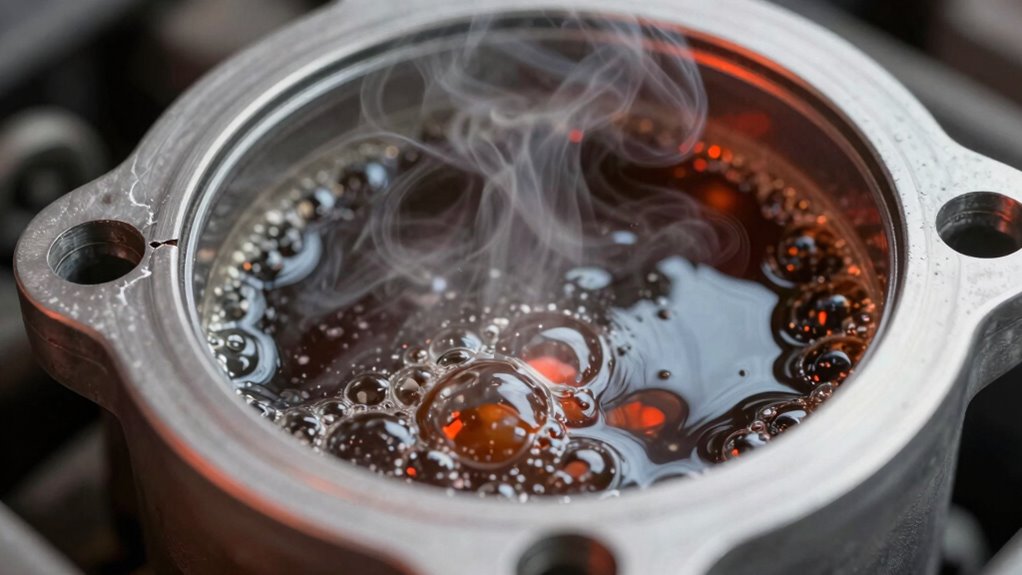
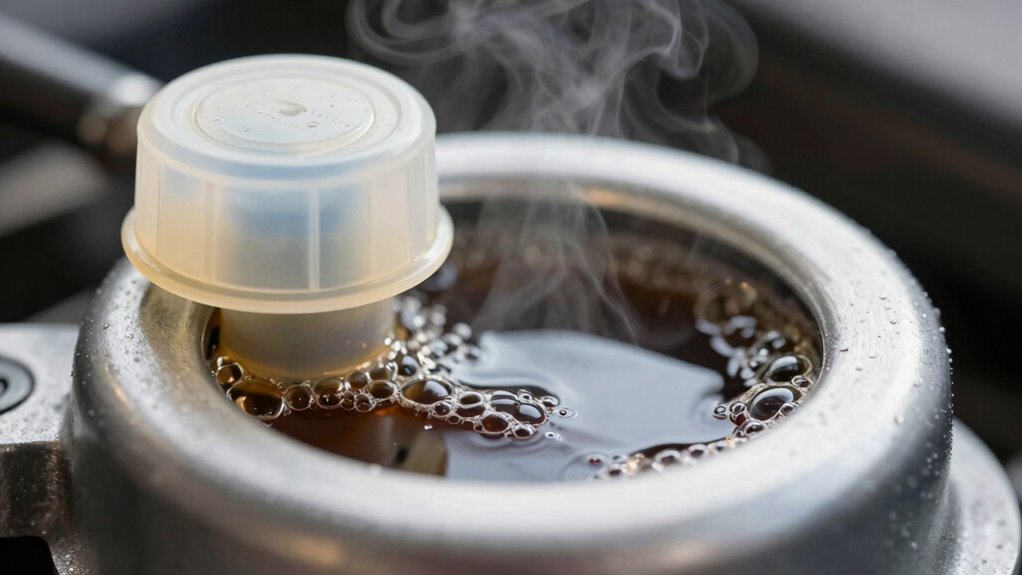
Brake fluid boiling occurs when the fluid reaches its boiling point during intense braking, causing it to turn into vapor instead of remaining a liquid. The brake fluid composition, typically based on glycol or silicone, influences its boiling point standards. If the fluid’s temperature exceeds these standards, boiling can happen, leading to a loss of hydraulic pressure. When brake fluid vaporizes, it creates air pockets that compress under pressure, making your brakes feel spongy or unresponsive. This loss of braking power is dangerous, especially during emergency stops or downhill driving. Maintaining proper brake fluid levels and using fluid that meets or exceeds the recommended boiling point standards helps prevent boiling. Recognizing the importance of brake fluid composition and boiling point standards is key to safe vehicle operation. Additionally, regular inspection and fluid replacement can help ensure your brake system remains reliable under demanding conditions. Being aware of boiling point standards and how they are affected by driving conditions is crucial for preventing brake failure. Regularly monitoring brake system performance can also help detect early signs of boiling or other issues before they become hazardous. Proper understanding of brake fluid properties enables better maintenance and safer driving practices.
How Can You Tell If Your Brake Fluid Is Overheating or Boiling?
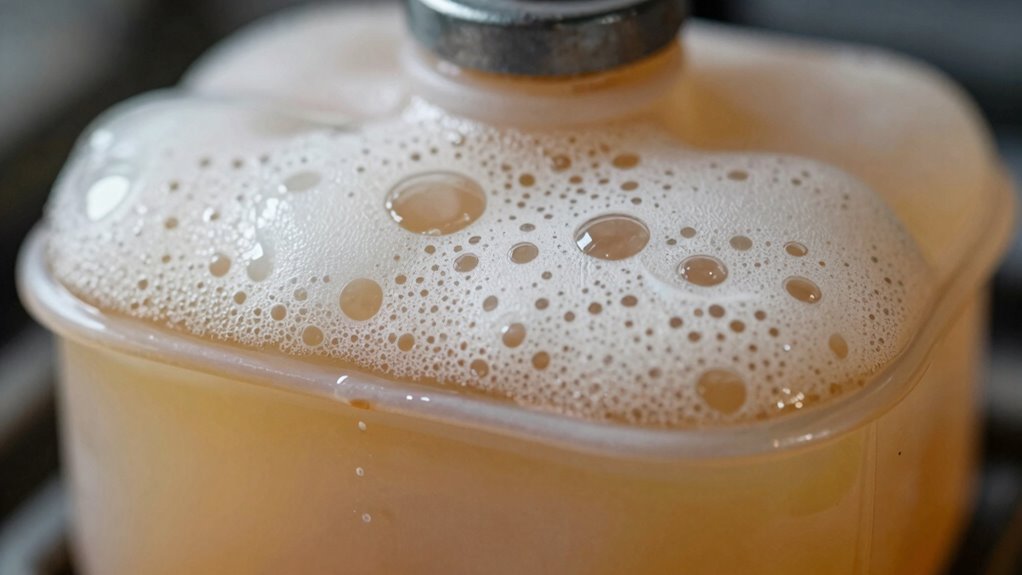
You can often notice warning signs like spongy brake pedals or longer stopping distances when your brake fluid overheats. Monitoring how your brakes perform during driving can help catch issues early. Staying alert to these signs keeps you safe and prevents costly repairs. Additionally, if your brake fluid boils, it can lead to infection risks, which may cause brake failure if not addressed promptly.
Recognizing Warning Signs
How can you tell if your brake fluid is overheating or boiling? One key sign is a soft or spongy brake pedal, indicating the fluid isn’t transmitting pressure properly. You might also notice a burning smell, which signals overheating. Pay attention to warning lights on your dashboard, especially if it relates to brake system issues. Additionally, if your brake fluid is of an older type or hasn’t been maintained regularly, it’s more prone to boiling. Proper brake maintenance helps prevent these signs. Different brake fluid types have varying boiling points, so using the right one for your vehicle is essential. Keep an eye out for:
- Soft or sinking brake pedal
- Burning smell during braking
- Brake warning light illumination
- Reduced braking responsiveness
Regular brake fluid checks help ensure your brake system remains safe and effective. Maintaining brake system integrity through proper fluid management is essential for safety.
Monitoring Brake Performance
Ever wonder if your vehicle’s braking system is working properly? Monitoring brake performance is key to spotting overheating or boiling brake fluid early. Pay attention to how your brakes feel—if they’re spongy, soft, or require more pedal travel, it could signal brake fluid issues related to altered brake fluid properties. Listen for unusual noises like squealing or grinding, which may indicate brake system maintenance is needed. Regularly check for increased brake pedal effort or delayed response, especially after heavy braking. These signs suggest the brake fluid is overheating, risking boiling and brake failure. Additionally, proper brake system maintenance includes checking for leaks and ensuring the fluid is at the correct level, which can help prevent fluid from overheating. Staying alert to changes in braking performance helps you catch problems early, ensuring your brake system remains safe and effective. Always prioritize routine inspections to prevent fluid boiling and maintain ideal brake system health. Remember that brake fluid properties can change under high temperatures, impacting braking performance. Additionally, understanding how brake fluid reacts to heat can help you better anticipate when issues might occur. Proper brake system maintenance, including fluid checks, can extend the lifespan of your brakes and prevent costly repairs.
What Causes Brake Fluid to Overheat and Boil?
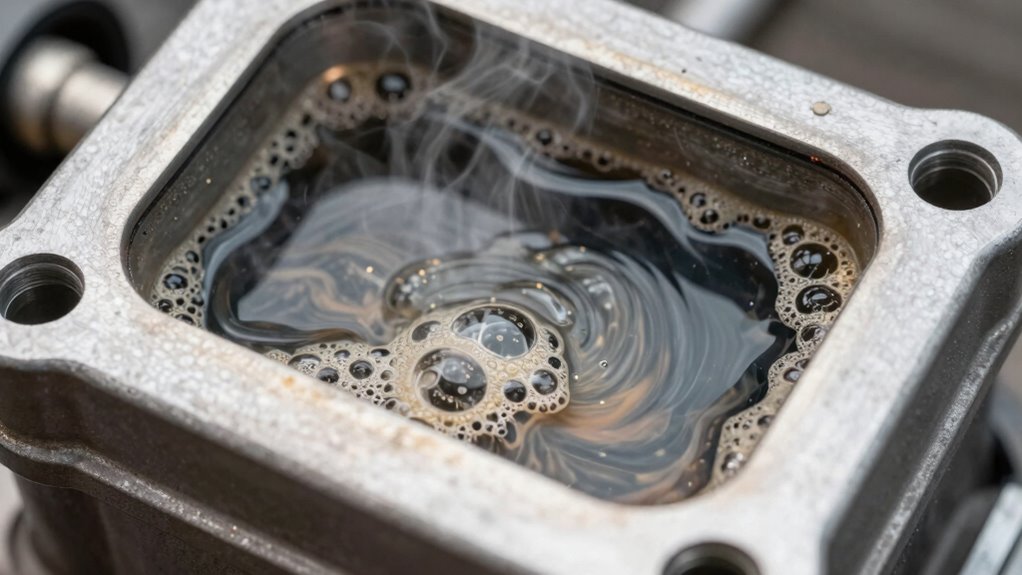
Brake fluid can overheat and boil when the braking system generates excessive heat, often due to aggressive driving, heavy loads, or prolonged braking. When you brake hard, the brake pad presses against the brake caliper, creating friction that generates heat. If this heat isn’t managed properly, it transfers to the brake fluid, raising its temperature. Over time, continuous or intense braking can cause the fluid to reach its boiling point. Factors contributing to overheating include poor ventilation, worn brake components, or a malfunctioning cooling system. Excessive heat causes the brake fluid to vaporize, leading to a loss of hydraulic pressure. This can result in brake fade or complete failure, making it essential to understand what causes these dangerous conditions.
Overheating brake fluid can vaporize, causing brake fade and potential failure during aggressive driving or heavy loads.
- Excessive friction from aggressive braking
- Worn or sticking brake calipers
- Inadequate cooling or ventilation
- Heavy loads or prolonged downhill driving
- Nanotechnology-based cooling systems are also being developed to improve heat dissipation in high-performance braking systems.
How to Check If Your Brake Fluid Is Too Hot or Boiling?
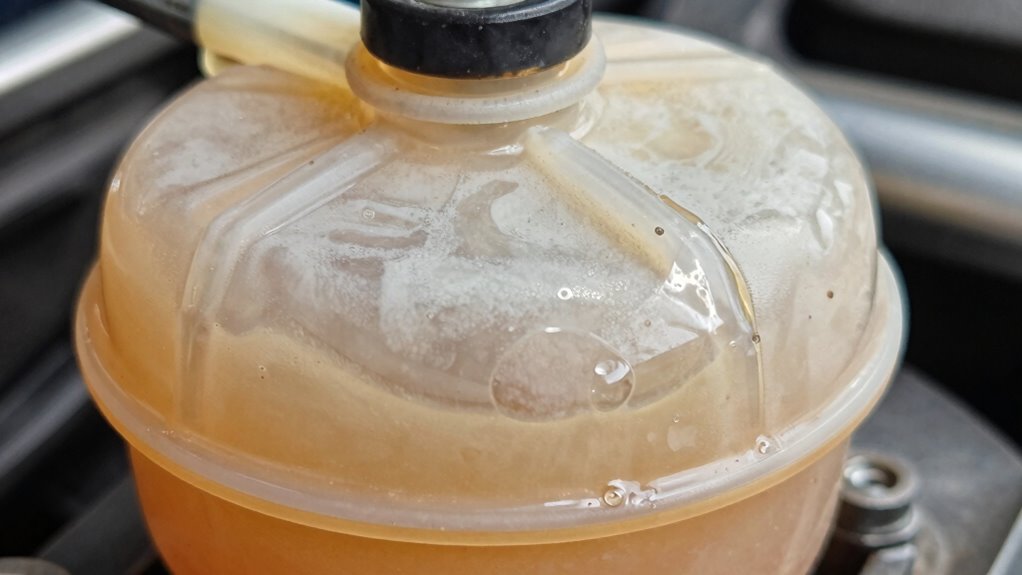
Monitoring the temperature of your brake fluid can help you identify if it’s overheating or boiling. You can do this with a brake fluid temperature gauge or infrared thermometer, which provides quick readings of the fluid’s temperature. Keep an eye on the gauge during heavy braking or towing, as these conditions raise brake fluid temperature. If the fluid approaches or exceeds its boiling point, you’ll notice decreased brake performance or sponginess. Boiling point awareness is vital because once brake fluid boils, it creates vapor that compresses under pressure, leading to brake failure. Regularly checking your brake fluid temperature helps you catch overheating early, preventing dangerous situations. Staying vigilant ensures you maintain peak braking performance and safety on the road. Additionally, understanding how to monitor and maintain fluid quality can further help prevent boiling and ensure optimal braking efficiency. Proper fluid maintenance, such as fluid replacement intervals, is essential for consistent brake system performance and safety. Regular inspections can also help identify fluid contamination, which can lower the boiling point and compromise braking safety. Being familiar with brake system components can also aid in diagnosing potential issues before they become critical.
How to Prevent Brake Fluid Boiling and Protect Your Brakes?

To keep your brakes safe, make sure you check your brake fluid regularly to catch any overheating early. Always use the correct type of brake fluid specified for your vehicle to prevent boiling issues. Additionally, avoid heavy or repeated braking whenever possible to reduce heat buildup and protect your braking system. Proper maintenance of your brake system can also help prevent fluid boiling by ensuring all components are functioning correctly and efficiently. Regularly inspecting your brake system components can help identify potential issues before they lead to overheating, and choosing the right brake fluid plays a crucial role in maintaining optimal brake performance. Being aware of heat buildup in your braking system is essential for preventing fluid boiling and ensuring safe stopping power. For added peace of mind, consider whole-home backup power options to keep critical systems operational during emergencies.
Regular Brake Fluid Checks
Regularly checking your brake fluid is essential to prevent it from boiling and causing brake failure. Over time, brake fluid absorbs moisture, altering its brake fluid composition and lowering its boiling point. This makes it more prone to vaporizing under heavy use. To maintain peak performance, monitor fluid levels and condition regularly. Consider these key points:
- Use a clear reservoir to visually check fluid levels easily
- Look for dark, contaminated brake fluid that signals the need for brake fluid replacement
- Keep an eye on the brake fluid’s color and consistency
- Follow the manufacturer’s recommended schedule for brake fluid replacement
- Vetted information about brake fluid maintenance can help you make informed decisions and prevent dangerous failures.
Consistent checks help you catch issues early, preserving brake performance and avoiding dangerous failures. Proper maintenance ensures your brake system functions reliably when you need it most.
Use Correct Brake Fluid
Using the correct brake fluid is essential for preventing boiling and ensuring your brakes stay reliable under heavy use. Different brake fluid types, such as DOT 3, DOT 4, and DOT 5.1, have specific boiling points and compatibility requirements. Always check your vehicle’s specifications before choosing a fluid. Regularly adhere to fluid replacement intervals—typically every 2 years or as recommended—to prevent moisture buildup, which lowers boiling points. Use this table to help select the right brake fluid:
| Brake Fluid Type | Boiling Point | Compatibility |
|---|---|---|
| DOT 3 | 205°C | Most vehicles, budget |
| DOT 4 | 230°C | Higher performance |
| DOT 5.1 | 260°C | Heavy-duty use |
| DOT 5 | N/A | Not compatible with others |
Choosing the right fluid and replacing it timely helps prevent brake fluid boiling.
Avoid Excessive Braking
Excessive braking generates intense heat that can cause brake fluid to reach its boiling point, leading to brake fade or failure. To prevent this, practice smooth, controlled braking rather than sudden stops. Regular brake maintenance helps identify worn components that increase heat buildup. Avoid riding the brake pedal downhill—constant pressure raises temperatures unnecessarily. Consider upgrading to high-temperature brake fluid during fluid replacement to withstand more heat. Additionally, monitor your brake system’s condition and replace brake fluid as recommended to maintain ideal performance.
- Use engine braking on steep descents
- Avoid heavy, prolonged braking sessions
- Maintain proper brake system adjustments
- Schedule routine brake inspections and fluid replacements
What Should You Do Immediately If You Suspect Brake Fluid Is Boiling?
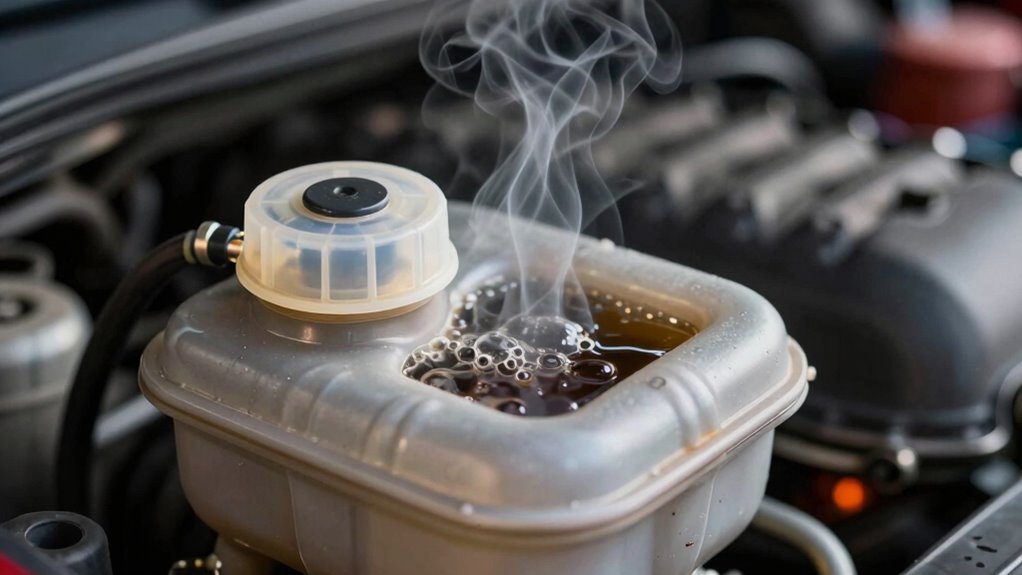
If you notice a spongy brake pedal, a burning smell, or your brakes feel less responsive, it’s a clear sign that the brake fluid may be boiling. Your immediate response should be to safely pull over and stop driving as soon as possible. Turn on your hazard lights to alert other drivers. Prioritize safety by avoiding sudden stops or aggressive braking, which can worsen the situation. Remember, this is an emergency response situation, so don’t attempt to fix the problem yourself on the side of the road. Instead, call for roadside assistance or a professional mechanic. Following safety precautions is vital to prevent brake failure and guarantee your safety until the vehicle can be inspected and repaired properly.
When Should You Have a Professional Diagnose Brake Fluid Issues?
Recognizing when to seek professional help for brake fluid issues can prevent dangerous situations and costly repairs. If you notice persistent brake pedal softness, unusual sponginess, or a burning smell, it’s time for a professional diagnosis. Regular brake fluid testing can reveal contamination or moisture that you might not detect yourself. Don’t ignore warning signs like decreased braking performance or warning lights on your dashboard. A qualified mechanic can perform thorough brake fluid testing and identify issues early. Knowing when to get expert help ensures your safety and extends your braking system’s lifespan.
- Sudden changes in braking feel
- Repeated brake fade under normal use
- Warning lights indicating brake system problems
- Visible fluid leaks or discoloration
Frequently Asked Questions
Can Low Brake Fluid Levels Cause Boiling?
Yes, low brake fluid levels can cause boiling. When your brake fluid leaks or isn’t maintained properly, the reduced fluid can’t absorb heat effectively, leading to higher temperatures. This increases the risk of brake fluid boiling during intense braking. Regular brake system maintenance and checking for leaks help prevent this. Keep an eye on fluid levels and address leaks promptly to avoid brake failure caused by boiling fluid.
Does Hot Weather Increase the Risk of Brake Fluid Boiling?
Yes, hot weather increases the risk of brake fluid boiling. During summer heat, high engine temperatures can transfer to your brake system, raising the fluid’s temperature. When you drive in hot conditions, the combination of engine heat and intense braking can cause the brake fluid to reach its boiling point more quickly. To stay safe, check your brake fluid regularly and avoid heavy braking when engine and ambient temperatures are extremely high.
How Often Should Brake Fluid Be Replaced to Prevent Boiling?
You should replace your brake fluid regularly, following a fluid replacement schedule of every 2 years or 24,000 miles, whichever comes first. Prioritize brake fluid maintenance by checking its condition often, especially if you notice spongy brakes or increased stopping distances. Regularly flushing and replacing brake fluid prevents boiling, maintains peak brake performance, and extends the lifespan of your braking system, ensuring safety every time you hit the road.
Are Certain Types of Brake Fluid More Resistant to Boiling?
Yes, some brake fluids resist boiling better. Synthetic brake fluids, especially those compatible with DOT 4 or DOT 5.1, handle higher temperatures without boiling. You should check the label to confirm synthetic compatibility and adhere to DOT specifications. These fluids are designed to perform better under extreme conditions, reducing the risk of brake fade and maintaining safe braking performance, especially during demanding driving or heavy braking.
Can Driving Style Affect Brake Fluid Temperature?
Imagine your brake system as a delicate balance, where aggressive driving habits can turn up the heat. Hard braking, frequent stops, or riding the brake pedal cause friction and elevate brake fluid temperature. If you’re constantly pushing your brakes to their limit, you risk boiling the fluid, which diminishes braking power. So, your driving style directly impacts brake fluid temperature, making smooth, controlled stops essential for safety.
Conclusion
Don’t wait until your brakes whisper warnings you can’t ignore. By staying vigilant and knowing how to spot the signs of boiling brake fluid, you’re the guardian of your safety. Remember, your brakes are the silent heroes of your journey—treat them with care before they fail when you need them most. Keep an eye on fluid temperature and get regular checks; otherwise, you risk turning a routine drive into a dangerous dilemma.
Fall Picks
fall essentials
As an affiliate, we earn on qualifying purchases.