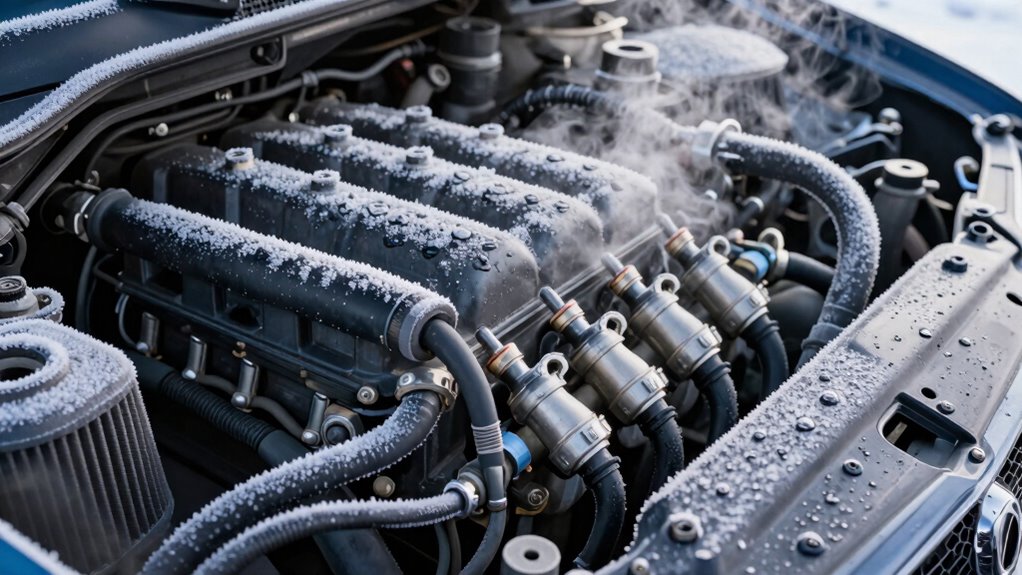

Cold weather stresses your fuel system by promoting fuel gelling, wax crystallization, and thickened oil, making cold starts difficult. To prevent this, check fuel filters, maintain at least half a tank, and use winterized fuels with additives that inhibit wax buildup. Ensuring fuel lines are intact and free of obstructions also helps. Addressing these issues early can keep your engine running smoothly—continue to find out what your fuel system needs this winter.
Open a free Amazon Business account
Business pricing, bulk buying and tax-exempt orders.
As an affiliate, we earn on qualifying purchases.
Key Takeaways
- Use winterized fuel blends and additives to prevent wax crystallization and gelling.
- Keep the fuel tank at least half full to reduce condensation and freeze risks.
- Regularly inspect and replace fuel filters to prevent clogging from sediment and ice.
- Check fuel lines for cracks, leaks, or blockages to ensure proper fuel delivery.
- Consider professional diagnostics if your vehicle struggles to start in cold weather.
How Cold Weather Can Make Your Car Hard to Start

Cold weather considerably impacts your vehicle’s starting system by causing the fuel to vaporize less readily and increasing the viscosity of engine oil, which hampers overall engine cranking. Lower temperatures reduce the volatility of fuel, leading to incomplete vaporization in the intake manifold, resulting in a weaker air-fuel mixture and harder starts. Simultaneously, cold conditions cause engine oil to thicken, increasing resistance within the moving parts of the engine. This heightened viscosity impairs proper lubrication during startup, adding to the difficulty of turning over the engine. Additionally, the battery’s chemical reactions slow down in cold temperatures, decreasing its cranking power. Proper fuel system maintenance and using winter-grade fuels can help mitigate some of these issues. Cold temperatures can also cause fuel lines to become brittle and more prone to cracking, which can lead to fuel leaks and further starting problems. In some cases, old or poorly maintained fuel systems can exacerbate these difficulties, making fuel delivery less reliable during winter months. Combined, these factors markedly reduce ease of ignition, demanding more effort from the starter motor and increasing the risk of extended cranking times or failure to start.
Pre-Winter Fuel System Checks to Prevent Cold Starts
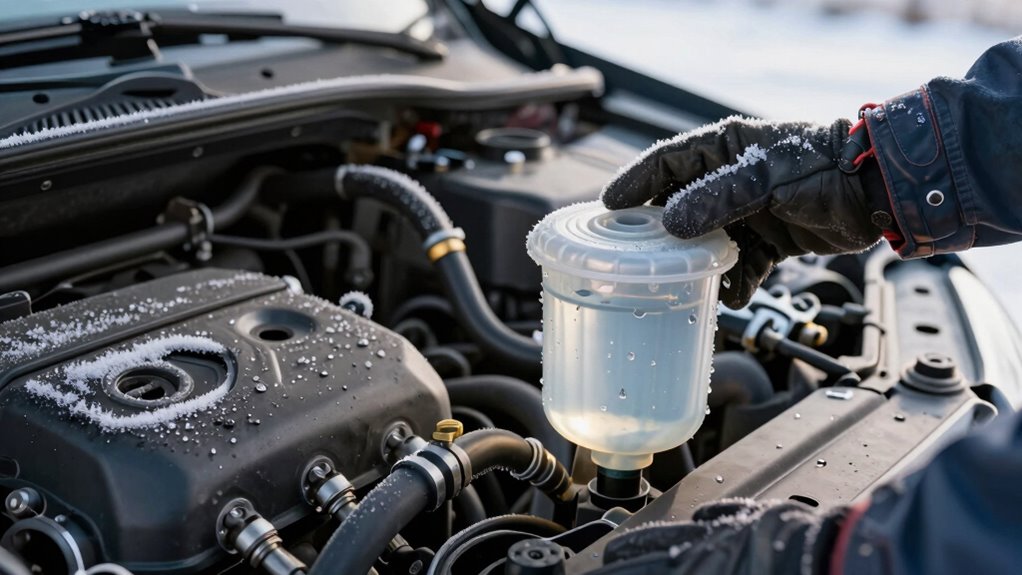
Have you performed essential pre-winter fuel system checks to guarantee reliable cold-start performance? Begin by inspecting fuel filters for clogging or sediment buildup, as restricted flow can hinder combustion in low temperatures. Replace filters if they’ve reached their service limit, ensuring unobstructed fuel flow. Next, verify the integrity of fuel lines and connections for leaks, cracks, or blockages that could introduce air or moisture, impairing fuel delivery. Consider testing the fuel pump’s pressure output to confirm it maintains proper flow rates under cold conditions. Additionally, check for water contamination in the fuel tank—water can freeze and block fuel passages. Draining any accumulated water and adding fuel stabilizer with anti-gel properties can prevent fuel waxing and ensure consistent atomization during cold starts. Familiarity with fuel system technology can help identify potential issues with modern fuel delivery components that may affect cold start reliability. Regular maintenance and understanding of fuel composition are also crucial to prevent starting issues in winter temperatures. Conducting fuel system diagnostics periodically can help detect early signs of problems before they lead to cold start failures. To further safeguard against cold starts, inspecting and maintaining fuel system components ensures your vehicle remains reliable during the winter months.
Easy Tips to Keep Your Fuel System Running Smoothly in Cold Weather
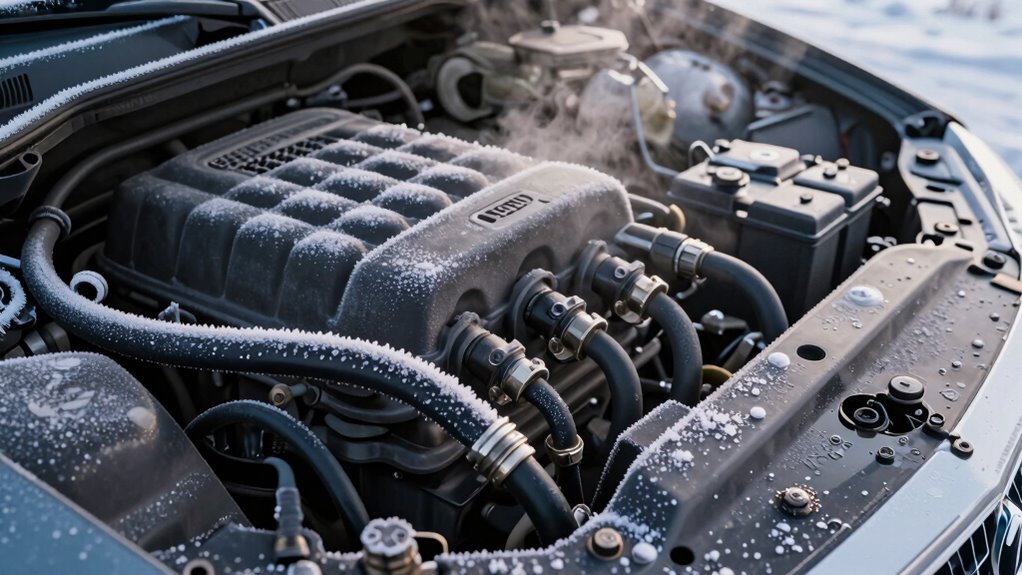
Maintaining peak fuel system performance in cold weather requires consistent, proactive measures to prevent fuel gelling and guarantee reliable operation. To achieve this, you should:
- Use winterized fuel blends that contain additives lowering the pour point and preventing wax crystallization.
- Regularly add fuel additives designed for cold temperatures, which inhibit wax formation and improve flowability.
- Keep your fuel tank at least half full to minimize condensation and reduce the risk of fuel contamination or freeze-up.
- Consider utilizing smart monitoring tools that can alert you to potential fuel issues caused by temperature fluctuations. This technology enhances home security by providing real-time alerts, similar to how fuel system monitoring helps maintain vehicle performance.
- Understanding ceiling fan technology can help you select the most effective methods and products for winter use, ensuring optimal airflow and temperature regulation indoors. Additionally, inspecting your fuel lines for clogging signs can prevent costly repairs later on. Being aware of fuel system components and their maintenance needs can further help you prevent issues before they arise.
These steps promote steady fuel flow, reduce strain on the fuel pump, and prevent blockages caused by wax buildup. Ensure your vehicle’s fuel system components are compatible with winter additives and that your fuel lines are inspected periodically for signs of freezing or clogging. Proper maintenance keeps your fuel system reliable during the coldest months.
Common Winter Fuel Problems and How to Fix Them

During winter, fuel systems are prone to specific issues such as fuel gelling, wax crystallization, and contamination, all of which can severely impair engine performance. Fuel gelling occurs when paraffin wax components solidify at low temperatures, clogging fuel filters and injectors, reducing flow. To prevent this, use winter-grade fuels with additives designed to lower the gel point, or add anti-gel agents before cold weather hits. Wax crystallization leads to sediment buildup in tanks, which can clog filters and reduce fuel flow; regular tank draining and filtration help mitigate this. Contamination from water or debris can cause corrosion and injector damage; employing proper storage techniques and using fuel stabilizers reduces this risk. Ensuring your fuel system is clean and well-maintained is essential for reliable cold starts and engine efficiency. Additionally, fuel system maintenance practices such as inspecting fuel lines and replacing filters before winter can prevent many common issues. Regularly checking for water contamination and draining water separators can further protect your fuel system during cold months. Proper storage techniques and the use of fuel additives can also help maintain fuel quality in winter conditions. Moreover, staying informed about industry trends allows you to adopt new solutions that improve fuel stability and performance during winter. Incorporating fuel testing can also help identify potential problems early and ensure your fuel remains suitable for cold weather operation.
Signs You Need a Mechanic for Winter Fuel Issues
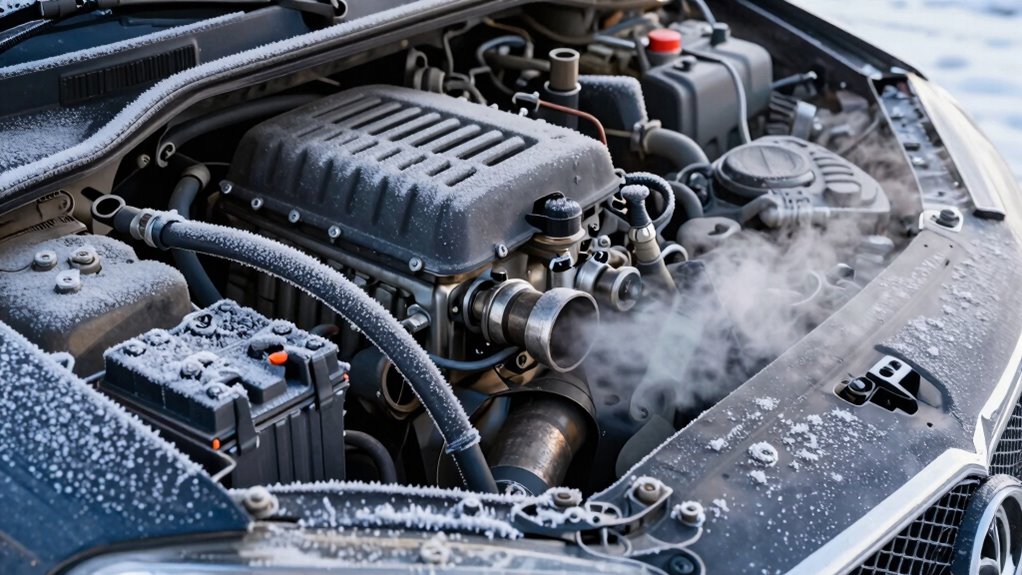
When your vehicle exhibits persistent starting difficulties or stalls shortly after ignition in cold weather, it’s a clear sign that professional intervention may be necessary. Recognizing specific symptoms can prevent further damage and ensure reliability.
Common signs include:
- Difficulty starting the engine, especially after overnight freezes, indicating fuel vaporization issues or fuel line blockages.
- Engine stalling or rough idling, suggesting fuel delivery problems due to clogged injectors or contaminated fuel.
- Increased fuel consumption or unresponsive acceleration, which points to fuel system inefficiencies or inaccurate fuel pressure regulation.
These symptoms highlight potential issues like fuel line freezing, fuel pump failure, or improperly functioning fuel injectors. Prompt diagnosis by a mechanic can address these problems before they escalate.
Frequently Asked Questions
How Does Temperature Affect Fuel Viscosity and Engine Performance?
Temperature directly impacts fuel viscosity, making it thicker in cold conditions and thinner when warm. When fuel thickens, it flows less easily through injectors and filters, causing poor atomization and combustion. This reduced flow can lead to sluggish engine performance, misfires, or hard starts. To mitigate these issues, guarantee your fuel system uses appropriate additives and maintain proper fuel heating systems, especially during winter, to optimize viscosity and engine efficiency.
Can Using Additives Improve Fuel Flow in Freezing Conditions?
Using additives can considerably improve fuel flow in freezing conditions by lowering the fuel’s pour point and preventing wax crystallization. These additives, such as anti-gel agents, modify the fuel’s chemical properties, ensuring it remains fluid at low temperatures. You should add them before the temperature drops, following the manufacturer’s instructions, to maintain ideal fuel flow and engine performance during cold starts. Proper use helps prevent fuel gelling and engine stalling.
What Types of Fuel Are Best for Winter Cold Starts?
You should opt for winterized or blend fuels designed specifically for cold climates, such as winter-grade diesel or gasoline with cold flow improvers. These fuels contain additives that lower pour points and prevent gelling, ensuring reliable ignition and smooth combustion during freezing temperatures. Always choose fuels formulated for your region’s winter conditions, and consider using supplemental additives if necessary, to optimize fuel flow and prevent fuel system issues during cold starts.
How Often Should I Replace My Fuel Filter Before Winter?
You should replace your fuel filter every 20,000 to 30,000 miles or annually before winter, whichever comes first. Regular replacement prevents clogging from debris and moisture, ensuring peak fuel flow during cold starts. Inspect for signs of contamination like sediment or water accumulation, and perform maintenance proactively. Using high-quality filters improves filtration efficiency, extending your fuel system’s lifespan and maintaining engine performance in freezing temperatures.
Are There Specific Engine Components Sensitive to Cold-Related Fuel Issues?
Yes, your fuel injectors and fuel pump are especially vulnerable to cold-related issues. Cold temperatures can cause fuel to thicken, leading to clogging or reduced flow, which strains these components. You might experience rough idling or difficulty starting. To prevent damage, ensure your fuel filter is clean, use winter-grade fuel, and consider adding fuel additives designed to improve cold-weather flow. Regular maintenance helps sustain ideal engine performance in winter conditions.
Conclusion
When temperatures plummet, your fuel system faces increased stress, risking poor starts and engine performance. Regular pre-winter checks, using appropriate fuel additives, and inspecting fuel lines can prevent costly breakdowns. Are you prepared to guarantee your fuel system remains reliable through the cold? Staying proactive with these detailed maintenance tips guarantees smoother starts and ideal engine function despite the freezing conditions. Don’t wait for winter’s worst—protect your vehicle now to avoid unexpected cold weather failures.
Fall Picks
fall essentials
As an affiliate, we earn on qualifying purchases.