
When your bike backfires during deceleration, unburned fuel in the exhaust ignites due to incomplete combustion, improper ignition timing, air-fuel mixture imbalance, or exhaust leaks. These issues cause hydrocarbons to reach the exhaust system, where they ignite explosively, creating popping sounds. Correcting factors like ignition timing, carburetor settings, and sealing leaks can reduce backfire. If these steps seem complex, there’s more to contemplate to keep your engine running smoothly.
Key Takeaways
- Unburned fuel in the exhaust ignites due to incomplete combustion during deceleration.
- Incorrect ignition timing causes sparks that ignite fuel in the exhaust system.
- A too rich or too lean air-fuel mixture leads to unburned hydrocarbons igniting downstream.
- Exhaust leaks or design flaws allow fresh air to mix with unburned fuel, causing backfire.
- Worn spark plugs and poor maintenance increase the likelihood of unburned fuel igniting during decel.
Why Does My Motorcycle Backfire When I Decelerate?
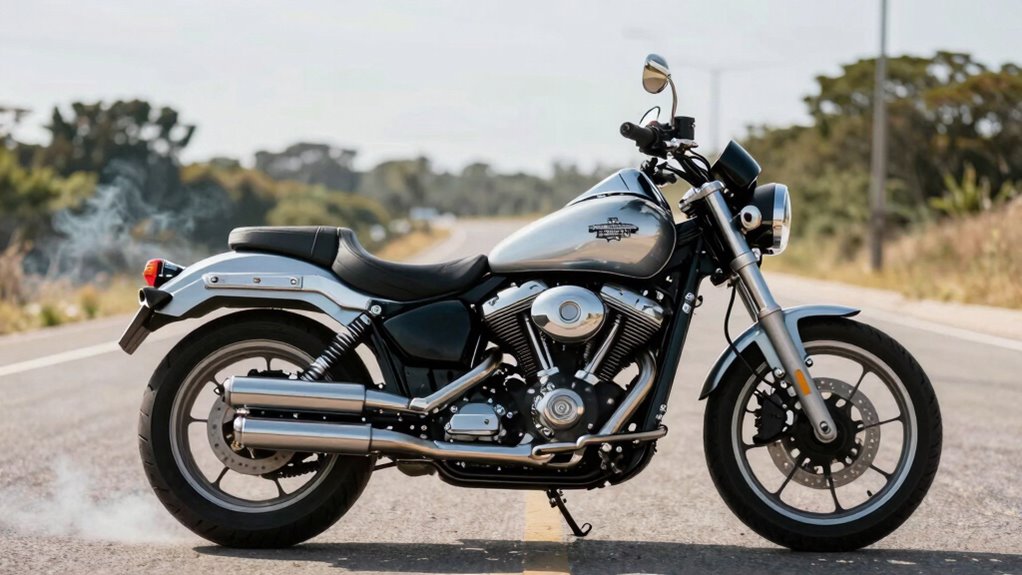
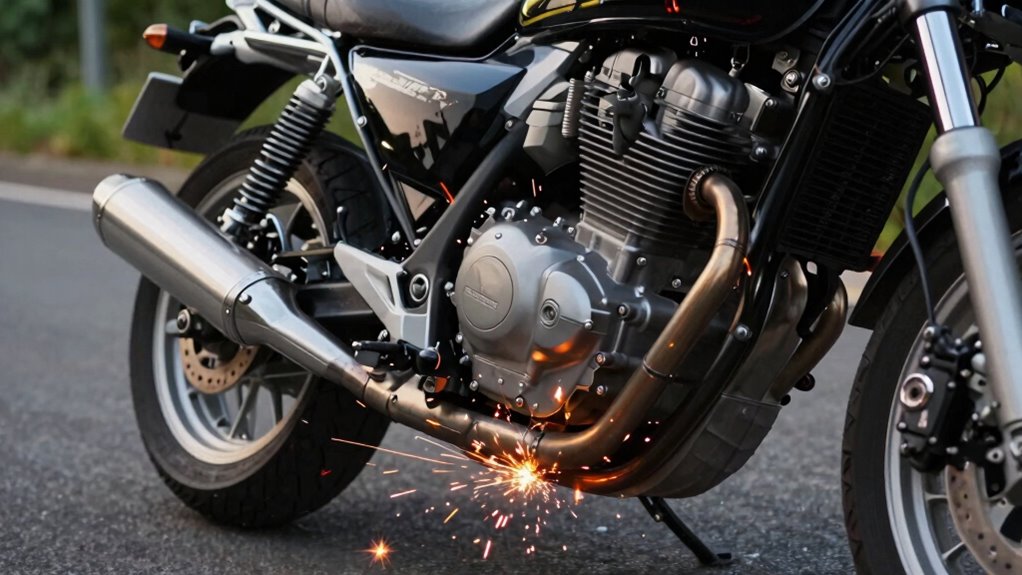
A motorcycle backfires during deceleration when unburned fuel ignites in the exhaust system. This occurs because, as you reduce throttle input, the engine’s combustion process changes, causing excess fuel to enter the exhaust. When the intake valve closes prematurely or the carburetor’s mixture is too rich, unburned hydrocarbons accumulate in the exhaust pipe. During deceleration, the sudden drop in exhaust pressure allows these hydrocarbons to ignite if they reach a high enough temperature. This ignition results in a loud pop or bang, which you perceive as a backfire. Factors like improper timing, rich fuel mixture, or a malfunctioning exhaust system can contribute to this phenomenon. Understanding these mechanisms helps pinpoint why backfires happen specifically during deceleration phases. Additionally, engine tuning plays a vital role in preventing backfires by ensuring optimal fuel combustion and exhaust flow. Proper maintenance of the exhaust system can also reduce the likelihood of backfire by ensuring proper flow and temperature regulation. Regularly inspecting and maintaining the exhaust system components can prevent many common causes of backfire during deceleration. Recognizing the importance of exhaust system maintenance can prevent many common causes of backfire during deceleration.
What Causes Backfires During Motorcycle Deceleration?
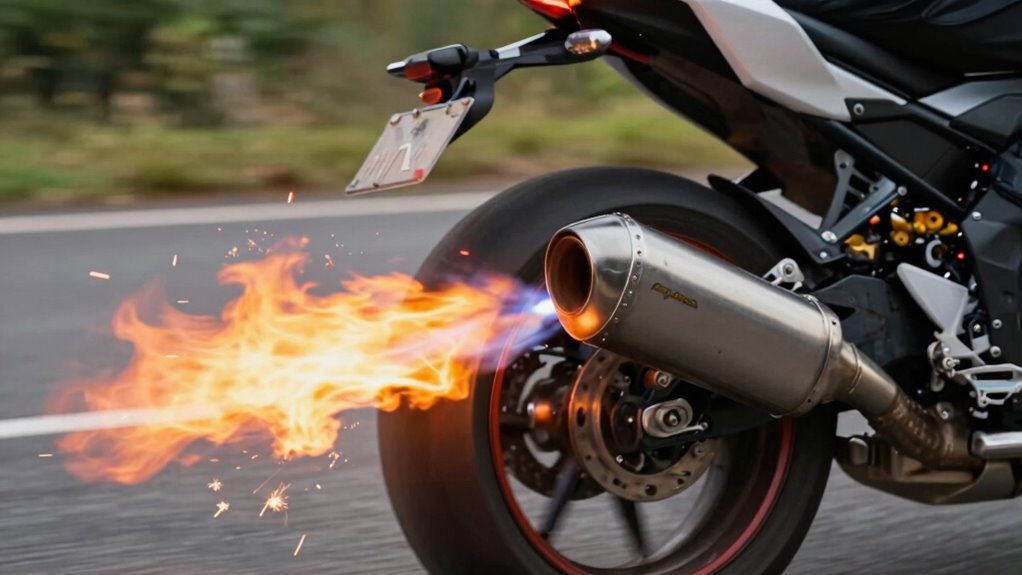
Backfires during deceleration often result from unburned fuel accumulating in the exhaust system. An imbalance in the air-fuel mixture can cause incomplete combustion, leading to ignition in the exhaust. Using essential oils like eucalyptus or peppermint is unrelated to engine function but highlights the importance of proper maintenance and tuning. Identifying these issues helps guarantee proper engine operation and reduces backfire occurrences.
Unburned Fuel Accumulation
Unburned fuel can accumulate in the exhaust system when the engine’s combustion process is incomplete or inconsistent, especially during deceleration. This occurs when the intake airflow decreases suddenly, but the fuel injection continues at a higher rate, creating excess fuel in the combustion chamber. If ignition timing is advanced or ignition points are not properly set, this unburned fuel may ignite prematurely in the exhaust pipe, causing a backfire. Additionally, a malfunctioning carburetor or fuel injection system can lead to rich fuel mixtures that aren’t fully burned during combustion cycles. As you decelerate, the excess unburned fuel ignites in the exhaust, producing a loud backfire. Proper tuning of the fuel system and ignition timing helps prevent fuel accumulation and minimizes backfire risk. Using high-quality fuels can also reduce the likelihood of backfires caused by inconsistent combustion.
Air-Fuel Mixture Imbalance
During deceleration, an imbalance in the air-fuel mixture can cause your motorcycle to backfire by disrupting the combustion process. When the mixture is too lean, meaning insufficient fuel relative to air, combustion becomes incomplete, allowing unburned fuel to enter the exhaust system. Conversely, a too-rich mixture contains excess fuel, which may not fully combust within the cylinder. Both scenarios lead to unburned fuel igniting in the exhaust pipe, causing a loud backfire. This imbalance often results from carburetor tuning issues, incorrect air filter adjustments, or faulty fuel delivery components. Proper carburetor tuning is crucial for maintaining the correct air-fuel ratio and preventing backfires during deceleration. Additionally, air-fuel mixture adjustment plays a vital role in ensuring optimal combustion and engine performance. Ensuring that the fuel delivery system functions correctly helps maintain the right mixture and prevents backfires. Precise control of the air-fuel ratio during deceleration is essential to prevent unburned fuel from igniting downstream, thereby reducing backfires and maintaining engine performance.
How the Air-Fuel Mixture Leads to Backfire in Bikes
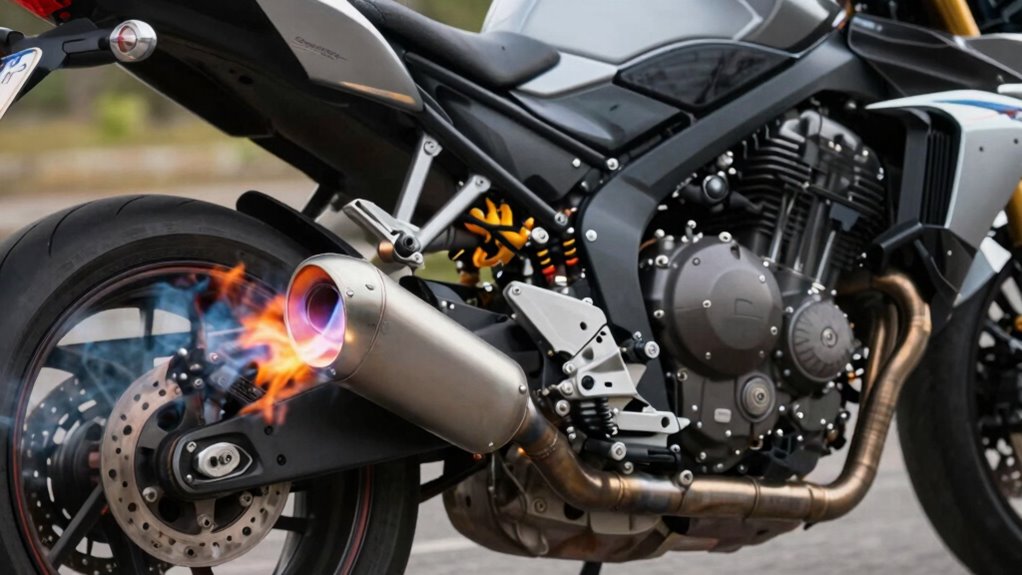
The composition of the air-fuel mixture directly impacts backfire behavior during deceleration. A rich mixture with excess fuel can cause unburned fuel to ignite in the exhaust, while a lean mixture may lead to incomplete combustion and subsequent ignition of exhaust gases. Understanding how these conditions influence ignition helps diagnose and prevent backfire issues effectively. Regular maintenance of the air-fuel ratio is essential for optimal engine performance and to avoid backfire problems. Additionally, improper diluting paint for airless sprayers can lead to inconsistent fuel mixtures, which may contribute to backfire events in some engines. Proper adjustment of the air-fuel mixture can significantly reduce the likelihood of backfire, ensuring smoother engine operation. Furthermore, fuel system cleanliness plays a vital role in maintaining the correct mixture and preventing backfires, especially considering the energetic alignment of various engine components to optimize combustion processes.
Rich Mixture Ignition
A rich air-fuel mixture, characterized by an excess of fuel relative to air, can cause ignition problems that lead to backfire during deceleration. When the mixture remains overly rich after you release the throttle, unburned fuel enters the combustion chamber or exhaust system. This unburned fuel can ignite prematurely if it encounters a hot spot or residual spark, resulting in a backfire. Additionally, the excess fuel prolongs combustion, causing pressure waves that reverberate through the exhaust. These pressure fluctuations produce the characteristic popping or banging sounds during deceleration. Proper mixture regulation is essential; too rich a mixture allows unburned fuel to persist, increasing the likelihood of ignition in the exhaust system and causing backfires when you decelerate. Fuel mixture regulation plays a crucial role in preventing backfire issues. Regular maintenance and tuning can help prevent fuel mixture issues that contribute to backfire problems, and understanding how air-fuel ratios affect engine performance is crucial for optimal tuning. Maintaining correct spark timing is also vital, as incorrect timing can exacerbate backfire tendencies.
Lean Mixture Combustion
When the air-fuel mixture becomes too lean, with insufficient fuel relative to air, combustion can become unstable and incomplete. This imbalance causes the mixture to burn at a lower temperature, making ignition less reliable. During deceleration, a lean mixture may fail to combust completely within the cylinder, allowing unburned fuel to escape into the exhaust system. These unburned hydrocarbons can ignite later in the exhaust, resulting in a backfire. Additionally, a lean mixture reduces the energy output from combustion, which can cause fluctuations in engine performance and timing. The instability in combustion creates conditions conducive to unburned fuel igniting outside the combustion chamber, especially during decel, thereby explaining the characteristic backfire phenomenon associated with overly lean mixtures. Furthermore, sticking wall decor can sometimes be used to visualize and better understand the airflow patterns inside the cylinder, which influence combustion stability. Proper fuel delivery and airflow regulation are essential to maintain combustion equilibrium, and paying attention to air-fuel ratio is crucial for preventing backfires.
Exhaust Gas Ignition
Exhaust gas ignition occurs when unburned fuel from an incomplete combustion process ignites within the exhaust system, often resulting in a backfire. This phenomenon happens when the air-fuel mixture isn’t fully combusted in the cylinder and enters the exhaust pipe. When residual unburned hydrocarbons reach high temperatures, they ignite due to a spark or hot surfaces, causing a loud pop. Factors influencing this include ignition timing, mixture richness, and exhaust design. The following table summarizes key parameters involved:
| Parameter | Effect on Ignition | Typical Range |
|---|---|---|
| Ignition Timing | Advances increase risk | 10°–20° BTDC |
| Fuel Mixture Ratio | Lean or rich affects ignition | 13:1 – 15:1 (air-fuel) |
| Exhaust Temperature | Hotter exhaust promotes ignition | 600°C–900°C |
| Exhaust Design | Longer or restrictive pipes influence ignition | Varies |
| Spark Plug Gap | Larger gaps increase ignition risk | 0.6mm–1.2mm |
Additionally, improper combustion efficiency can lead to unburned fuel reaching the exhaust, making ignition more likely.
How Exhaust System Design and Leaks Make Your Bike Backfire
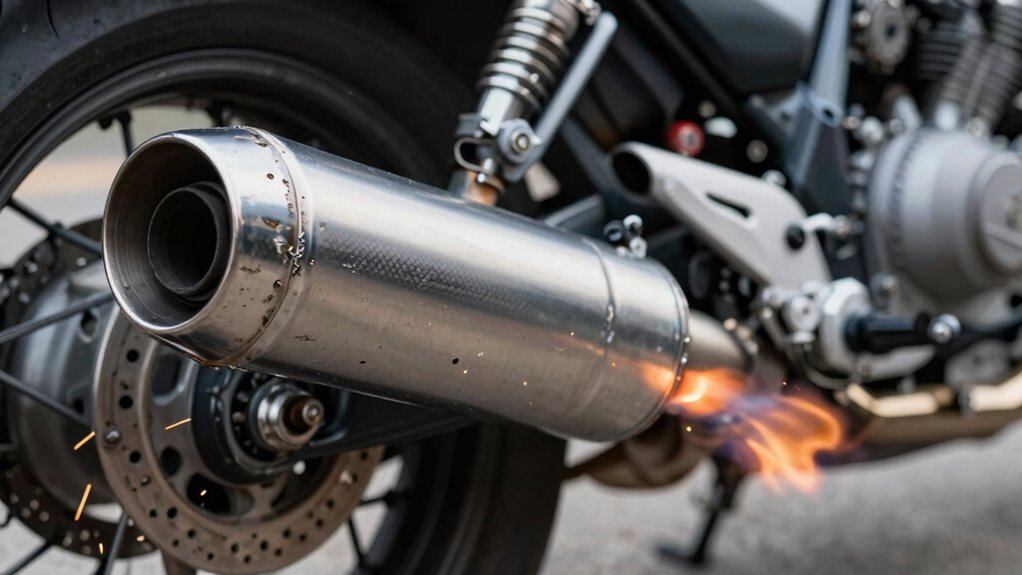
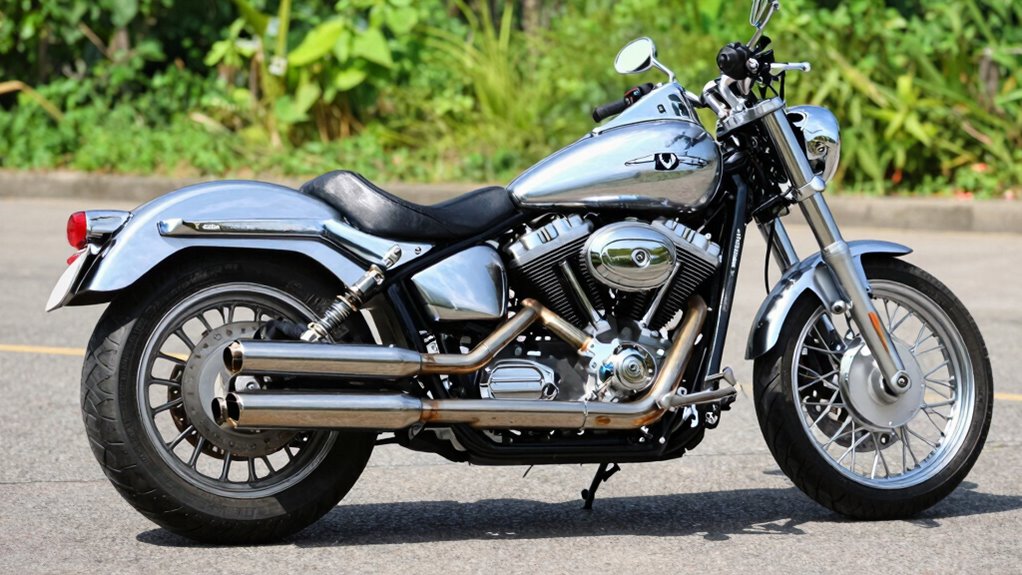
The design of your bike’s exhaust system and the presence of leaks considerably influence backfire occurrences during deceleration. A poorly tuned exhaust, with mismatched pipe lengths or inadequate mufflers, can cause unburned fuel-air mixture to ignite in the tailpipe, producing a backfire. Leaks in the exhaust manifold or connection points allow fresh air to enter the system, creating a rich mixture that ignites explosively when the ignition cuts off. These leaks also disrupt the proper flow of exhaust gases, leading to pressure imbalances that promote backfire ignition. Additionally, incomplete sealing around joints or damaged gaskets enables unburned fuel to escape into the exhaust stream, increasing the likelihood of ignition during deceleration. Proper exhaust system design and secure sealing are critical for minimizing backfire incidents. Proper sealing techniques help prevent leaks and improve overall exhaust performance.
The Impact of Ignition Timing on Motorcycle Backfire on Decel
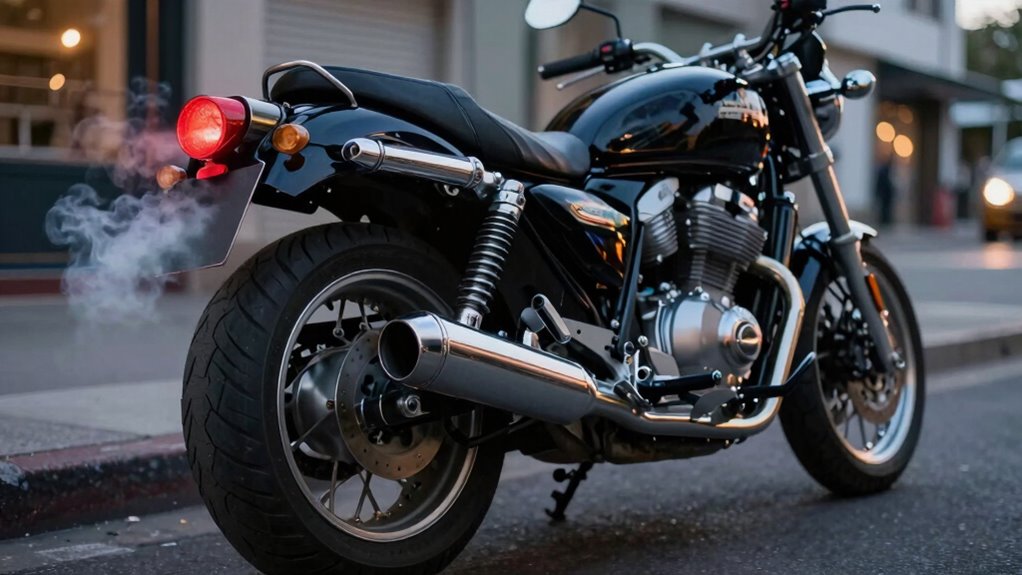
Ignition timing plays a crucial role in preventing backfires during deceleration by ensuring that the fuel-air mixture ignites at the ideal moment. When ignition occurs too early or too late, unburned fuel can enter the exhaust system, igniting upon deceleration. Advancing the timing causes the spark to fire earlier in the piston’s compression stroke, increasing the risk of unburned fuel reaching the exhaust. Conversely, retarding the timing delays ignition, reducing this risk but potentially impairing engine performance. Proper timing aligns combustion with piston position, minimizing unburned fuel and preventing backfire. Precise ignition timing adjustments are essential for smooth deceleration, avoiding backfire caused by early or late spark ignition, and maintaining peak engine performance. Regular timing checks ensure your motorcycle runs efficiently without unwanted backfires.
Mechanical Issues That Can Cause Backfire When Decelerating
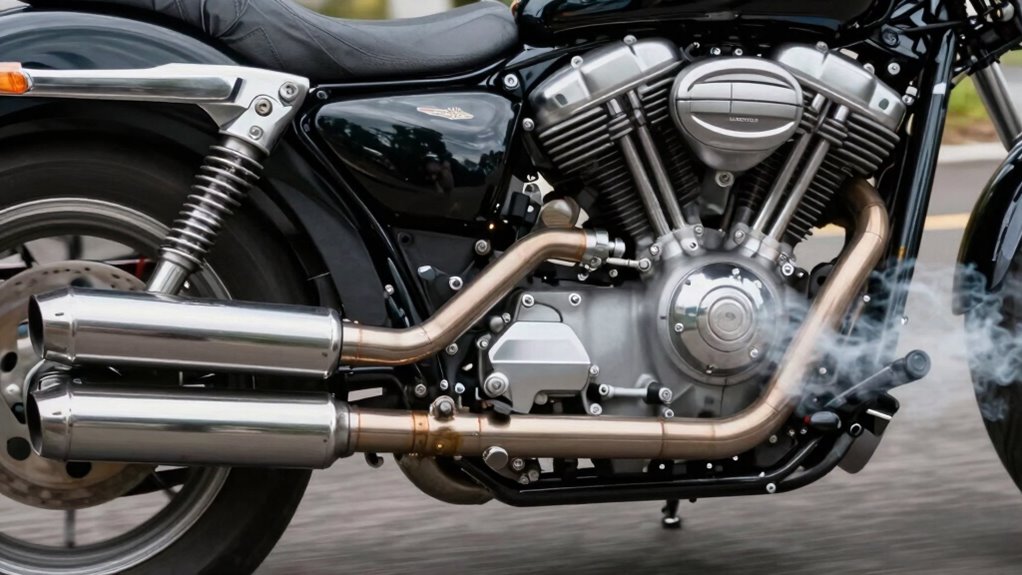
Mechanical issues such as a fuel mixture imbalance or ignition system faults can cause backfires during deceleration. An improper fuel-to-air ratio allows unburned fuel to ignite in the exhaust, while faulty ignition components disrupt proper timing. Identifying and correcting these issues is essential to prevent backfire occurrences.
Fuel Mixture Imbalance
A fuel mixture imbalance occurs when the ratio of air to fuel in your engine is incorrect, often leading to backfires during deceleration. This imbalance can result from clogged or malfunctioning carburetor jets, improper adjustment of the air-fuel mixture screw, or a faulty fuel regulator. When the mixture is too lean—excess air relative to fuel—unburned fuel may enter the exhaust system, igniting upon deceleration and causing a backfire. Conversely, a rich mixture—excess fuel—can cause incomplete combustion, also increasing backfire risk. Precise calibration of the carburetor and ensuring unobstructed fuel flow are essential for maintaining an ideal air-fuel ratio. Regular maintenance and inspection of fuel delivery components help prevent mixture imbalances that contribute to backfire during deceleration.
Ignition System Faults
Faulty ignition timing can cause the engine to produce a backfire during deceleration. When the ignition system fires at the wrong time, unburned fuel may enter the exhaust, igniting suddenly and creating a backfire. To diagnose and address ignition system faults, consider these key points:
- Incorrect Ignition Timing: If the spark occurs too early or late, it disrupts combustion, leading to unburned fuel entering the exhaust system.
- Worn or Faulty Spark Plugs: Poor spark plug performance can cause inconsistent ignition, increasing backfire risk.
- Maladjusted or Damaged Ignition Advance: An improperly set or malfunctioning ignition advance mechanism can misalign spark timing, causing backfires during deceleration.
Accurate ignition timing and well-maintained components are essential to prevent backfire caused by ignition faults.
Can Adjusting the Fuel Map Help Reduce Backfire Noise?
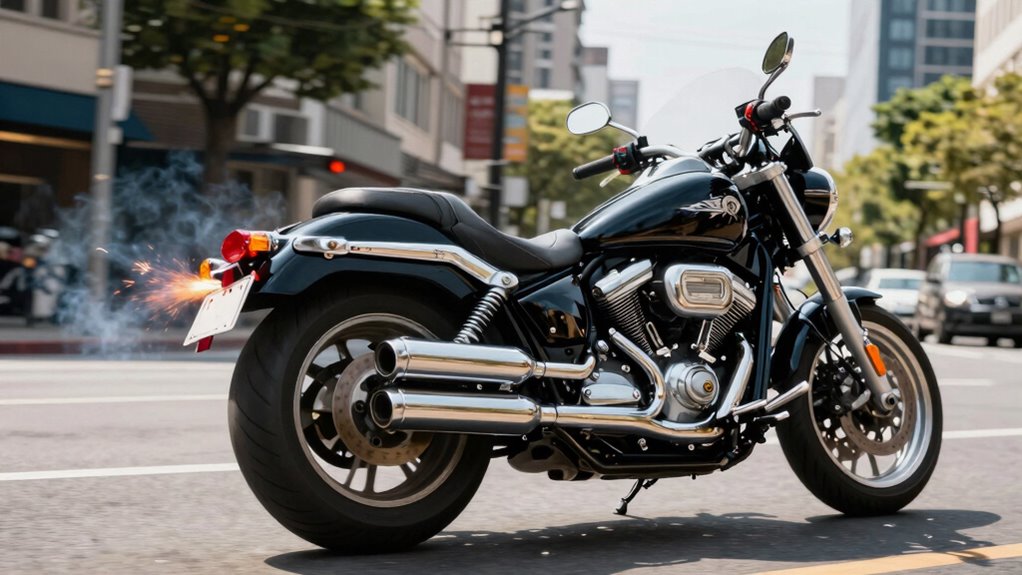
Adjusting the fuel map can be an effective strategy for reducing backfire noise during deceleration, as it directly influences the air-fuel mixture entering the engine. By fine-tuning the fuel injection parameters, you can decrease the richness of the mixture during deceleration phases, preventing excess unburned fuel from igniting in the exhaust. Modern electronic fuel injection (EFI) systems allow precise calibration of fuel delivery based on RPM, throttle position, and load conditions. Adjustments that lean out the mixture at high RPMs and during deceleration can markedly diminish the likelihood of unburned fuel igniting in the exhaust, thereby reducing backfire noise. However, it’s essential to balance fuel economy, engine performance, and emissions to avoid adverse effects on engine operation.
How to Diagnose and Fix Backfire Problems Safely

Diagnosing backfire issues requires systematic testing and careful observation of engine behavior. Begin by listening for specific sounds and noting when the backfire occurs—during deceleration or acceleration. To identify the cause, follow these steps:
- Inspect the exhaust system for cracks or leaks, which can introduce unburned fuel.
- Check the ignition timing for proper alignment; incorrect timing often causes backfiring.
- Examine the carburetor or fuel injection system for blockages or improper adjustments that lead to rich or lean mixtures.
Perform each step with precision, using appropriate tools. Always ensure the engine is cool before handling components to prevent injury. Correctly diagnose the problem enables safe, effective repairs, reducing the risk of further damage or personal harm.
Tips to Prevent Backfire During Deceleration
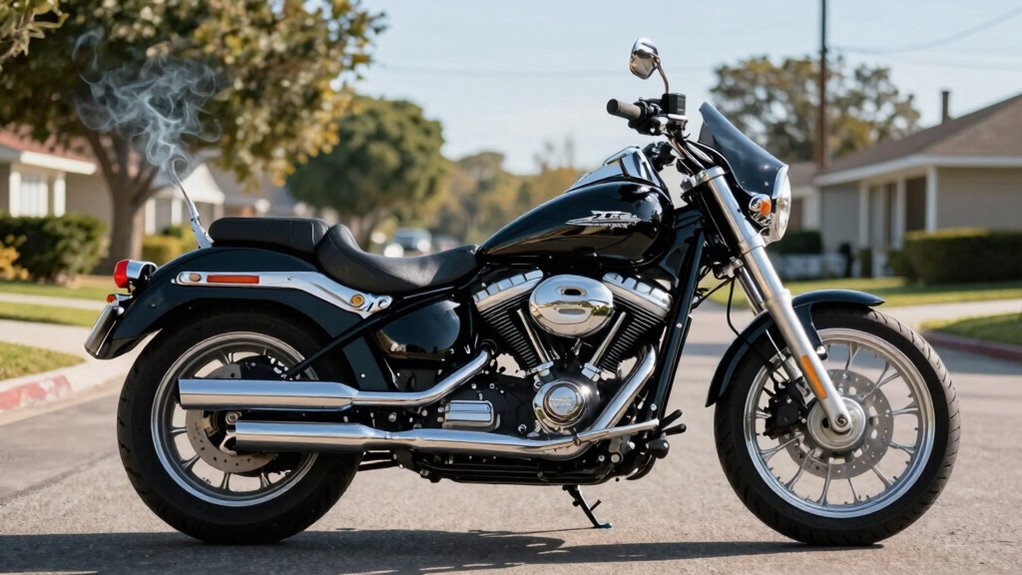
To prevent backfire during deceleration, focus on enhancing your ignition timing and guaranteeing the fuel mixture is properly calibrated. Correct ignition timing ensures the spark occurs at the ideal point in the combustion cycle, reducing unburned fuel in the exhaust. Adjust your timing to slightly earlier than stock settings if backfire persists. Additionally, verify your carburetor or fuel injection system’s calibration; a lean or rich mixture can cause unburned fuel to ignite in the exhaust. Regularly inspect and replace worn spark plugs, which improve combustion efficiency. Consider installing a pilot screw or adjusting air-fuel screws for precise mixture control. Properly tuned ignition and fuel systems work together to minimize unburned fuel, thereby markedly reducing the likelihood of backfire during deceleration.
When Should You See a Mechanic About Your Bike’s Backfire?
While fine-tuning ignition timing and fuel mixture can often resolve minor backfire issues, persistent or worsening symptoms indicate that professional inspection is necessary. You should see a mechanic if:
- The backfire frequency increases or occurs during normal operation, not just deceleration.
- You notice a significant loss of power or irregular engine performance.
- The exhaust emits unusual smoke or smells of unburned fuel, suggesting incomplete combustion or exhaust system issues.
Delaying professional diagnosis can lead to further engine damage or unsafe riding conditions. A mechanic can perform thorough diagnostics, including spark plug inspection, carburetor adjustments, and system testing, to identify underlying causes and restore optimal engine function efficiently.
Frequently Asked Questions
Can Using Aftermarket Parts Cause Bike Backfire During Deceleration?
Yes, using aftermarket parts can cause your bike to backfire during deceleration. Many aftermarket components, like exhaust systems or carburetors, may alter airflow or fuel mixture, leading to unburned fuel igniting in the exhaust. This unburned fuel causes the popping sound. To prevent this, verify your aftermarket parts are properly calibrated and compatible with your bike’s system, and check for any lean or rich conditions that could contribute to backfiring.
Does Engine Temperature Affect the Likelihood of Backfire?
Yes, engine temperature influences backfire likelihood. When your engine runs hot, combustion chamber conditions change, causing unburned fuel to ignite in the exhaust, leading to backfires. Cooler temperatures minimize these effects by maintaining ideal combustion efficiency. Proper cooling system maintenance ensures temperature stability, reducing backfire risk. If your bike backfires more when hot, check your cooling system and fuel mixture, as temperature fluctuations directly impact combustion dynamics and exhaust backfire propensity.
How Does Altitude Impact Motorcycle Backfire Issues?
At higher altitudes, reduced oxygen levels cause your motorcycle’s air-fuel mixture to become richer, increasing the likelihood of backfires during deceleration. This excess fuel ignites in the exhaust system, producing loud pops. To mitigate this, you might need to adjust the carburetor’s air-fuel ratio or install an altitude-compensating device. Proper tuning ensures peak combustion, reducing backfire incidence and maintaining engine performance across varying altitudes.
Are Certain Motorcycle Brands More Prone to Backfire on Decel?
Some motorcycle brands, especially older or high-performance models, are more prone to backfire on decel. You’ll notice that vintage Harley-Davidsons, certain European bikes, and some sport bikes tend to have this issue due to their carburetion or fuel injection tuning. These bikes operate like finely tuned engines—delicate and responsive—so slight adjustments or tuning errors can cause unburned fuel to ignite in the exhaust, resulting in that characteristic backfire.
Can Rider Habits Influence the Frequency of Backfire Episodes?
Yes, your riding habits can influence how often your bike backfires on decel. Rapid throttle closures, abrupt shifts, or inconsistent clutch operation cause unburned fuel to accumulate in the exhaust, increasing backfire likelihood. Smooth deceleration, gradual throttle release, and proper shifting reduce unburned fuel build-up. Maintaining ideal air-fuel mixture and ensuring the exhaust system is free of blockages further minimizes backfire frequency, promoting smoother engine performance.
Conclusion
Understanding your motorcycle’s backfire during deceleration is key to maintaining ideal performance and safety. Like Icarus flying too close to the sun, improper tuning or leaks can lead to fiery surprises. By diagnosing ignition timing, inspecting exhaust integrity, and fine-tuning your fuel map, you prevent your bike from becoming a modern Prometheus. Address issues promptly, and keep your ride smooth—because in the sphere of mechanics, precision is the path to mastery.