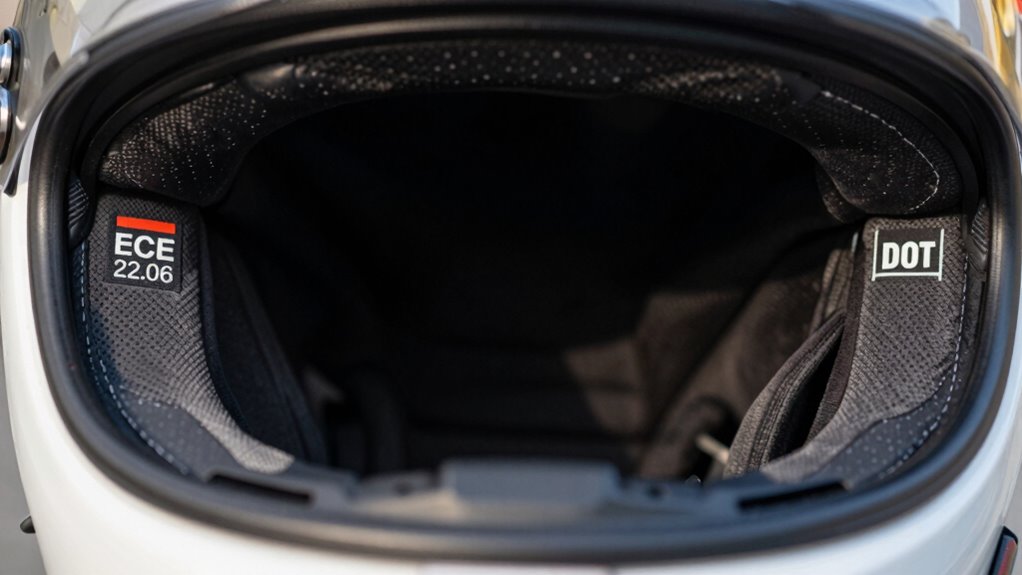

You might think all helmets offer the same protection, but ECE 22.06 and DOT standards actually differ quite a bit. ECE 22.06 helmets usually meet stricter safety criteria, which can give you better impact protection. They also tend to fit more snugly and conform better to your head’s shape, improving comfort and safety. Overlooking these differences could affect your riding experience and safety in an accident. Keep going—there’s more to know that could make a real difference.
Key Takeaways
- ECE 22.06 has stricter safety testing protocols than DOT, leading to higher overall helmet safety standards.
- Helmets certified under ECE 22.06 often provide better impact protection and durability.
- The certification process influences helmet fit, comfort, and conformity to safety regulations.
- ECE 22.06 helmets typically meet more rigorous safety criteria than DOT-approved helmets.
- The differences in standards can significantly affect rider safety during accidents and impacts.

Have you ever wondered what riders might overlook when choosing between ECE 22.06 and DOT motorcycle helmets? Many focus on price, design, or brand reputation, but there are essential differences related to helmet comfort and the certification process that can greatly impact your safety and riding experience. These details often go unnoticed, yet they influence how well your helmet performs and how comfortable you’ll feel during long rides. For example, the certification standards differ significantly, affecting the overall safety and quality of the helmet. Helmet comfort is more than just padding and style; it’s about how the helmet fits your head and how it manages pressure points during extended use. ECE 22.06 helmets tend to prioritize a snug, precise fit, often resulting in a helmet that feels more secure without sacrificing comfort. Manufacturers design these helmets with advanced shaping techniques and padding materials that conform better to the contours of your head. In contrast, DOT helmets might sometimes compromise on fit for affordability or aesthetic reasons, which can lead to pressure points, discomfort, or even headaches after hours on the road. Additionally, helmet fit plays a crucial role in overall safety, as a poorly fitting helmet might shift or fail to provide adequate protection during an impact. When choosing between these standards, it’s essential to evaluate how well the helmet will feel during your rides, not just how it looks or costs.
ECE 22.06 motorcycle helmet
As an affiliate, we earn on qualifying purchases.
As an affiliate, we earn on qualifying purchases.
Frequently Asked Questions
How Do ECE 22.06 and DOT Certifications Impact Helmet Safety?
You should know that certification standards like ECE 22.06 and DOT directly impact helmet safety by ensuring rigorous safety testing. ECE 22.06, common in Europe, requires extensive impact and retention tests, while DOT standards, used in the U.S., focus on impact absorption and penetration resistance. Both certifications confirm that helmets meet specific safety criteria, giving you confidence that your helmet provides reliable protection during a crash.
Are There Visual Differences Between ECE 22.06 and DOT Helmets?
Like a painter’s palette, ECE 22.06 and DOT helmets can have subtle visual differences. You might notice color variations, but the main distinctions are in the ventilation features and internal construction. ECE helmets often feature more advanced vent designs, which aren’t always visible from the outside. While the logos differ, both certifications focus on safety, so don’t judge a helmet solely by its appearance—look for the certification marks.
Which Certification Is More Widely Accepted Internationally?
You should know that ECE 22.06 certification is more widely accepted internationally because of its thorough standards. While DOT certification is primarily recognized in the United States, ECE 22.06 meets stricter global regulatory differences, making it a preferred choice for international riders. This certification ensures helmets adhere to rigorous safety standards, giving you confidence no matter where you ride. So, if you’re traveling abroad, choosing an ECE 22.06 helmet is often the smarter move.
Do ECE 22.06 and DOT Helmets Fit Differently?
You’ll find that ECE 22.06 and DOT helmets can fit differently because of their design variations. ECE 22.06 helmets often have a slightly more rounded shape, while DOT helmets may have a different contour, affecting comfort. Additionally, their color options and aesthetic designs vary, so you might prefer one for style. Always try on both types to see which fits best, ensuring comfort and safety.
Are There Price Differences Between ECE 22.06 and DOT Helmets?
Imagine stepping into a shop where helmets like armor, each with a different badge of honor. ECE 22.06 helmets often come with a higher price tag, reflecting superior material durability and a reputation for rigorous testing. Brands with top-tier reputation may charge more, but you’re investing in quality and safety standards. Dot helmets might be more budget-friendly, yet ECE 22.06 helmets generally symbolize advanced protection and reliability, justifying the cost.
DOT certified motorcycle helmet
As an affiliate, we earn on qualifying purchases.
As an affiliate, we earn on qualifying purchases.
Conclusion
Choosing between ECE 22.06 and DOT isn’t just about small differences; it’s about prioritizing safety and confidence on the road. Imagine donning a helmet that feels like a sturdy fortress versus one that’s more like a flexible shield—each offers protection, but the differences could be the line between safety and injury. As a rider, you’ll want to see beyond the label and understand what truly safeguards your journey—because your ride’s safety is worth every detail.
impact-resistant motorcycle helmet
As an affiliate, we earn on qualifying purchases.
As an affiliate, we earn on qualifying purchases.
comfortable motorcycle helmet with snug fit
As an affiliate, we earn on qualifying purchases.
As an affiliate, we earn on qualifying purchases.