
Engine braking, when properly understood and used, is a valuable technique that enhances control and safety in off-road conditions by utilizing your engine’s internal resistance to decelerate the vehicle. It reduces brake wear, prevents brake fade, and offers precise speed management on steep or uneven terrain. However, overusing or misapplying it can cause engine overheating or loss of stability. To maximize benefits and avoid risks, learn how to wield engine braking effectively as you explore deeper insights.
Key Takeaways
- Engine braking enhances control and safety on rough terrain by reducing reliance on traditional brakes.
- Proper technique minimizes risks like engine overheating, component wear, and loss of traction.
- When used correctly, engine braking acts as a valuable tool, not a danger, in off-road driving.
- Overuse or improper application can cause engine damage, brake fade, or instability.
- Balancing engine braking with conventional brakes ensures optimal safety and vehicle performance in dirt conditions.
What Is Engine Braking and How Does It Work?
Ever wondered how engine braking slows down your vehicle without applying the brake pedal? It operates by utilizing the engine’s internal resistance to deceleration. When you release the accelerator, the throttle closes, restricting airflow into the engine. This creates a vacuum within the intake manifold, which increases internal resistance. As you downshift, the engine’s RPMs remain high relative to the vehicle’s speed, causing the engine’s pistons to resist movement due to compression forces. This resistance translates into deceleration forces transmitted through the drivetrain, reducing the vehicle’s speed. Unlike traditional brakes, engine braking involves no hydraulic or friction components; instead, it relies on the engine’s compression and internal resistance. Precise control of this process allows smooth deceleration without brake wear, provided you understand the engine’s mechanics. Additionally, knowing how vehicle control techniques like engine braking influence overall driving safety can help you make more informed decisions on the road. Understanding the internal engine processes involved can further enhance your ability to use engine braking effectively and safely. Recognizing the engine’s internal resistance can also improve your overall vehicle handling during various driving conditions. Being aware of how engine load affects engine braking can also assist in optimizing your driving technique for different terrains. Moreover, understanding the effects of altitude on engine performance can help you adapt your driving style accordingly.
When and Why to Use Engine Braking Off-Road (Benefits & Tips)
Using engine braking off-road can enhance control and safety when maneuvering uneven or steep terrain. It allows you to modulate speed precisely without over-relying on the brake system, reducing brake fade and maintaining stability. Employ engine braking in scenarios such as descending slopes, navigating technical obstacles, or controlling speed on loose surfaces. Effective use involves understanding engine response characteristics and terrain demands. Key considerations include:
- Maintaining consistent throttle behavior to prevent sudden deceleration
- Selecting appropriate gear ratios for gradual deceleration
- Anticipating terrain changes to preemptively engage engine braking
- Avoiding excessive engine load that could cause stalling
- Combining engine braking with proper throttle modulation for optimal control
- Understanding safe installation practices and proper setup to ensure reliable engine braking performance in off-road conditions.
Implementing these strategies ensures you leverage engine braking as a precise, reliable tool for off-road safety and vehicle stability.
How to Use Engine Braking Properly for Better Control
To harness engine braking effectively for better control, it’s essential to understand how to modulate throttle and gear selection precisely. You should downshift smoothly to match engine speed with wheel velocity, ensuring a seamless changeover that provides consistent deceleration without abrupt engine load changes. Maintain steady throttle application during deceleration to avoid sudden engine responses that may destabilize your ride. Use engine braking proactively by selecting lower gears early when approaching obstacles or turns, allowing controlled speed reduction without over-relying on brakes. Pay attention to engine sound and RPM fluctuations as indicators of proper modulation. Incorporating proper gear control and outdoor wisdom can further optimize your control during challenging terrain. Developing an intuitive understanding of engine response helps riders anticipate vehicle behavior and adjust their techniques accordingly. This disciplined approach optimizes deceleration forces, improving overall control and reducing tire wear during technical maneuvers. Additionally, understanding how vehicle weight transfer affects traction can help you fine-tune your engine braking technique for safer and more precise handling. Recognizing the engine load during different maneuvers can also aid in smoother transitions and better traction management.
How to Recognize Signs of Overusing or Misusing Engine Braking
Recognizing signs of overusing or misusing engine braking is essential for maintaining vehicle stability and component longevity. Excessive engine braking can cause abrupt deceleration and uneven weight transfer, leading to handling issues. Watch for:
- Sudden deceleration sensations inconsistent with braking inputs
- Increased engine noise or irregular RPM fluctuations
- Unusual vibrations or drivetrain stress
- Premature wear on transmission components
- Poor control during descent or downhill driving
These indicators suggest that engine braking is being overapplied or improperly timed. Overuse may also cause engine lugging or stalling, especially at low RPMs. Properly calibrated engine braking minimizes these risks, ensuring stable deceleration without compromising mechanical integrity or control. Additionally, understanding the Yardage for Scarves can help in assessing vehicle load and performance during driving. Being aware of glycolic acid benefits can assist in understanding how proper maintenance and care influence overall vehicle performance. Recognizing these signs early helps optimize driving technique, and paying attention to engine management systems can further prevent damage to drivetrain components. Developing a good understanding of engine tuning principles can also aid in achieving a balanced driving approach that maximizes safety and efficiency.
What Are the Risks and Safety Concerns of Engine Braking?

Engine braking can cause engine overheating if applied excessively, risking damage to internal components. It also places additional stress on the brake system, potentially leading to premature wear or failure. Additionally, improper use may result in loss of vehicle control, especially on slippery or steep surfaces. Proper technique is essential to minimize these risks and ensure safe operation. Understanding engine load management can help maintain optimal engine performance and longevity, especially during demanding driving conditions. Maintaining proper engine maintenance routines can further prevent overheating and mechanical issues, ensuring longevity and reliability. Understanding essential oils for vehicle health can help maintain optimal engine performance and longevity, especially during demanding driving conditions. Understanding Gold IRA rollovers can help diversify your retirement portfolio and protect your assets, especially during market volatility.
Engine Overheating Risks
Have you considered how engine braking can lead to overheating risks? When you rely heavily on engine braking, the engine’s internal temperature rises due to sustained friction and reduced airflow cooling. This risk becomes more significant in high-RPM scenarios or prolonged descents. Overheating can cause component failure, piston seizure, and oil degradation, compromising engine integrity.
- Increased thermal load on pistons and valves
- Reduced lubrication efficiency due to high temperatures
- Accelerated wear of internal components
- Potential for coolant system strain
- Elevated risk of thermal expansion leading to mechanical failure
Understanding these risks emphasizes the importance of balancing engine braking with proper cooling measures and avoiding overuse during aggressive descents or extended engine braking periods.
Brake System Stress
While engine braking can reduce brake wear, excessive or improper use can impose significant stress on the brake system, leading to safety concerns. Relying heavily on engine braking may cause increased heat buildup in the brake components, especially if brake pads or rotors are engaged unintentionally or for prolonged periods. This heat can accelerate wear, weaken structural integrity, and increase the risk of brake fade. Additionally, frequent or aggressive engine braking can induce vibrations and uneven brake pad contact, compromising braking efficiency. Improper technique may also lead to unintended overuse of the hydraulic brake system, risking fluid overheating and failure. Understanding brake system stresses is essential to prevent damage and maintain safe driving conditions. Hence, understanding the limits of engine braking and balancing it with conventional braking is essential to maintain brake system integrity and safety during demanding driving conditions.
Loss of Vehicle Control
Although engine braking can enhance control during deceleration, improper application or excessive reliance may lead to significant safety risks. Misjudging engine braking can cause loss of traction, especially on slippery or uneven surfaces. It might result in unintended vehicle yaw or oversteering, compromising directional stability. Inconsistent engine load management can trigger abrupt shifts in vehicle dynamics, increasing the risk of skidding. Additionally, overuse may lead to mechanical stress, reducing braking system effectiveness.
- Reduced driver awareness of brake system status
- Increased likelihood of engine stall in certain conditions
- Potential for rear-wheel lock-up, causing instability
- Amplification of existing traction issues
- Delayed response to emergencies due to misjudged deceleration
Comparing Engine Braking to Traditional Braking in Off-Road Conditions

When steering through off-road terrain, understanding the distinctions between engine braking and traditional hydraulic braking is crucial for maintaining control and safety. Engine braking reduces vehicle speed through internal engine resistance, providing a progressive deceleration that minimizes wheel lockup and tire slippage. It offers smoother control on uneven surfaces, especially when descending slopes, by modulating torque without abrupt changes. Conversely, hydraulic braking relies on brake fluid pressure applied via pedal force, delivering immediate, high-power deceleration. While effective for emergency stops or precise speed adjustments, it can induce wheel lockup on loose terrain, risking loss of steering control. Comparing both methods, engine braking excels in maintaining traction and stability during sustained deceleration, whereas hydraulic brakes are essential for quick, forceful stopping. Proper braking techniques and familiarity with each method allow drivers to better adapt to diverse off-road conditions and improve overall safety. Additionally, understanding the interaction between engine braking and hydraulic brakes helps optimize vehicle handling in challenging environments.
Debunking Common Myths About Engine Braking
Many misconceptions persist about engine braking, often leading drivers to underestimate its effectiveness or misuse it in ways that compromise safety. Contrary to popular belief, engine braking is a controlled deceleration method that can enhance vehicle stability when applied correctly. It’s not inherently harmful or a sign of engine wear if used properly. Misunderstandings include:
- Believing it causes excessive engine wear
- Thinking it’s only useful on steep descents
- Assuming it replaces traditional braking entirely
- Viewing it as unsafe for modern fuel-injected engines
- Assuming it causes abrupt deceleration
In reality, engine braking allows smoother deceleration, reduces brake fade, and minimizes tire lock-up risks. Proper understanding and application optimize safety, control, and vehicle longevity in off-road and on-road environments.
How to Use Engine Braking Safely When Off-Roading

To use engine braking safely when off-roading, you must adjust your driving technique to the terrain and vehicle conditions, ensuring controlled deceleration without over-relying on engine power. Begin by selecting an appropriate gear ratio for the descent, typically lower gears that match the slope and surface. Maintain steady throttle input, allowing engine compression to manage speed rather than constant brake application, which can cause wheel lockup or loss of traction. Anticipate changes in terrain by modulating throttle and gear shifts proactively, avoiding abrupt decelerations. Monitor your speed continuously, ensuring your engine braking does not induce engine lugging or stall risks. Proper application minimizes brake fade and enhances vehicle stability, especially on loose or uneven surfaces, making engine braking a precise tool for off-road control.
Should You Disable or Modify Your Vehicle’s Engine Braking System?
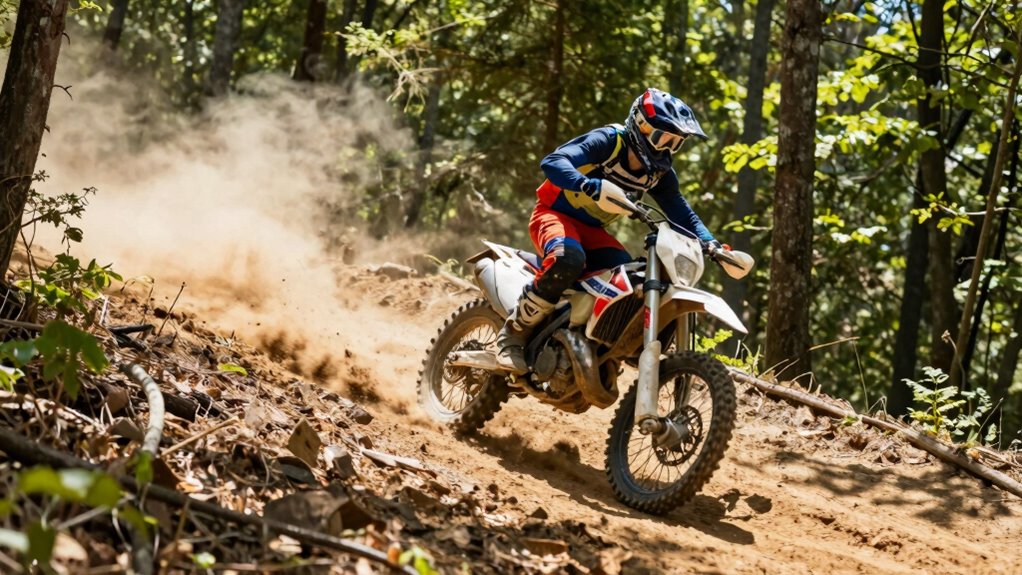
Disabling or modifying your vehicle’s engine braking system can substantially impact safety by reducing deceleration control during critical situations. It also affects performance and handling, potentially compromising stability and responsiveness. Carefully evaluating these factors helps determine whether adjustments align with your driving needs and safety priorities.
Safety Impacts of Disabling
When you disable or modify your vehicle’s engine braking system, you alter critical safety features that help control deceleration and maintain stability during downhill driving or sudden stops. This can increase reliance on brake systems, which may lead to overheating and reduced effectiveness in emergency scenarios. Disabling engine braking diminishes the vehicle’s ability to distribute deceleration forces evenly, risking loss of control on steep descents. You also reduce redundancy in safety mechanisms, making your vehicle more vulnerable to brake failure.
- Increased brake wear and overheating risk
- Reduced control during steep downhill sections
- Higher likelihood of brake fade in emergencies
- Loss of engine braking as a backup safety measure
- Greater potential for loss of vehicle stability
Performance and Control Considerations
Modifying or disabling your vehicle’s engine braking system substantially impacts its performance and control capabilities. Engine braking provides a predictable deceleration force, aiding in precise speed regulation, especially on steep descents or technical terrain. Removing or altering this system reduces your ability to control vehicle deceleration smoothly, forcing reliance on mechanical brakes, which may lead to increased fade and reduced responsiveness during prolonged use. Conversely, in some scenarios, disabling engine braking can prevent unintended engine torque effects that compromise stability, particularly in high-performance or specialized off-road setups. Ultimately, any modification must be carefully evaluated against your specific driving conditions and skill level, as it can alter vehicle handling dynamics, influencing overall control, braking efficiency, and safety margins during challenging maneuvers.
Frequently Asked Questions
Can Engine Braking Cause Engine Damage During Off-Road Driving?
Engine braking typically doesn’t cause damage during off-road driving if you use it properly. However, excessive or abrupt engine braking can increase stress on components like the transmission and drivetrain, potentially leading to wear or failure over time. It’s best to regulate engine braking smoothly, especially on steep descents or rough terrain, to prevent undue strain and ensure longevity of your engine and associated parts.
Is Engine Braking Effective on All Types of Off-Road Terrain?
You can’t judge a book by its cover, and similarly, engine braking isn’t universally effective across all off-road terrains. It works well on loose gravel or moderate inclines, helping control speed smoothly. However, on deep sand or uneven surfaces, its effectiveness diminishes, requiring additional braking methods. Always assess terrain conditions carefully, adapting your approach to maintain vehicle stability and prevent drivetrain stress.
How Does Engine Braking Impact Fuel Efficiency Off-Road?
Engine braking can improve fuel efficiency off-road by reducing the need for continuous throttle input, which conserves fuel. When you release the accelerator during descents or slowdowns, the engine’s resistance slows the vehicle naturally, minimizing fuel consumption. This technique also reduces wear on your brake system. However, excessive engine braking may cause unnecessary engine stress, so it’s essential to balance its use for maximum fuel economy and vehicle longevity.
Are There Vehicle Modifications Recommended for Optimal Engine Braking?
Like tuning a vintage radio, vehicle modifications can optimize engine braking. You should consider installing a heavier-duty exhaust brake or an aftermarket engine control unit (ECU) remap. These upgrades enhance engine compression resistance, allowing better deceleration control without excessive wear. Upgrading the transmission linkage or adding a manual shift mode can also improve engine braking responsiveness, ensuring precise speed management in off-road conditions.
Can Engine Braking Be Combined With Traditional Braking Systems Safely?
Yes, engine braking can be safely combined with traditional braking systems. You should do so by applying engine braking first to reduce speed gradually, then supplement with pedal brakes for fine control. Confirm your vehicle’s braking system is well-maintained and synchronized with engine braking techniques. Proper training and awareness of your vehicle’s response are essential to prevent lock-ups or skidding, especially on slippery or uneven surfaces.
Conclusion
Understanding when and how to use engine braking enhances your off-road safety and vehicle control. While some may worry about potential wear or damage, proper application minimizes these risks and improves traction. Ignoring engine braking altogether can lead to sudden, unsafe stops. By mastering its correct use, you optimize braking efficiency, reduce reliance on traditional brakes, and maintain stability in challenging terrain. Don’t dismiss engine braking—apply it strategically for safer, more controlled off-road adventures.