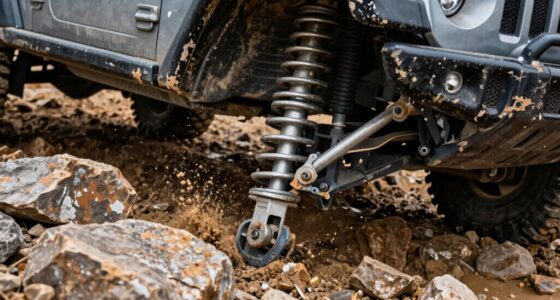
To stay in the torque “sweet spot” off-road, you need to understand your engine’s ideal RPM range where torque peaks. Modulate throttle smoothly, shift gears proactively, and choose ratios that keep RPMs within this zone. Avoid excessive acceleration or high gears that drop RPM below peak torque. Proper tuning and modifications can broaden this range, enhancing performance. If you want to master precise control, the next tips will help you fine-tune your approach.
Key Takeaways
- Monitor RPM and shift gears proactively to keep the engine within the torque peak range.
- Use smooth throttle modulation to prevent RPM fluctuations and stay within the torque “sweet spot.”
- Support modifications like ECU remapping and intake/exhaust upgrades to broaden the torque curve for off-road resilience.
- Employ engine braking and proper gear selection to maintain optimal torque delivery on variable terrains.
- Regularly inspect engine components and maintain gear management strategies for consistent, reliable performance off-road.
How Four-Stroke Engines Generate Torque at Different RPMs
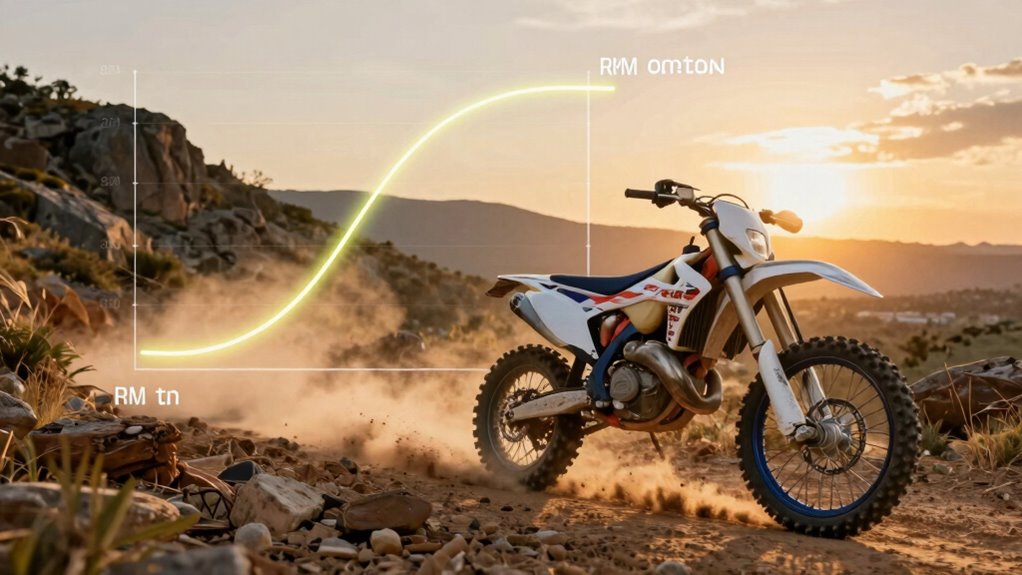
Four-stroke engines produce torque through a cycle of intake, compression, power, and exhaust strokes, with their torque output varying markedly across different RPM ranges. At low RPMs, torque is limited by reduced airflow and slower combustion, resulting in lower instantaneous force. As RPM increases, the engine’s ability to draw in air and fuel improves, boosting torque output up to a certain point. In the mid-RPM range, combustion efficiency peaks, producing maximum torque as the engine balances intake, compression, and power strokes effectively. Beyond this range, increasing RPM causes a decline in torque due to diminished combustion time and potential mechanical limitations, such as valve float or piston speed restrictions. An understanding of engine performance can help optimize engine operation and efficiency across different operating conditions. Additionally, knowing how different engine components interact can assist in tuning for optimal power output and longevity. Recognizing the influence of torque curves can further aid in selecting the ideal RPM range for specific off-road applications. For instance, understanding the power band of your engine allows for better control and performance during challenging terrain.
Why Staying in the Torque Sweet Spot Matters Off-Road
Maintaining the engine within its torque sweet spot is crucial off-road because it guarantees ideal power delivery when maneuvering challenging terrain. Operating within this optimal RPM range ensures maximum torque output, allowing for smoother throttle response and better control. Staying in this zone minimizes engine strain and prevents excessive fuel consumption. Color accuracy is vital for assessing terrain features clearly and making precise driving decisions. Key benefits include:
Keeping your engine in its torque sweet spot ensures smooth power, better control, and increased efficiency off-road.
- Consistent traction during steep ascents or descents
- Reduced risk of wheel slip or bogging down
- Enhanced responsiveness for sudden directional changes
- Improved engine efficiency and longevity
- Precise power application in technical sections
How to Find Your Engine’s Maximum Torque RPM Range
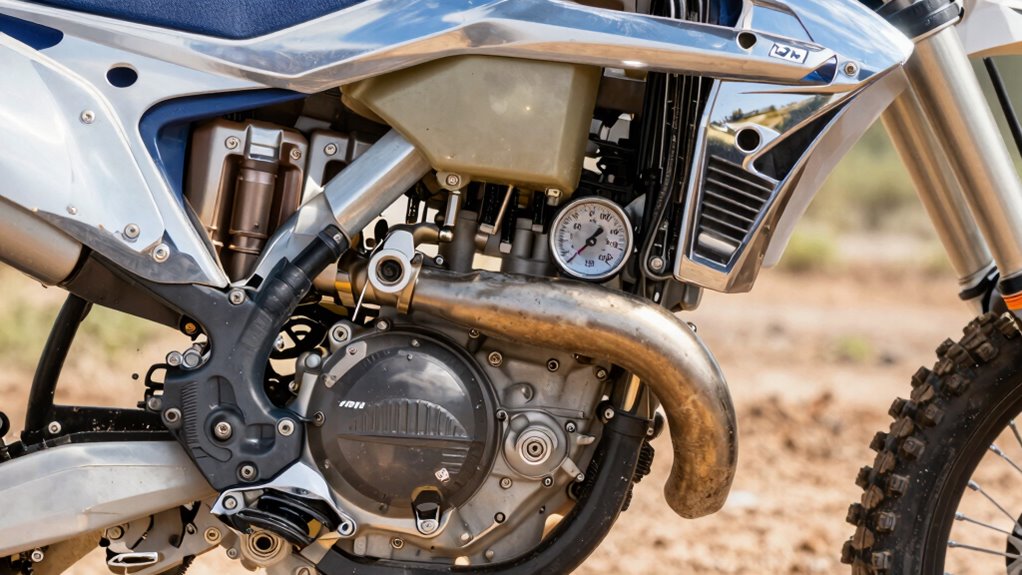
To identify your engine’s maximum torque RPM range, start by analyzing the torque curve to locate the peak power output. Using precise measurements, you can pinpoint the RPM band where torque is at its highest, ensuring ideal performance. This process enables you to fine-tune your engine operation for maximum efficiency and responsiveness. Remember that understanding style consistency can also contribute to optimizing your overall off-road experience.
Identifying Power Peaks
Identifying your engine’s maximum torque RPM range is essential for optimizing performance and ensuring efficient power delivery. To pinpoint this peak, analyze your torque curve, focusing on where torque output reaches its highest point and maintains stability. Look for the RPM range where torque plateaus before declining, indicating the true power peak. Key indicators include:
- The highest torque value on your dyno chart
- The flat, sustained section of your torque curve
- RPMs where torque begins to drop after the peak
- Consistent torque readings across multiple tests
- The point where power-to-RPM ratio maximizes efficiency
Using Torque Curves
Analyzing torque curves provides a direct method for pinpointing your engine’s maximum torque RPM range. By examining the graph of torque output across RPM, you can identify the plateau where torque remains relatively constant before declining. Focus on the flat, broad section of the curve to determine the *best* RPM window for maximum torque delivery. This range indicates where your engine produces peak torque efficiently, essential for off-road performance. Precise interpretation involves noting the RPM values at the beginning and end of this plateau, ensuring you stay within this zone during operation. Understanding the torque curve allows you to optimize gear selection and throttle application, maintaining consistent power and avoiding the inefficiencies associated with operating outside the maximum torque range.
Techniques to Keep Your RPMs in the Power Zone

Maintaining your engine’s RPM within the ideal power band requires precise control of throttle input and gear selection. To enhance performance off-road, focus on these techniques:
- Modulate throttle smoothly to avoid abrupt RPM fluctuations that can cause torque dips.
- Use engine braking effectively to control descent slopes without excessive throttle.
- Anticipate terrain changes to adjust throttle proactively, sustaining consistent RPM.
- Shift gears at best points to prevent RPM overshoot or undershoot of the torque peak.
- Monitor tachometer closely, making incremental adjustments rather than reactive, large throttle changes.
- Incorporate adaptive driving techniques that utilize real-time data to optimize engine response and efficiency.
Selecting Gears to Stay in the Torque Peak
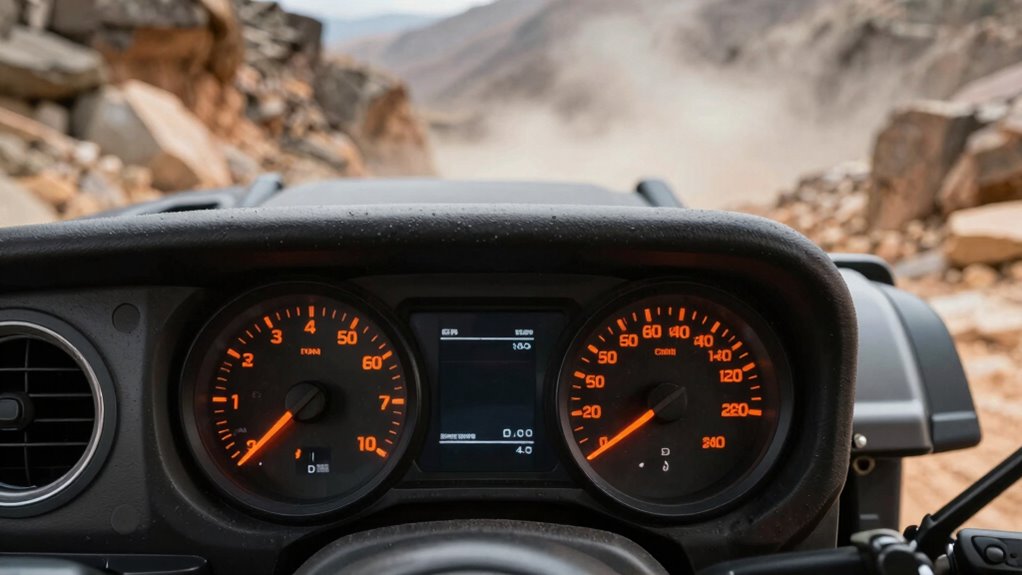
Choosing the correct gear is essential for keeping your engine within the peak torque zone, as it directly influences RPM control and power delivery. Selecting the appropriate gear ratio ensures the engine operates at an ideal RPM range, maximizing torque without over-revving. In technical terms, shifting to a lower gear increases torque multiplication, allowing you to stay within the power band over variable terrain. Conversely, selecting too high a gear risks dropping RPM below the torque peak, reducing traction and power. Precise gear selection involves analyzing terrain demands, engine torque curves, and vehicle response. By understanding your vehicle’s torque curve and adjusting gears accordingly, you maintain consistent power delivery, improve control, and prevent engine strain, thereby enhancing performance in off-road conditions. Being aware of cybersecurity measures can also help prevent digital disruptions during your adventures.
Common Mistakes That Drop You Out of the Torque Zone: And How to Fix Them

One common mistake that causes you to drop out of the torque zone is shifting gears too late or too early, disrupting the ideal RPM range. This misstep shifts power delivery outside the engine’s paramount torque curve, reducing efficiency and performance. To prevent this:
- Monitor RPM closely during acceleration and deceleration
- Shift at the manufacturer-recommended RPM for your engine
- Avoid relying solely on engine sound; use a tachometer if available
- Recognize the loss of torque when RPM drops below the peak zone
- Practice smooth, deliberate shifts to maintain consistent engine load
- Being aware of Glycolic Acid benefits can help improve skin health, but for off-road driving, maintaining proper gear management is key to engine longevity and consistent performance. Proper technique also involves understanding the importance of engine temperature to prevent overheating during intense driving conditions. Additionally, understanding how torque curves vary with RPM can help optimize gear shifts for maximum power delivery. Regularly inspecting your body jewelry measurements and materials, especially if you wear piercings during off-road activities, can prevent irritation or injury caused by dirt or impact.
Addressing these errors ensures you stay within the torque sweet spot, maximizing power transfer and minimizing engine stress during off-road maneuvers. Proper gear management is key to consistent performance and engine longevity.
Tuning and Modifying Your Engine for Better Torque Across RPMs
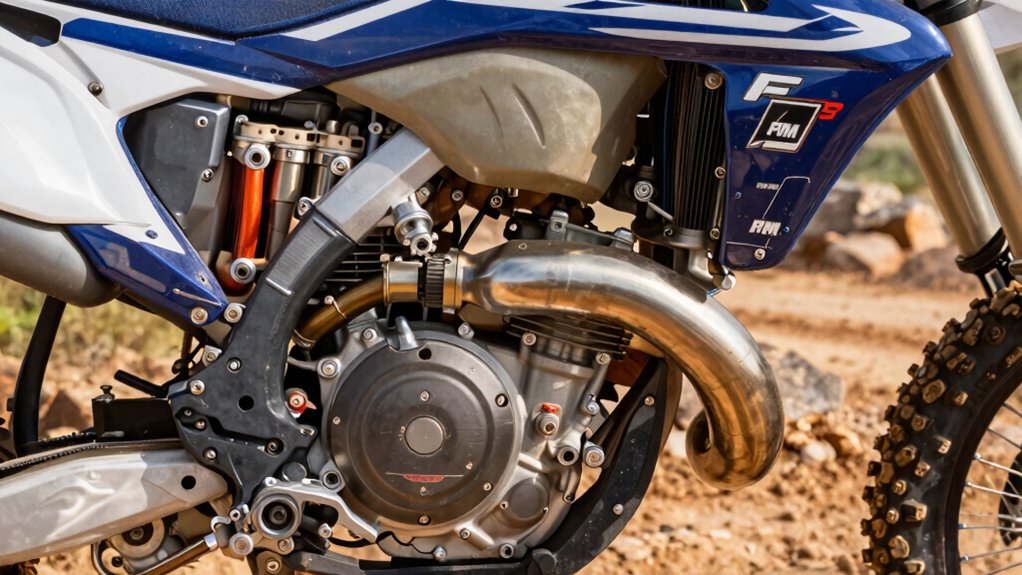
Optimizing engine performance for enhanced torque across various RPM ranges involves precise tuning and strategic modifications. To achieve a broader torque curve, focus on adjusting your ignition timing to improve combustion efficiency at different speeds. Upgrading your intake and exhaust systems reduces flow restrictions, increasing volumetric efficiency and torque delivery. Consider installing a camshaft profile designed for flatter torque across a wider RPM band, ensuring better off-road performance. ECU remapping can fine-tune fuel injection and ignition parameters, enhancing power output throughout the rev range. Additionally, lightweight internal components, like forged pistons or a high-performance crankshaft, reduce internal losses and improve responsiveness. These modifications work synergistically to extend the torque plateau, maintaining power in the ideal RPM zone for off-road applications. Proper tuning can also help maximize your engine’s potential while maintaining reliability in demanding conditions. Incorporating engine modifications that target the torque curve can further enhance your vehicle’s off-road capabilities and adaptability, especially when considering the benefits of advanced engine technologies.
Frequently Asked Questions
How Does Altitude Affect Four-Stroke Torque and RPM Performance?
At higher altitudes, your four-stroke engine’s torque decreases because the thinner air reduces oxygen intake, limiting combustion efficiency. RPM performance also drops since the engine can’t generate the same power levels. To counteract this, you should adjust your carburetor or fuel injection system to maximize air-fuel mixture, and consider using a turbocharger or intercooling to maintain power output, ensuring you stay within the engine’s ideal torque and RPM range off-road.
What Role Does Engine Temperature Play in Torque Output?
A stitch in time saves nine, and keeping your engine temperature essential for maximum torque output. When your engine runs too hot, metal components expand, reducing efficiency and power. Conversely, too cold, and combustion isn’t ideal, limiting torque. Maintaining proper cooling ensures consistent combustion, preserving your engine’s ability to produce critical torque and RPM, particularly off-road, where performance reliability is indispensable.
Can Modifications Improve Torque Consistency Across RPM Ranges?
Yes, modifications can enhance torque consistency across RPM ranges. Upgrading the camshaft, installing a fuel management system, or optimizing exhaust flow helps maintain optimal combustion and airflow, reducing torque fluctuations. These changes improve throttle response and power delivery, especially off-road. By fine-tuning engine components, you guarantee smoother torque output across varied RPMs, enabling better control and performance when maneuvering challenging terrains.
How Does Load or Terrain Influence Optimal RPM and Torque Usage?
Load and terrain considerably shift your ideal RPM and torque demands. For instance, studies show that under heavy loads, you need to operate at lower RPMs to maximize torque without stalling. Rough terrain demands higher RPMs for better power response. By analyzing terrain and load conditions, you can fine-tune your engine’s RPM, ensuring you stay in the torque sweet spot, improving performance, efficiency, and control during off-road adventures.
Are There Specific Engine Types Better Suited for Off-Road Torque Management?
You’ll find that naturally aspirated four-strokes excel in off-road torque management due to their predictable power delivery and broad torque curve. Diesel engines also perform well because of their high low-end torque, making them ideal for tough terrains. Conversely, high-revving sportbike engines aren’t suited for off-road conditions, as they prioritize high RPM over torque. Select engine types based on terrain demands and torque response needs for suitable off-road performance.
Conclusion
Mastering your engine’s torque curve isn’t just a tip; it’s the secret weapon to conquering any off-road challenge. By precisely staying in that ideal RPM zone, you release unstoppable power, prevent engine strain, and maximize efficiency. Ignore this, and your ride stalls, bogs, or worse—losing precious momentum. Fine-tune your gear selection and engine tweaks relentlessly. Ultimately, dominating the trail demands relentless precision—push your RPMs into that perfect torque sweet spot, and watch your performance skyrocket beyond limits.