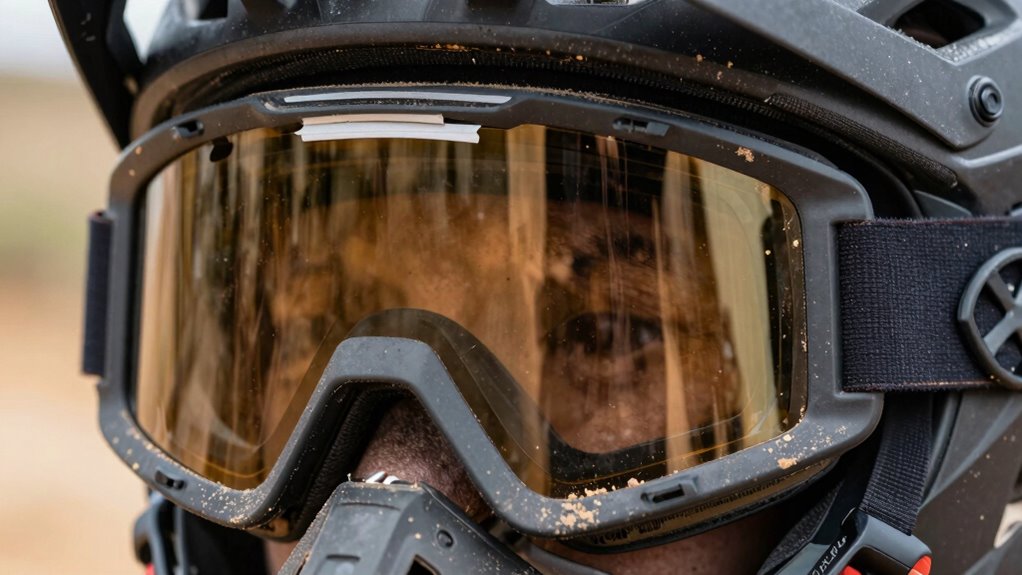

To set up your off-road goggles effectively, choose lens tints based on light conditions—darker tints for bright sun and lighter ones for low light. Keep your lenses clean and dust-free with proper storage and regular wiping, and use tear-offs carefully to prevent scratches while riding. Adjust the straps and vents for a snug, comfortable fit and good airflow to prevent fogging. If issues arise, simple tweaks and maintenance can often fix them—discover more tips to optimize your setup.
Key Takeaways
- Choose lens tints based on lighting conditions: dark for bright sunlight, lighter for low-light or overcast environments.
- Properly install tear-offs by cleaning lenses beforehand and securing them tightly to prevent bubbles or vision interference.
- Regularly clean and store goggles in protective cases to prevent dust buildup, scratches, and damage.
- Adjust strap tension for a snug fit to minimize dust entry and prevent fogging, while ensuring comfort.
- Enhance dust management with vents and foam padding, and use tear-offs or dust covers during rides for optimal clarity.
How to Choose the Right Lens Tints for Off-Road Goggles

Choosing the right lens tints for your off-road goggles is essential for ideal visibility and safety. The lens materials you select influence durability and clarity, with polycarbonate and Trivex being popular choices for impact resistance. Tint categories vary based on light conditions; for example, dark tints like bronze or dark amber reduce glare in bright sunlight, while lighter tints such as yellow or clear enhance contrast in low-light or overcast conditions. Consider your typical riding environment when selecting lenses. The right combination of lens material and tint category ensures you can see clearly, react quickly, and stay protected from harmful UV rays. Incorporating lens material properties into your decision can further optimize your goggles’ performance and durability. Making an informed choice helps you improve safety and performance during every off-road adventure.
How to Manage Dust and Keep Your Goggles Clear
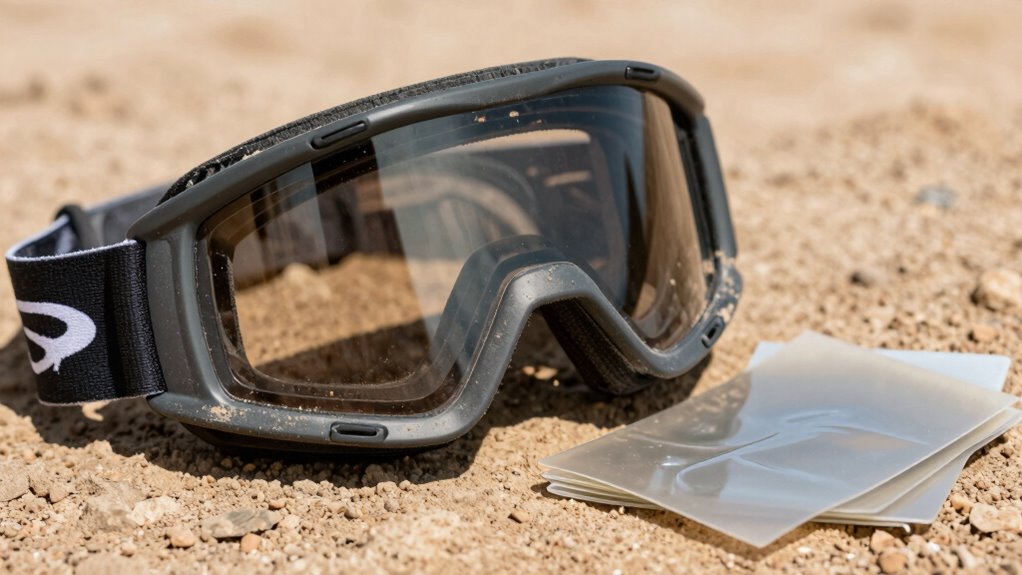
Dust can quickly impair your visibility on off-road rides, making it essential to keep your goggles clear. Regular lens cleaning is key—use a microfiber cloth or a lens cleaning solution to remove dust and dirt without scratching. When you’re not riding, store your goggles in a soft case or a dedicated goggle bag to protect them from debris and scratches. Avoid leaving your goggles in direct sunlight or in areas with dust buildup. If dust gets inside, gently rinse the goggles with water and dry them carefully to prevent smudges. Always keep a small cloth or cleaning wipe handy during rides for quick lens maintenance. Proper goggle storage and regular lens cleaning ensure clear vision and prolong the life of your goggles. Additionally, consider using tear-offs or dust covers to prevent dust buildup during rides, and make sure your goggles are equipped with the appropriate lens tint for varying light conditions. To further enhance your off-road experience, selecting the right dust management accessories can help keep your vision unobstructed in challenging environments, especially when considering the impact of dust on clarity and how it can reduce visibility.
How to Install Tear-Offs So They Work When You Need Them
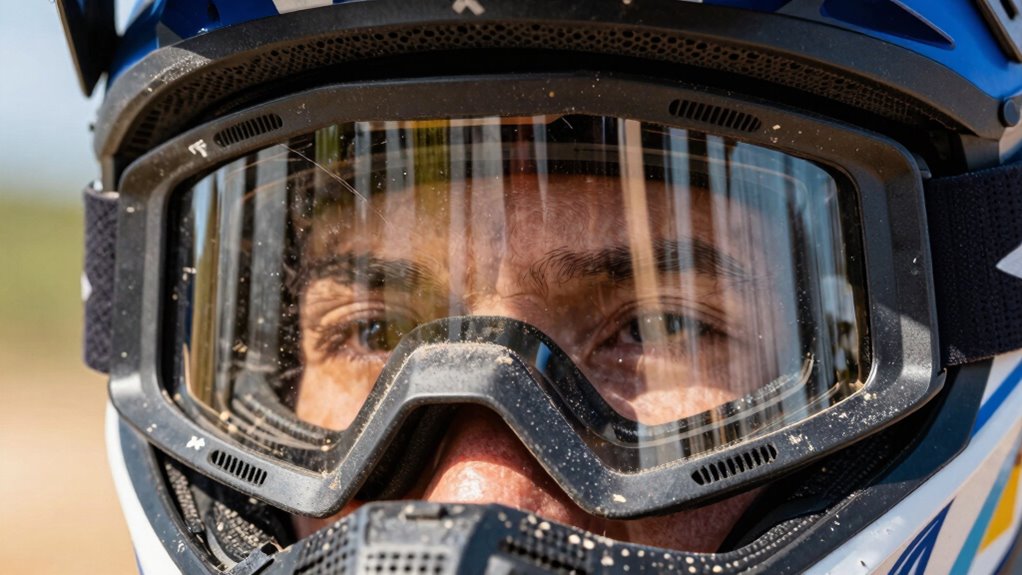
Properly installing tear-offs guarantees they function effectively during your ride, providing a clean view when you need it most. First, confirm your goggles fit snugly with the goggle strap adjustment, so tear-offs stay in place and don’t shift. Carefully peel the protective layer from each tear-off and align it with the edges of your lens. Use gentle lens cleaning techniques to remove dust or fingerprints before applying the tear-offs, ensuring a smooth, bubble-free installation. Attach the tear-offs starting from the center and work outward, pressing gently to eliminate air bubbles. Confirm they’re secure and don’t interfere with your vision or goggle strap. When riding, flip the tear-offs as needed to maintain a clear view, and always clean your lenses properly afterward to keep the system working smoothly.
How to Adjust Fit and Ventilation for Comfort and Fog Prevention

Ensuring your goggles fit comfortably and have good ventilation is key to preventing fog and maintaining clear vision during your ride. Start with the goggle strap adjustment to guarantee a snug but not tight fit, which keeps the goggles secure without causing discomfort. Proper fit prevents air from leaking in and reduces fog buildup. Next, focus on the ventilation system design; choose goggles with vents positioned to promote airflow and minimize moisture accumulation. Adjust the vents or foam padding if possible, to optimize airflow without letting dust in. Good ventilation helps dissipate heat and humidity, keeping your lenses clear. Regularly check and fine-tune the strap and ventilation setup to maintain comfort and fog prevention throughout your ride. Additionally, selecting goggles with effective dust management features can further enhance clarity in challenging environments. Incorporating proper maintenance practices can also extend the lifespan of your goggles and ensure consistent performance. Being aware of ventilation efficiency can help you select goggles that better prevent fog and improve overall comfort. Remember that airflow optimization is essential in high-dust conditions to keep your vision clear and goggles functioning properly. Properly cleaning and inspecting your goggles regularly will also help maintain lens clarity and prevent fogging issues.
Troubleshooting Common Off-Road Goggle Problems

Are fogging, scratching, and discomfort disrupting your off-road rides? These issues can ruin your experience, but they’re often fixable. For lens scratches, avoid touching the inside of the lens with your fingers and use a soft, microfiber cloth for cleaning. Fogging can be minimized by improving strap adjustments to ensure a snug fit and proper ventilation. Discomfort may stem from improper strap tension or poorly fitted goggles. To troubleshoot effectively, remember:
- Regularly check and adjust your strap for a secure, comfortable fit
- Use anti-fog coatings or treatments on your lenses
- Handle lenses carefully to prevent scratches and damage
- Incorporating professional voiceover techniques in your gear reviews can help communicate tips effectively and engage your audience.
- Proper lens lens tint selection can also enhance visibility and reduce glare during different riding conditions.
Addressing these common problems will help you stay focused and safe on the trail, maximizing your off-road adventures.
Frequently Asked Questions
How Often Should I Replace My Goggle Lens Tints?
You should replace your goggle lens tints when you notice significant scratches, fading, or reduced visibility. Lens durability varies, but generally, tint longevity lasts several riding sessions depending on conditions. Regularly inspect your lenses, and if they become hazy or lose clarity, it’s time for a replacement to guarantee maximum protection and clear vision. Keeping your lenses in good condition helps maintain their durability and extends their effective lifespan.
What Are the Best Cleaning Techniques for Off-Road Goggles?
Imagine you’re racing through rugged trails—your goggles need to perform flawlessly. To master lens cleaning, gently rinse with lukewarm water, avoiding harsh chemicals, then use a soft cloth or microfiber to remove dust without scratching. For dust removal, blow off loose debris first, then wipe gently. Proper cleaning keeps your vision crystal clear, ensuring focus and safety while you conquer every obstacle.
Can Tear-Offs Be Reused After They’Re Torn?
Tear-offs generally aren’t reusable after they’re torn because their tear-off durability isn’t designed for multiple uses. Once you tear them off, they lose integrity, making reusing them ineffective and potentially unsafe. If you want reusable options, look for tear-offs specifically labeled as reusable or designed for multiple uses. These are made with stronger materials to withstand repeated tearing, providing better value and consistent protection during your off-road adventures.
How Do I Prevent Fogging During Long Rides?
Think of your goggles as a sip of fresh mountain air—keeping fog at bay. To prevent fogging on long rides, use goggles with anti-fog coatings and ensure good ventilation design. Keep vents clear of dust and debris, allowing air to circulate freely. Regularly wipe the inside with a damp cloth, and consider applying anti-fog spray. These steps help maintain clear vision, so you stay focused on the trail ahead.
Are There Specific Goggles Recommended for Different Terrains?
Yes, you should choose terrain-specific goggles tailored to your riding environment. For rocky trails, look for goggles with durable, impact-resistant lenses and good goggle compatibility. In muddy or wet conditions, opt for goggles with anti-fog coatings and quick-drying straps. Different terrains demand different features, so selecting the right goggles guarantees maximum protection and clarity. Always check goggle compatibility with your helmet and gear for a seamless fit.
Conclusion
Mastering your off-road goggles turns every ride into an epic adventure, not a blurry nightmare. By choosing the right lens tints, managing dust effectively, installing tear-offs properly, and tweaking your fit and ventilation, you’ll stay crystal clear no matter what terrain throws at you. Think of your goggles as your secret weapon—without them, you’re basically riding blind in a storm of chaos. Nail these tips, and you’ll conquer the trails like a true champion!