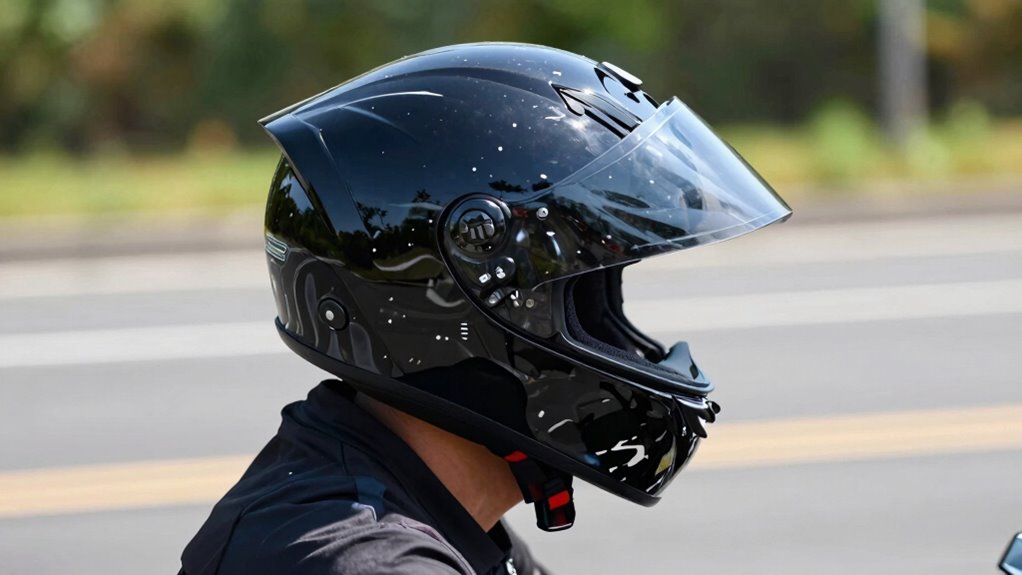

If your helmet lifts at speed, your fit isn’t right. To fix it quickly, check that the helmet sits level, covers your forehead, and the padding is snug without gaps. Tighten the chin strap so it’s secure but comfortable, and use the fit system or dial to adjust snugness. Make sure the helmet doesn’t shift when you shake your head. Keep these tips in mind to *guarantee* maximum safety—there’s more to learn for a perfect fit.
Key Takeaways
- Ensure the helmet sits level, covering your forehead without tilting back or forward.
- Adjust the chin strap so it’s snug but comfortable, with only one finger’s width between strap and chin.
- Use the fit system or dial to tighten the helmet until it feels secure without pressure points.
- Perform a shake test—if the helmet shifts or lifts, readjust the fit for stability.
- Recheck and tighten straps after cleaning or adding accessories to maintain a proper, secure fit.
Why a Proper Helmet Fit Matters for Safety at Speed
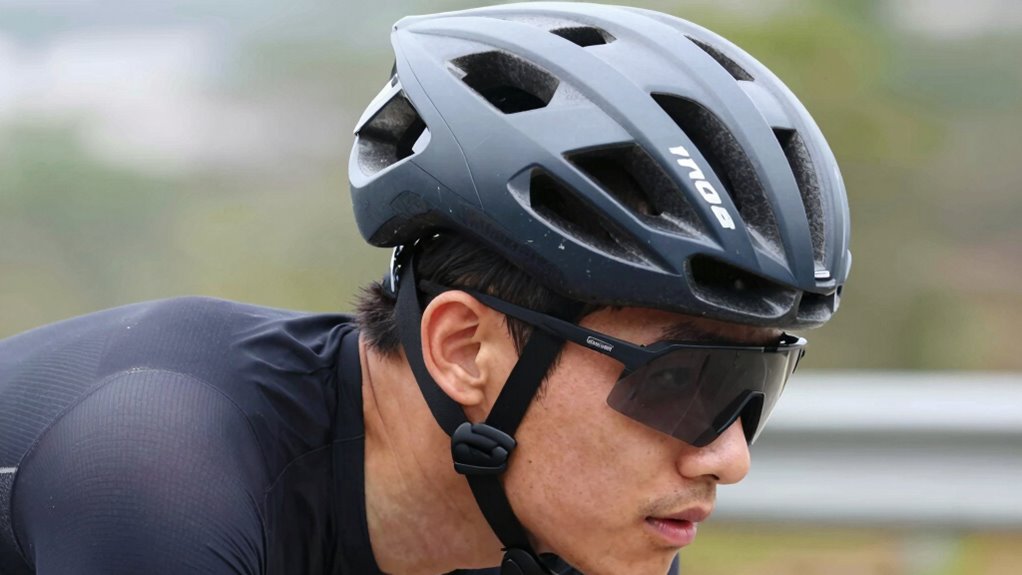
A proper helmet fit is vital because, at speed, even small movements can compromise your safety. The materials used in your helmet, like polycarbonate or fiberglass, determine its durability and ability to absorb impact. Lighter helmets, made from advanced helmet materials, reduce fatigue and make it easier to keep your head steady during rides. If your helmet is too heavy or poorly fitted, it can shift or wobble, decreasing its protective ability. Proper fit ensures the helmet stays in place during a crash, providing maximum coverage and impact absorption. When your helmet fits well, you’ll feel confident, and your focus stays on the ride, not adjusting or worrying about your helmet’s security. Helmet fit and quality materials are essential for your safety at high speeds. Additionally, a well-fitting helmet can prevent helmet movement that might occur during rapid acceleration or deceleration. Ensuring your helmet has the right fit and comfort can significantly enhance protection and reduce the risk of injury.
How to Check If Your Helmet Fits Correctly

To make certain your helmet fits correctly, start by checking its position on your head—it should sit level and cover your forehead without tilting back. Then, test for comfort by feeling for tight spots or pressure points, making sure it’s snug but not painful. Understanding helmet fit is crucial to ensure maximum safety during your activities. Additionally, consider the proper helmet fit guidelines to ensure your helmet provides optimal protection. Ensuring correct helmet size can prevent unnecessary movement and improve overall safety. Finally, secure the chin strap so it’s snug under your chin without causing discomfort, and confirm the helmet stays in place when you move your head. Ensure that your helmet’s fit aligns with safety standards, such as the proper helmet fit, to maximize protection.
Check Helmet Position
Ensuring your helmet fits correctly starts with checking its position on your head. Make sure the helmet sits level, covering your forehead without tilting back or forward. The helmet padding should be snug but comfortable, ensuring it stays in place during movement. Adjust the chin strap so it’s tight enough to hold the helmet securely, but not so tight that it causes discomfort or restricts breathing.
- Verify that the helmet sits just above your eyebrows for proper coverage
- Ensure the helmet doesn’t shift when you shake your head
- Confirm the chin strap keeps the helmet stable without pinching or loosening
A proper fit prevents lift at speed, keeping you safe and comfortable on the road.
Test Fit Comfort
Checking your helmet’s fit for comfort involves a simple test: put it on and move your head. If it feels tight or causes pressure points, it’s too small. If it shifts or feels loose, it’s too big. Pay attention to how the helmet material conforms to your head; a good fit means the material feels snug but not uncomfortable. Also, consider the ventilation design—airflow should be unobstructed, and the helmet shouldn’t block your vents or cause hot spots. When you move, the helmet should stay securely in place without feeling restrictive. Comfort is key for safety and enjoyment, so take a moment to adjust until it feels just right. A properly fitted helmet ensures maximum protection without sacrificing comfort.
Secure Chin Strap
A proper helmet fit isn’t complete without securing the chin strap correctly. You want it snug but comfortable, preventing any movement of the helmet during speed. To check this:
- Fasten the chin strap tightly, ensuring the strap lies flat against your chin without pinching.
- Make sure the strap is snug enough that you can fit only one finger between your chin and the strap.
- Confirm that the helmet padding presses evenly around your head, with no gaps or slack caused by loose straps.
- Regularly inspect the strap for signs of wear or damage to maintain optimal safety standards.
- Remember that a secure chin strap also helps you meet European safety regulations and ensures your helmet performs properly in case of a fall.
- Ensuring proper fit and comfort can prevent the helmet from lifting at speed, maintaining safety and performance.
Signs Your Helmet Is Too Loose or Wobbles When You Ride
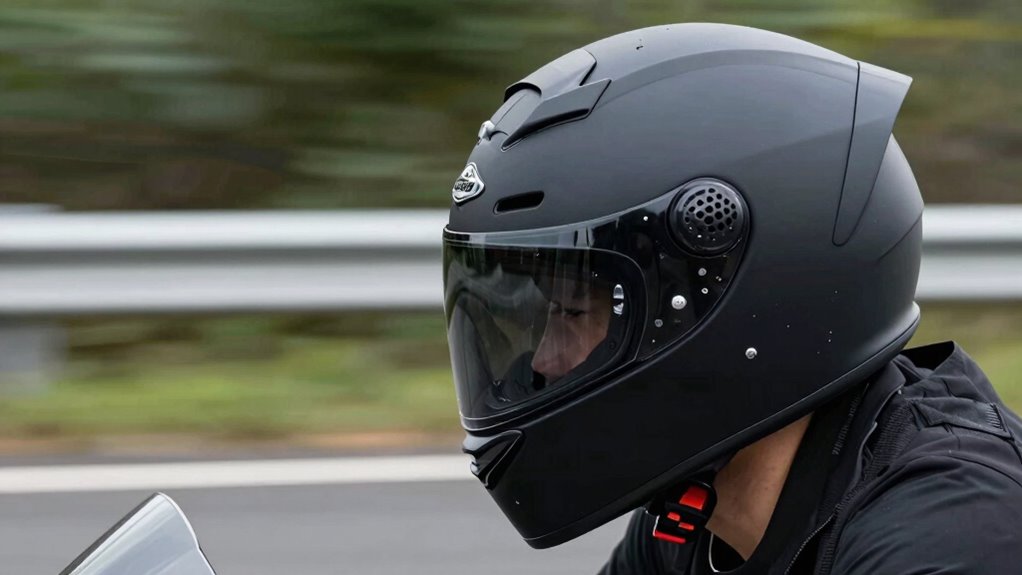
If your helmet wobbles or shifts during your ride, it’s a clear sign it’s too loose. This excessive movement increases your risk of injury if you fall, so it’s vital to check for proper fit. Make sure to perform fit checks regularly to keep your helmet secure and effective. Ensuring the correct helmet fit can dramatically improve your safety and riding confidence.
Wobbly Helmet Indications
A wobbly helmet clearly signals that it’s too loose or not fitting properly. You might notice it shifting side to side as you ride, which can compromise safety and comfort. Check the helmet padding; if it’s worn out or uneven, it can cause unnecessary movement. Make certain your chin strap is snug and properly fastened—loose straps contribute to wobbling. Also, verify that the helmet sits level on your head, not tilted forward or back. If your helmet wobbles despite these adjustments, it’s time to readjust or replace it. Proper fit ensures your helmet stays in place, absorbing impact effectively. Remember, a secure fit isn’t just about comfort—it’s your first line of defense. Keep it snug, and your helmet will perform when you need it most. Environmental considerations like ensuring your helmet fits correctly also help reduce the need for replacements, promoting sustainability.
Excessive Movement Risks
Excessive helmet movement during your ride is a clear warning sign that your helmet is too loose. When your helmet shifts or wobbles, it compromises safety and comfort. Check the helmet padding; if it feels loose or uneven, it may not be fitting snugly enough. The padding should mold comfortably to your head, providing stability without pressure. Also, ensure your chin strap adjustment is secure. A loose chin strap allows the helmet to move excessively, increasing the risk of injury in a crash. Tighten the strap until you feel firm contact but no discomfort. Properly fitted helmet padding and an adjusted chin strap work together to keep your helmet stable, reducing the risks associated with excess movement and ensuring maximum protection when you ride.
Proper Fit Checks
When your helmet shifts or wobbles during your ride, it’s a clear sign that it may be too loose. Check for proper fit by performing quick tests to ensure safety. First, try the shake test: gently push the helmet front to back and side to side. It should stay snug without excessive movement. Next, verify if the helmet style and helmet color feel secure; if it feels loose, adjust the straps or padding. Finally, look in a mirror or ask a friend to confirm that the helmet sits level and covers your forehead properly. A well-fitting helmet shouldn’t wobble or lift at speed. Proper fit checks can also include inspecting filtering and pump protection, which help ensure your helmet’s safety features remain effective during use. Regularly testing helmet fit can prevent accidents caused by poor fit. Additionally, paying attention to support features enhances overall helmet safety and comfort. Remember, a snug fit enhances safety and comfort, regardless of your helmet style or color. Proper fit checks keep you protected and confident on every ride.
Simple Steps to Adjust Your Helmet for a Secure Fit

To make certain your helmet stays secure during your ride, start by adjusting the chin strap so it fits snugly but comfortably under your chin. Next, check the helmet’s positioning: it should sit level on your head, covering your forehead without tilting forward or backward. Adjust the fit system or dial to tighten or loosen as needed. Be mindful of helmet styles, as some may require different adjustments for comfort and stability. For better helmet ventilation, ensure vents are aligned with your face and head. Here’s a quick guide:
| Adjustment Area | How to Adjust |
|---|---|
| Chin Strap | Tighten until snug, with room to breathe comfortably |
| Fit System | Use dial or sliders to secure the helmet’s snugness |
| Helmet Position | Level on your head, covering your forehead |
| Ventilation | Align vents for ideal airflow |
Additionally, ensuring your helmet fits correctly can prevent discomfort and enhance safety during your rides. Proper fit not only increases comfort but can also reduce the risk of injury, making your rides safer and more enjoyable. Remember that correct helmet fit is essential for optimal protection, as even a slight misfit can compromise safety.
How to Test If Your Helmet Won’t Lift or Shift at Speed
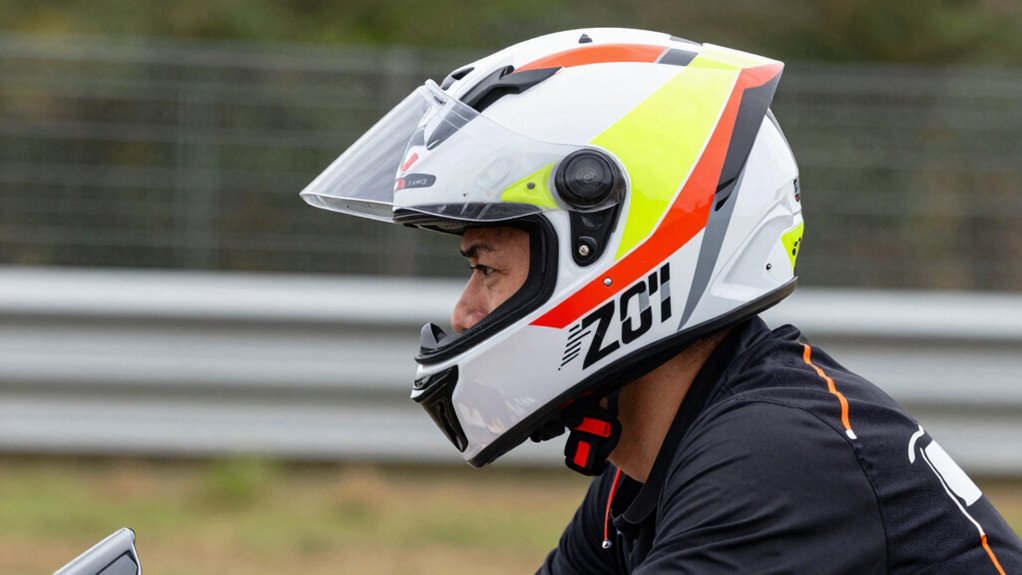
Ensuring your helmet stays securely in place at speed is crucial for safety and comfort. To test if it won’t lift or shift, do a quick shake test while riding or on a trainer. Focus on how your helmet material and ventilation design influence stability. If it shifts easily, it may be too loose or poorly fitted. Check these key points:
- Helmet material: A snug fit relies on the right material that molds to your head without slipping.
- Ventilation design: Proper airflow shouldn’t compromise helmet stability, so ensure vents aren’t causing movement.
- Fit consistency: Confirm that the helmet feels secure with no noticeable lateral or vertical movement during quick head motions.
- Additionally, consider how family photoshoot fails can sometimes highlight the importance of a secure fit, as unexpected movements or distractions may cause the helmet to shift unexpectedly.
This quick test helps you gauge if your helmet is properly fitted to prevent lift at high speeds.
Troubleshooting Common Helmet Fit Problems and When to Seek Help

Even with careful fitting, you might encounter common helmet issues like pinching, sliding, or discomfort that can compromise safety and comfort. Poor helmet ventilation can cause overheating, while an improperly balanced helmet might feel too heavy or cause pressure points. If your helmet shifts during rides or feels too tight, it’s a sign the fit needs adjustment. Check the straps and padding first—sometimes minor tweaks can improve stability and comfort. Adjusting the helmet properly can prevent safety risks and improve overall performance. Proper helmet fit is essential for safety and performance. Ensuring the helmet is correctly adjusted for your head shape can make a significant difference in comfort and security. If discomfort persists or the helmet still doesn’t sit securely, seek help from a professional fitter or helmet specialist. Don’t ignore persistent issues, as they can affect safety. Remember, a well-fitted helmet should feel snug but not tight, and ventilated enough to keep you comfortable without adding unnecessary weight. Paying attention to proper helmet sizing can help you achieve the best fit and safety standards.
Tips to Keep Your Helmet Fitting Perfectly Over Time
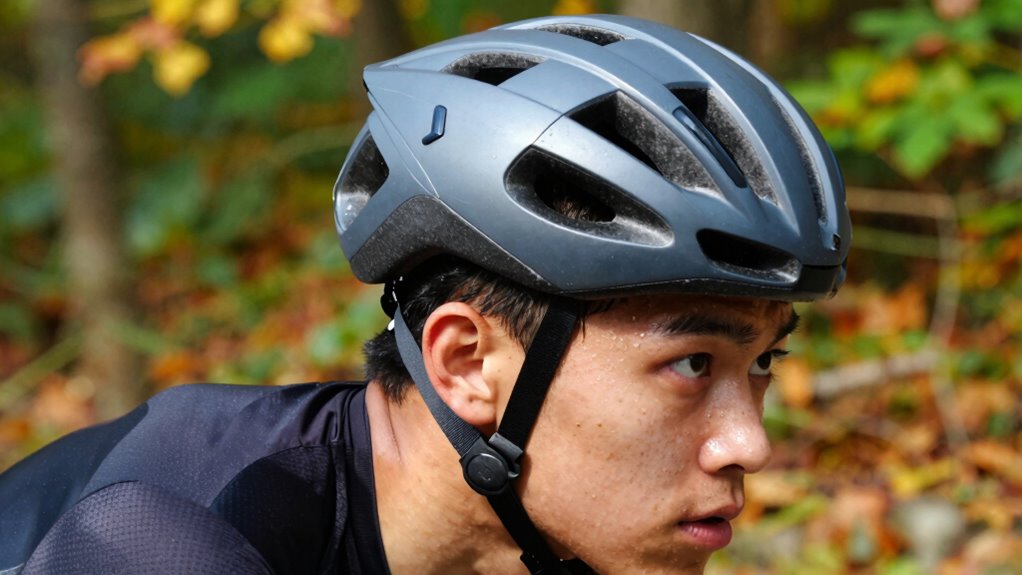
Once you’ve achieved a proper helmet fit, maintaining it over time requires regular checks and adjustments. Your helmet can shift or loosen due to daily wear, sweat, or helmet accessories like pads and liners. To keep it fitting perfectly, incorporate simple helmet maintenance routines.
- Regularly inspect and replace worn helmet accessories, ensuring liners and pads stay snug and comfortable.
- Clean your helmet and accessories to prevent sweat buildup, which can affect fit.
- Recheck fit after cleaning or adjusting accessories, making small tweaks as needed.
Frequently Asked Questions
Can Helmet Padding Be Added or Removed for a Better Fit?
Yes, helmet padding can be added or removed for a better fit. You just need to carefully take out or insert padding to adjust the helmet’s fit. This fit adjustment helps keep the helmet snug and secure, reducing movement at speed. Make sure to test the fit after each adjustment, ensuring it’s comfortable without being too tight. Proper padding placement is key for ideal safety and comfort.
How Often Should I Recheck My Helmet’s Fit?
You should recheck your helmet’s fit every few rides or if you notice any discomfort or changes. Proper helmet safety depends on a secure fit, so make fit adjustments as needed. Regularly inspecting and adjusting your helmet guarantees it stays snug and protective. Keep in mind, a well-fitted helmet prevents lift at speed and maintains its safety features. Don’t wait too long—your safety depends on it.
Are Helmet Size Charts Accurate Across Brands?
Helmet size charts are like puzzle pieces—they don’t always fit perfectly across brands. You might find that sizing varies because of differences in helmet sizing and brand differences. Always measure your head accurately and try on different brands whenever possible. Don’t rely solely on size charts; your comfort and safety come first. Remember, a helmet that fits well is your best protection, so trust your feel over the labels.
What Materials Best Prevent Helmet Movement at Speed?
You should look for helmets made from materials like expanded polystyrene foam or EPS, which excel at impact absorption. These materials are lightweight yet effective at preventing helmet movement at high speeds, ensuring your helmet stays snug. Additionally, helmets with a secure inner padding system mold to your head shape, reducing movement. Prioritize a helmet with high-quality impact-absorbing materials to stay safe and comfortable during fast rides.
Can Wearing a Helmet Improperly Cause Long-Term Head Injuries?
Wearing a helmet improperly can definitely increase your risk of long-term head injuries by compromising helmet safety and injury prevention. When your helmet isn’t fitted correctly, it might not absorb shocks effectively during a crash. Make sure to adjust straps and fit to stay secure. Proper helmet fit is essential for maximum protection, reducing the chance of serious injury and ensuring you stay safe while riding or engaging in risky activities.
Conclusion
If your helmet lifts at speed, it’s a clear sign your fit isn’t right. Just like a cyclist who ignored the signs and experienced discomfort during a race, you risk sacrificing safety and comfort. By taking five minutes to check and adjust your helmet properly, you make certain it stays secure no matter how fast you go. Remember, a well-fitted helmet isn’t just about comfort—it’s your best defense in a crash.