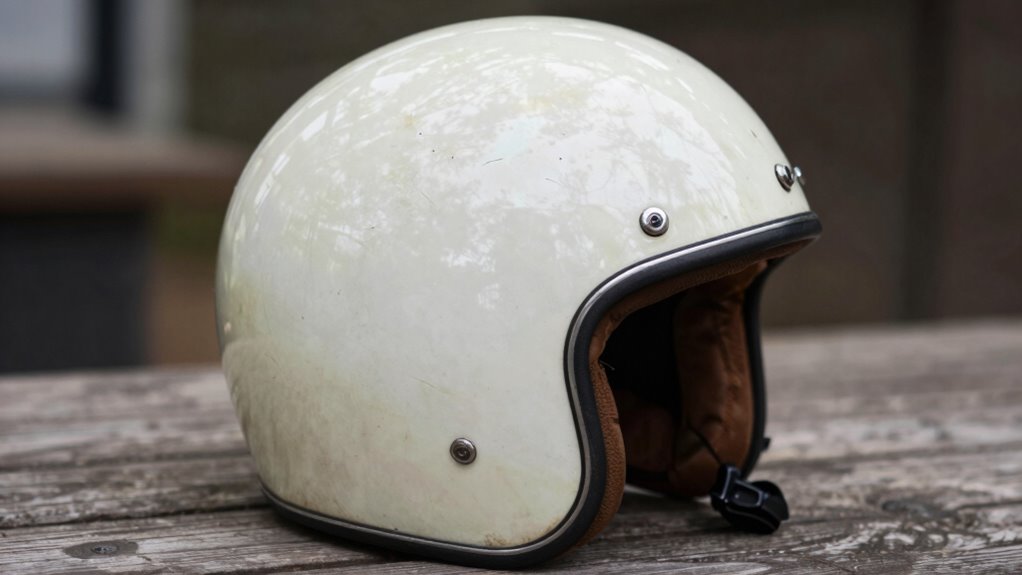

Helmets have expiration dates because materials like foam and plastic degrade over time, especially when exposed to sunlight, moisture, and temperature changes. These environmental factors cause cracks, brittleness, and loss of impact absorption, which compromise safety. Even if a helmet looks fine, internal damage can be hidden. Staying aware of how materials deteriorate and knowing the signs of wear can help you stay protected. To learn more about keeping your helmet safe, keep exploring this important topic.
Key Takeaways
- Helmet materials like foam and plastics degrade over time, reducing impact absorption capabilities.
- Environmental exposure such as UV rays, moisture, and temperature swings weaken helmet components.
- Internal padding and straps lose flexibility and integrity, compromising fit and safety.
- Visible damage or deterioration indicates reduced protective effectiveness, necessitating replacement.
- Safety standards specify maximum service life to ensure helmets provide reliable protection.
Why Do Helmets Have Expiration Dates?

Helmets have expiration dates because materials like foam and plastic degrade over time, reducing their ability to absorb impact effectively. During helmet manufacturing, strict quality control and adherence to legal regulations ensure helmets meet safety standards. However, over time, exposure to environmental factors such as heat, moisture, and UV rays can weaken these materials, even if the helmet looks fine. Free floating in the materials can occur, which further diminishes their protective properties. Safety regulations set by authorities like the Department of Transportation or the Consumer Product Safety Commission specify maximum service life to protect consumers. These regulations recognize that, regardless of appearance, the internal components may lose their protective qualities. Understanding how nanomaterials can alter over time helps you understand why manufacturers and safety standards recommend replacing helmets after a certain period, ensuring your safety isn’t compromised. Additionally, material degradation can accelerate if helmets are stored improperly or exposed to harsh environmental conditions.
What Causes Helmets to Deteriorate Over Time?
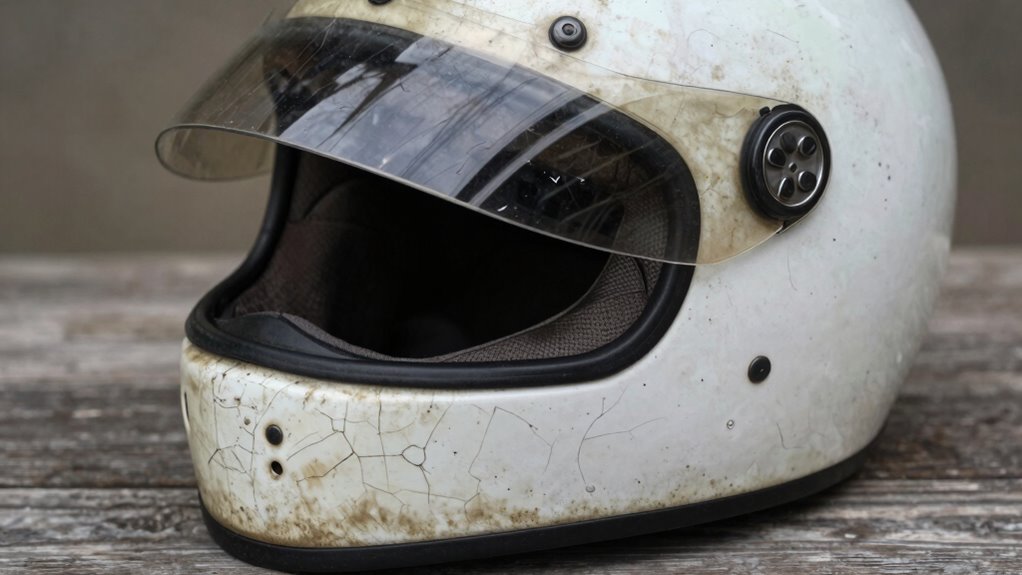
Over time, exposure to environmental elements causes helmet materials to break down, reducing their impact resistance. Sunlight, moisture, and temperature fluctuations weaken the integrity of the helmet’s structure. These factors cause the helmet materials to become brittle, cracked, or deformed, which compromises safety. You might notice:
Exposure to sunlight, moisture, and temperature changes deteriorates helmet materials, reducing impact resistance and compromising safety over time.
- Fading or chalking of outer shell, indicating material degradation
- Cracks or fraying in foam padding that absorbs impact
- Loss of flexibility in straps or retention systems
As these materials deteriorate, the helmet’s ability to absorb shock diminishes, jeopardizing your safety. Even if a helmet looks fine on the outside, internal damage can be hidden. This is why understanding what causes deterioration in helmet materials is key to knowing when to replace your helmet for ideal impact resistance. Recent advancements in European cloud innovation contribute to developing new materials that can better withstand environmental exposure, including material durability testing.
How Do Environmental Factors Speed Up Helmet Damage?
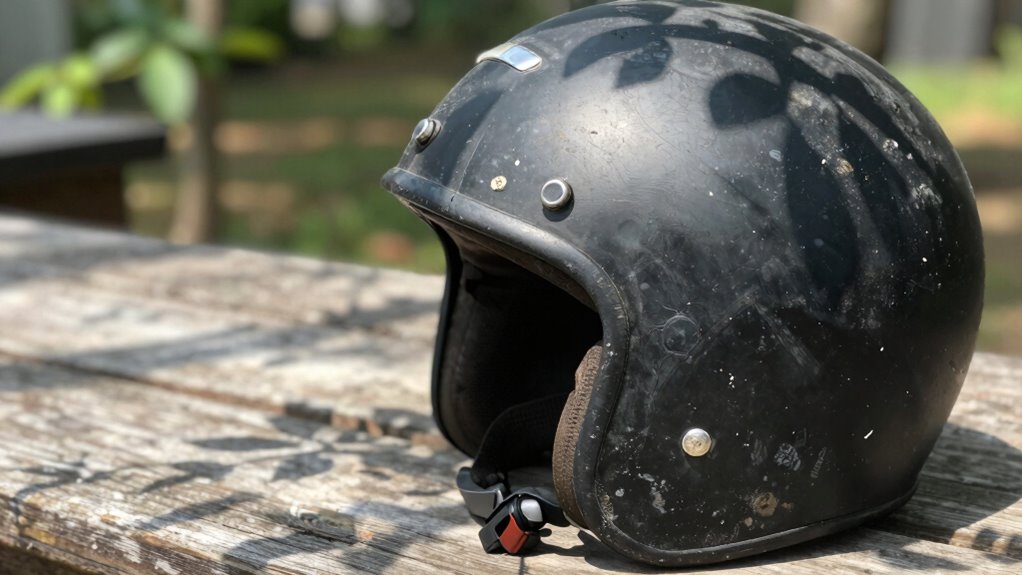
Environmental factors like sunlight, moisture, and temperature fluctuations accelerate helmet damage by breaking down materials faster. UV damage from prolonged sun exposure weakens the shell and foam, reducing impact resistance. Moisture from rain or humidity promotes chemical exposure, leading to material degradation. Temperature swings cause expansion and contraction, causing cracks or delamination. Here’s a closer look:
| Factor | Effect |
|---|---|
| UV Damage | Breaks down plastics, weakening structure |
| Chemical Exposure | Accelerates material breakdown, reducing durability |
| Temperature Fluctuations | Causes cracks, compromises integrity |
These environmental elements markedly shorten your helmet’s lifespan, making regular inspection and proper storage essential to maintain safety. Exposure to environmental conditions can also influence the material durability, further emphasizing the importance of proper helmet care. Additionally, neglecting these factors can lead to hidden damage that is not immediately visible but compromises safety over time.
How Can You Tell If Your Helmet Is Still Safe?

Wondering if your helmet still offers reliable protection? To determine if it’s safe, check for signs of wear and damage. A helmet that no longer fits well or feels uncomfortable likely isn’t providing ideal safety. Look for:
- Cracks or dents on the shell that could compromise integrity
- Frayed or damaged straps affecting helmet fit and stability
- Deteriorated foam lining, which reduces impact absorption
If your helmet feels loose, tight, or uncomfortable, it might be time to replace it rather than risk inadequate protection. Even if visible damage isn’t apparent, consider the age of the helmet; materials degrade over time, impacting helmet comfort and safety. Regularly inspecting your helmet ensures it continues to protect you when you need it most. Additionally, helmet longevity can vary depending on use and storage conditions, so staying aware helps keep you safe. Understanding how materials degrade over time is crucial to maintaining helmet safety and ensuring optimal performance. Moreover, proper storage can significantly extend the lifespan of your helmet by minimizing unnecessary wear. Recognizing signs of wear and tear early can prevent potential injury during an impact.
Why Replacing Your Helmet Is Critical for Safety
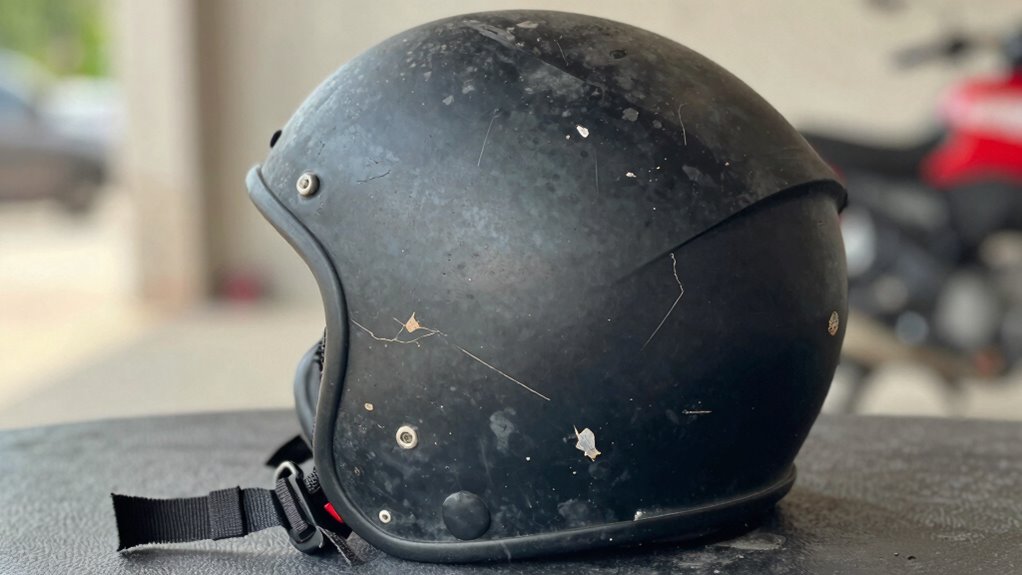
Since helmets are designed to absorb impact and protect your head during crashes, their effectiveness diminishes over time. Regular helmet maintenance can help identify visible damage or wear, but it doesn’t restore the helmet’s original safety. Replacing your helmet ensures you maintain the safety certifications that guarantee its protection standards. Over time, exposure to sunlight, sweat, and environmental factors weaken the materials, reducing impact absorption. Even if a helmet looks fine, its inner foam and straps may have degraded, compromising safety. Wearing an expired or damaged helmet increases your risk during a crash. Prioritize safety by replacing your helmet when it’s outdated, damaged, or past the manufacturer’s recommended expiration date. This simple step keeps your head protected and guarantees your helmet maintains its certification standards. Material degradation occurs over time, further underscoring the importance of timely replacement. Additionally, understanding the signs of helmet wear and tear can help you decide when it’s time for a new helmet. Being aware of helmet safety standards can help you choose the best protection for your needs.
Frequently Asked Questions
Can a Helmet’s Color or Design Indicate Its Safety Status?
Your helmet’s color or design, such as helmet paint and decals, doesn’t indicate its safety status. Safety depends on the helmet’s materials and internal structure, which can degrade over time regardless of appearance. Bright colors and decals may improve visibility, but they won’t tell you if the helmet’s impact protection has diminished. Always check the manufacturing date and replace your helmet according to safety guidelines, not its look.
Are All Helmet Materials Equally Susceptible to Degradation?
Ever wondered if all helmet materials age the same way? Not all are equally susceptible to degradation. Some plastics, like polycarbonate, are more prone to UV deterioration and material breakdown over time. Foam liners can also degrade with age, losing shock absorption. You should regularly check your helmet for cracks or discoloration, regardless of material, because exposure to sun and elements accelerates wear, compromising safety sooner than you think.
How Often Should Helmets Be Inspected for Damage?
You should inspect your helmet for damage before every ride. Check the helmet fit to guarantee it’s snug and comfortable, and look for cracks, dents, or compromised straps. Regular helmet cleaning helps maintain its integrity and keeps it in good shape. If your helmet shows any signs of damage or doesn’t fit properly, replace it promptly. Frequent inspections help assure your safety and ideal helmet performance.
Do Helmet Manufacturers Recommend Specific Storage Conditions?
Imagine your helmet lounging in a sauna or freezing in a garage—definitely not storage best practices. Helmet manufacturers recommend storing your helmet in a cool, dry place away from direct sunlight and chemicals. Keep it clean by avoiding harsh helmet cleaning products, and store it in a breathable bag or box. This way, your helmet stays in top shape, ready to protect you—no sauna or freezer required.
What Are the Signs of Hidden Damage After a Minor Crash?
After a minor crash, you should look for signs of hidden damage like cracks that aren’t visible and foam deterioration inside the helmet. Even if it looks fine externally, hidden cracks can compromise its safety, and foam deterioration reduces impact absorption. Always inspect your helmet thoroughly, and if you notice any signs of damage, replace it. Don’t rely solely on visual checks—trust your safety and get a new helmet if in doubt.
Conclusion
Think of your helmet as a guardian that wears out with time, no matter how well you care for it. Its protective powers weaken like a fading shield, leaving you vulnerable. Regularly check for signs of deterioration and replace it when needed. Staying proactive keeps your safety net strong, ensuring you’re always ready to face the unexpected. Remember, a helmet’s expiration date isn’t just a suggestion — it’s a reminder to keep your safety armor intact.