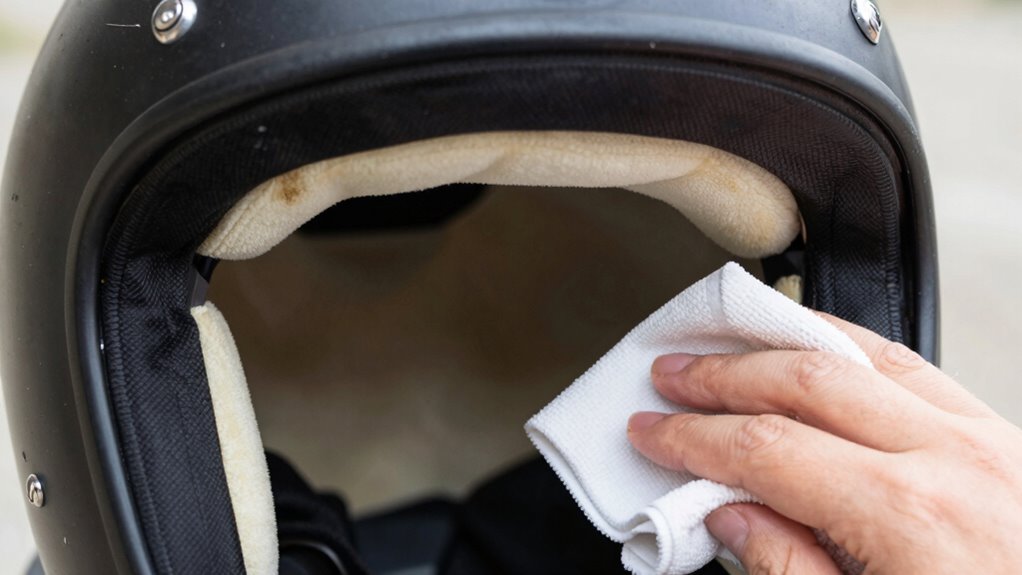

To keep your helmet odor-free without ruining the foam, clean the liner gently using mild soap or a helmet-safe cleaner, avoiding harsh chemicals or excessive water. Remove the liner carefully, wash it with lukewarm water, and gently hand dry it in a well-ventilated area away from direct sunlight. Proper cleaning preserves foam integrity and maintains safety. If you’d like more tips on freshening and protecting your helmet, keep exploring.
Key Takeaways
- Remove the liner carefully and wash it separately with mild soap and lukewarm water to prevent foam damage.
- Use gentle cleaning techniques, avoiding harsh chemicals and excessive scrubbing to preserve foam integrity.
- Air dry the liner flat in a ventilated, shaded area to prevent moisture buildup and maintain foam shape.
- Clean the helmet interior regularly but limit cleaning frequency to avoid weakening the foam over time.
- Opt for helmet-safe cleaners or vinegar solutions tested cautiously, ensuring effective odor removal without harming the foam.
Why Does My Helmet Smell Bad? Common Causes of Odor
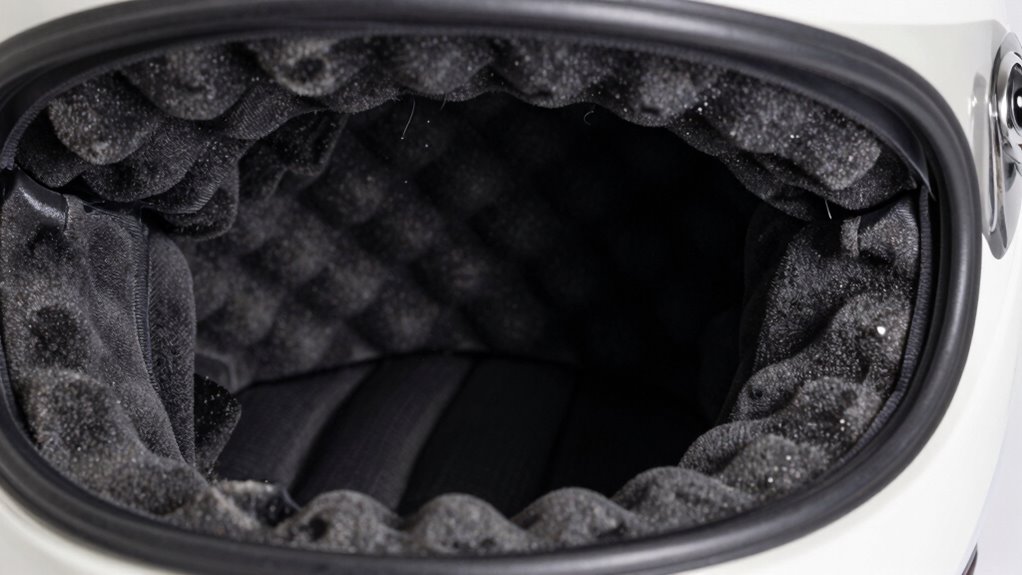
If your helmet starts to smell bad, it’s usually due to sweat, oil, and dirt building up over time. The materials inside your helmet, like foam padding and fabric liners, can trap moisture and bacteria, which are primary odor sources. Sweat from your skin seeps into the helmet lining, providing a breeding ground for bacteria and fungi that produce unpleasant smells. Oils from your skin also cling to the helmet’s interior surfaces, intensifying the odor. Dirt and environmental debris can settle into the helmet materials, further contributing to smell. Over time, these odor sources accumulate, making your helmet smell worse and potentially causing skin irritation. Proper helmet maintenance helps remove these buildup and keeps your helmet fresh and odor-free, especially since foam padding can absorb odors and become difficult to deodorize once contaminated. Regular cleaning and deodorizing techniques are essential to prolong the lifespan of your helmet and ensure it remains hygienic.
How to Choose Safe Cleaning Products for Your Helmet Liner
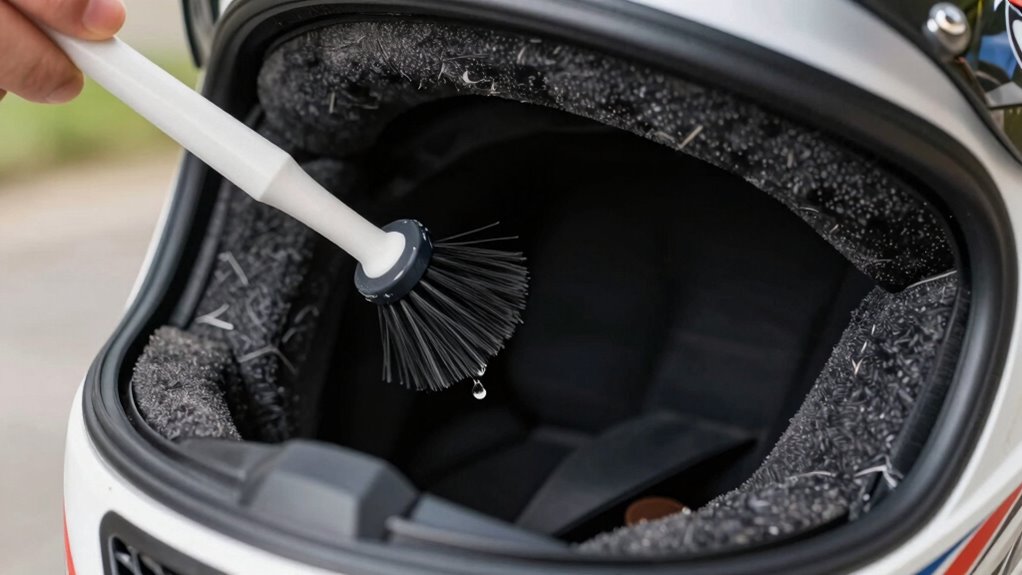
Choosing the right cleaning products for your helmet liner is essential to guarantee safety and maintain its integrity. Using harsh chemicals can compromise helmet hygiene and damage the foam, leading to reduced protection. Opt for gentle, helmet-safe cleaners like mild soap or specialized helmet liners sprays. Always read labels to make certain cleaning safety and avoid products with alcohol or strong solvents. Here’s a quick comparison:
| Product Type | Suitability for Helmet Liner |
|---|---|
| Mild soap | Highly recommended |
| Alcohol-based cleaners | Not recommended |
| Specialized helmet sprays | Safe and effective |
| Vinegar and water solution | Use cautiously, test first |
| Harsh detergents | Avoid |
Prioritize safe, gentle options to preserve your helmet’s protective quality and hygiene, and regularly inspecting for material degradation can help prevent long-term damage. It’s also helpful to understand foam preservation techniques to extend the lifespan of your helmet liner. Additionally, choosing cleaners that do not leave residues will help maintain the helmet’s odor control over time. Using residue-free products can further prevent unpleasant smells from developing in your helmet.
Step-by-Step: Cleaning Your Helmet Liner Without Damaging the Foam
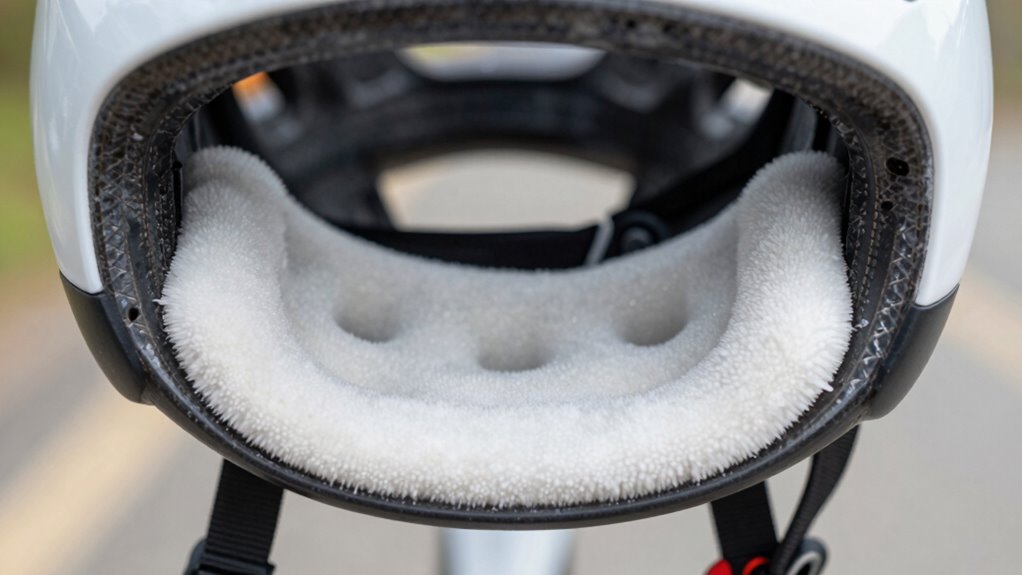
Cleaning your helmet liner carefully is essential to avoid damaging the foam and compromising its protective qualities. Start by removing the liner from your helmet, paying attention to how it fits in the helmet ventilation system. Use lukewarm water and a mild cleaner suitable for liner materials, avoiding harsh chemicals that can weaken foam. Gently hand wash the liner, focusing on areas prone to sweat buildup, without twisting or wringing it. Rinse thoroughly to remove any soap residue. To dry, lay the liner flat in a well-ventilated area away from direct sunlight, ensuring it retains its shape and foam integrity. Proper handling preserves the liner’s foam structure and maintains ideal helmet ventilation, keeping your helmet fresh and safe. When storing your helmet, keep it in a cool, dry place to prevent mold or odor buildup. Proper handling helps ensure the foam’s durability and safety over time, which is crucial for helmet safety standards. Additionally, understanding foam material properties can guide you in choosing the best cleaning method to extend the lifespan of your helmet liner.
Tips to Prevent Helmet Odor and Keep It Fresh Longer
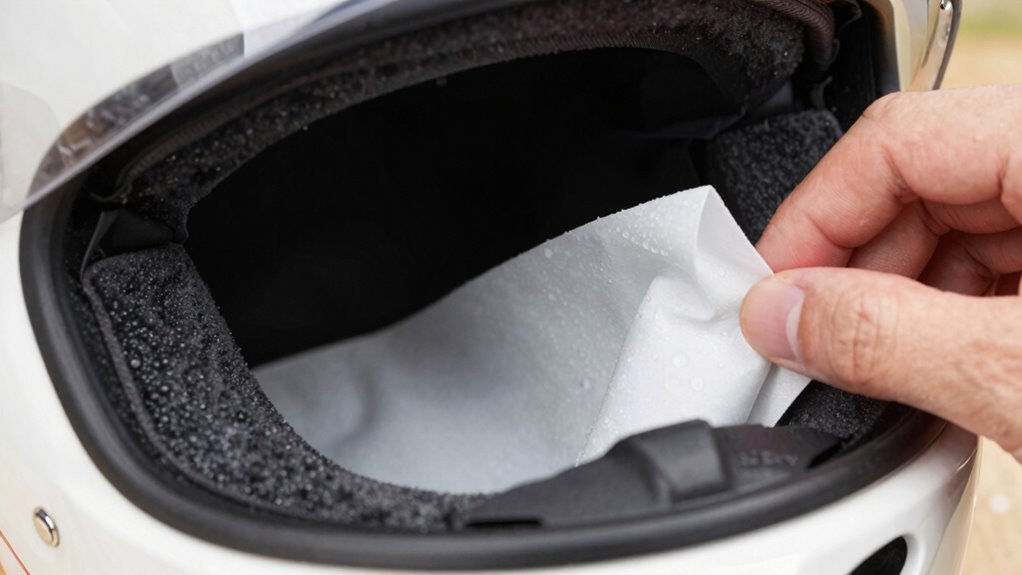
To keep your helmet smelling fresh and prevent odors from building up, it’s important to take regular preventative measures. Proper helmet maintenance includes wiping down the interior after rides and storing it in a well-ventilated area. Using helmet sprays or odor absorbers can help neutralize smells before they become persistent. Make sure to allow your helmet to air out thoroughly, especially if you’ve been sweating heavily. Keep the liner dry and avoid leaving it in humid environments, which promote odor-causing bacteria. Regularly inspecting your helmet for dirt and sweat buildup ensures you catch odor issues early. Additionally, understanding helmet hygiene and how it impacts odor prevention can help you maintain a fresh helmet longer. Proper drying techniques and avoiding moisture retention are essential for odor control. Maintaining proper air circulation within your helmet can also significantly reduce odor buildup. Incorporating antibacterial liners can further inhibit bacteria growth that causes odors. Furthermore, using moisture-wicking materials for your helmet liner can help manage sweat more effectively. By maintaining good helmet hygiene and practicing odor prevention, you’ll extend the freshness of your helmet and enjoy more comfortable, odor-free rides.
Common Mistakes That Could Damage Your Helmet During Cleaning
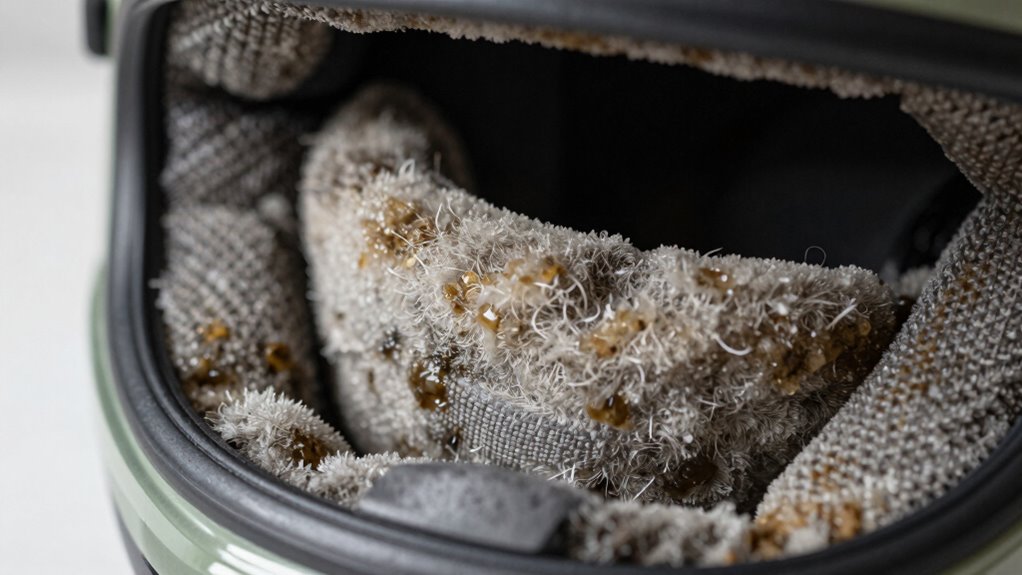
Using harsh cleaning agents can weaken your helmet’s materials, so stick to gentle solutions. Excessive water exposure might compromise the foam and inner padding, reducing its protection. Ignoring the foam’s durability can lead to damage, making it less effective over time. Additionally, neglecting proper air purifier maintenance practices can introduce dust and allergens that further degrade the helmet’s interior. Regular cleaning and proper maintenance routines can help preserve the helmet’s lifespan and safety. To preserve the integrity of your helmet, avoid harsh chemicals that can break down delicate components. Incorporating proper cleaning techniques can help maintain helmet longevity and safety. Being aware of helmet material care guidelines ensures you don’t unintentionally weaken essential parts during cleaning.
Using Harsh Cleaning Agents
Many people make the mistake of using harsh cleaning agents on their helmet liners, thinking stronger solutions will remove dirt more effectively. However, harsh chemicals can damage the foam and compromise the helmet’s integrity. Instead, opt for gentle cleaners specifically designed for helmets. Using aggressive cleaning agents may seem effective but often leads to degraded materials and reduced protection. To ensure your helmet remains reliable, always consider cybersecurity principles of protecting sensitive materials even during cleaning processes. Proper cleaning techniques also incorporate understanding of material durability to prevent unintended damage. Additionally, understanding the material composition of your helmet can help select the most suitable cleaning methods that preserve its protective qualities.
Excessive Water Exposure
Overusing water during helmet liner cleaning can cause more harm than good. Excessive water exposure risks water damage to the helmet’s internal components and foam. When soaked, the foam can become compromised, losing its shape and protective qualities. Additionally, too much moisture creates an ideal environment for mold growth, which can develop behind the liner and inside the helmet shell. Mold not only causes unpleasant odors but can also pose health risks. To avoid these issues, use a damp cloth or lightly spray cleaning solution, ensuring you don’t saturate the liner. Allow the helmet to air dry thoroughly in a well-ventilated area. Proper, controlled cleaning prevents water damage and keeps mold at bay, ensuring your helmet remains safe and odor-free.
Ignoring Foam Durability
Ignoring the foam’s durability can lead to serious damage during cleaning. If you’re too rough or clean too often, you risk compromising the foam’s integrity, causing it to break down prematurely. Frequent cleaning without proper methods can weaken the foam, reducing its effectiveness and lifespan. Remember, foam isn’t designed to withstand harsh scrubbing or excessive moisture exposure. Instead, focus on gentle cleaning techniques and limit how often you clean the liner. Over-cleaning or using harsh chemicals can deteriorate the foam faster, making your helmet less safe. Protect your investment by understanding the foam’s limits and adjusting your cleaning frequency accordingly. Keeping the foam intact ensures your helmet maintains its protective qualities and lasts longer, saving you money and providing peace of mind.
Quick Ways to Freshen Your Helmet When You’re on the Go
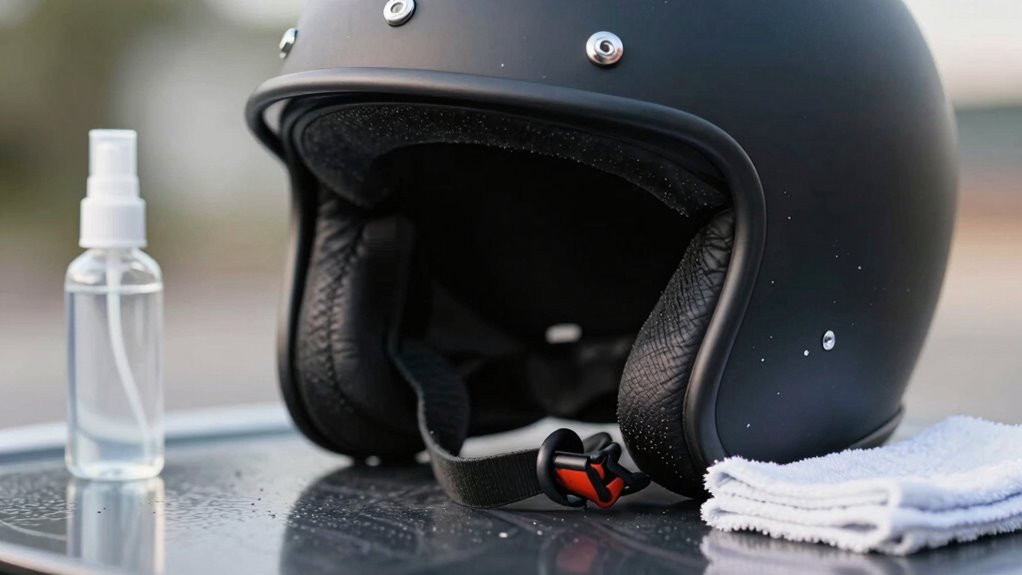
When you’re out and about, keeping your helmet smelling fresh is simple with quick spray solutions. Carrying a portable freshening spray can instantly neutralize odors and refresh your liner. Just a few spritzes can make a noticeable difference until you can give your helmet a thorough clean.
Quick Spray Solutions
Looking for a quick way to refresh your helmet while you’re on the move? A spray designed for helmet ventilation can do wonders. Choose a product with odor absorption properties to neutralize smells instantly. Keep a small spray bottle in your bag or pocket for easy access. Simply spritz inside your helmet, focusing on areas that trap sweat and odor. The spray helps reduce moisture buildup, which minimizes bacteria growth and keeps your helmet smelling fresher longer. It’s a fast, convenient solution that doesn’t damage foam or liners. Just remember to give your helmet a brief airing out afterward whenever possible. Quick spray solutions are perfect for a midday refresh or when you’re rushing between rides, ensuring your helmet stays odor-free without hassle.
Portable Freshening Tips
If you need a quick way to keep your helmet smelling fresh on the go, portable freshening tips are your best bet. They help combat helmet odor without risking foam preservation. Carrying small items can make a big difference in maintaining freshness during rides. For example, using mini spray bottles with a diluted vinegar or odor-neutralizing solution can quickly refresh your helmet. Scented dryer sheets placed inside your helmet can mask odors and keep it smelling clean. You can also keep a small packet of baking soda or activated charcoal in your bag to absorb moisture and odor. Finally, using a portable microfiber cloth to wipe the interior helps remove sweat and dirt, keeping your helmet fresh and odor-free without damaging the foam.
- Mini spray bottles with odor-neutralizer
- Scented dryer sheets
- Baking soda packets
- Activated charcoal pouches
- Microfiber cloth for quick cleaning
When Should You Consider Replacing Your Helmet for Safety and Hygiene
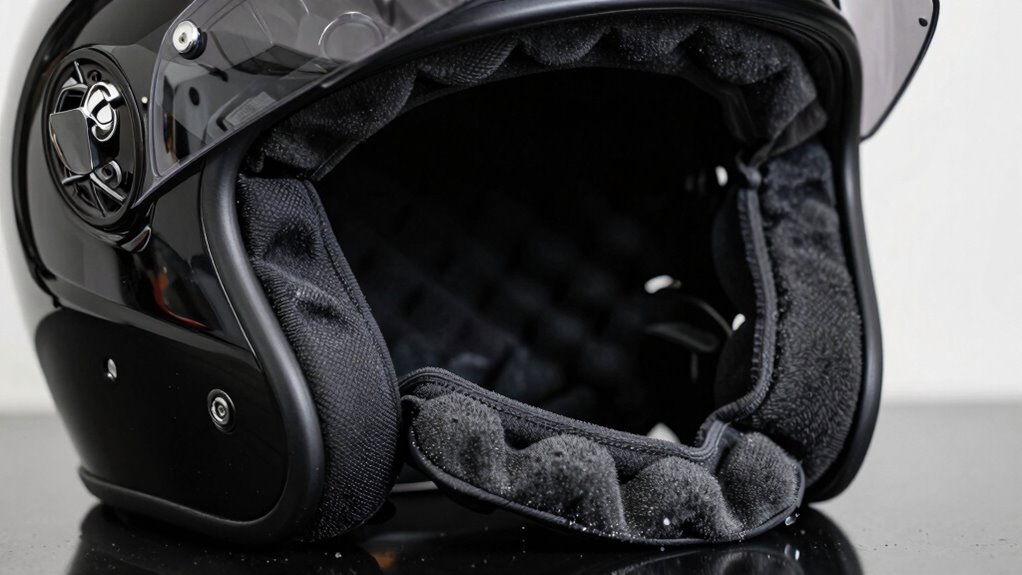
Your helmet should be replaced as soon as it shows signs of significant damage or deterioration. If you notice cracks, dents, or compromised helmet ventilation, it’s time for a new one. Damaged shells or broken straps can’t protect you effectively. Also, consider foam durability—over time, foam compresses and loses its ability to absorb impact properly, reducing safety. Even if your helmet looks fine externally, worn foam can be a hidden hazard. Regularly inspect for any frayed padding or unusual softness. If cleaning hasn’t restored freshness and odors persist, replacing the helmet ensures hygiene and safety. Don’t risk riding with compromised gear; your well-being depends on timely replacement when signs of wear are evident.
Final Tips for Maintaining a Clean, Odor-Free Helmet
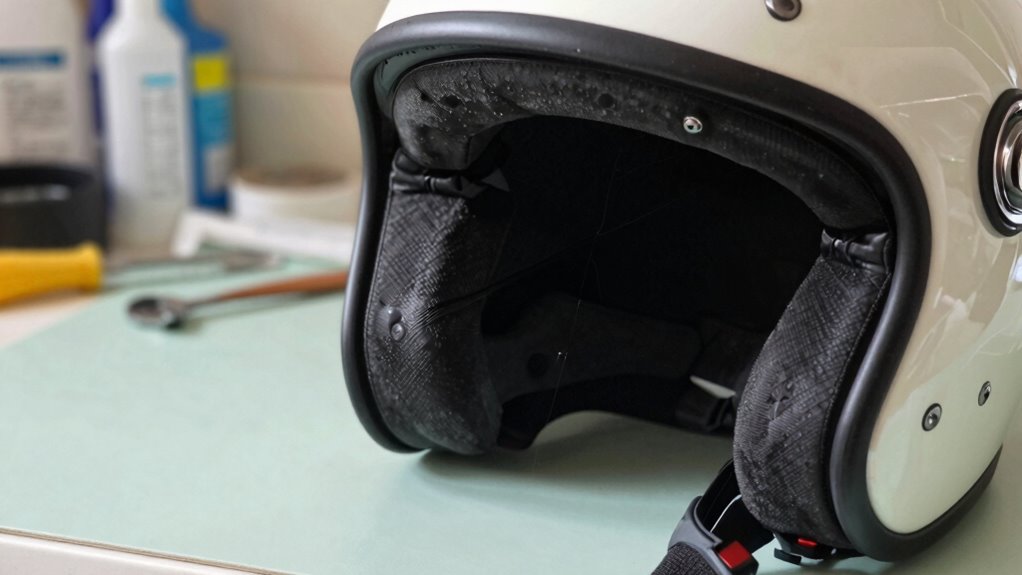
To keep your helmet fresh and odor-free, regular cleaning is essential. Maintaining a consistent cleaning frequency helps prevent odor buildup and extends the life of your helmet accessories. Always remove and clean your helmet’s liner and pads following the proper method to avoid damaging the foam. Store your helmet in a dry, well-ventilated area when not in use. Use gentle cleaning solutions suited for foam and plastics. Consider using helmet deodorizer sprays or inserts for added freshness. Avoid harsh chemicals that can degrade materials. Regularly inspect and replace worn or damaged helmet accessories to ensure safety and comfort. Staying proactive with these tips will keep your helmet smelling clean and performing well for every ride.
- Clean after each ride or weekly
- Use gentle, helmet-safe cleaning solutions
- Air dry thoroughly before storage
- Replace worn helmet accessories regularly
- Store in a dry, ventilated space
Frequently Asked Questions
How Often Should I Clean My Helmet Liner?
You should clean your helmet liner every 1 to 2 weeks to maintain good helmet maintenance and prevent odors. Regular cleaning keeps sweat and dirt from building up, which can cause unpleasant smells over time. Use a gentle cleaning method that doesn’t ruin the foam, like a mild soap and water solution. This way, you’ll keep your helmet fresh, odor-free, and in top condition for safe riding.
Can I Use Bleach or Harsh Chemicals on My Helmet?
You shouldn’t use bleach or harsh chemical cleaners on your helmet, as they can cause foam damage and compromise the liner’s integrity. Investigating this, many assume stronger chemicals mean better cleaning, but they often worsen odors and weaken materials. Instead, opt for gentle, helmet-safe cleaning solutions that preserve foam and extend your helmet’s lifespan. Remember, preserving foam integrity is essential for safety and comfort.
Is It Safe to Submerge My Helmet in Water?
You shouldn’t submerge your helmet in water, as it can cause foam degradation and make drying more difficult. Instead, gently wipe the exterior with a damp cloth and clean the liner with a mild solution. After cleaning, allow your helmet to air dry in a well-ventilated area. Proper helmet drying prevents foam damage and keeps your helmet safe, comfortable, and smelling fresh without risking structural integrity.
How Do I Remove Stubborn Odors From My Helmet?
Did you know that a helmet can harbor bacteria that produce odors for up to 90 days? To remove stubborn odors, try helmet deodorization with a mixture of equal parts water and white vinegar, lightly spritzing the liner. Use odor elimination techniques like airing out your helmet in fresh air and applying baking soda overnight. These simple steps can effectively eliminate odors without damaging the foam or liner.
Does Cleaning Affect the Helmet’s Safety Certifications?
Cleaning your helmet properly won’t affect its safety certifications if you follow manufacturer instructions. Use gentle cleaners that won’t damage helmet paint or cause visor scratches, and avoid harsh chemicals. Regular cleaning maintains helmet integrity and safety standards. Be cautious around vents and foam lining, as improper cleaning can compromise protection. Always check your helmet’s guidelines before cleaning to guarantee safety features remain intact and certifications stay valid.
Conclusion
Keeping your helmet fresh isn’t just about smell—it’s about safety and comfort. With gentle cleaning and regular care, you can banish odors without risking damage. Remember, your helmet isn’t just gear; it’s your safeguard. Neglect it, and like a house of cards, it could collapse when you need it most. Treat it with care, and it’ll serve you well, smelling clean and performing flawlessly every ride. After all, a fresh helmet is your best defense.