Your motovlog audio gets ruined when you mount the mic too close to your helmet or chin guard, causing helmet noise and rattling sounds to overwhelm your voice. Moving the mic too far can make your audio muffled and distant. Proper placement—like just below or beside helmet vents and close to your mouth—helps reduce wind noise and improves clarity. If you’re still struggling, there’s more to discover about perfect mic positioning for professional sound.
Key Takeaways
- Mounting the microphone too close to the helmet or chin guard causes amplified helmet noise and rattling sounds.
- Placing the mic directly in front of helmet vents exposes it to wind and airflow, increasing wind noise.
- Positioning the mic too far from the mouth results in muffled, distant audio.
- Ignoring proper shielding from wind and airflow leads to harsh wind interference.
- Using an inappropriate mounting angle or location fails to minimize ambient helmet noise.
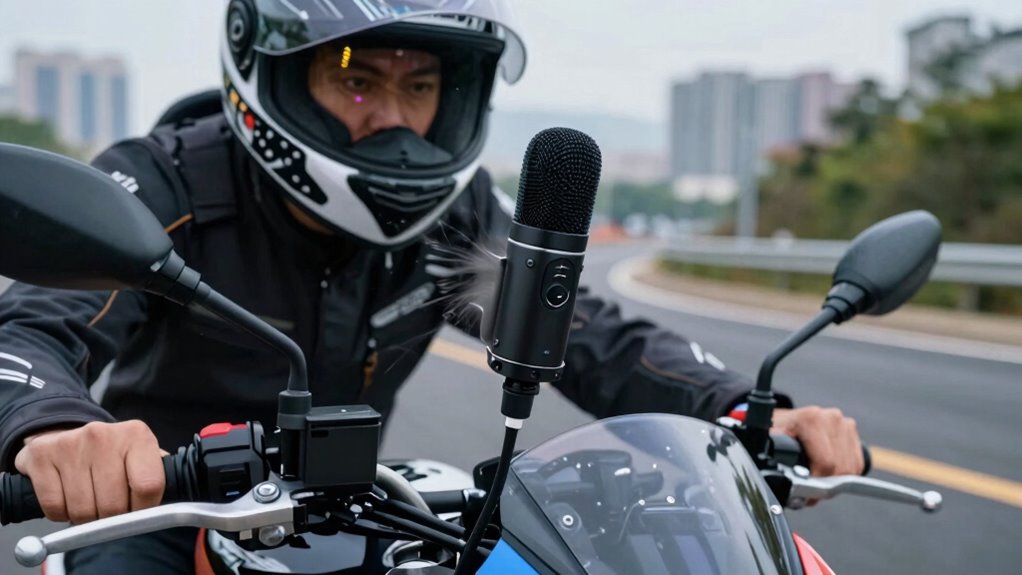
When it comes to motovlogging, clear and high-quality audio is just as important as capturing your ride visuals. If your audio is muffled, full of helmet noise, or overwhelmed by wind interference, viewers won’t stay engaged. One of the most common mistakes beginners make is choosing the wrong mic placement, which can seriously compromise sound quality. The placement of your microphone directly influences how well you capture your voice and how much ambient noise gets through. If you don’t position your mic correctly, you’ll end up with audio that’s unusable or distracting.
A typical mistake is mounting the microphone too close to your helmet or chin guard. When you do this, helmet noise becomes a major problem. Every time you turn your head or shift position, the mic picks up the rattling of the helmet, causing distracting sounds that drown out your voice. This helmet noise can make your recordings unbearable, forcing viewers to turn down the volume or stop watching altogether. On the other hand, placing the mic too far from your mouth means your voice will sound distant or muffled, reducing clarity and making it harder for viewers to understand you.
Wind interference is another factor that can ruin your audio. If your mic isn’t shielded properly or if it’s exposed to direct airflow, wind noise can overpower your voice. This creates a harsh, hissing sound that becomes unbearable. When you’re riding at higher speeds, wind noise amplifies, making it even more important to position your mic carefully. Using foam windscreens or dead cats can help, but the key is to place your mic in a spot where it’s less exposed to wind yet close enough to capture your voice clearly. Additionally, understanding how to optimize microphone placement can significantly improve your overall sound quality. Exploring different mounting options can also help you find a more effective setup that reduces unwanted noise. It’s also helpful to consider feedback from other riders or viewers to identify what works best in real-world conditions.
The best placement usually involves mounting the mic slightly below or beside your helmet’s vents, close to your mouth but shielded from direct airflow. A boom arm or a mic with a built-in windscreen can help you achieve a cleaner sound. Experimenting with different angles and distances is crucial because what works for one helmet or riding style might not work for another. Proper microphone placement is essential for optimizing sound quality and minimizing unwanted noise, so take the time to find the best position for your setup. Remember, the goal is to find a position that minimizes helmet noise and wind interference while keeping your voice crisp and clear. Proper mic placement isn’t just about convenience; it’s the key to creating professional-sounding motovlogs that keep viewers engaged and coming back for more.
motovlog microphone mount
As an affiliate, we earn on qualifying purchases.
As an affiliate, we earn on qualifying purchases.
Frequently Asked Questions
How Do I Know if My Mic Placement Is Causing Audio Issues?
You’ll notice if your mic placement causes audio issues when background noise becomes distracting or inconsistent. If your voice sounds muffled or distant, it’s a sign your microphone positioning isn’t perfect. Experiment with different angles and distances to find the best spot. Proper microphone positioning helps reduce background noise and guarantees your voice stays clear, so listen carefully to your recordings and adjust accordingly for the best sound quality.
What Are the Best Microphones for Motovlogging?
Sometimes, the best microphone for motovlogging feels like a coincidence — you stumble upon it. For your needs, a Lavalier mic or shotgun mic offers clear audio, and pairing them with good soundproofing methods minimizes wind noise. Think of it like mastering interview techniques; positioning matters. Look for mics with windshields or dead cats, and guarantee your setup balances proximity and wind protection for crisp, professional sound.
Does Wind Noise Affect Mic Placement Choices?
Yes, wind noise considerably impacts your mic placement choices. When using helmet microphones, you need to position them carefully to minimize wind interference. Placing the mic too close to vents or exposed areas can amplify wind noise, while positioning it behind a windscreen or closer to your mouth helps reduce it. Proper placement ensures clearer audio and less wind noise, making your motovlogs more professional and enjoyable for viewers.
How Can I Improve Audio Clarity on a Budget?
To improve audio clarity on a budget, start by choosing the right microphone type, like a shotgun or lavalier, which can better focus on your voice and reduce background noise. Use affordable foam or windshields to minimize wind noise. Additionally, record with good proximity to your mic, and refine your sound in audio editing software by removing background noise and equalizing your voice. Small adjustments can make a big difference.
Are There Specific Mic Mounts Recommended for Motovloggers?
In the age of dial-up internet, helmet mounts are your best bet for motovlogging. They keep your mic steady, reducing noise and improving clarity. Avoid handheld techniques while riding, as they cause shaky audio. Look for mounts that securely attach your mic to your helmet, like adhesive or clamp-based options. These guarantee consistent sound quality, letting you focus on the road while your audio stays crisp and clear.
helmet microphone windscreen
As an affiliate, we earn on qualifying purchases.
As an affiliate, we earn on qualifying purchases.
Conclusion
Imagine trying to hear a friend speak from across a crowded room—you miss details, right? That’s what poor mic placement does to your motovlog audio. I once fixed my mic just inches from my helmet, and suddenly, my voice was crystal clear, like turning on a switch. Proper placement isn’t just a tweak; it’s the difference between a lost story and an engaging ride. Pay attention to your mic, and your audience will thank you.
lapel microphone for motorcycle vlogs
As an affiliate, we earn on qualifying purchases.
As an affiliate, we earn on qualifying purchases.
boom arm microphone for helmet
As an affiliate, we earn on qualifying purchases.
As an affiliate, we earn on qualifying purchases.