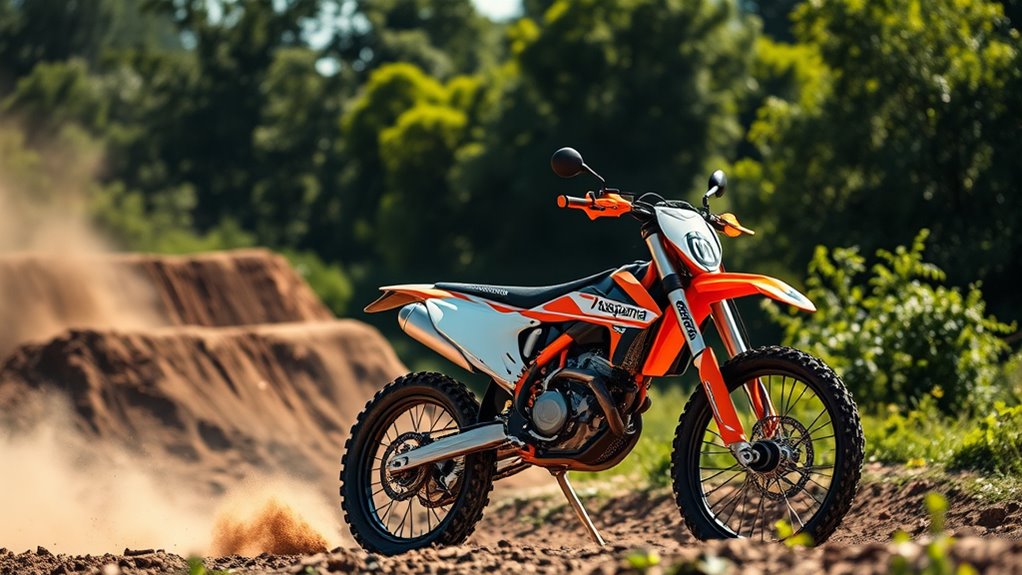

To transfer your Husqvarna MX bike to trail riding, you need to make key adjustments like softer suspension, versatile tires, and lower gear ratios for better control and comfort. Adding protective accessories such as skid plates and a spark arrestor boosts durability and safety. Regular maintenance, including cleaning air filters and checking brake pads, guarantees reliable performance. Taking these steps makes your bike more trail-ready and confident on rugged terrain; explore further for detailed tips.
Key Takeaways
- Swap the stiff suspension and tires for softer, versatile options suited for trail conditions.
- Adjust gearing with lower sprockets for better torque and obstacle handling.
- Install protective accessories like skid plates and ensure regular cleaning and maintenance.
- Equip the bike with safety gear and organize tools for longer, rugged trail rides.
- Conduct thorough pre-ride checks and modifications to ensure bike readiness and safety on trails.
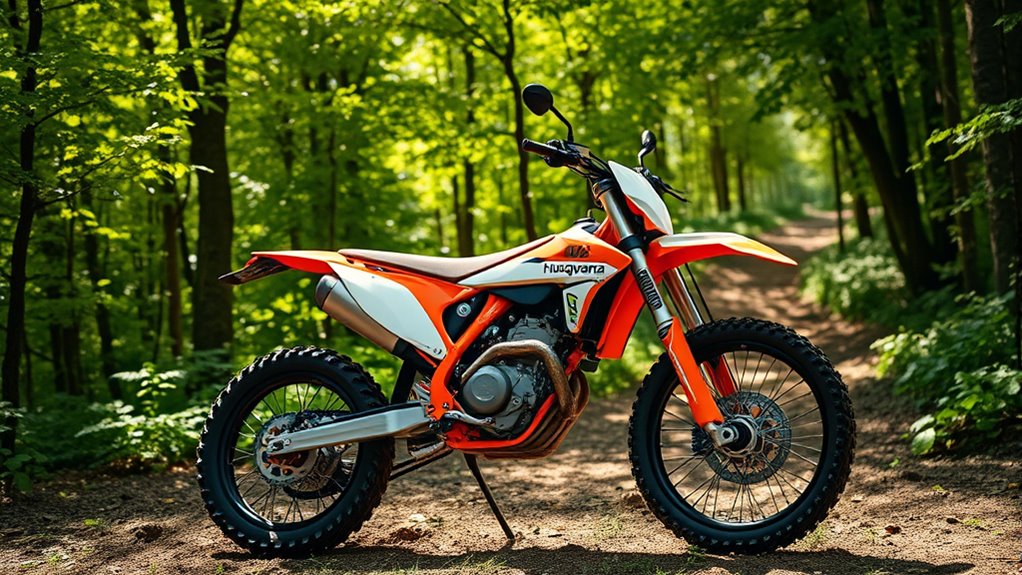
Switching your Husqvarna from MX to trail riding is a straightforward process that can enhance your off-road experience. The key is understanding what modifications are needed and how to prepare your bike properly. Trail riding often involves different terrain and riding styles, so your focus should be on making your bike more adaptable and comfortable for longer, more varied rides. Before making any changes, it’s a good idea to review your dirt bike maintenance routine. Ensuring your bike is in top shape helps prevent issues down the line and keeps your trail rides smooth and enjoyable.
Start by inspecting your suspension. MX bikes typically have stiff setups for high-speed racing, but trail riding calls for a softer suspension to absorb bumps, roots, and uneven terrain. Adjust your suspension settings accordingly, or consider aftermarket parts designed specifically for trail riding. Next, check your tires; MX tires are often knobby but may not suit all trail conditions. Switch to tires with a more versatile tread pattern that offers better grip on dirt, mud, and loose surfaces. This small change can dramatically improve your handling and safety on the trail.
Inspect your suspension and switch to versatile tires for better trail control and safety.
Another essential step is to modify your bike’s gearing. MX gearing favors high speeds on smooth tracks, but trail riding benefits from a lower gear ratio for better torque and control at slower speeds. Changing your sprockets can make a noticeable difference in how your bike responds to obstacles and steep inclines. Also, consider installing a skid plate or guard to protect the underside of your bike from rocks and debris. Trail riding gear like a sturdy helmet, gloves, and protective clothing is *essential* for safety, but also *guarantee* your bike is equipped with necessary accessories, such as a reliable spark arrestor and extra fuel or tools for longer rides. Additionally, paying attention to dirt bike maintenance can significantly extend your bike’s lifespan and performance in rugged conditions.
Routine dirt bike maintenance becomes even more *important* when transitioning to trail riding. Regularly check and clean your air filter, as trails tend to be dirtier and more demanding. Keep your chain properly lubricated and tensioned to prevent slippage and reduce wear. Lubricate pivot points and inspect brake pads frequently, ensuring everything functions correctly and safely during rough terrain. These small maintenance tasks keep your bike reliable and extend its lifespan, especially when you’re spending extended hours on the trail.
Finally, organizing your trail riding gear is *imperative* for a hassle-free experience. Pack essentials like a first aid kit, spare parts, and tools for quick repairs. Carry water, snacks, and navigation aids, so you’re prepared for different scenarios. When you combine proper dirt bike maintenance with thoughtful modifications and suitable gear, *switching* from MX to trail riding becomes seamless. You’ll find yourself more confident, comfortable, and ready to enjoy the diverse terrains that make trail riding so rewarding.
Frequently Asked Questions
Will My Existing Husqvarna MX Bike Be Compatible With Trail Modifications?
Your existing Husqvarna MX bike can be compatible with trail modifications, but you’ll need to take into account bike maintenance and gear compatibility. Check if your suspension, tires, and handlebars suit trail riding, and ensure your gear shifts smoothly with the new setup. Some adjustments or upgrades might be necessary to optimize performance. Always consult a professional for tailored advice, so your bike remains reliable and fun for trail adventures.
How Long Does the MX to Trail Transfer Process Typically Take?
The transfer duration for converting your Husqvarna MX bike to trail use usually takes about one to three days, depending on how many modifications you plan to make. You’ll want to factor in the modification timeline, including installing suspension upgrades, changing tires, and adjusting the handlebars. Planning ahead and working with a professional can help guarantee a smooth process, so you get back on the trail sooner.
Are There Specific Tools Required for the Transfer?
Think of the transfer as swapping out a gear in a finely-tuned machine. You’ll need specific tools like a socket wrench, screwdrivers, and possibly a torque wrench for compatibility considerations. These tools guarantee a smooth switch without damaging parts. Make certain to check Husqvarna’s recommended tool requirements to avoid issues. Having the right gear makes the process easier and keeps your bike running perfectly on any terrain.
Does the Transfer Affect the Bike’s Warranty?
The transfer can impact your warranty, so warranty concerns should be considered before modifying your bike. While some modifications like the MX to Trail transfer are generally reversible, they might affect your warranty coverage if they’re classified as non-approved alterations. Always check with Husqvarna or your dealer to understand the specific modification impact on warranty terms. Doing so helps you avoid potential issues if warranty claims arise later.
Can I Revert Back to MX Mode After Converting to Trail?
You can revert back to MX mode after converting to Trail, but keep in mind that transfer limitations may apply. It’s a coincidence that your bike’s customization options allow for easy switching, yet some models might require professional adjustments. Be aware that repeated conversions could affect performance or warranty coverage. Check your specific bike’s instructions and consult a dealer to ensure smooth reversion without risking damage or voiding your warranty.
Conclusion
Switching from MX to trail mode is like opening a secret passage to endless adventures. You’ll feel the wind whispering through the trees and the terrain transforming beneath you, enthusiastic for your next ride. With Husqvarna’s seamless transfer, you’re not just riding—you’re dancing with nature’s wild rhythm. Embrace the change, and let your bike be the brushstroke on the canvas of your outdoor masterpiece. Adventure awaits—are you ready to take the ride?