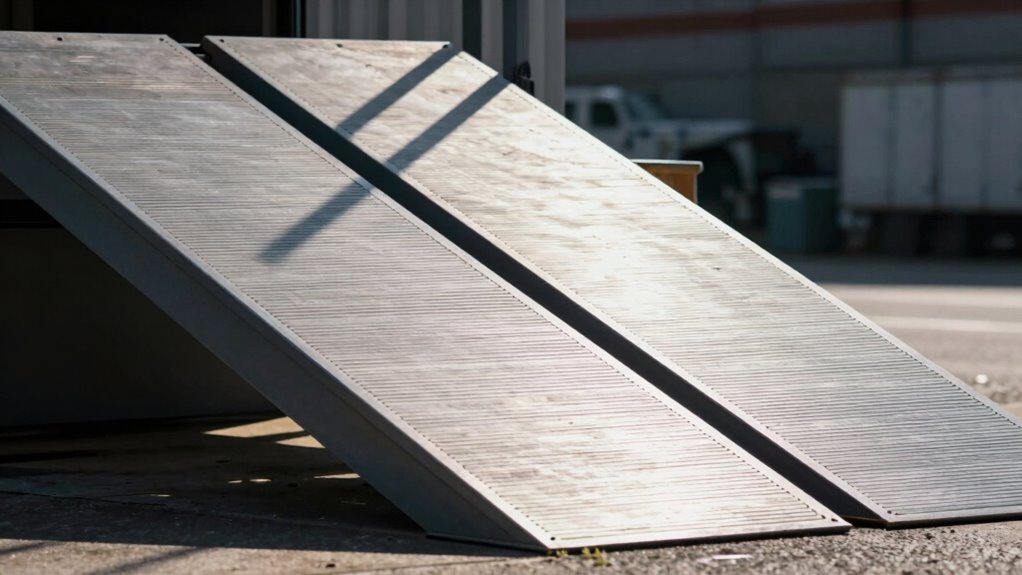

Loading ramps become dangerous when their angle exceeds the manufacturer’s recommended maximum, usually around 20-30 degrees. Going steeper makes it harder to maintain balance, especially if you’re carrying heavy loads. It increases the chances of slips, falls, and shifting loads, putting you at risk. Proper setup and regular inspections are essential for safety. Keep your ramp within safe angles to prevent accidents—there’s more to know if you keep exploring.

Get garage and car supplies delivered free — and shop member deals
- Fast, free delivery on millions of items
- Access to Prime Big Deal Days deals on October 6–7
- Prime Video, Amazon Music and more included
Key Takeaways
- Excessive ramp angles increase the risk of slips, falls, and load shifting, compromising safety.
- Manufacturer’s recommended maximum angles should always be followed to prevent dangerous setup.
- Steep ramps make balancing difficult for users, especially with heavy or awkward loads.
- Worn or damaged traction surfaces reduce grip, heightening the danger of accidents at steep angles.
- Regular inspection and proper securing of loads are crucial when ramps are used at higher angles.
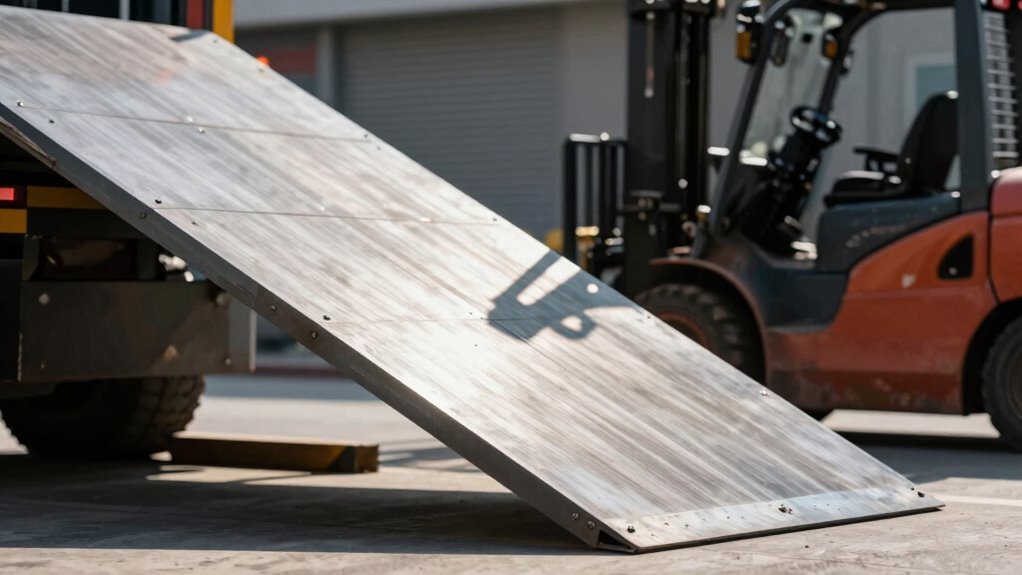
When loading ramps are set at an overly steep angle, they become markedly more dangerous, increasing the risk of slips, falls, and accidents. You need to understand that the angle of your ramp directly impacts safety. If it’s too steep, you may find yourself struggling to maintain balance, and anyone using the ramp could slip or fall, especially when carrying heavy or awkward loads. To prevent this, always check the manufacturer’s recommended maximum angle for your ramp type and make certain you’re not exceeding it. Proper safety tips include securing the ramp firmly to the ground or loading surface to prevent shifting during use. You should also inspect the ramp for any damage or wear before each use, because cracks, loose bolts, or worn-out surfaces can drastically reduce traction and stability. Ensuring the traction surface is in good condition is essential for maintaining safety. Equipment maintenance plays a vital role in keeping your loading operations safe. Regularly clean the ramp to remove debris, mud, or grease that could cause slipping. Keep the surface in good condition by repairing or replacing damaged sections promptly. Pay special attention to the traction surface; a worn or smooth surface can turn even a well-angled ramp into a hazard. When setting up the ramp, make sure it is on a stable, level ground and that the incline is gentle enough for safe passage. Use safety equipment, such as wheel chocks or barriers, to prevent accidental movement during loading and unloading. Don’t forget to secure the load properly, as shifting or falling loads can cause serious injuries. Additionally, understanding the safe loading capacity of your ramp can help prevent overloading, which significantly increases safety risks. It’s also important to consider proper ramp slope for optimal safety and efficiency.
As an affiliate, we earn on qualifying purchases.
Frequently Asked Questions
What Is the Safest Angle for Loading Ramps?
The safest angle for loading ramps is typically between 20 to 30 degrees, ensuring stability and ease of use. Proper ramp design and adherence to safety regulations are essential in preventing accidents. You should check that the incline isn’t too steep, which could cause slips or falls. Always confirm your ramp meets safety standards and is securely positioned before loading or unloading, keeping safety your top priority.
How Do Weather Conditions Affect Ramp Safety?
Weather conditions markedly impact ramp safety, as weather hazards like rain, snow, or ice increase slip risks. You should always check the forecast before using a ramp and take slip prevention measures, such as adding traction mats or applying salt or sand to icy surfaces. Wet or icy conditions make ramps more dangerous, so slowing down, increasing caution, and ensuring proper footwear are essential to prevent accidents and injuries.
Are There Specific Materials Better for Steep Ramps?
For steep ramps, you should choose materials with high durability and excellent surface grip to prevent slips and guarantee safety. Steel and textured rubber are ideal because they withstand heavy use and maintain traction even in wet conditions. Avoid slippery materials like smooth plastic or polished surfaces, which can become hazardous. Investing in durable, high-traction materials keeps your ramp safe and functional, especially at steeper angles where slips are more likely.
How Often Should Ramps Be Inspected for Safety?
You should inspect your ramps regularly, ideally before each use and at least monthly for ongoing safety. Think of ramp maintenance as tending to a garden—neglect invites hazards. Follow safety regulations diligently, checking for cracks, loose fittings, or wear that could turn a smooth ride into a dangerous tumble. Staying vigilant guarantees your ramps remain safe, reliable, and ready to support your load without risking accidents.
Can Improper Ramp Use Cause Equipment Damage?
Yes, improper ramp use can cause equipment damage. When you don’t prioritize equipment stability and neglect proper user training, you risk putting excessive stress on your gear. Incorrect angles, sudden movements, or overloading can lead to mechanical failures or misalignments. To prevent this, make certain proper user training is provided and always maintain equipment stability during ramp use, especially when handling heavy loads or operating at challenging angles.
Conclusion
So, next time you’re setting up a loading ramp, remember that crossing that critical angle isn’t just about ease—it’s about safety. Think of it like a trust fall; if the angle is too steep, the risk of slipping or collapse skyrockets. It’s worth questioning the common belief that steeper ramps save space—sometimes, a gentler slope isn’t just safer, but smarter. Trust the numbers, not just instinct, to keep everyone safe.
Fall Picks
fall essentials
As an affiliate, we earn on qualifying purchases.