When stuck on a trail without a winch, leverage and traction methods can help you get free safely. Use sturdy tools like levers, recovery boards, and ground anchors to shift or straighten your vehicle. Apply gentle, controlled force and place traction aids under tires for better grip. Always prioritize safety, check your gear, and plan your approach. Staying patient and cautious can make all the difference — keep exploring to learn more effective techniques.

Get business pricing on garage and car supplies
- Business-only prices and quantity discounts
- Tax-exempt purchasing
- Multiple users, one account, clear invoices
Key Takeaways
- Use leverage tools like pry bars or jacks to gently shift or lift the vehicle without causing damage.
- Employ traction aids such as recovery boards, mats, or sand ladders under tires for better grip.
- Assess terrain and vehicle stability carefully before applying force to avoid accidents.
- Ensure proper tire pressure and inspect recovery gear for damage to maximize effectiveness and safety.
- When in doubt or facing significant obstacles, seek professional recovery assistance instead of risking further damage.
vehicle recovery traction boards
As an affiliate, we earn on qualifying purchases.
As an affiliate, we earn on qualifying purchases.
When and Why You Might Need to Use Leverage and Traction to Recover Your Vehicle
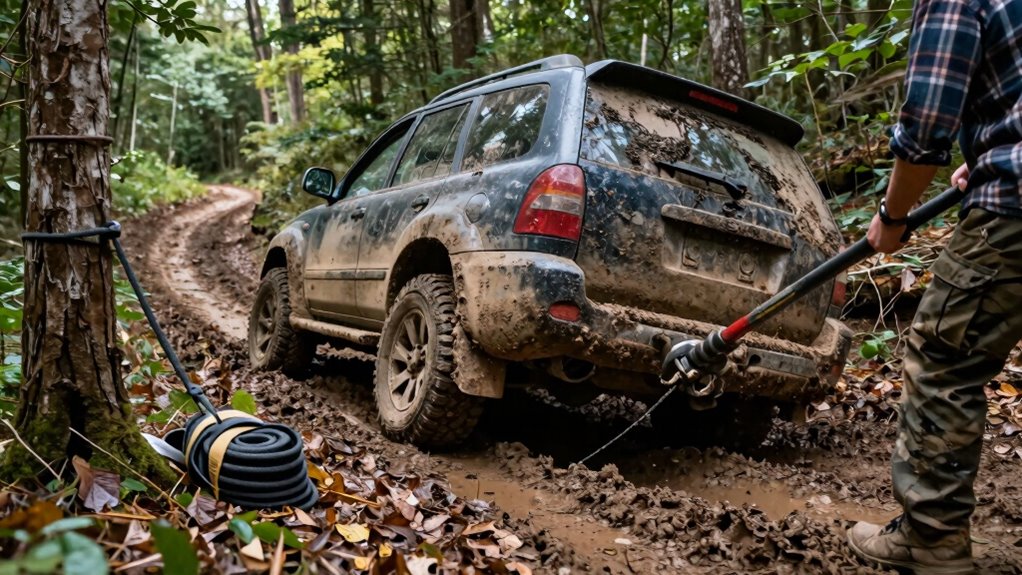
There are times when a winch isn’t available or practical, and you’ll need to rely on leverage and traction to recover your vehicle. You might face this situation when your vehicle’s weight is too heavy for manual effort or when terrain conditions prevent the use of equipment. Proper terrain assessment is vital—determine if the ground is firm enough to support traction methods or if obstacles could worsen the situation. You’ll need to evaluate whether leverage can help shift or free your vehicle without causing damage. Understanding your vehicle’s weight helps gauge the effort needed, ensuring you choose the right approach safely. Recognizing when to use leverage and traction can make the difference between a successful recovery and getting further stuck. Incorporating energy-efficient solutions can also facilitate recovery efforts in remote or challenging environments.
Essential Tools and Safety Tips for Vehicle Recovery Without a Winch
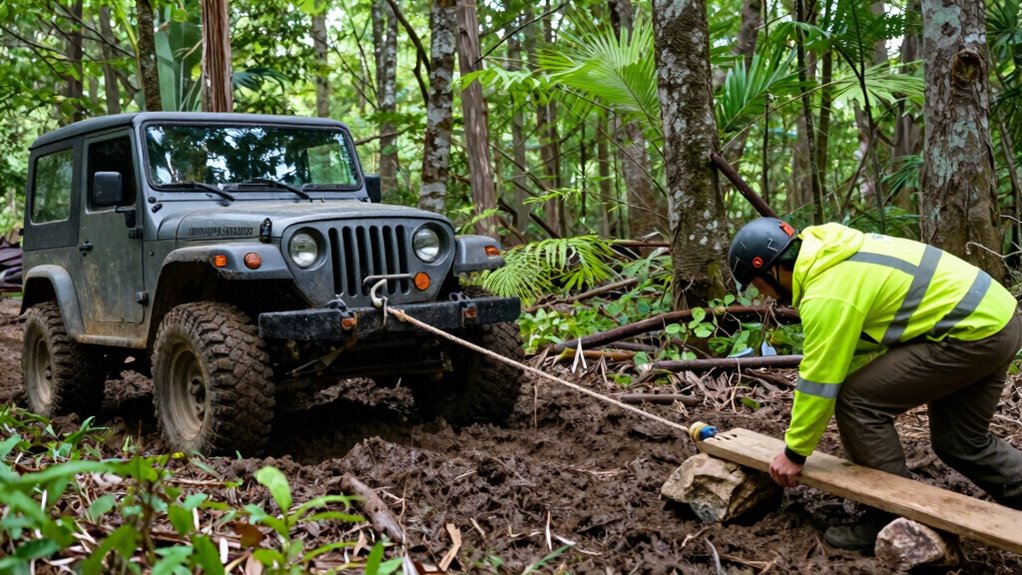
When recovering a vehicle without a winch, having the right tools and following safety protocols are crucial to avoid injury or further damage. Essential tools include manual tools like tow straps, recovery boards, a sturdy jack, gloves, and a recovery anchor or tree saver. Always inspect your vehicle’s maintenance status before recovery to verify brakes, tires, and suspension are in good shape. Keep safety in mind by wearing gloves, staying clear of snatch straps under load, and communicating clearly with your recovery partner. Additionally, verify your tools are in good condition and rated for the task. Proper planning and cautious use of manual tools help prevent accidents and protect your vehicle’s integrity. Recognizing proper leverage techniques can make a significant difference in the effectiveness and safety of the recovery process. Applying techniques such as traction methods can enhance your ability to recover a vehicle without additional equipment. Understanding vehicle recovery safety practices ensures you are better prepared to handle unexpected situations during recovery efforts. Furthermore, employing auditory cues during recovery can improve coordination and safety among team members. Incorporating knowledge of home theatre projectors can also assist in creating a comfortable recovery environment, especially in low-light conditions.
Step-by-Step: How to Use Leverage and Traction to Unstick Your Vehicle
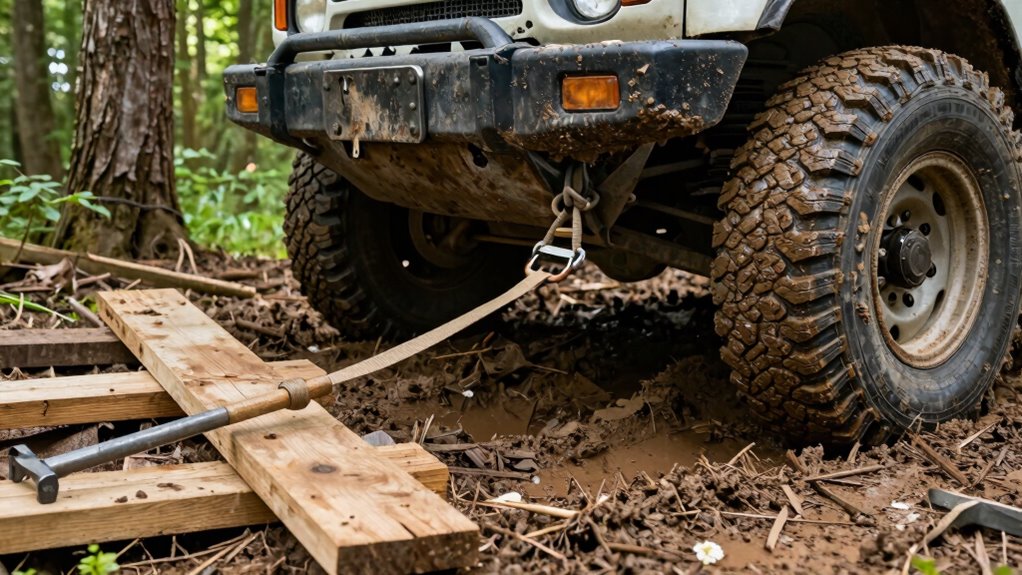
To get your vehicle unstuck using leverage and traction, start by evaluating the situation carefully. Confirm your vehicle remains stable before applying any force; instability can cause damage or injury. Select appropriate recovery gear, such as a sturdy lever or traction aids like mats or boards. Position your vehicle on a flat, stable surface if possible. Use leverage to shift the vehicle gently, avoiding sudden jerks that could destabilize it. For traction, place recovery gear under the tires to increase grip. Additionally, utilizing smart tools like remote monitoring devices can help assess stability and track progress during recovery. Understanding the field‑of‑view and imaging‑scale examples can help you plan your approach effectively, especially if working in a remote or challenging environment. Here’s an emotional perspective:
| Risk of Damage | Confidence in Success |
|---|---|
| Unstable vehicle can tip or slide | Proper gear and technique boost your confidence |
| Damage to tires or suspension | Every successful move builds your confidence |
| Frustration from ineffective efforts | Clear steps lead to a successful recovery |
Stay calm, plan your moves, and carefully execute each step.
Safety Tips to Prevent Damage and Ensure a Successful Recovery
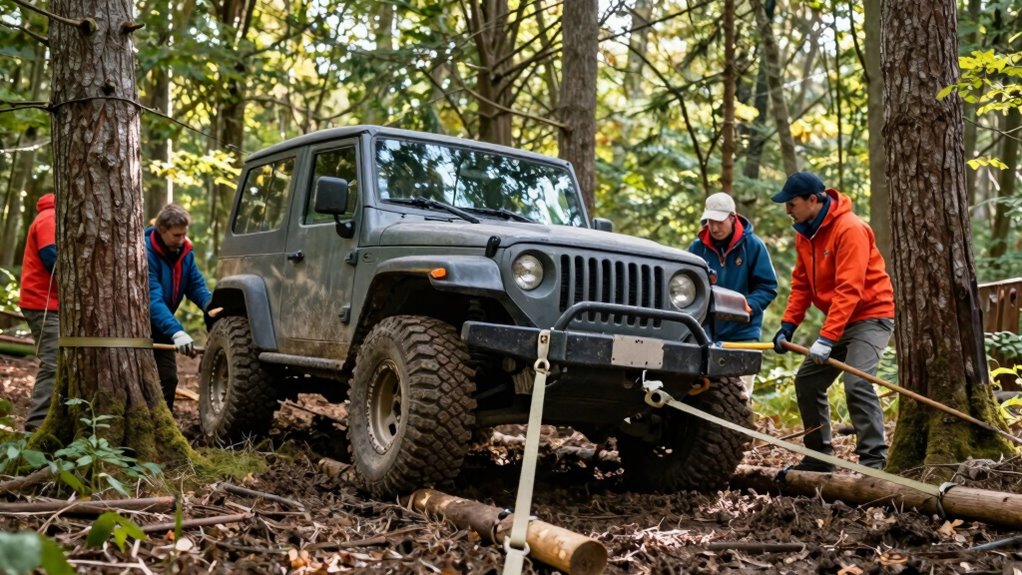
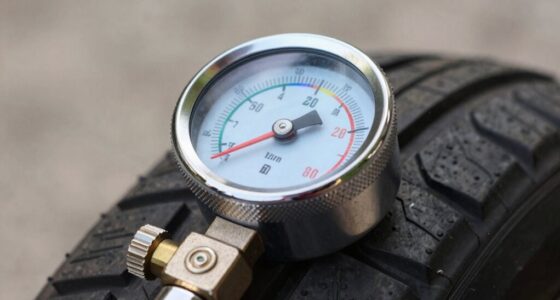
Ensuring safety during vehicle recovery starts with prioritizing prevention of damage to your vehicle and surroundings. Proper tire pressure is essential; verify your tires are inflated to the recommended levels to improve traction and stability. Always inspect your recovery gear for damage before use, replacing any worn or frayed equipment. Keep bystanders at a safe distance to avoid injuries from sudden slippage or gear failure. Use spotters to guide your movements carefully. Additionally, plan your recovery route to avoid obstacles that could cause further damage. Remember, patience is key—rushing can lead to mistakes. Regularly check your vehicle’s position and tension on recovery gear throughout the process. Proper navigation and mapping can help you plan effective recovery routes and avoid hazards. Being aware of your surroundings and potential hazards is vital for a safe recovery. Incorporating vehicle assessment into your process can further ensure you’re choosing the safest and most effective recovery method. Staying informed about AI ethics can also help develop safer and more responsible recovery tools in the future. Additionally, understanding the impact of cookies on user privacy can foster a safer online environment for recovery planning resources.
Troubleshooting Common Issues and Knowing When to Call for Help
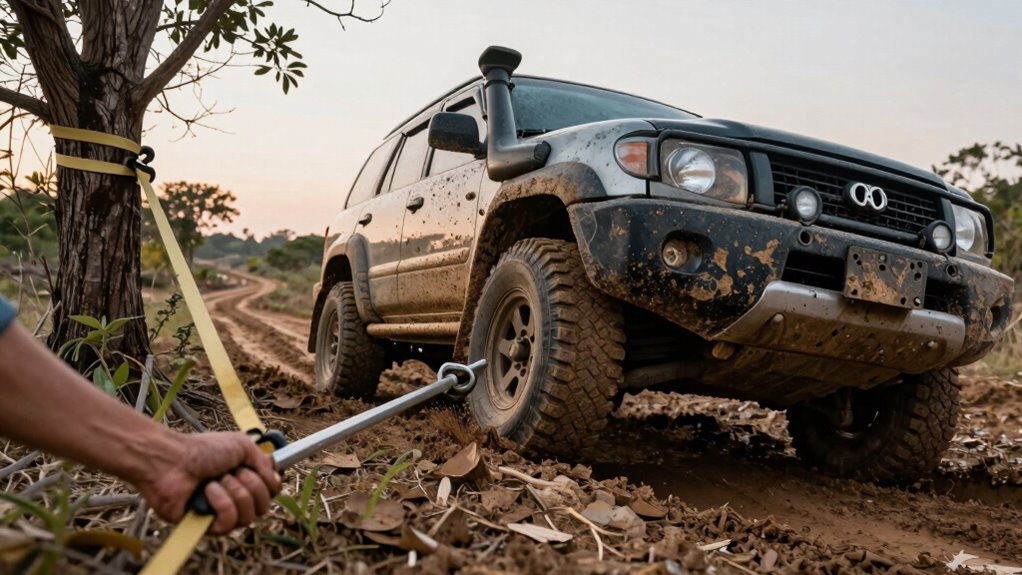
Encountering persistent or unexpected issues during vehicle recovery can be frustrating and potentially dangerous. If you notice signs of vehicle damage or if recovery isn’t progressing despite your efforts, it’s time to reassess your approach. Poor recovery planning can lead to further damage or injury. Always stop if you feel unsure or if obstacles seem insurmountable. Know your limits and recognize when to call for help, such as professional recovery services or assistance from experienced off-roaders. Attempting to force a recovery without proper tools or knowledge can worsen the situation. Prioritize safety, evaluate the risks, and don’t hesitate to seek expert help when needed. Proper troubleshooting guarantees your safety and preserves your vehicle’s integrity. Understanding vehicle recovery techniques can greatly improve your chances of success and safety. Familiarity with recovery strategies can also prevent escalation of issues and ensure a smoother process. Additionally, having a solid grasp of traction and leverage methods can often resolve challenges without additional equipment. Being aware of common recovery pitfalls can help you avoid costly mistakes and dangerous situations. Developing a clear plan for alternative recovery options can also be invaluable when traditional methods fail.
Frequently Asked Questions
Can Leverage and Traction Methods Damage My Vehicle?
Leverage and traction methods can cause vehicle damage if not done carefully, but when used correctly, they minimize recovery risks. You need to guarantee proper placement of recovery points and avoid excessive force, as improper technique may lead to scratches, dents, or broken parts. Always assess your vehicle’s condition beforehand, follow safety guidelines, and proceed cautiously to prevent damage during trail recovery.
What Are the Best Surfaces for Traction Recovery?
The best surfaces for traction recovery are firm, stable terrains like packed dirt, gravel, or snow. These surfaces work well with tire types like all-terrain or mud-terrain tires and traction aids such as sand mats or traction boards. Avoid loose sand or deep mud, as they reduce traction. Using the right combination of tire types and traction aids on solid surfaces helps you recover your vehicle safely and efficiently.
How Do I Choose the Right Leverage Points?
Choosing the right leverage points can feel like finding a needle in a haystack, but it’s simpler with vehicle anchor points and leverage tools. Look for solid, fixed points like a bumper or frame that won’t shift. Use leverage tools to maximize force, positioning them so they generate the most pull without slipping. Always test your setup carefully—your safety depends on selecting sturdy, reliable leverage points.
Are There Situations Where a Winch Is Still Necessary?
Yes, there are situations where a winch is still necessary. If you’re stuck in deep mud, snow, or on steep, uneven terrain, manual recovery methods and winch alternatives might not suffice. A winch provides powerful, reliable assistance that leverage and traction alone can’t deliver. In these cases, using a winch ensures safety and prevents further damage to your vehicle or surroundings. Always assess the situation before deciding on the best recovery method.
How Can I Practice These Techniques Safely?
You can practice leverage and traction techniques safely by first ensuring your vehicle is well-maintained and equipped with proper recovery gear like traction mats, tow straps, and a jack. Always practice in a controlled environment, such as an open, flat area, away from traffic. Wear gloves and eye protection, and never stand directly in line with recovery straps. Regularly review safety procedures to stay confident and prepared for real recovery situations.
Conclusion
Next time you find yourself stuck deep in the mud or tangled in roots, remember that leverage and traction can be your silent allies—like a sturdy branch helping you climb out of a tricky spot. With patience and the right techniques, you can turn a frustrating moment into a satisfying victory. Sometimes, all it takes is a little ingenuity and a bit of luck to see the trail open up again, just like the sun breaking through after a storm.
Halloween Picks
halloween
As an affiliate, we earn on qualifying purchases.