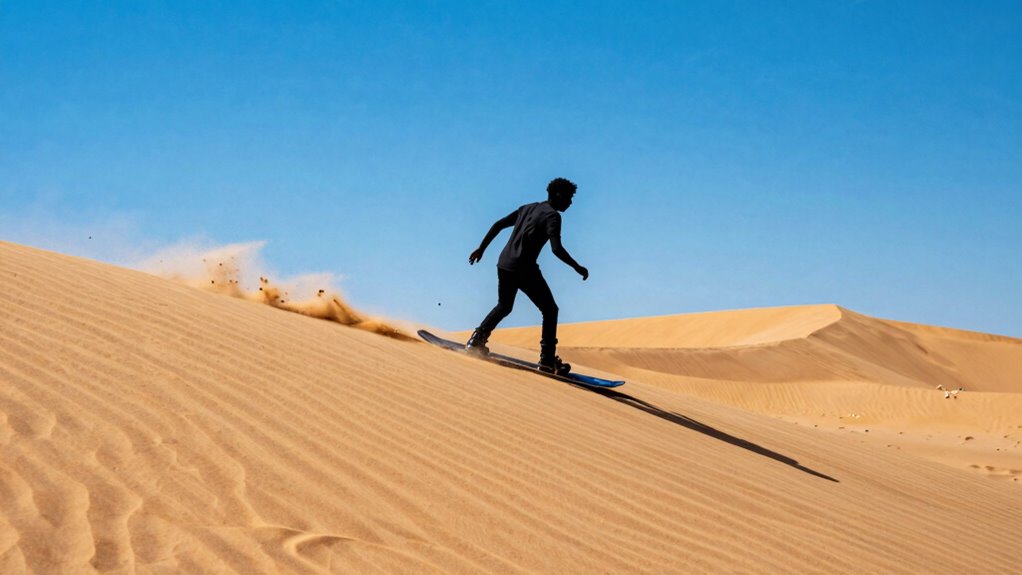

Sand riding feels impossible until you understand that increasing your tire’s contact area reduces ground pressure, preventing sinking. You can do this by lowering your tire pressure, which helps the tire deform and spread weight over a larger surface. This physics trick allows you to stay afloat and improve traction. Mastering this concept transforms your ride, and if you continue exploring, you’ll uncover more tips to conquer loose terrain effortlessly.
Key Takeaways
- Lower tire pressure increases the contact patch, distributing weight and preventing the bike from sinking into the sand.
- Maintaining steady throttle avoids sudden wheel spin, helping the tires stay afloat on loose surfaces.
- Shifting body weight back reduces front wheel load, improving traction and preventing the bike from digging in.
- Understanding the physics of traction and force distribution allows for better control and smoother riding.
- Consistent, deliberate movements with minimal abrupt inputs help maintain momentum and stability on sandy terrain.
Why Sand Makes Your Bike Sink: The Physics Behind It
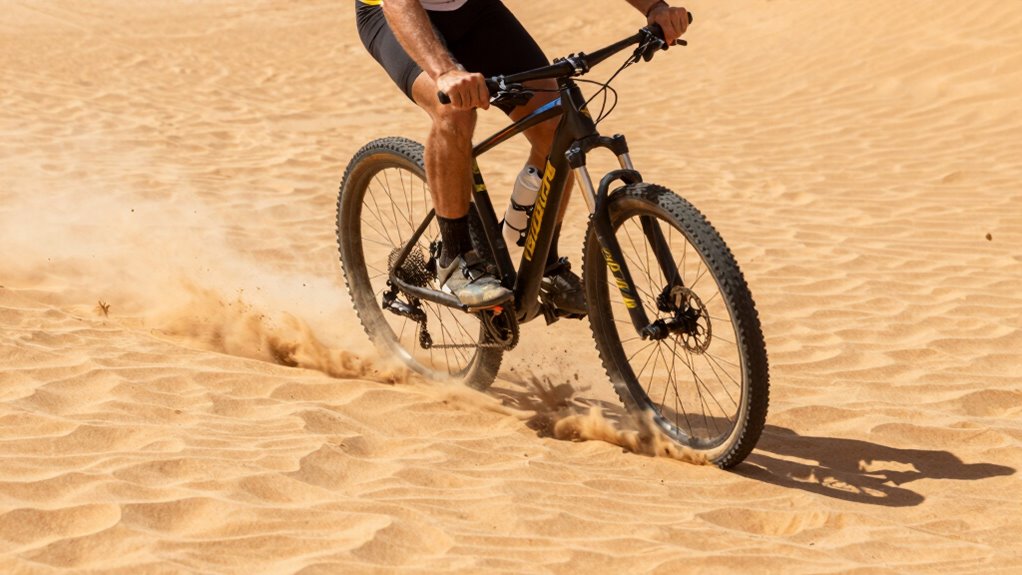
When you ride your bike across sand, it sinks because sand cannot support the weight evenly. Sand particles are loosely packed and have significant empty space between them, which reduces their load-bearing capacity. When you apply pressure with your bike tires, your weight pushes down, causing the particles to shift and compact beneath the contact patch. However, because sand particles are largely non-cohesive, they shift aside rather than support the load. This displacement results in a force imbalance, causing your tires to sink gradually. The key is that the force distribution isn’t uniform; instead, it concentrates in small areas, leading to deformation and sinking. Understanding this helps you grasp why sand behaves differently from solid ground and why your bike struggles to stay afloat without proper technique. Additionally, force distribution plays a crucial role in how different surfaces respond to weight and pressure. Recognizing the importance of pressure spread can help you learn techniques to distribute your weight more evenly and reduce sinking. Moreover, using wider tires can help improve load distribution and prevent sinking into the sand. In fact, mastering how pressure is applied influences how well you can navigate sandy terrain effectively.
How Tire Pressure Helps You Stay Afloat on Sand
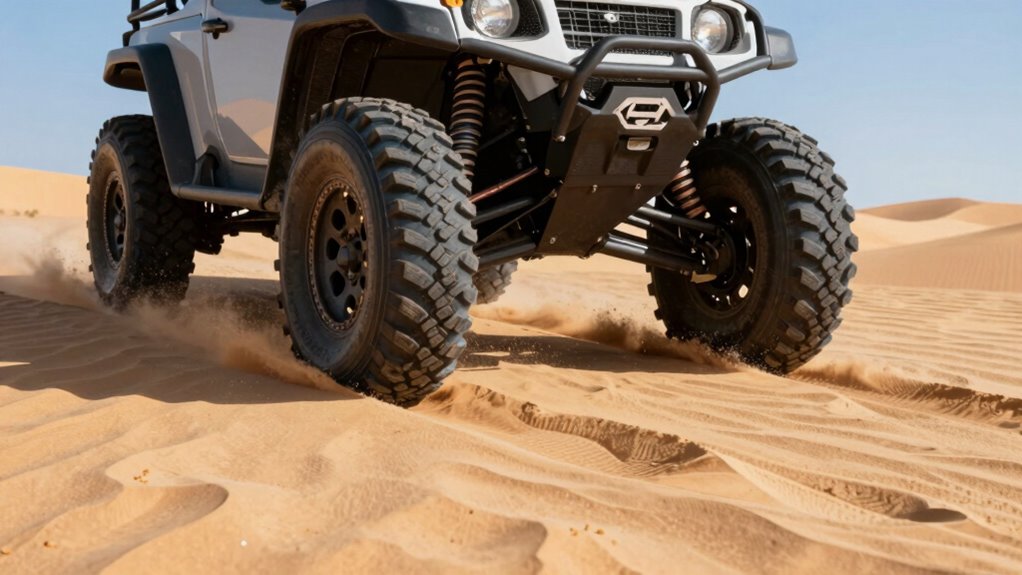
Have you ever wondered why lowering your tire pressure helps you ride more effectively on sand? When you reduce tire pressure, the tire’s contact patch with the sand increases, spreading your weight over a larger surface area. This distribution decreases ground pressure, preventing the tire from sinking quickly. Lower pressure also allows the tire to deform and conform to the sand’s surface, creating a more stable and buoyant ride. This improved flotation reduces the chances of digging in or getting stuck. Additionally, free floating allows the tire to move more freely over uneven terrain, enhancing stability and control. Proper tire pressure adjustment is essential for optimized flotation and minimizing physical effort. Moreover, understanding the physics of flotation can help you fine-tune your tire setup for different sand conditions. By adjusting tire pressure appropriately, you can also improve your traction on loose surfaces, making it easier to navigate challenging terrain. A proper understanding of surface tension can further improve your ability to adapt to varying sand textures and moisture levels. However, too low pressure can compromise tire integrity and control. By carefully adjusting tire pressure to match sand conditions, you optimize flotation, maintain momentum, and improve overall stability, making your ride smoother and less physically demanding.
Simple Riding Technique Adjustments for Better Traction
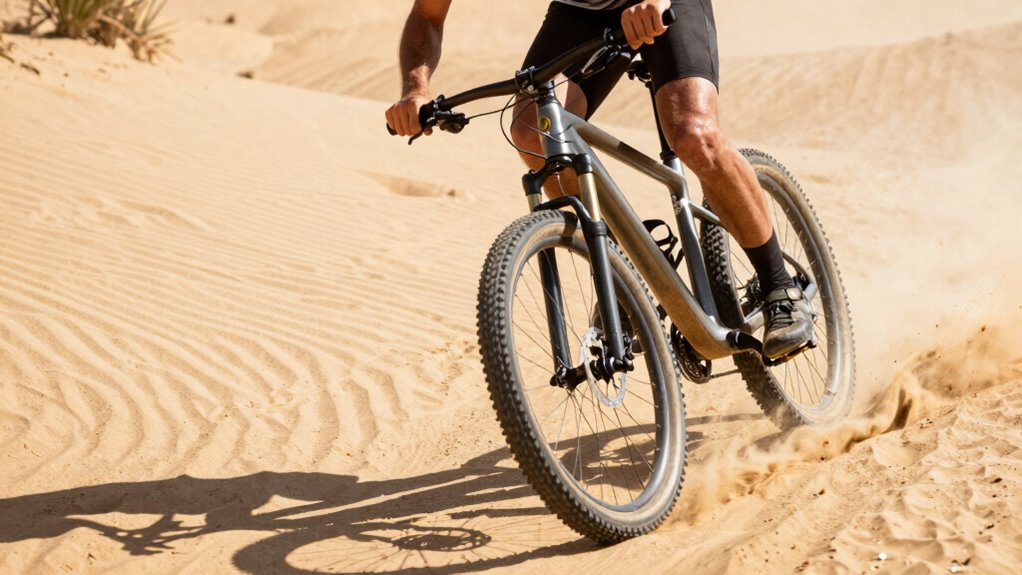
Adjusting your riding technique can substantially improve traction on sand, complementing the benefits of proper tire pressure. Focus on these key adjustments:
- Maintain a steady throttle to avoid sudden power shifts that cause wheel spin. Using consistent throttle application prevents abrupt changes that can lead to loss of control.
- Shift your weight slightly back to keep the front wheel light, enhancing grip and stability. Proper weight distribution helps prevent the front from digging in or lifting unexpectedly.
- Use smooth, deliberate movements with your handlebars to prevent abrupt changes in direction. Gentle steering inputs reduce lateral forces that can destabilize your ride.
- Be mindful of your net worth and how strategic adjustments can lead to better performance and confidence on challenging terrains. Understanding your physical mechanics enhances your ability to adapt riding techniques effectively. Additionally, leveraging traction physics can help you maintain control and optimize your ride on loose surfaces. Recognizing the importance of surface conditions allows you to adjust your approach accordingly for maximum traction. Applying environmental factors awareness can further fine-tune your technique for different sandy terrains.
These techniques optimize your interaction with the sand, reducing the likelihood of digging in or losing control. By maintaining consistent throttle application, you prevent wheel spinning and dig-in. Shifting weight back improves flotation and steering response, while smooth handling minimizes unnecessary lateral forces. Combining these adjustments creates a balanced, controlled ride, leveraging physics principles to enhance traction effectively.
Common Mistakes in Sand Riding and How to Fix Them
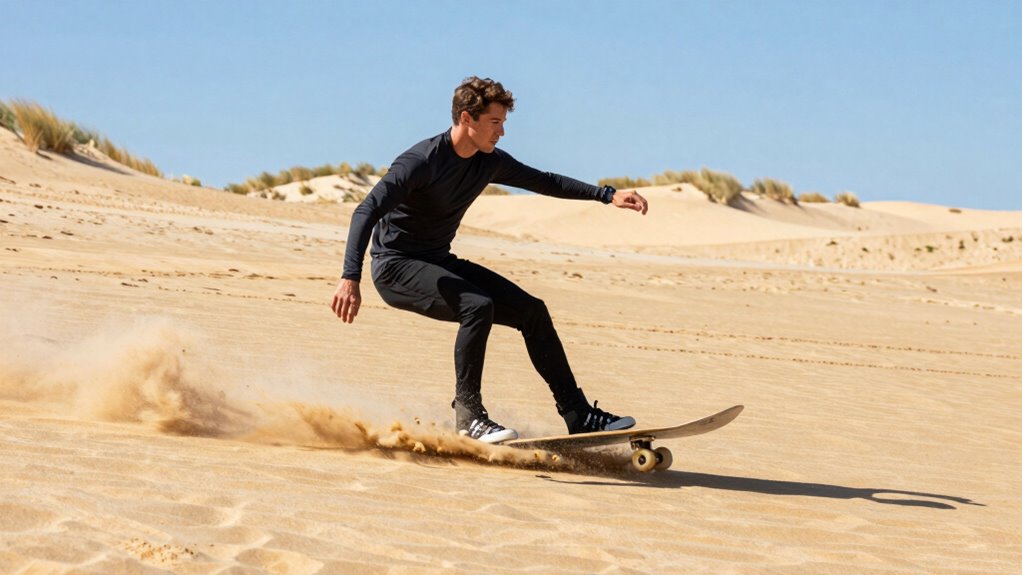
One of the most common mistakes in sand riding is applying too much throttle too suddenly, which quickly leads to wheel spin and loss of control. To fix this, focus on smooth, progressive throttle inputs, allowing the bike to find traction without overwhelming the sand. Overspeeding the throttle causes the rear wheel to break loose, digging deeper into the sand and worsening the situation. Another mistake is riding with a static stance, which reduces maneuverability; shifting your weight back slightly improves traction and stability. Additionally, many riders neglect proper tire pressure; lowering it slightly increases the contact patch, enhancing grip. In conclusion, leaning too far into turns can cause the bike to slide uncontrollably. Keep your body centered and relaxed, and make gentle adjustments to maintain traction and control. Proper power management techniques are also essential to prevent wheel spin and maintain momentum on difficult terrain. Mastering traction control methods can make a significant difference in difficult sand conditions. Also, understanding the physics of sand helps riders anticipate how their bike will behave and adapt their riding style accordingly. Moreover, developing a better understanding of the bike’s weight distribution can significantly improve handling in loose terrain. Additionally, paying attention to tire traction can further improve overall control in challenging conditions.
Practice Tips to Master Sand Riding and Conquer Dunes
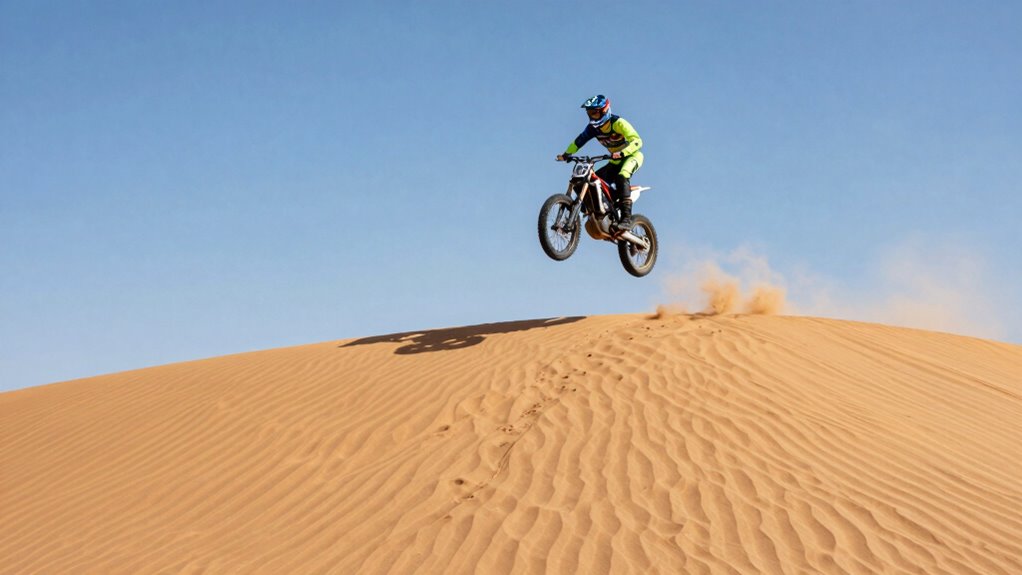
Mastering sand riding and conquering dunes requires deliberate practice focused on developing smooth throttle control, body positioning, and tire management. To improve, concentrate on these key areas:
- Maintain consistent throttle input to prevent wheel spin and loss of momentum.
- Shift your body weight forward and slightly back to optimize traction and stability.
- Adjust tire pressure appropriately—lower pressure increases grip but must be balanced to prevent tire damage.
- Understanding traction physics can help you make better decisions about throttle and body positioning to stay in control.
Frequently Asked Questions
Can Different Bike Types Handle Sand Riding Better Than Others?
Yes, some bike types handle sand better than others. Fat bikes, with their wide tires, distribute weight more evenly, preventing sinking and providing stability. Dual-sport or dirt bikes with knobby tires also perform well due to their traction and maneuverability. Lightweight bikes are easier to control in loose sand, while heavier bikes may struggle. Choose a bike designed for off-road conditions to improve your sand riding experience considerably.
How Does Bike Weight Influence Sand Riding Difficulty?
Heavier bikes increase your difficulty in sand riding because they sink more easily, requiring more effort to maintain balance and momentum. Lighter bikes are easier to maneuver, as they float better on the surface and respond quicker to your inputs. To improve, choose a bike with an ideal weight balance—light enough to stay afloat but sturdy enough to handle rough terrain. Proper tire pressure and riding technique also help offset weight challenges.
Are There Specific Gear Ratios Optimal for Sand Dunes?
Gear ratios govern your grit when conquering dunes. Opt for a low, tall gear ratio—think 14/50 or 13/52—giving you torque and traction. This setup lets you spin smoothly through soft sand without stalling or slipping. Adjust based on your bike’s power and sand softness. Consistent, controlled cadence keeps momentum steady, preventing you from getting bogged down. Fine-tune accordingly for fantastic, friction-free dune domination.
What Safety Equipment Is Essential for Sand Riding?
You need essential safety gear like a helmet, goggles, gloves, and sturdy riding boots to protect yourself during sand riding. Wearing a durable, breathable riding suit offers abrasion resistance and comfort. Carry a hydration pack to prevent dehydration in the heat. Consider a communication device for emergencies, and always ride with a buddy. Proper safety gear minimizes injury risk and guarantees you can handle unexpected situations confidently.
How Does Weather Affect Sand Riding Conditions and Techniques?
Weather considerably impacts sand riding conditions and techniques. When it’s dry and hot, sand becomes loose and challenging, requiring you to keep a steady throttle and maintain momentum. Conversely, damp or humid conditions cause sand to firm up, offering more traction but risking clutch slippage if not managed carefully. Rain can create muddy patches, making riding unpredictable. Adjust your speed, weight distribution, and gear selection accordingly to stay safe and maintain control.
Conclusion
Mastering sand riding might seem impossible at first, but with this one physics trick, you’ll conquer dunes like a pro. Adjust your tire pressure, refine your technique, and avoid common mistakes—soon, sand will feel like solid ground. Think of it this way: once you discover this simple concept, you’ll be gliding over sand with the ease of a fish swimming through water. It’s not just riding; it’s transforming a challenge into your playground.