
When inspecting your spark plugs, pay attention to their color, as it reveals your engine’s fuel condition. Light tan or gray indicates proper combustion, while black or soot suggests a rich fuel mixture. White or blistered tips can point to overheating, and oily deposits mean oil leaks. Recognizing these clues helps you catch fuel problems early. Keep reading to learn more about interpreting spark plug colors and keeping your engine in top shape.
Key Takeaways
- Black or sooty spark plugs indicate a rich fuel mixture or fuel delivery issues.
- White or blistered tips suggest overheating, lean mixture, or incorrect spark plug material.
- Light tan or gray deposits reflect proper combustion and healthy engine conditions.
- Dark, greasy deposits point to excessive fuel or oil fouling, risking engine damage.
- Regular inspection of spark plug color helps detect fuel problems early and prevent costly repairs.
spark plug color inspection kit
As an affiliate, we earn on qualifying purchases.
As an affiliate, we earn on qualifying purchases.
What Your Spark Plug Colors Say About Your Engine’s Health

Ever wonder what your spark plug colors reveal about your engine’s condition? The color can tell you a lot about your engine tuning and spark plug materials. For example, a light tan or grayish hue indicates proper combustion and good engine health. On the other hand, a black, sooty appearance suggests your engine might be running rich, possibly due to fuel delivery issues. White or blistered tips could point to overheating, which might stem from incorrect spark plug materials or improper engine tuning. Different spark plug materials, like platinum or iridium, heat at different rates and resist wear differently, affecting color changes. Paying attention to these subtle color cues helps you identify potential fuel problems early, keeping your engine running smoothly and efficiently. Additionally, understanding contrast ratio in related components can help optimize visual and engine performance, ensuring overall system health. Recognizing spark plug color interpretation can improve troubleshooting accuracy and engine longevity.
engine spark plug diagnostic tool
As an affiliate, we earn on qualifying purchases.
As an affiliate, we earn on qualifying purchases.
How to Recognize Different Spark Plug Colors and Their Meaning
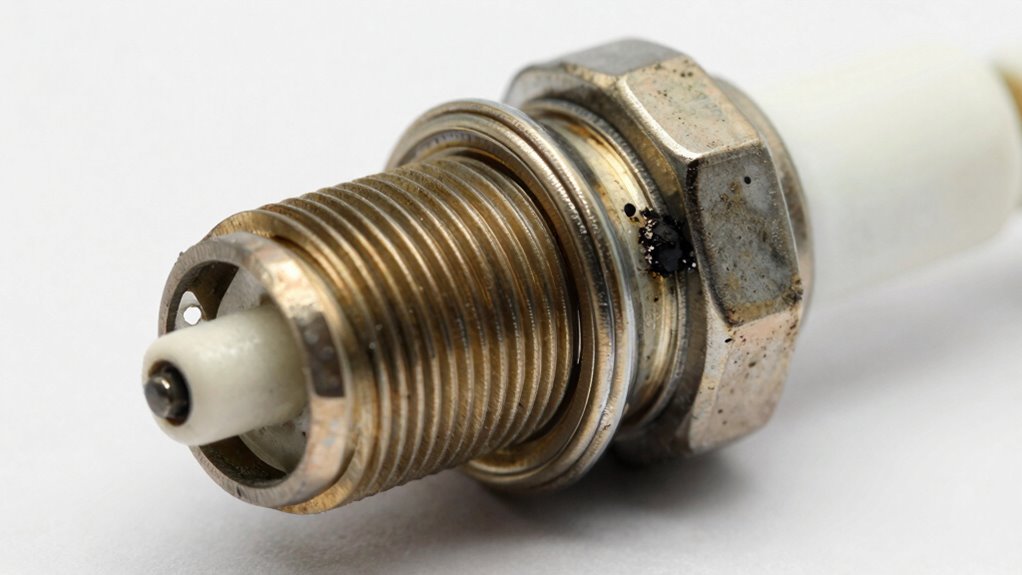
Recognizing different spark plug colors and understanding what they mean can help you quickly assess your engine’s condition. The color of the insulator tip varies based on spark plug materials and electrode design. A light tan or gray hue typically indicates a healthy, ideal combustion process. White or ashy deposits might suggest overheating, while black soot indicates excess fuel or poor combustion. When you see wet or oily deposits, it could point to oil leaks or other issues. The electrode design, such as fine wire or broad surface, influences how heat is dissipated and can affect color changes. Understanding spark plug colors can also help in diagnosing underlying engine issues more accurately. Additionally, combustion chamber conditions play a significant role in the resulting spark plug color and should be considered during diagnostics. By paying attention to these subtle color differences, you can identify fuel problems early and decide whether your spark plug needs cleaning, adjusting, or replacement for better engine performance.
spark plug reading guide
As an affiliate, we earn on qualifying purchases.
As an affiliate, we earn on qualifying purchases.
Are White, Black, or Brown Spark Plugs a Sign of Trouble?

White, black, or brown spark plugs often indicate underlying engine issues that you should address promptly. The color of your spark plug can be influenced by spark plug materials, such as ceramic insulators and metal electrodes, which react differently to engine conditions. White or very light-colored plugs usually suggest overheating, often caused by lean fuel mixtures or incorrect spark plug heat ranges. Black, sooty plugs indicate rich fuel mixtures or oil fouling, while brown deposits can point to normal wear but may also signal incomplete combustion. Ignoring these signs could lead to more serious problems. If your spark plugs show these colors, consider spark plug replacement to restore proper combustion and prevent further engine damage. Regular inspection helps catch issues early, much like connected fitness technology can help monitor and improve your overall health. Additionally, understanding spark plug inspection techniques can aid in diagnosing engine troubles more accurately. Being aware of fuel mixture balance is crucial to maintain optimal spark plug condition and engine performance. Proper body piercing aftercare is essential to prevent infections that could complicate engine diagnostics or lead to additional issues.
car engine fuel mixture tester
As an affiliate, we earn on qualifying purchases.
As an affiliate, we earn on qualifying purchases.
Diagnosing Fuel System Problems From Spark Plug Colors
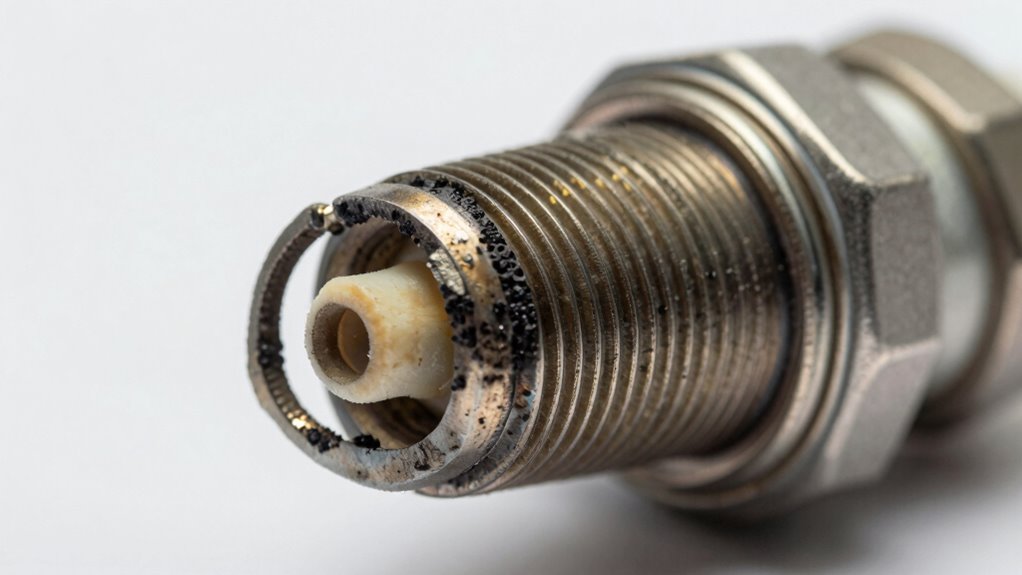
Your spark plugs can reveal if your fuel mixture is too rich or too lean. A dark, greasy plug indicates a rich mixture, while a whitish or scorched plug suggests lean combustion. Recognizing these signs helps you identify and fix fuel system problems before they worsen.
Signs of Rich Fuel Mixture
Have you ever wondered what a spark plug’s color reveals about your engine’s health? A rich fuel mixture often causes the spark plug to appear black, oily, or sooty. This indicates excess fuel, which can reduce fuel efficiency and hinder emission control. To help you identify this, here’s a quick comparison:
| Condition | Spark Plug Color | Possible Cause |
|---|---|---|
| Rich mixture | Black, oily soot | Faulty injectors or carburetor issues |
| Fuel economy impact | Reduced | Excess fuel consumption |
| Emission concern | Increased emissions | Unburned fuel escaping |
| Engine performance | Rough idling | Improper air-fuel ratio |
| Maintenance needed | Yes | Adjust fuel delivery or check sensors |
Monitoring these signs helps maintain ideal performance and environmental standards. Regular inspection of spark plug conditions can also serve as an early warning for fuel system problems before more severe damage occurs.
Indicators of Lean Combustion
Ever wonder what a spark plug’s color reveals about your engine’s combustion efficiency? If the insulator tip appears light tan or white, it indicates lean combustion, meaning there’s too much air and not enough fuel. This imbalance can reduce fuel efficiency and increase emissions, making your engine less eco-friendly. Lean conditions often result from issues like vacuum leaks, faulty sensors, or clogged fuel injectors. Recognizing these signs helps you diagnose potential fuel system problems early. A spark plug showing a pale or ashy appearance signals that your engine isn’t getting enough fuel during combustion. Regular spark plug inspections are key to maintaining ideal engine performance and emissions control. Monitoring spark plug color can also prevent further engine damage by catching problems before they escalate. Additionally, addressing these issues promptly can optimize fuel economy and prolong engine life, especially when combined with proper maintenance practices. Understanding fuel mixture balance is crucial for keeping your engine running smoothly and efficiently. Properly diagnosing fuel system issues can help maintain optimal engine operation and avoid costly repairs.
How to Maintain Spark Plugs and Prevent Fuel-Related Issues
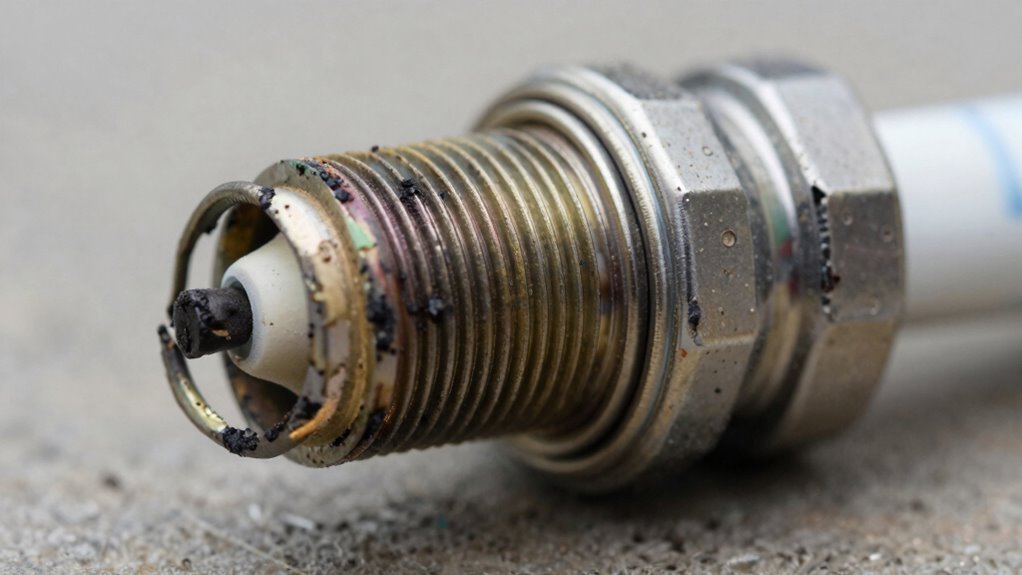
To keep your engine running smoothly, you should regularly inspect your spark plugs for wear or buildup. Make sure you’re using the correct spark plugs specified for your vehicle to guarantee peak performance. Additionally, maintaining the proper fuel and air mixture helps prevent fuel-related issues that can harm your spark plugs and engine. Regularly checking your vehicle’s organizing systems can help you stay on top of maintenance schedules and keep everything running efficiently.
Regular Spark Plug Inspection
Regularly inspecting your spark plugs is essential for maintaining ideal engine performance and preventing fuel-related issues. Start by removing the plugs carefully and checking their condition. If they’re dirty or coated with carbon, perform spark plug cleaning to remove deposits and restore proper function. Look for signs of wear like eroded electrodes or cracks, which indicate it’s time for spark plug replacement. Regular inspection helps you catch problems early, ensuring your engine runs smoothly and efficiently. By maintaining clean, properly functioning spark plugs, you reduce the risk of misfires, poor fuel economy, and increased emissions. Staying proactive with these inspections keeps your engine in top shape, saving you money and preventing more serious fuel system issues down the line. Additionally, paying attention to air quality considerations can help maintain optimal engine performance and longevity, especially since exfoliation and pore refinement can contribute to overall engine cleanliness and efficiency. Proper spark plug maintenance is also critical for supporting the effectiveness of your vehicle’s fuel system, helping to prevent clogging and deposit buildup. Regular checks also allow you to monitor for fuel system contaminants, which can adversely affect engine operation if left unaddressed.
Use Correct Spark Plugs
Using the correct spark plugs is essential for peak engine performance and fuel efficiency. Choosing the right spark plug materials—such as copper, platinum, or iridium—guarantees durability and reliable ignition. Proper spark plugs also help maintain ideal ignition timing, preventing misfires and fuel wastage. To make sure you select the best fit, consider these key points:
- Match the spark plug type to your vehicle’s specifications.
- Use spark plugs with the correct heat range for your engine.
- Guarantee the spark plug material suits your driving conditions.
- Regularly check and replace spark plugs to avoid fouling and misfires.
- Ensuring proper spark plug installation and maintenance can also enhance overall engine reliability, and understanding the heat range of spark plugs can help optimize performance and longevity. Additionally, paying attention to warranty and manufacturer recommendations can ensure you are using the most suitable components for your engine. Recognizing signs of wear and proper spark plug gap adjustment is also crucial for optimal operation. Maintaining proper spark plug torque can prevent damage and ensure consistent performance.
Proper Fuel and Air Mixture
Maintaining the proper fuel and air mixture is essential for keeping your spark plugs clean and functioning efficiently. If your mixture is off, it can cause fuel injector issues or improper carburetor adjustments, leading to incomplete combustion. To prevent these problems, ensure your fuel injectors are clean and operating correctly, providing the right amount of fuel. Regularly check and adjust your carburetor to maintain the ideal air-fuel ratio. A proper mixture results in a healthy, light-colored spark plug, indicating efficient combustion. Avoid running too rich or too lean, as both can cause fouling or damage to your spark plugs. Consistently monitoring and fine-tuning your fuel system helps your engine run smoothly and keeps your spark plugs in top condition.
When Should You Seek Professional Help for Spark Plug or Fuel Problems?
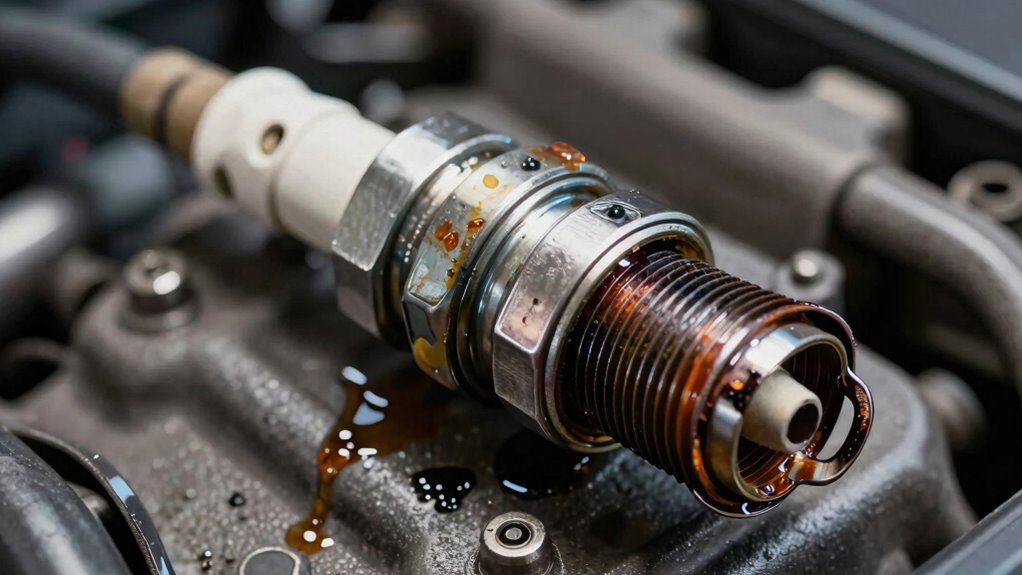
There are times when attempting to troubleshoot spark plug or fuel issues on your own can do more harm than good. If you notice persistent problems like rough idling, significant power loss, or unusual engine noises, it’s time to get professional help. Here are four signs to seek expert assistance:
- Your engine requires complex engine tuning or emission control adjustments.
- Spark plug color indicates severe fouling or damage you can’t identify.
- Fuel efficiency drops sharply despite regular maintenance.
- Troubleshooting doesn’t resolve issues after basic checks.
A professional can properly diagnose underlying problems, guarantee ideal engine tuning, and maintain emission control systems, preventing further damage and ensuring your vehicle runs smoothly.
Frequently Asked Questions
How Often Should Spark Plugs Be Replaced for Optimal Fuel Efficiency?
You should replace your spark plugs every 30,000 to 50,000 miles to maintain peak fuel efficiency. Follow your vehicle’s maintenance schedules and replacement intervals recommended by the manufacturer. Regular replacement ensures your engine runs smoothly, reduces fuel consumption, and prevents misfires. If you notice rough idling or decreased performance, consider inspecting and replacing your spark plugs sooner. Staying on top of maintenance keeps your vehicle running efficiently and saves you money in the long run.
Can Spark Plug Color Indicate Ignition System Issues Besides Fuel Problems?
Think of spark plug color as a diagnostic map. Besides fuel issues, a yellowish or white ash can signal ignition system troubles, like a failing ignition coil or worn spark plug wires. These problems disrupt the spark, causing incomplete combustion. If the plug’s color looks off, check your ignition coil and wires. Addressing these issues quickly keeps your engine firing on all cylinders and prevents further damage.
Are There Specific Spark Plug Types Recommended for Different Vehicle Models?
You should choose spark plug types based on your vehicle’s compatibility and the specific spark plug materials recommended by the manufacturer. For example, iridium plugs last longer and improve efficiency in modern vehicles, while copper plugs are suitable for older models. Always consult your vehicle’s manual to guarantee the spark plug materials match your engine requirements, ensuring peak performance and avoiding potential issues.
What Role Does Spark Plug Gap Size Play in Fuel Economy?
Think of it as fine-tuning a musical instrument. When you set the electrode gap correctly, your spark plug ignites at the right moment, improving ignition timing. A proper gap size guarantees efficient combustion, which boosts fuel economy. If the gap is too wide or narrow, it’s like trying to hit a moving target, causing misfires and wasted fuel. Keep the gap precise for smoother runs and better mileage.
Can Aftermarket Spark Plugs Affect the Accuracy of Color Diagnosis?
Yes, aftermarket spark plugs can affect the accuracy of color diagnosis. Lower-quality aftermarket brands may have inconsistent materials or manufacturing processes, leading to different burn colors that don’t accurately reflect your fuel mixture. High-quality aftermarket spark plugs from reputable brands usually perform closer to OEM parts, helping you get a more precise reading when evaluating spark plug color. Always choose trusted spark plug brands for reliable diagnostics.
Conclusion
Don’t ignore your spark plug’s color clues—they’re crucial signs of your engine’s health. Even if diagnosing seems intimidating, catching issues early can save you money and prevent breakdowns. You might worry about the hassle or cost, but staying attentive now means fewer headaches later. Trust your instincts, stay proactive, and keep your engine running smoothly. After all, a little effort today protects your ride and keeps you on the road tomorrow.