Before blaming your suspension, check your tire pressure. Improper inflation can cause handling issues, vibrations, uneven tire wear, and steering problems similar to suspension faults. Underinflated tires reduce grip and cause a softer ride, while overinflation leads to a harsh feel and uneven wear. Regularly monitoring and maintaining correct PSI prevents these symptoms. Continuing this examination will reveal how proper tire pressure enhances safety, handling, and ride quality without unnecessary repairs.
Key Takeaways
- Improper tire pressure can cause handling issues similar to suspension problems, such as vibrations and uneven steering response.
- Underinflated or overinflated tires wear unevenly, mimicking suspension faults like cupping or feathering.
- Regularly checking and maintaining correct tire pressure prevents misdiagnosis of suspension issues.
- Incorrect tire pressure impacts ride comfort and stability, often mistaken for suspension system faults.
- Ensuring proper tire pressure can resolve many handling concerns without unnecessary suspension repairs.
How Proper Tire Pressure Improves Handling and Ride Comfort
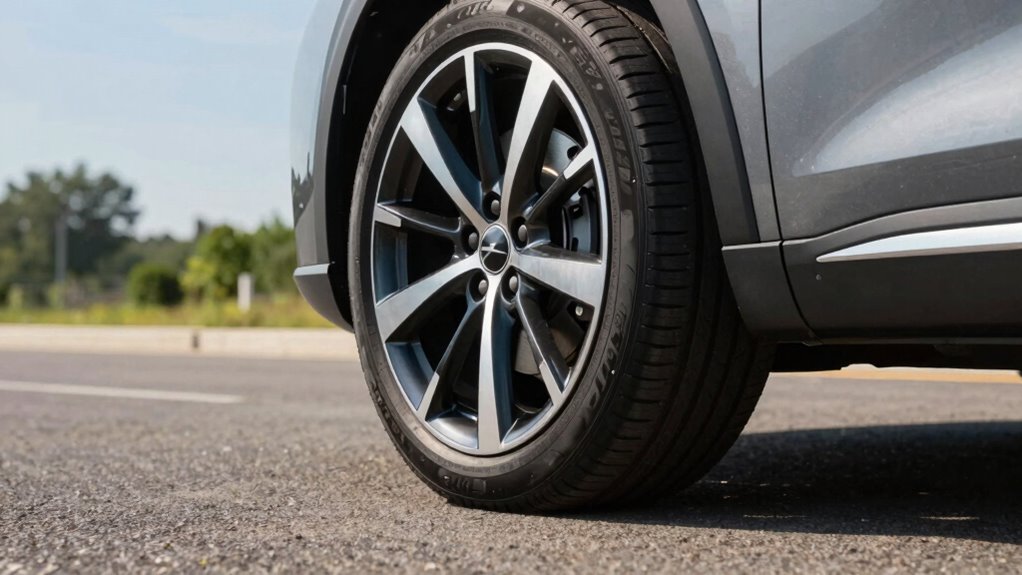
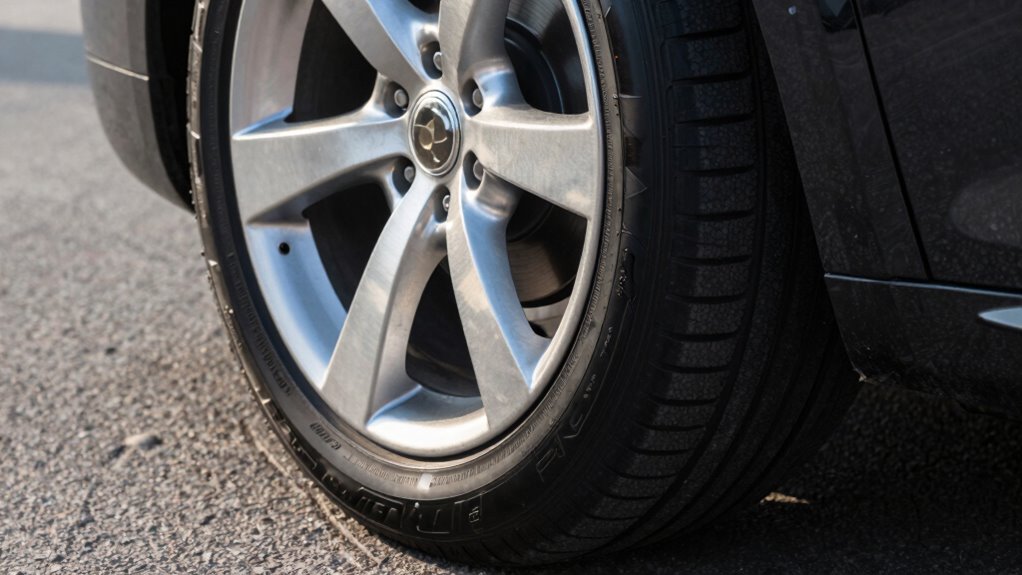
Maintaining proper tire pressure is essential for ideal handling and ride comfort because it ensures the tire maintains its designed contact patch with the road. When tire pressure is *correct*, the contact patch remains consistent, providing better grip and predictable steering response. Proper pressure minimizes uneven tire wear, which can compromise handling and safety. Overinflated tires reduce the contact patch, leading to harsher rides and decreased traction, while underinflated tires cause increased deformation, resulting in sluggish steering and increased heat buildup. Precise tire pressure balances load distribution across the tread, *maximizing* grip, stability, and responsiveness. This technical equilibrium allows the suspension system to operate effectively, enhancing overall vehicle control, minimizing vibrations, and ensuring a smoother, more controlled ride in various driving conditions. Additionally, proper tire pressure contributes to fuel efficiency and reduces the risk of tire blowouts, promoting safer driving experiences. Maintaining optimal tire pressure also supports the vehicle’s safety systems and prolongs tire lifespan, which is crucial for reliable performance. Regularly monitoring and adjusting tire pressure with advanced tire sensors can help drivers maintain these optimal conditions more conveniently and accurately. Proper tire pressure not only impacts handling but also plays a significant role in vehicle safety by preventing tire failures that could lead to accidents.
How to Check and Keep Your Tire Pressure in Check
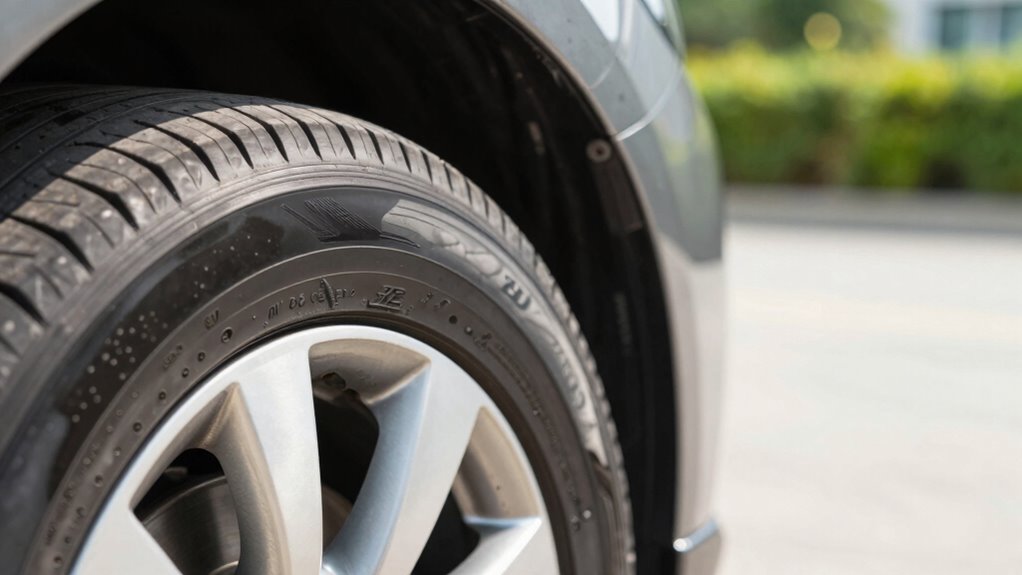
Maintaining correct tire pressure is essential for ideal vehicle performance and safety. Regularly checking and adjusting pressure using a reliable gauge prevents uneven wear and improves handling. Follow proper procedures and adhere to manufacturer recommendations to guarantee consistent tire health. Additionally, inspecting your tires for proper air quality can help identify issues like leaks or damage early on, ensuring your tires remain in optimal condition. Monitoring tire pressure levels regularly can also extend the lifespan of your tires and save you money on replacements. Proper body jewelry measurements and materials are crucial for comfort and avoiding irritation, similar to maintaining optimal tire pressure for vehicle longevity. Being aware of tire maintenance best practices can further enhance your vehicle’s overall safety and efficiency.
Proper Tire Pressure Tips
To guarantee ideal tire performance and safety, regularly checking your tire pressure is essential. Proper maintenance ensures peak contact patch and prevents uneven wear. Use a calibrated digital or analog pressure gauge for accuracy. Check tire pressure when tires are cold, ideally before driving or after at least three hours of inactivity. Follow these tips for precise maintenance:
- Consult your vehicle’s owner’s manual or tire placard for recommended PSI values.
- Check pressure at multiple points on each tire to ensure consistency.
- Inspect for leaks, punctures, or embedded objects during pressure checks.
- Adjust pressure gradually, avoiding over-inflation, to reach the specified PSI.
- Regularly monitor and maintain your tire pressure to prevent uneven wear and tire failure. Proper pressure also helps prevent blowouts and extends tire lifespan.
- Maintaining proper tire pressure also helps optimize fuel efficiency, saving you money on gas over time. Additionally, proper pressure can influence vehicle handling and safety, especially in emergency situations. Consistent monitoring and precise adjustments maximize tire longevity, improve fuel efficiency, and enhance overall vehicle safety.
Monitoring and Maintenance
Regularly checking your tire pressure is crucial for peak vehicle performance and safety. Use a high-quality digital or analog gauge to measure pressure when tires are cold, ideally before driving. Maintain pressure within the manufacturer’s recommended range, typically listed on the driver’s door jamb or in the owner’s manual. Record readings periodically to identify slow leaks or pressure drops. Confirm valve stems are free of debris and properly sealed to prevent leaks. Rotate and inspect tires for damage or uneven wear that may indicate pressure issues. Ensuring your tires are properly inflated not only enhances safety but also extends the lifespan of your tires, which is an important tire maintenance practice. Additionally, understanding how tire pressure impacts overall vehicle handling can help you identify issues before they become serious. Proper air pressure management can also improve fuel efficiency and reduce uneven tire wear. Regularly monitoring your tire pressure can also help prevent gold IRA scams related to misdiagnosed tire issues affecting vehicle safety and performance. Being aware of support breakfast options can also help you stay alert and energized during long drives.
Signs of Under- or Overinflated Tires You Should Know
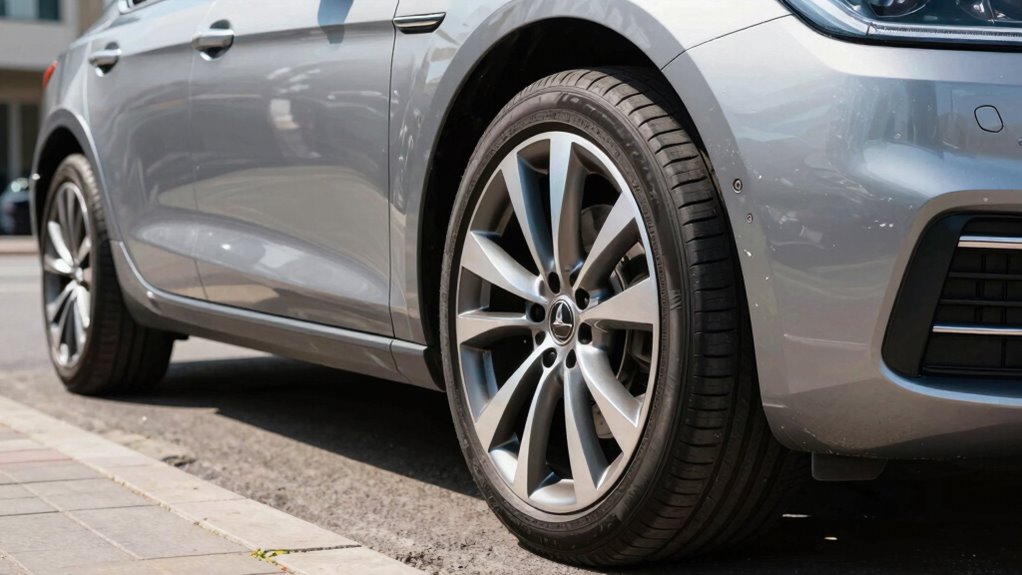
Uneven tire wear patterns and abrupt changes in vehicle handling often indicate improper tire pressure. Underinflation typically causes more wear on the outer edges, while overinflation results in center tread wear. Recognizing these signs promptly helps maintain ideal suspension performance and safety. Additionally, monitoring tire pressure levels regularly can prevent further issues and extend tire lifespan. Consistent checks using reliable pressure gauges ensure accurate readings and optimal driving conditions. Using a digital gauge can improve accuracy and make regular inspections more straightforward. Staying informed through automotive maintenance resources can also help drivers better understand tire health and safety tips.
Uneven Tire Wear Patterns
When your tires exhibit irregular tread wear patterns, it often indicates issues with inflation levels. Underinflation typically causes the outer edges of the tire to wear more rapidly, while overinflation results in center tread wear. Recognizing these patterns helps diagnose pressure problems before suspension components are affected. Proper air quality management can prevent uneven wear caused by environmental factors that impact tire condition.
- Center wear: Signifies overinflation, reducing contact patch and uneven pressure distribution.
- Edge wear: Indicates underinflation, causing the tire’s edges to contact the road more than the center.
- Cupping or scalloping: Often linked to uneven pressure, leading to vibration and irregular wear.
- Feathered edges: Suggests improper inflation affecting tire alignment and pressure balance.
Monitoring these wear patterns allows timely adjustment of tire pressure, ensuring ideal contact, safety, and tire longevity.
Sudden Vehicle Handling Changes
Sudden changes in vehicle handling can signal underlying tire pressure issues that require immediate attention. If your car becomes unexpectedly unstable, pulls to one side, or exhibits excessive steering response, check your tire pressures promptly. Underinflated tires reduce steering precision and cause sluggish handling, while overinflated tires lead to a harsh ride and decreased traction. The following table summarizes key signs:
| Handling Change | Likely Tire Issue | Immediate Action |
|---|---|---|
| Vehicle pulls to one side | Uneven tire pressure | Check and equalize pressures |
| Excessive steering response | Overinflated tires | Reduce pressure to recommended level |
| Loose or vague steering | Underinflated tires | Increase pressure to specifications |
| Sudden loss of grip or control | Severe under- or overinflation | Inspect and adjust tire pressure |
Proper tire pressure maintains handling stability, safety, and tire longevity. Maintaining proper tire pressure is essential for optimal vehicle performance and safety.
Why Tires Lose Pressure and How to Prevent It
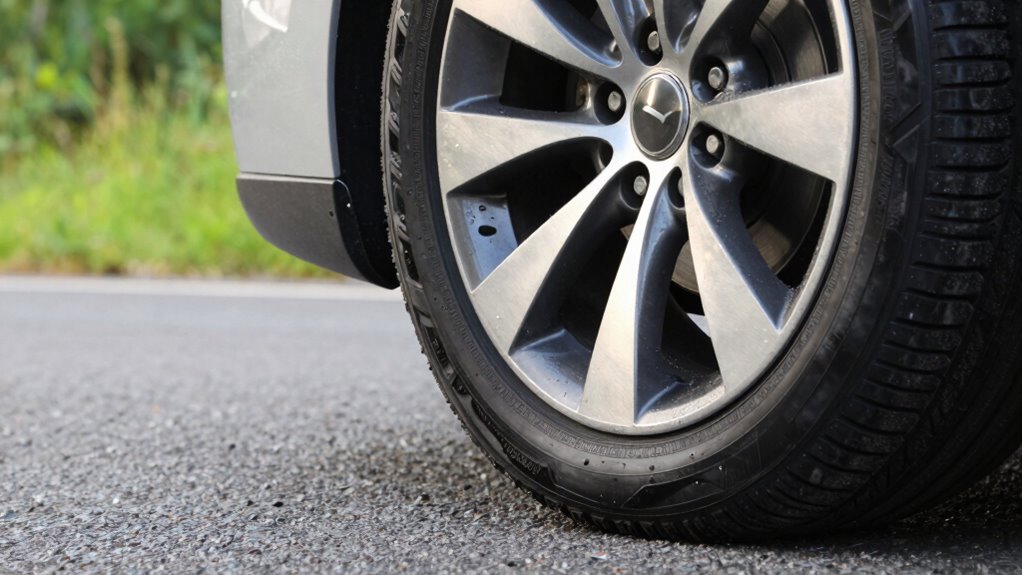
Tires naturally lose pressure over time due to small permeation of air molecules through the rubber and valve imperfections. This process, known as diffusion, causes gradual deflation, often unnoticed until handling issues arise. To prevent unnecessary pressure loss, consider these measures:
Tire pressure gradually decreases over time due to air permeation through rubber and valve imperfections.
- Check and replace faulty or aging valves regularly
- Use high-quality valve stems and caps
- Maintain proper storage conditions, avoiding extreme temperatures
- Monitor tire pressure with a calibrated gauge, especially before long trips
Consistent maintenance minimizes pressure fluctuations and ensures ideal tire performance. Understanding the diffusion process helps you identify early signs of pressure loss and take corrective action. Regular inspections and proactive replacements are essential for maintaining proper inflation levels, which directly impact vehicle safety, fuel efficiency, and tire longevity.
When to Adjust Tire Pressure for Different Driving Conditions
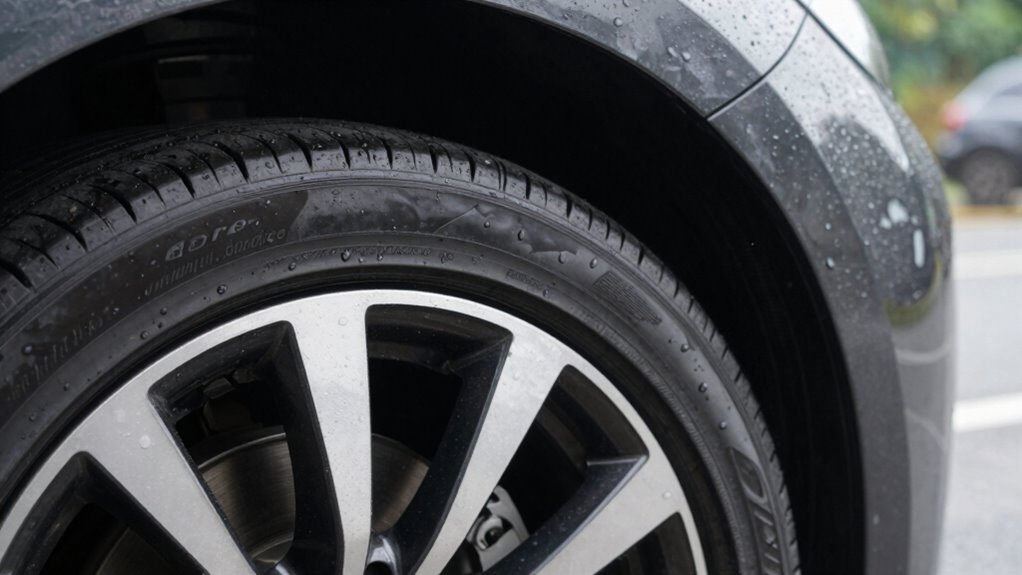
Adjusting tire pressure according to driving conditions is essential for optimizing safety, performance, and fuel efficiency. When driving on highways or during long-distance travel, slightly higher tire pressures within the manufacturer’s recommended range reduce rolling resistance, improving fuel economy and handling. Conversely, for off-road or rough terrain, lower pressures increase the tire’s contact patch, enhancing traction and shock absorption. During extreme temperature fluctuations, you should check and adjust tire pressure to compensate for air expansion or contraction, maintaining ideal contact with the road surface. When carrying heavy loads or towing, increase tire pressure according to load specifications to prevent excessive flexing and potential tire failure. Regularly monitor tire pressure before trips and adjust as needed to match specific driving conditions, ensuring safety and best vehicle performance.
How Incorrect Tire Pressure Can Mimic Suspension Problems
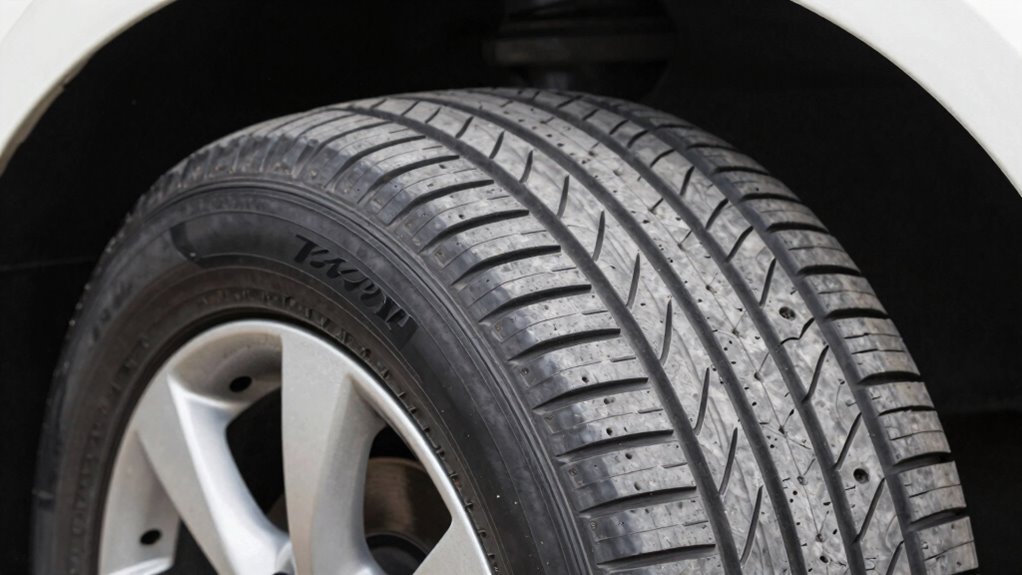
Have you ever noticed your vehicle vibrating or handling poorly, only to find no suspension issues upon inspection? Incorrect tire pressure can cause symptoms that mimic suspension problems, affecting ride quality and stability. Underinflated tires increase sidewall flex, leading to excessive vibrations and a softer ride that feels unstable. Overinflated tires reduce contact patch size, resulting in a harsher ride and poor cornering response. These pressure issues can also cause uneven tire wear, further degrading handling.
Incorrect tire pressure can cause vibrations, poor handling, and uneven tire wear—mimicking suspension problems.
- Excessive vibrations during acceleration or braking
- Poor steering response and increased steering effort
- Uneven tire wear patterns
- Increased road noise and harshness
Proper tire pressure guarantees consistent contact with the road, stabilizing handling and ride comfort. Misdiagnosing pressure issues as suspension faults can lead to unnecessary repairs and overlooked safety risks.
Troubleshooting and Maintaining Your Tire Pressure
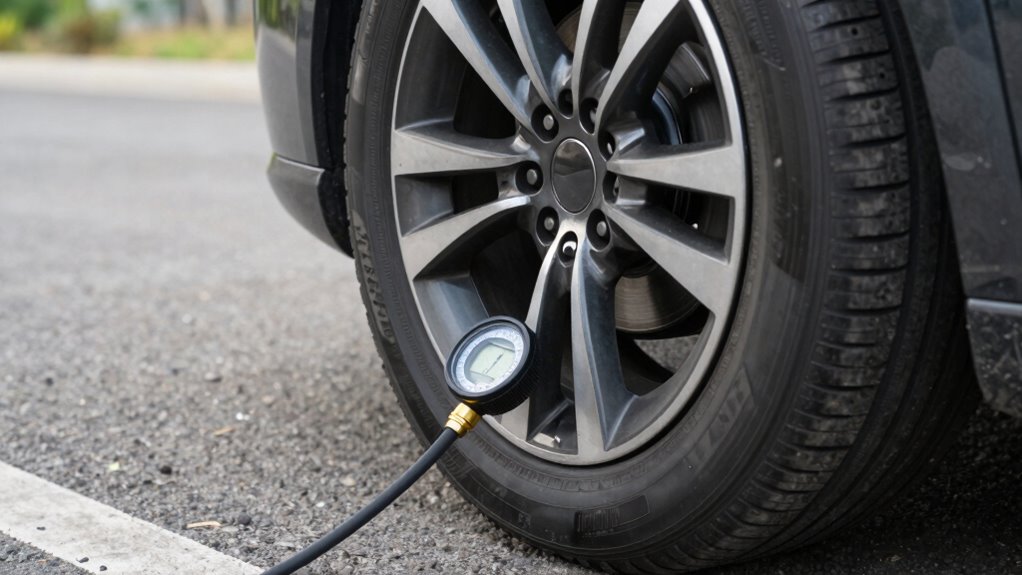
To guarantee ideal vehicle performance and safety, regularly troubleshooting and maintaining your tire pressure is essential. Begin by checking your tire pressure with a calibrated digital or dial gauge, ideally when tires are cold to ensure accuracy. Consult your vehicle’s manual or tire placard for the recommended PSI. Inspect each tire for visible damage, embedded debris, or uneven wear patterns that may indicate pressure issues. Adjust pressure as needed, using an air compressor to reach the specified level. After inflation, recheck the pressure to confirm accuracy. Regular maintenance involves seasonal checks and before long trips. Properly inflated tires optimize handling, fuel efficiency, and tire lifespan. Consistent monitoring prevents uneven wear and helps identify potential issues before they compromise safety or performance.
Frequently Asked Questions
Can Improper Tire Pressure Cause Uneven Tire Wear?
Yes, improper tire pressure causes uneven tire wear. Overinflated tires tend to wear more in the center, while underinflated tires wear more on the edges. This uneven wear reduces tire lifespan and affects vehicle handling. Regularly check and maintain recommended tire pressure to guarantee even wear, peak performance, and safety. Proper inflation distributes load evenly across the tire’s contact patch, preventing premature or uneven tread degradation.
How Often Should I Check My Tire Pressure?
You should check your tire pressure at least once a month. Studies show that nearly 30% of drivers neglect this, risking uneven wear and reduced fuel efficiency. Use a reliable tire pressure gauge and compare the reading to your vehicle’s recommended PSI, typically found on the driver’s door jamb. Regular checks ensure ideal handling, safety, and longevity of your tires, preventing potentially costly repairs down the line.
Does Temperature Affect Tire Pressure Significantly?
Yes, temperature greatly affects tire pressure. As ambient temperature rises, the air inside your tires expands, increasing pressure; conversely, cooler temperatures cause contraction and lower pressure. This fluctuation can impact ride quality, tire wear, and safety. It’s crucial to check and adjust your tire pressure regularly, especially with changing weather conditions. Use a reliable gauge and follow manufacturer recommendations, considering temperature effects to maintain ideal tire pressure and vehicle performance.
What Tools Are Best for Measuring Tire Pressure Accurately?
Digital tire pressure gauges offer precise readings, combining ease of use with accuracy. Manual analog gauges, with their sturdy build and clear dial, provide reliable measurements when maintained properly. For professional use, digital sensors with bleed valves are ideal, enabling fine adjustments. Always choose a calibrated, high-quality tool, and double-check readings across different gauges to guarantee consistency. Accurate tools help maintain ideal tire pressure, enhancing vehicle safety and ride comfort.
Can Tire Pressure Affect Fuel Efficiency?
Yes, tire pressure critically impacts fuel efficiency. Under-inflated tires increase rolling resistance, forcing your engine to work harder and consume more fuel. Properly inflated tires reduce this resistance, optimizing fuel economy. Maintaining recommended pressure levels, checked regularly with a reliable gauge, guarantees minimal energy loss. Proper tire pressure not only improves fuel efficiency but also enhances tire lifespan and driving safety, making it an essential aspect of vehicle maintenance.
Conclusion
Just like a finely tuned instrument responds to the slightest touch, your vehicle relies on proper tire pressure to perform effectively. Overlooking this vital detail can mask suspension issues, leading to costly repairs or unsafe driving conditions. Regularly check and maintain your tires, especially before long trips or changing seasons. Remember, neglecting tire pressure is akin to ignoring the whispers of your car’s true performance—listen closely, and keep your ride smooth, safe, and efficient.