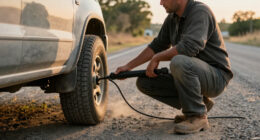
Tire knobs enhance traction through their geometric design, material hardness, and surface interaction, increasing grip on loose or uneven terrain. Their effectiveness depends on factors like surface roughness, contamination, and environmental conditions, which influence friction and interlocking. Worn or damaged knobs, debris buildup, or inappropriate tire pressure can cause slipping, reducing bite. Understanding how design and terrain interact helps optimize grip, and exploring these mechanisms further can improve your control over challenging surfaces.

Get business pricing on garage and car supplies
- Business-only prices and quantity discounts
- Tax-exempt purchasing
- Multiple users, one account, clear invoices
Key Takeaways
- Tire knobs increase grip by penetrating soft terrain and creating higher contact pressure, especially when designed with sharp edges and appropriate spacing.
- Material softness and flexibility enhance deformability, allowing knobs to bite into uneven surfaces for improved traction.
- Surface conditions like mud, water, or debris fill gaps and reduce friction, causing knobs to lose their biting capability.
- Worn or rounded knobs decrease contact points and interlocking, significantly diminishing the tire’s ability to “bite” into terrain.
- Proper maintenance, cleaning, and optimal tire pressure help preserve knob sharpness and surface interaction, ensuring maximum grip.
What Are Tire Knobs and How Do They Help With Traction?

Tire knobs are small, protruding rubber or rubber-like features strategically molded onto the tire’s surface, primarily designed to increase grip on various terrains. Their geometric shape, size, and placement are optimized to maximize surface contact and mechanical interlocking with uneven surfaces. By increasing local deformation and contact pressure, tire knobs enhance the tire’s ability to resist slipping and improve traction, especially on loose or uneven ground. The knobs work by penetrating soft surfaces and providing additional biting edges, which generate higher frictional forces. Precise engineering of these features considers variables such as tread pattern, knob height, and spacing, all contributing to the tire’s overall traction profile. Additionally, recent advancements in vetted design focus on optimizing knob configuration to adapt to different off-road conditions. Understanding how different tread patterns influence knob performance can lead to better traction outcomes in specific environments. Furthermore, innovative material compositions are being developed to further improve durability and grip under challenging conditions. These materials often incorporate advanced rubber compounds that offer enhanced wear resistance and grip. Ongoing research into these materials aims to extend the lifespan of tire knobs while maintaining optimal traction, which is crucial for off-road vehicles. Consequently, tire knobs serve as critical components in optimizing grip, especially during challenging off-road conditions.
How Friction, Material, and Surface Interaction Affect Tire Knob Grip

Friction, material properties, and surface interaction critically determine how effectively tire knobs grip various terrains. Frictional force depends on the coefficient of friction between the knob material and the substrate, influencing shear resistance. Material hardness, elasticity, and tread design affect deformability and contact pressure, which modify grip strength. Surface interaction involves microscopic asperities and contamination, such as mud, water, or debris, that alter frictional behavior. Softer rubber compounds typically generate higher friction on rough surfaces due to increased deformation, whereas harder materials excel on smooth or hard terrains. The interaction dynamics depend on pressure distribution and the surface’s roughness profile, affecting the extent of grip. Precise material selection and surface compatibility optimize traction, minimizing slip and maximizing control during movement across varied conditions. Additionally, surface roughness plays a crucial role in determining the amount of grip achievable under different conditions. Furthermore, the material properties of the tire knobs, such as elasticity and hardness, directly influence their ability to deform and adapt to different surface textures, thereby affecting grip quality. Advances in compound formulation can further enhance grip by tailoring deformation characteristics to specific terrains.
What Factors Influence Tire Knob Traction on Different Surfaces

The effectiveness of tire knob traction on different surfaces hinges on a complex interplay of factors, including surface texture, material properties, and environmental conditions. These elements determine how well knobs can generate grip. Additionally, the reliability of the surface in providing consistent traction plays a crucial role in performance. 1. Surface roughness influences contact points; rougher surfaces increase interlocking potential. 2. Material composition of the surface affects friction coefficients, with rubberized and abrasive terrains offering higher grip. 3. Moisture levels alter contact conditions, reducing adhesion on wet or icy surfaces. 4. Temperature impacts material flexibility and surface hardness, modifying the ability of knobs to bite into the terrain. Moreover, surface adhesion plays a vital role in maintaining traction under varying conditions. Understanding these factors allows you to predict and optimize tire performance across various environments, ensuring maximum traction and safety.
Why Tire Knobs Sometimes Fail to Bite and How to Fix It?

Surface conditions such as ice, mud, or worn-out terrain can ensure tire knob grip, causing slippage. Proper maintenance, including regular cleaning and tread inspection, guarantees optimal contact and reduces failure risks. Addressing these factors systematically enhances traction and minimizes the likelihood of tire knob failure. Additionally, understanding the plant properties of the rubber compounds used in tire manufacturing can help in selecting tires better suited for specific terrains. Recognizing the biochemical composition of rubber can also influence how well tires perform in various environmental conditions. Moreover, the material science behind rubber formulations plays a crucial role in durability and grip under diverse surface conditions, especially when considering environmental factors that affect rubber performance. Regularly monitoring the wear patterns of tire knobs can provide early signs of deterioration, allowing for timely intervention and replacement.
Surface Condition Effects
Have you ever wondered why tire knobs sometimes fail to grip the terrain effectively? Surface conditions profoundly influence knob performance, often causing slippage or reduced traction.
- Moisture and Mud: Wet or muddy surfaces create a slick layer between knobs and terrain, decreasing friction and preventing effective bite.
- Loose Gravel and Sand: Fine particles fill the gaps between knobs and the ground, reducing contact pressure and traction.
- Ice and Snow: Frozen surfaces form a barrier that limits the knobs’ ability to penetrate and grip, especially if the knobs lack aggressive tread design.
- Debris Accumulation: Dirt, leaves, or small stones lodge into the knobs’ crevices, diminishing their ability to engage with the terrain. Addressing these factors involves cleaning the knobs and choosing appropriate tires for specific conditions.
Proper Maintenance Techniques
Proper maintenance of tire knobs is essential to guarantee maximum traction, as neglecting routine care can lead to diminished grip and increased slippage. Regular inspection identifies worn or damaged knobs, which compromise bite force. Cleaning the knobs removes debris, mud, and grease that can create a slick interface, reducing friction. Applying appropriate traction-enhancing treatments, such as rubber conditioners, maintains flexibility and surface integrity. Proper inflation ensures the knobs maintain contact with the terrain, preventing uneven wear. Additionally, preventing exposure to harsh chemicals or UV radiation prolongs rubber lifespan. When knobs show significant deterioration—cracking, flattening, or loss of texture—consider replacement or targeted refurbishment. Consistent maintenance preserves the microtextural features responsible for grip, ensuring tire knobs function at peak efficiency and minimize the risk of slippage in demanding conditions. Incorporating regular maintenance routines can significantly extend the lifespan of tire knobs and optimize their performance over time. To further safeguard the rubber surface, applying protective coatings can help resist environmental damage and maintain flexibility. Moreover, understanding the Free Floating nature of tire knobs can help in designing better maintenance strategies by recognizing how they respond to various stresses and conditions. Recognizing the microtextural features that contribute to grip is crucial for effective tire care and performance.
How Tread Pattern and Knob Design Impact Grip in Snow and Mud

The effectiveness of a tire’s grip in snow and mud hinges critically on its tread pattern and knob design, which influence how well the tire evacuates debris and maintains contact with the surface.
- Deep, aggressive lugs create channels that expel snow and mud, preventing build-up and maintaining traction.
- Wide voids between knobs facilitate debris ejection, reducing clogging that compromises grip.
- Directional patterns guide debris outward, optimizing contact and stability during forward motion.
- Varied knob shapes—such as siped or jagged edges—enhance biting edges, increasing grip on uneven, slippery surfaces.
Practical Tips to Improve Tire Knob Traction in Challenging Conditions

Optimizing tire knob traction in challenging conditions requires targeted adjustments and proactive maintenance. Focus on selecting knobs with appropriate height, spacing, and tread pattern tailored to specific terrains. Regularly inspect for debris lodged between knobs, which can impair grip, and remove it promptly. Adjust tire pressure to optimize contact patch size—lower pressure enhances grip on loose surfaces, while higher pressure reduces sidewall deformation on hardpack. Consider applying traction-enhancing additives or installing aggressive tread inserts if conditions demand. The table below summarizes key variables affecting traction:
| Variable | Effect on Traction |
|---|---|
| Knob Height | Larger increases grip in loose terrain |
| Knob Spacing | Closer spacing improves surface contact |
| Tire Pressure | Proper PSI maximizes grip and stability |
| Debris Removal | Maintains uninterrupted contact with terrain |
| Additives/Inserts | Enhance grip in extreme conditions |
Maintaining the proper maintenance techniques ensures consistent traction and prolongs tire life. Additionally, understanding the material composition of your tires can influence how well they perform under different conditions, making informed choices crucial for optimal traction. Implementing regular inspections can help identify early signs of wear or damage that might compromise grip. Incorporating correct tire pressure adjustments based on terrain type further optimizes traction performance.
How Worn or Damaged Tire Knobs Reduce Your Vehicle’s Grip

Worn or damaged tire knobs directly compromise your vehicle’s grip by reducing the contact area and disrupting the tread pattern’s ability to channel away debris and grip uneven surfaces. As knobs wear down, their sharp edges become rounded, decreasing frictional force. Damage such as cuts or tears create uneven surfaces that hinder proper contact. This deterioration impacts grip through:
- Decreased Traction: Smoother knobs generate less friction on the road surface, reducing overall grip.
- Impaired Debris Ejection: Damaged knobs fail to effectively expel mud and stones, leading to clogging and further grip loss.
- Altered Tread Pattern: Wear distorts the designed pattern, diminishing its ability to grip irregular terrains.
- Uneven Wear Patterns: Damage causes inconsistent contact patches, leading to unpredictable handling and reduced safety.
Additionally, improper maintenance can accelerate knob wear, emphasizing the importance of regular inspections and timely replacements to preserve optimal tire performance.
Choosing Better Tires: What Science Tells You About Tire Knob Performance

Selecting the right tires involves understanding how tire knob design influences grip and performance under various conditions. Scientific studies show that knob shape, height, and spacing markedly affect traction by altering contact pressure distribution. Aggressive, tall knobs provide increased bite on loose surfaces but may compromise on-road handling and durability. Conversely, smaller, densely spaced knobs enhance contact patch stability, improving wet and dry performance. Material composition also plays a role; softer compounds improve initial grip but wear quickly, while harder compounds offer longevity at the expense of traction. Ideal tire selection balances these factors based on intended use, terrain, and climate. By analyzing knob geometry and material science, you can choose tires that maximize safety, efficiency, and durability tailored to your driving environment.
Frequently Asked Questions
How Do Tire Knobs Differ Between Off-Road and On-Road Tires?
Off-road tires feature larger, more aggressive knobs with deeper spacing, maximizing grip on loose or uneven terrain by increasing surface contact and dirt displacement. In contrast, on-road tires have smaller, closely spaced knobs designed for smooth, stable contact on paved surfaces, reducing rolling resistance and noise. These differences enhance performance by tailoring tread patterns to specific driving conditions, ensuring optimal traction off-road and comfort on-road.
Can Tire Knob Design Influence Vehicle Fuel Efficiency?
Your tire knob design can substantially influence your vehicle’s fuel efficiency. Aerodynamically optimized patterns reduce drag, much like slicing through air with a razor. Knob size, shape, and tread pattern affect rolling resistance, impacting fuel consumption. When designed with precision, they minimize energy loss, boosting efficiency. Conversely, poorly designed knobs increase resistance, forcing your engine to work harder, which drastically drains fuel — a negligible detail with massive consequences for your wallet.
Are There Environmental Factors That Degrade Tire Knob Grip Over Time?
Environmental factors like temperature fluctuations, UV exposure, and moisture can considerably degrade tire knob grip over time. You should regularly inspect your tires for signs of cracking, hardening, or loss of tread elasticity, as these indicate diminished traction. Prolonged exposure to harsh conditions accelerates rubber deterioration, reducing grip. Proper maintenance, including storage in cool, dry environments and timely replacement, guarantees ideal tire performance and safety.
How Does Tire Rotation Affect the Longevity of Tire Knobs’ Traction?
Rotating your tires distributes wear evenly across all knobs, delaying the loss of traction. Regular rotation minimizes uneven tread degradation and maintains consistent grip by preventing localized wear patterns. This proactive approach preserves the integrity of the tire knobs, ensuring they retain their biting capability longer. Neglecting rotation accelerates uneven wear, leading to reduced traction sooner, especially on specific tire sections, compromising safety and performance over time.
What Innovations Are Emerging in Tire Knob Technology?
Imagine tire knobs as tiny warriors evolving for better grip. Emerging innovations include adaptive tread patterns that adjust to terrain, smart materials that harden or soften for ideal traction, and embedded sensors providing real-time data on wear and performance. These advancements aim to enhance durability, safety, and efficiency, allowing your tires to respond dynamically to changing conditions, much like a soldier adapting tactics mid-battle for maximum advantage.
Conclusion
Understanding tire knobs is like mastering a language of grip, where each design and material choice acts as a dialect influencing traction. When knobs fail, it’s akin to losing your footing on a critical step—highlighting the importance of surface interaction and wear. By analyzing these factors with precision, you can enhance your vehicle’s connection to the road, ensuring stability and control. Ultimately, optimizing tire knobs transforms your ride into a well-tuned symphony of friction, resilience, and reliability.
Halloween Picks
halloween
As an affiliate, we earn on qualifying purchases.