
To keep trails open, you must follow proper etiquette by respecting signage, yielding to others, and controlling your speed to prevent erosion and habitat damage. Avoid riding beyond designated areas or during seasonal closures, as these actions can lead to trail erosion and closures. Pack out trash and stay on established routes to protect wildlife and vegetation. Ignoring these essential practices risks losing trail access; understanding more about responsible riding guarantees everyone can enjoy the outdoors.
Key Takeaways
- Obey all posted signage, closures, and seasonal restrictions to prevent environmental damage and keep trails accessible.
- Yield to other users and communicate intentions clearly to reduce conflicts and ensure safety.
- Stay on designated trails and avoid overusing popular routes to minimize erosion and habitat disruption.
- Pack out all trash and waste to protect ecosystems and maintain clean, enjoyable environments.
- Ride responsibly with controlled speeds, especially around blind corners and crowded areas, to prevent trail degradation.
Why Trail Etiquette Is Key to Keeping Trails Open for Everyone
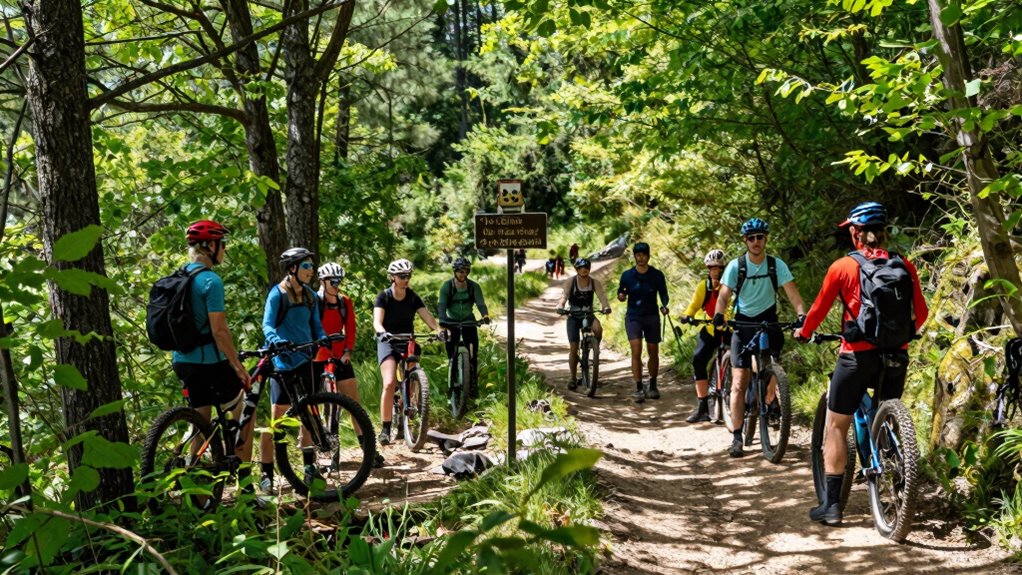
Have you ever wondered what keeps popular trails accessible and enjoyable for all visitors? Trail etiquette plays an essential role in maintaining open access by ensuring safety, respect, and minimal environmental impact. When everyone follows basic rules—such as yielding the right of way, avoiding reckless behavior, and staying on designated paths—it reduces conflicts and prevents damage to sensitive ecosystems. Proper etiquette fosters a cooperative atmosphere, encouraging trail managers to keep areas open and well-maintained. Conversely, neglecting these practices can lead to trail closures due to erosion, safety hazards, or user conflicts. Your adherence to trail etiquette helps preserve the natural beauty and usability of these spaces, ensuring that everyone, from hikers to bikers, can enjoy the trails long-term. It’s about collective responsibility for sustainable recreation. Additionally, being aware of and respecting sensitive habitats helps protect the environment for future generations. Recognizing the importance of trail sustainability can motivate all users to minimize their impact and support conservation efforts.
How to Respect Trail Signs and Follow Local Rules

Respecting trail signs and adhering to local rules is essential for preserving access and safety. Always obey posted signage indicating trail directions, closures, or hazards, as these guide your responsible use of the area. By following regulations, you help safeguard the environment and ensure everyone can enjoy the trails responsibly. Proper trail maintenance also depends on all users respecting these guidelines. Additionally, understanding essential oils for trail health can promote overall well-being during outdoor activities. Incorporating support breakfast options like nutritious foods can also help maintain energy and focus during your outdoor adventures. Being mindful of Free Floating trail etiquette encourages sustainable use and helps prevent conflicts among outdoor enthusiasts. Recognizing environmental impact and practicing Leave No Trace principles further supports the longevity of trail access for future generations.
Obey Trail Signage
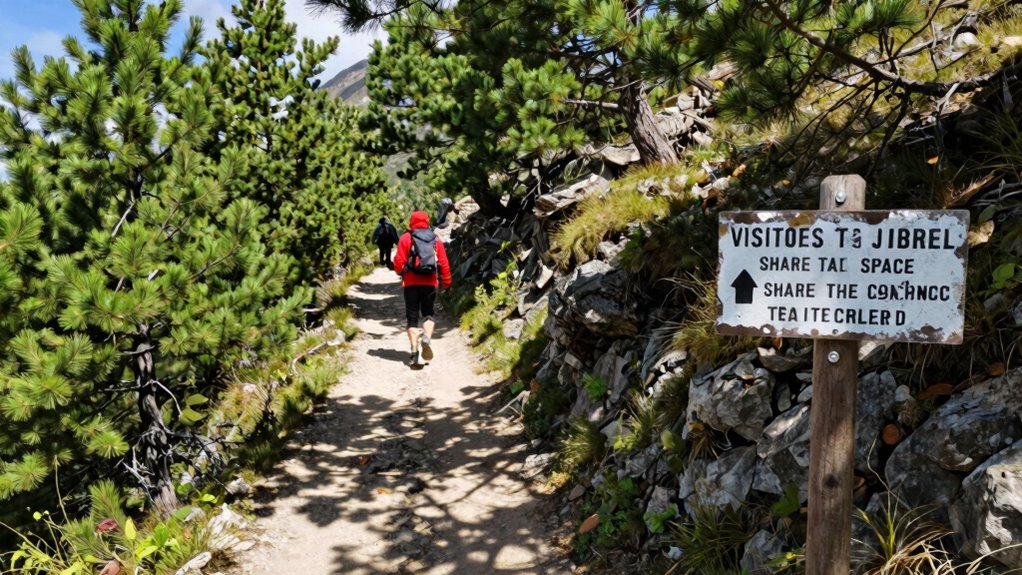
Trail signage exists to guide your safety, protect the environment, and guarantee everyone can enjoy the area responsibly. Obeying these signs is essential for maintaining access and preventing damage. When you see a sign indicating trail direction, speed limit, or riding restrictions, follow it precisely—ignoring signs can lead to unsafe situations and environmental harm. Signs marking closed areas or sensitive habitats must be respected; entering these zones risks causing lasting damage and may result in trail closures. Pay attention to warning signs about obstacles, steep sections, or hazardous conditions. By adhering to trail signage, you demonstrate respect for the land, fellow users, and the rules established by land managers. This responsible behavior helps keep trails open and enjoyable for everyone, ensuring the natural environment remains protected for future visitors. Practicing trail etiquette helps preserve access for future generations and minimizes environmental impact.
Follow Local Regulations
Understanding and complying with local regulations is essential for responsible trail use, as these rules are established to protect the environment, ensure safety, and preserve access for all users. Always read and follow posted signs, which provide crucial information about trail restrictions, speed limits, and designated areas. Respect seasonal closures and habitat protection zones, which prevent damage during sensitive times. Adhere to noise ordinances and trail width limits to minimize disturbance to wildlife and other users. If there are specific permits or registration requirements, ensure you complete those beforehand. Ignoring local rules can lead to trail closures, legal penalties, and environmental harm. Implementing smart monitoring systems can help trail managers enforce regulations more effectively and educate users about responsible riding. Additionally, understanding the operations of cruise ships can provide insight into how large-scale management and safety protocols are maintained on floating environments, emphasizing the importance of following rules to ensure everyone’s safety. By actively following these regulations, you demonstrate respect for the land and fellow trail users, helping keep areas open and accessible for everyone.
Yielding Properly to Hikers and Other Trail Users
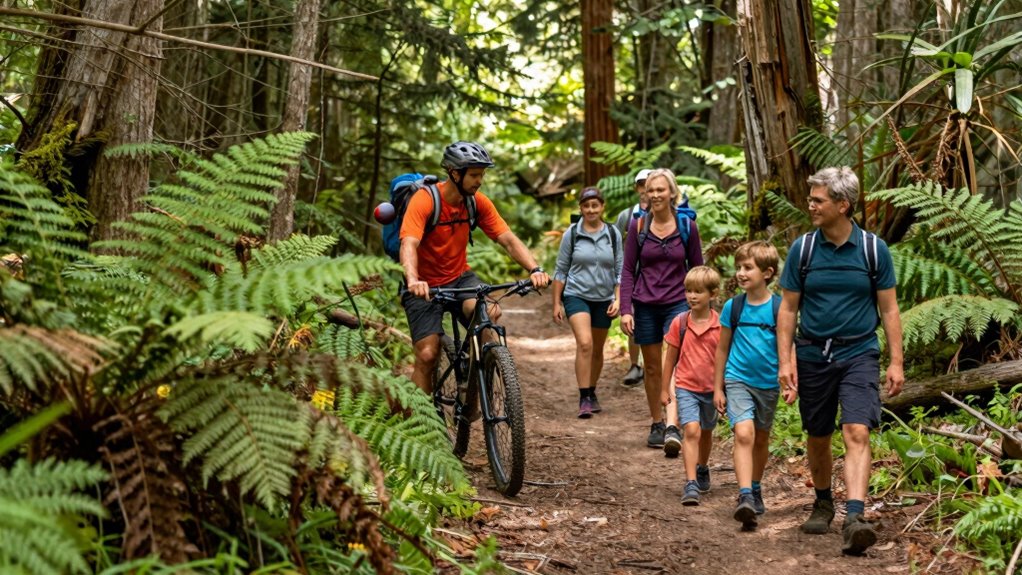
When encountering other trail users, you should always yield appropriately to maintain safety and harmony on the path. This means slowing down or stopping to give way to hikers, horseback riders, and others sharing the trail. Proper yielding prevents accidents and demonstrates respect for all users. Being aware of trail etiquette helps ensure everyone’s safety and enjoyment. Recognizing the importance of outdoor safety can further enhance your trail experience and prevent conflicts. Visualize stepping aside on a narrow trail as a hiker approaches, or stopping to let a group of equestrians pass smoothly.
- Step aside to allow hikers to pass on a single-track trail, especially when space is tight
- Halt your bike or horse and wait patiently if a group of hikers is ascending or descending a steep section
- Signal your intention clearly by raising a hand or ringing a bell to alert others of your presence
Yielding appropriately fosters cooperation, reduces conflicts, and keeps trails open for everyone.
Controlling Your Speed for Safety and Access
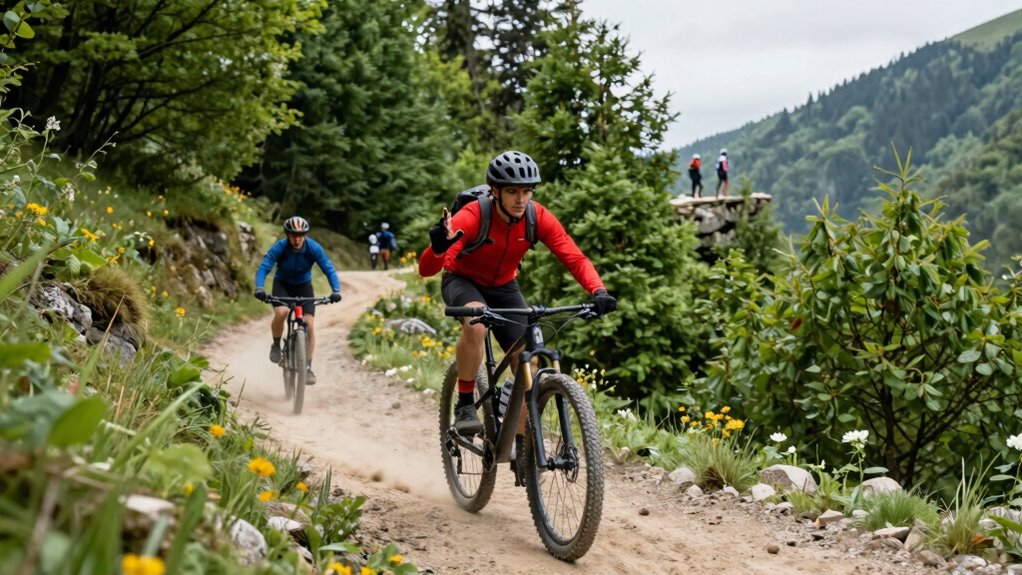
Controlling your speed is essential for maintaining safety and ensuring continued access to shared areas. When riding, always adjust your speed based on trail conditions, visibility, and nearby users. Excessive or reckless speeds increase the risk of collisions, especially with hikers, cyclists, and wildlife. Slow down around blind corners, narrow sections, or crowded spots to give yourself more reaction time. Use your brakes smoothly to avoid startling others or causing trail damage. Remember, maintaining a manageable speed isn’t just about your safety; it’s about respecting others’ right to a safe experience. Proper speed control minimizes erosion, trail damage, and conflicts, helping keep the area open for everyone. Being aware of trail maintenance practices can also help you make informed decisions that contribute to the preservation of shared spaces. Additionally, understanding firearm sale regulations ensures that users do not inadvertently violate rules that could lead to access restrictions or safety concerns. Practicing responsible riding behavior supports the sustainability of water-based recreation, and being mindful of environmental impact can further ensure that trails remain accessible and enjoyable for future users.
Common Mistakes Riders Make That Can Lead to Trail Closures

One of the most common mistakes riders make is ignoring trail signs, which can lead to dangerous conditions and trail damage. Overusing popular trails without spreading out your rides causes erosion and wear that threaten access for everyone. Additionally, disregarding trail limits, such as riding in closed areas or beyond designated boundaries, directly jeopardizes the area’s ability to stay open and safe for future use. Proper trail management practices help preserve trail integrity and ensure continued access for all users. Following trail guidelines can minimize environmental impact and promote sustainable recreation. Practicing trail stewardship by respecting these rules is essential to keep trails open and enjoyable for everyone, as understanding trail regulations is key to responsible riding and preservation efforts. Being aware of and adhering to trail signage helps prevent unintended damage and supports ongoing trail maintenance efforts.
Ignoring Trail Signs
Ignoring trail signs can substantially disrupt the delicate balance of trail management and lead to closures that impact everyone. Signs are placed to protect the environment, ensure rider safety, and maintain trail sustainability. Overlooking them can result in serious consequences, such as damaging fragile ecosystems or creating unsafe conditions.
- Cutting through closed sections marked with barriers or warning signs, risking erosion and habitat destruction.
- Ignoring directional arrows that guide you along sustainable routes, leading to trail widening and soil erosion.
- Disregarding seasonal or weather-related warnings, which can cause trail damage or dangerous riding conditions.
Overusing Popular Trails
Overusing popular paths can quickly lead to environmental deterioration and increased maintenance challenges. When you repeatedly ride the same routes without variation, trail surfaces become eroded, vegetation suffers, and soil compaction occurs, harming local ecosystems. This overuse also accelerates trail wear, prompting agencies to close sections to facilitate repairs, which limits access for everyone. To prevent this, you should diversify your riding locations, exploring lesser-used trails and backcountry routes. Limit your trips to peak times or weekdays when they are less crowded, reducing pressure on busy areas. Respect trail capacity by riding only as often as necessary and encouraging fellow riders to do the same. Responsible trail use helps preserve the environment, maintains trail quality, and ensures these areas remain accessible for future generations.
Disregarding Trail Limits
Failing to respect trail limits, such as designated riding hours, distance restrictions, or seasonal closures, can swiftly lead to trail damage and increased maintenance costs. When you ignore these boundaries, you risk eroding trail surfaces, disturbing wildlife habitats, and contributing to erosion that can render trails unusable. Imagine riding past signs that specify hours or closed seasons—your actions can cause irreversible harm. Common violations include:
- Riding during restricted hours, disrupting wildlife and causing trail wear.
- Going beyond designated mileage, damaging fragile ecosystems.
- Ignoring seasonal closures, which can lead to soil erosion and plant destruction.
Respecting Nature and Packing Out Trash
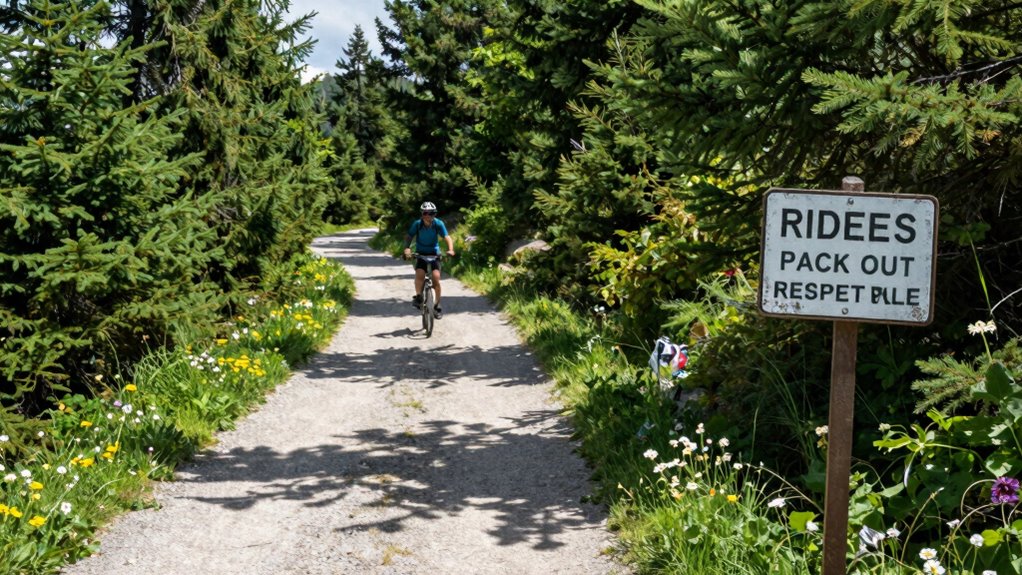
To preserve the natural beauty of outdoor areas, it’s essential that you respect the environment by packing out all trash and waste. Leaving no trace guarantees future enjoyment and protects ecosystems. Carry reusable bags for trash, and dispose of waste properly at designated sites. Remember, even small litter can harm wildlife and degrade trail conditions. To help you stay organized, consider this guide:
| Trash Type | Proper Disposal Method | Impact on Nature |
|---|---|---|
| Food wrappers | Pack out in sealed bags | Attracts pests, pollutes soil |
| Water bottles | Recycle or discard properly | Contributes to pollution |
| Biodegradable waste | Pack out or bury responsibly | Prevents wildlife ingestion |
| Personal hygiene | Pack out all waste | Keeps environment clean |
Respectful packing out maintains trail integrity, ensuring outdoor areas remain accessible and pristine for all.
How to Educate Fellow Riders and Promote Good Trail Etiquette
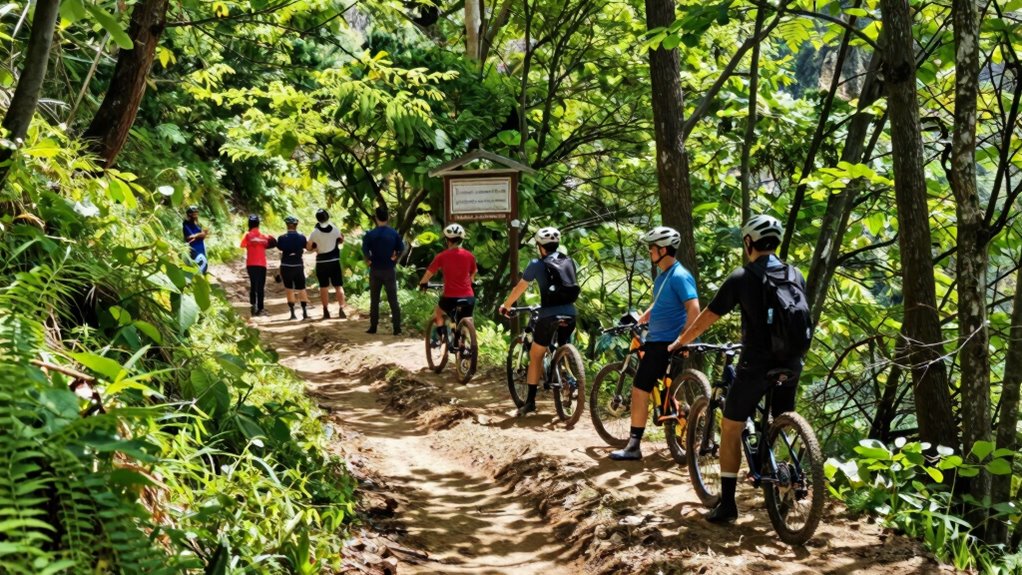
Educating fellow riders about proper trail etiquette is essential for maintaining safe and sustainable outdoor spaces. You can lead by example, demonstrating respectful behavior and sharing knowledge during rides. Engage in friendly conversations to explain why staying on designated trails prevents erosion and protects wildlife. Offer tips on courteous passing, such as signaling intentions and reducing speed in congested areas. Encourage others to carry out trash, respect trail closures, and avoid cutting switchbacks. Promote a culture of responsibility by reminding riders that their actions impact everyone’s access. To reinforce your message, consider organizing trail cleanups or etiquette workshops in your community. By actively sharing your understanding and encouraging respectful behavior, you help foster a trail environment where everyone can enjoy and preserve these outdoor spaces.
Frequently Asked Questions
How Can Riders Help Prevent Trail Erosion and Environmental Damage?
You can prevent trail erosion and environmental damage by staying on designated trails, avoiding shortcuts, and riding within your skill level. Use proper riding techniques, such as maintaining a steady speed and avoiding sudden turns, to reduce trail wear. Regularly inspect your equipment to prevent damage that could contribute to erosion. Respect seasonal closures and sensitive areas, and help with trail maintenance efforts whenever possible to preserve the environment for future riders.
What Should I Do if I Encounter Wildlife on the Trail?
When you encounter wildlife on the trail, stay calm and keep your distance. Avoid startling animals by slowing down and speaking softly. Do not attempt to feed or approach them, as this can cause stress or dangerous behavior. If an animal appears distressed or aggressive, back away slowly and give it space. Respect their habitat, and remember, observing from afar keeps both you and wildlife safe, preserving the trail experience.
Are There Specific Etiquette Tips for Riding in Groups?
When riding in groups, you should communicate clearly using hand signals or voice to coordinate movements. Keep a safe distance between riders to avoid accidents and stay on designated trails to protect the environment. Pass slower riders politely and make certain everyone is aware of upcoming obstacles. Maintain a steady pace, and avoid sudden stops or changes, so the group remains cohesive. Respect others’ experience levels and promote a positive, responsible riding environment.
How Can Beginners Learn Proper Trail Etiquette Quickly?
You can learn proper trail etiquette quickly by studying local trail rules and guidelines, observing experienced riders, and asking for tips. Before hitting the trail, review etiquette resources or talk to park staff. During your ride, communicate clearly with others, yield appropriately, and keep your speed in check. Practice patience and respect for fellow riders and the environment, which helps you cultivate good habits and guarantees trails stay open for everyone.
What Are the Consequences of Ignoring Trail Etiquette Guidelines?
Ignoring trail etiquette can lead to severe consequences—riders face increased risks of accidents, trail closures, and strained community relationships. When you neglect proper manners, you disrupt harmony and compromise safety for everyone. Authorities may impose restrictions, and areas could shut down, depriving all riders of access. To keep trails open and enjoyable, follow etiquette diligently, respecting others and the environment, ensuring a safe, sustainable riding experience for all.
Conclusion
By embracing respectful trail habits, you help make certain these beautiful spaces stay open and welcoming for everyone. When you follow signs, yield to others, control your speed, and pack out trash, you’re gently guiding the community toward harmony with nature. Educate fellow riders with patience and lead by example. Together, these small yet impactful actions create a sustainable riding culture—one where trails thrive and memories last, all thanks to your commitment to good etiquette.