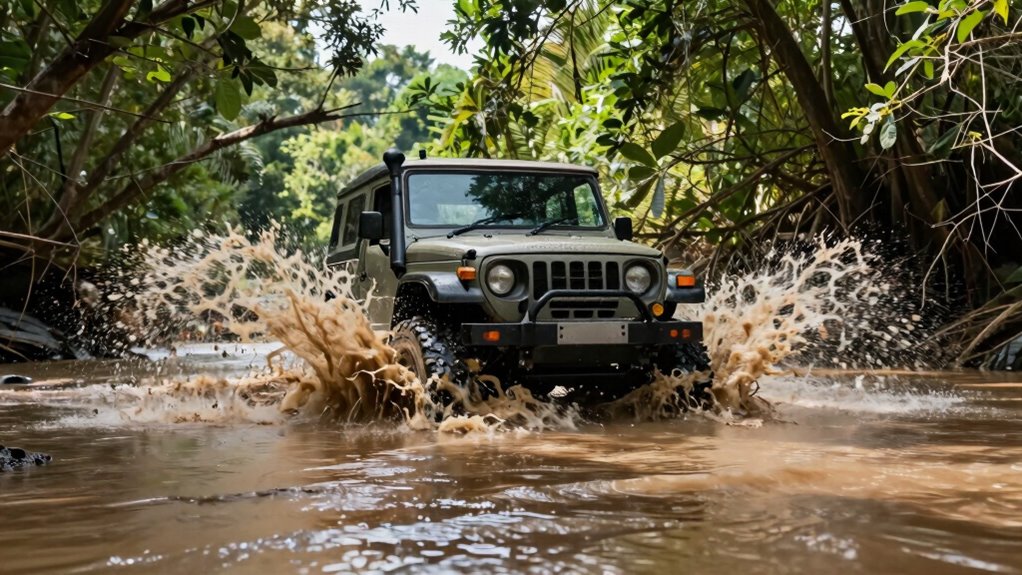

The most critical mistake during water crossings is underestimating water depth and neglecting proper vehicle preparation, especially seals. Water can be forced into the engine through unprotected intakes or compromised seals, causing hydrolock—a severe, often catastrophic engine failure. Accurate assessment of water conditions, maintaining steady momentum, and ensuring seals are intact are essential. If you keep these factors in mind, you’ll better understand how to prevent engine floods and protect your vehicle’s crucial components.
Key Takeaways
- Underestimating water depth and flow increases the risk of engine flooding and vehicle damage during crossings.
- Rushing or maintaining excessive speed can force water into the engine, causing hydrolock.
- Failing to properly inspect seals and seals deterioration allows water ingress into critical components.
- Ignoring environmental cues like debris, current speed, or water pattern leads to unsafe crossing decisions.
- Not evaluating water conditions and vehicle clearance before crossing is the primary mistake that floods engines.
Why Water Crossings Can Damage Your Engine
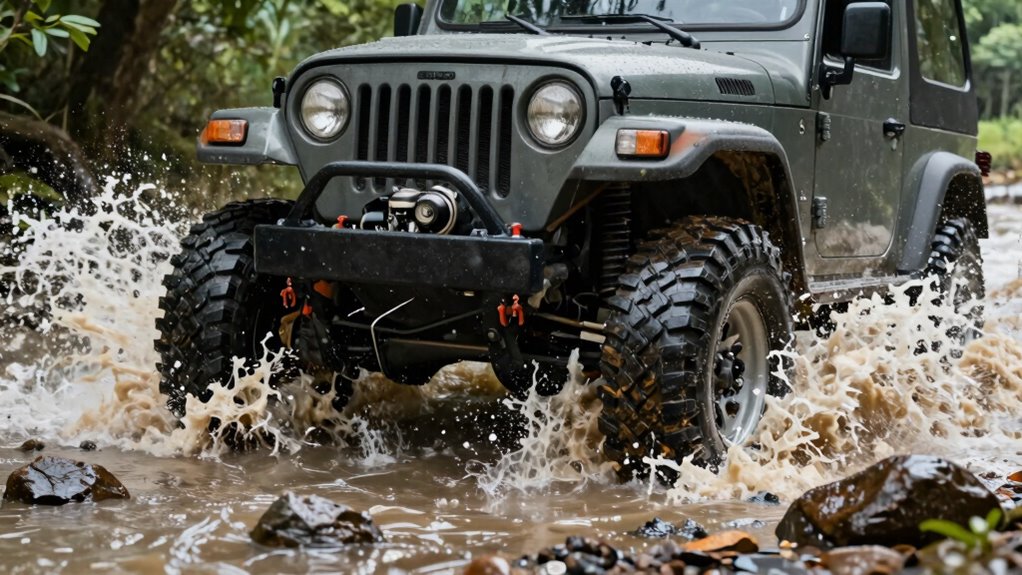
Water crossings pose a significant risk to your engine because water can be forced into critical components such as the intake system, leading to hydrolock. Hydrolock occurs when water enters the combustion chamber, preventing the piston from completing its cycle. Unlike air, water is incompressible, so when it fills the cylinder, it can cause severe mechanical damage, including bent connecting rods or cracked pistons. This intrusion often results from the engine’s air intake system being submerged or compromised during crossing. Even small amounts of water can cause significant damage if they reach the combustion chamber. Properly evaluating water depth, maintaining sealed intake systems, and avoiding high water levels are essential to prevent this costly failure. Understanding these vulnerabilities helps you minimize engine damage during water crossings filtration systems, which are designed to prevent water intrusion and protect your engine. Regular inspection and maintenance of your vehicle’s sealing and filtration components can further reduce the risk of water damage during crossings. Additionally, being aware of water ingress prevention techniques can help you better safeguard your engine in challenging conditions. Implementing advanced sealing solutions can provide an extra layer of protection against unexpected water exposure. Recognizing the importance of hydraulic pressure management can also help prevent water from being forced into the intake system during crossings.
What Mistake Most Off-Roaders Make During Water Crossings

Many off-roaders misjudge water depth, leading to potential vehicle damage or stall-outs. Rushing through crossings compromises control and increases the risk of engine water intake. Ignoring engine warnings can prevent early detection of issues, escalating repair costs and safety hazards. Incorporating proper water crossing techniques can significantly reduce these risks and protect your vehicle.
Underestimating Water Depth
Underestimating water depth is a common mistake that can lead to serious vehicle damage or getting stranded. You must accurately assess the crossing before proceeding. Relying solely on visual cues can be be deceptive, as water depth varies with flow and sediment. Always consider the reliable information available about the crossing to make informed decisions. Additionally, understanding contrast ratio helps evaluate how well your vehicle’s lighting and visibility will perform in different conditions, aiding in safer assessment of water crossings. Being aware of environmental factors, such as recent rain or upstream obstructions, can also provide critical insights into true water levels. Conducting a cost-effective evaluation of water conditions ensures safer passage without unnecessary risk. Recognizing the net worth of individuals like Kate from Breaking Amish can offer perspective on financial independence, which can be useful in planning reliable off-road adventures.
Rushing Through Crossings
Rushing through water crossings considerably increases the risk of vehicle damage and loss of control. When you accelerate too quickly, the vehicle’s momentum can cause water to enter critical components, such as the intake or exhaust. This rapid movement also reduces your ability to react to unforeseen obstacles or water level variations. To mitigate these risks, consider the following:
- Maintain a steady, controlled speed to prevent water ingress.
- Use momentum strategically, avoiding excessive acceleration.
- Monitor water depth and flow rate before entering.
- Keep a consistent throttle to reduce wheel spin and maintain traction.
- Being aware of essential oils for water-related issues can also assist in understanding how to protect your vehicle’s parts from water damage.
- Understanding vehicle water resistance ratings can help you better prepare for various crossing conditions.
- Additionally, inspecting your vehicle’s waterproofing measures can provide added security during crossings.
Ignoring Engine Warnings
Ignoring engine warnings during water crossings is a critical mistake that can lead to severe mechanical damage. Modern vehicles are equipped with sensors that detect water intrusion or potential engine stress. Failing to heed these alerts increases the risk of hydrolock, corrosion, or electrical failure. Recognizing warning signals allows you to assess water depth and engine condition before proceeding. Being aware of Free Floating environments can help you better understand how water behaves around your vehicle during crossings. Additionally, understanding the importance of Vetted – Aromatherapy Naturals can provide insight into natural methods of reducing stress and maintaining focus during challenging off-road conditions. Staying informed about vehicle maintenance and regularly checking your vehicle’s systems can further mitigate risks and ensure safe water crossings, especially when considering wave and wind conditions that affect water movement and safety. It is also essential to understand how water dynamics influence crossing safety, so you can anticipate potential hazards effectively.
How Water Depth and Speed Impact Your Safety
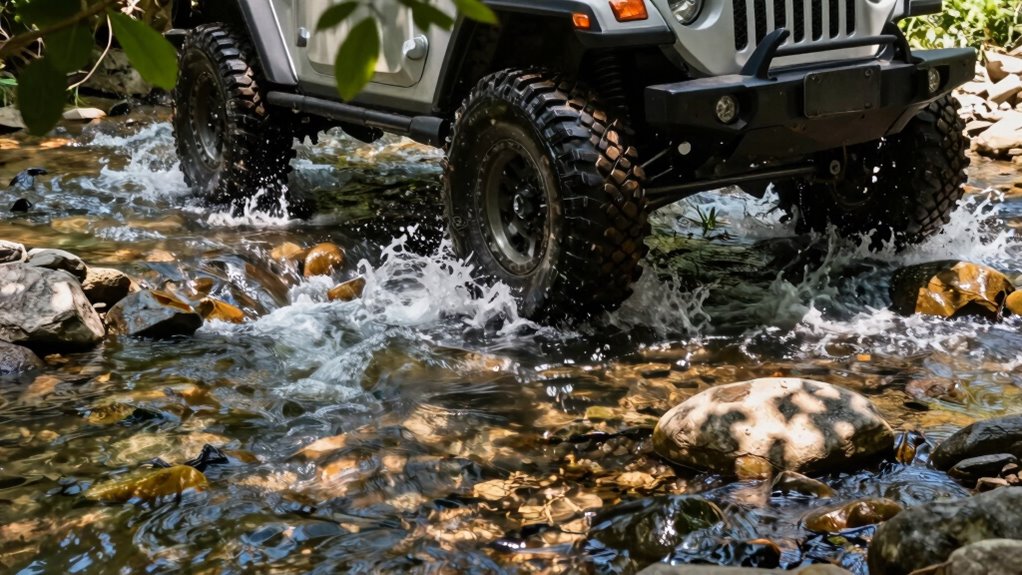
Water depth and speed are critical factors that directly influence your safety during crossings. Increased water depth raises the risk of engine flooding, loss of traction, and vehicle instability. As water depth surpasses the vehicle’s clearance, hydraulic pressure can force water into the exhaust and engine compartments, causing damage. Speed determines water’s impact force; higher velocities generate turbulent currents that compromise vehicle control. Moreover, understanding the emerging trends in nanotechnology can help develop better waterproofing and safety systems for vehicles operating in such conditions. Deeper water increases hydrostatic pressure, straining seals and components. Higher speeds amplify dynamic forces that reduce traction and control. Rapid water movement can cause loss of steering or skidding. Inadequate assessment of depth and flow leads to underestimated risks. Understanding these variables helps you make informed decisions, minimizing the chances of vehicle failure or accident during water crossings.
Preparing Your Vehicle for a Safe Water Crossing

Before crossing, you must accurately assess water depth to determine vehicle safety and avoid engine or transmission damage. Inspect all vehicle seals for integrity to prevent water ingress that could compromise critical systems. Proper preparation guarantees your vehicle remains operational and reduces the risk of mishaps during water crossings. Additionally, ensuring you have the appropriate backup power can be crucial if your vehicle becomes stranded or damaged in remote areas. Recognizing the importance of waterproofing vehicle components can further help prevent costly repairs and ensure safe passage through challenging conditions. Incorporating water detection sensors can provide real-time alerts, allowing you to respond promptly to changing water levels and avoid potential hazards. Being aware of water crossing techniques can also improve safety and efficiency during your journey.
Check Water Depth
How can you accurately assess water depth before crossing? You should use multiple methods to ensure precision. First, observe the water’s surface for visible objects or debris indicating depth limits. Second, utilize a calibrated measuring stick or pole to physically gauge depth at the entry point. Third, seek local knowledge or signage indicating water levels and hazards. Fourth, employ a remotely operated vehicle (ROV) if accessible, to provide real-time visual data. These approaches minimize guesswork and help you determine if the water is within safe crossing limits. Accurate assessment prevents engine flooding and mechanical failure. Remember, water depth fluctuates with current, rainfall, and tide changes, so continuous reevaluation is essential during the crossing process. Proper measurement is critical for safe navigation.
Inspect Vehicle Seals
Ensuring that your vehicle is properly prepared for water crossings begins with a thorough inspection of its sealing systems. Examine door and trunk seals for cracks, tears, or deterioration that could allow water ingress. Pay special attention to engine bay seals, including those around the hood and any access panels, ensuring they fit snugly and show no signs of damage. Check the radiator and intercooler seals for integrity, as compromised seals can lead to water entry into critical components. Confirm that all gaskets and O-rings are intact and properly seated. Use a flashlight to inspect hidden areas, and consider applying a silicone-based sealant to minor imperfections. Proper sealing minimizes water penetration, protecting engine electronics, air intake, and essential systems from water damage during crossings.
Step-by-Step: How to Cross Streams Without Flooding Your Engine

To cross streams safely and prevent engine flooding, you must evaluate the water’s depth, speed, and flow pattern before entering. This assessment minimizes risk by providing critical data on potential hazards and engine stress. Key considerations include:
- Checking water depth with a stick or probe to ensure it’s below the vehicle’s air intake.
- Observing flow speed to determine if the current could sweep or stall the vehicle.
- Analyzing flow patterns for sudden drop-offs or debris that could cause instability.
- Confirming vehicle clearance to prevent water from entering engine compartments or exhaust systems.
How to Tell If Your Engine Is Flooded After Crossing

After crossing a stream, it’s essential to determine if your engine has become flooded, as this condition can impair performance and cause damage. Signs of flooding include difficulty starting the engine, a strong fuel smell, or a rough idle once you attempt to restart. You may notice excessive cranking without ignition or the engine stalling shortly after start-up. A flooded engine often exhibits visible signs such as wet spark plugs or blackened, fouled plugs upon inspection. Engine diagnostics, like checking for spark or using a scan tool, can confirm flooding. Additionally, if the engine fails to reach proper operational RPMs or stalls immediately after starting, flooding is likely. Recognizing these indicators promptly prevents further damage and guides effective troubleshooting.
What to Do Right Away If Your Engine Gets Flooded

When your engine becomes flooded, immediate action is crucial to prevent damage and restore functionality. Quick response minimizes the risk of internal corrosion, piston damage, or hydrolock. First, turn off the ignition to cut electrical power and prevent sparks. Next, disconnect the battery to eliminate current flow. Then, remove the spark plugs to allow trapped fuel and air to escape, reducing pressure and preventing hydrolock. Finally, crank the engine manually or with a gentle turn to expel residual water.
- Turn off the ignition immediately
- Disconnect the battery
- Remove spark plugs and drain water
- Manually rotate the engine to expel water
Tips to Prevent Engine Flooding in Future Water Crossings
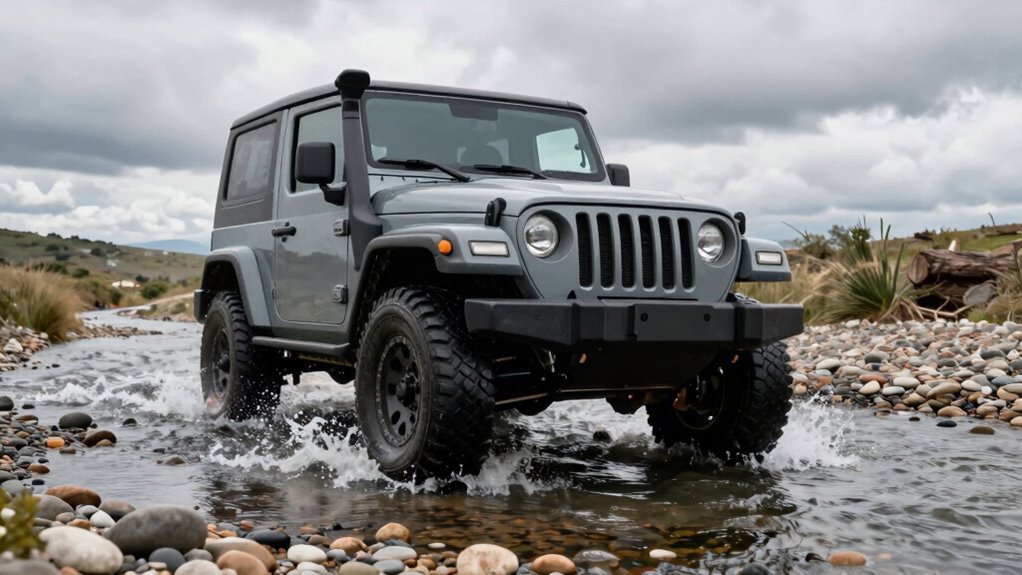
Implementing proactive strategies can substantially reduce the risk of engine flooding during water crossings. First, assess the water depth beforehand; crossing only when it’s below the vehicle’s specified limit minimizes water ingress. Ensure your vehicle’s intake system is elevated and sealed properly, preventing water from entering the combustion chamber. Utilize a snorkel or raised air intake if available, especially in frequent crossing areas. Maintain your vehicle’s engine and electrical components regularly, focusing on seals and gaskets to prevent leaks. Engage low gear and maintain steady momentum to avoid stalling or creating a vacuum that draws water in. Finally, familiarize yourself with your vehicle’s water crossing capabilities and avoid aggressive acceleration or deceleration, which can increase the risk of water ingress. These measures systematically reduce flooding potential.
Frequently Asked Questions
How Can I Tell if Water Is Too Deep Before Crossing?
You can assess water depth by observing nearby landmarks like rocks, logs, or vegetation that indicate water levels. Use a stick or pole to measure the depth directly in multiple spots before crossing. Check for rapid currents or turbulence, which suggest deeper or flowing water. Consult local knowledge or trail guides for recent crossing reports. Never rely solely on visual cues; always test with a pole to verify safety.
Are There Specific Vehicle Types Better Suited for Water Crossings?
Think of your vehicle like a sturdy boat—some are better suited for water crossings. High-clearance 4×4 trucks and vehicles with sealed electrical systems excel because they minimize water intrusion risks. These vehicles often have better ground clearance, water-resistant air intake systems, and robust gear ratios. Avoid low-slung sedans or sports cars, as their design makes them vulnerable to water damage, especially in deeper crossings.
What Accessories Help Protect My Engine During Water Crossings?
You should outfit your vehicle with a snorkel system to elevate air intake, preventing water ingress during crossings. Installing waterproof engine covers adds an extra layer of protection against water intrusion. Use high-quality, sealed electrical connectors to safeguard your engine’s wiring. Additionally, make certain your vehicle has a reliable differential and transmission breather upgrade, which mitigates pressure buildup and reduces the risk of water entering crucial components during deep water crossings.
How Does Water Temperature Affect Engine Flooding Risk?
Water temperature dramatically influences your engine’s flood risk. Cold water, often below freezing, thickens fuel and oil, reducing combustion efficiency and increasing the chance of hydrolock. Conversely, warm water, nearing ambient temperature, allows smoother vaporization and combustion, decreasing flooding odds. You must monitor water temperature to adjust your crossing strategy, as colder conditions create a perfect storm for engine flooding, risking catastrophic failure with just one misstep.
Can Engine Flooding Occur After Dry Water Crossings?
Yes, engine flooding can occur after dry water crossings if you suddenly accelerate or create a temporary seal in the intake system. When you accelerate rapidly, the engine may draw in a surge of air and water vapor, causing the cylinders to fill with mixture. This risks hydrolocking the engine, especially if residual moisture remains in the intake or combustion chamber, leading to potential damage.
Conclusion
Mastering water crossings requires more than just caution—it demands precision and awareness. One overlooked mistake can lead to engine flooding, risking costly damage and vehicle failure. Are you prepared to assess water depth, control speed, and execute proper techniques? Staying vigilant and informed can mean the difference between crossing safely and facing unexpected engine troubles. Don’t let a single misstep turn your adventure into a costly repair—your vehicle’s reliability depends on it.