
Waterproof boots use specialized membranes like Gore-Tex or PTFE that block water while allowing moisture to escape, keeping your feet dry and comfortable. Seams are critical because water can seep through stitch holes unless they’re sealed or taped properly. Common leak points include heel, toe, zipper areas, and where the sole attaches. Understanding these features helps you pick and maintain boots that stay waterproof longer—keep going to find out more details.
Key Takeaways
- Waterproof membranes like Gore-Tex use microscopic pores to block water while allowing vapor escape, ensuring breathability.
- Seams are critical leak points; sealing with tape or liquid sealant prevents water from penetrating through stitch holes.
- Common leak points include heel, toe, eyelets, zippers, and the sole-to-upper junction, requiring reinforced construction.
- Materials such as high-quality leather, synthetic fabrics, and reinforced stitching enhance durability and resistance to leaks.
- Proper maintenance, including seam sealing and coating reapplication, is essential to sustain waterproof performance over time.
What Features Make Waterproof Boots Truly Effective?

To make certain waterproof boots keep your feet dry in wet conditions, they need to have specific features that work together effectively. Waterproof testing is essential to ensure the boots can withstand exposure to water without leaking. This involves rigorous assessments of seams, materials, and construction to confirm durability. Additionally, breathable fabrics are crucial—they allow moisture and sweat from your feet to escape, preventing discomfort and overheating. High-quality waterproof boots often use advanced fabrics that balance waterproofing with breathability, keeping your feet dry both inside and out. Properly tested and designed boots minimize water intrusion while promoting airflow, making your outdoor experience more comfortable and reliable. Incorporating proper ventilation considerations can further enhance comfort by reducing internal moisture buildup and maintaining a healthy foot environment. Recognizing leak points in the design can help in selecting boots that truly keep water out under tough conditions. Furthermore, understanding the manufacturing standards can provide confidence in the boots’ waterproof performance and longevity. Advances in nanotechnology are increasingly being integrated into waterproof footwear, offering enhanced protection and durability through innovative membrane technologies. Proper seam sealing techniques are also crucial, as many leaks occur at the stitches if not properly sealed during manufacturing.
How Do Waterproof Membranes Keep Water Out of Boots?
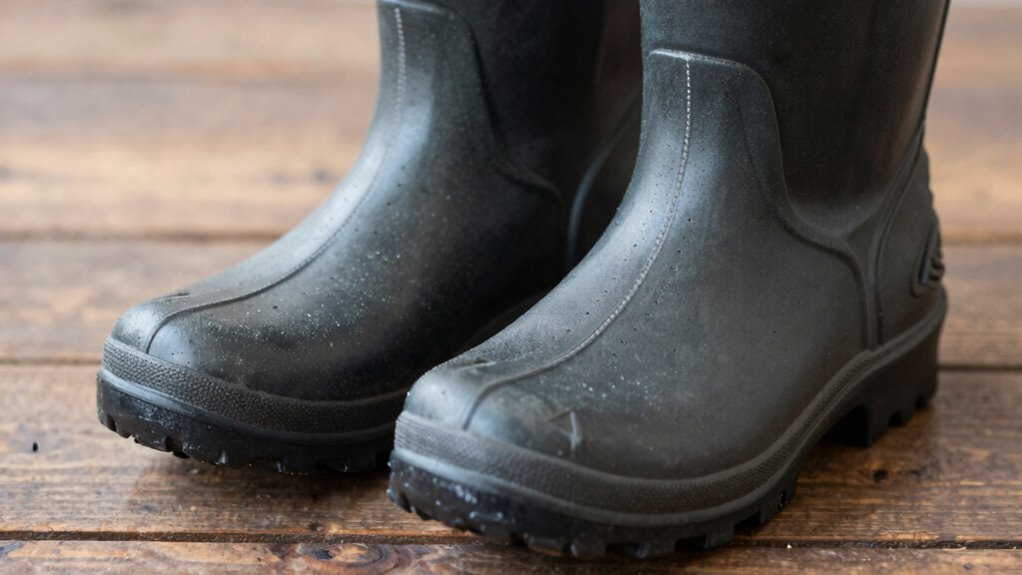
Waterproof membranes use specialized barrier materials that block water from passing through while remaining breathable. These materials are designed with properties like microscopic pores that keep water out yet let moisture escape. Different waterproofing techniques, such as lamination or coating, enhance how effectively these membranes protect your boots from water intrusion. Additionally, the contrast ratio of the membrane impacts its ability to render clear, detailed images of water and moisture movement, ensuring durability and performance over time. The microscopic pore size is crucial in balancing water resistance with breathability, allowing sweat vapor to escape without letting water in.
Barrier Material Properties
Waterproof membranes keep water out of boots by creating a barrier that prevents moisture from penetrating the material. The key to this protection lies in the waterproof fabric’s barrier properties, which make it resistant to water while remaining breathable. These fabrics are often made from specialized materials like polyurethane or PTFE, which form a tight, impermeable layer. This barrier prevents water molecules from passing through, even under pressure, while allowing vapor from sweat to escape. The effectiveness of the barrier depends on its thickness, density, and treatment. Properly engineered waterproof fabrics maintain their barrier properties over time, ensuring that water stays out without sacrificing comfort. Additionally, advancements in waterproof fabric technology have improved the durability and performance of waterproof membranes. Innovations in membrane materials have led to even better resistance against water ingress while maintaining breathability, making modern waterproof boots more reliable than ever. These technological improvements also enhance the overall durability of the boots, allowing them to withstand harsh conditions over extended periods. The incorporation of advanced membrane coatings further boosts the waterproofing capabilities, providing an extra layer of protection against leaks. This combination of waterproofing and breathability keeps your feet dry and comfortable in wet conditions, aligning with traditional practices that emphasize natural and sustainable solutions for comfort and resilience.
Waterproofing Techniques Used
Waterproof membranes prevent water from entering boots by creating an effective barrier that blocks moisture while letting sweat escape. Techniques like Gore Tex technology utilize microporous membranes that repel water but allow vapor to pass through, keeping your feet dry and comfortable. Seam sealing is another critical method, where all stitched areas are coated or taped to prevent leaks at seams. Here are four key waterproofing techniques:
- Gore Tex technology with microporous membranes
- Seam sealing with waterproof tape or liquid sealants
- Waterproof membranes glued directly to the outer fabric
- Use of waterproof coatings on the outer surface
Additionally, breathability is a crucial factor in ensuring that moisture vapor can escape, preventing your feet from becoming clammy and uncomfortable. Modern membrane production techniques continuously improve the durability and effectiveness of waterproof layers. Together, these methods ensure your boots remain waterproof, durable, and breathable, no matter the weather.
Why Are Seams Important in Waterproof Boot Construction?
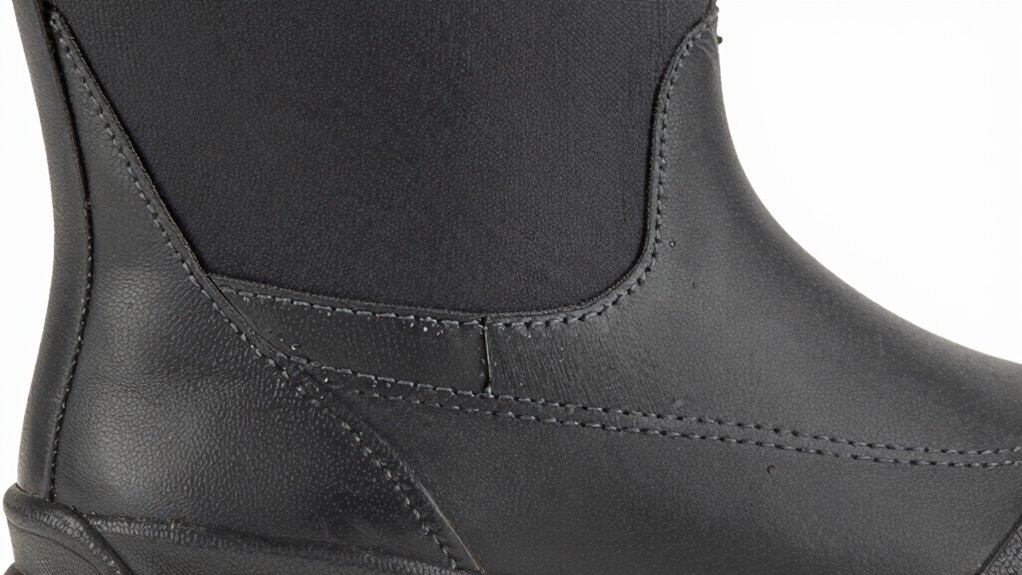
Have you ever wondered how waterproof boots keep your feet dry even in harsh conditions? Seams are a critical part of this process because they can be weak points where water might seep in. That’s why seam strength matters—strong seams resist tearing and maintain the integrity of the waterproof barrier. Seam sealing is essential because it involves applying waterproof tape or glue to prevent water from penetrating through stitch holes. Without proper sealing, even sturdy stitches can become leak points. Manufacturers focus on reinforcing seams to ensure durability and waterproof performance. Proper seam construction and sealing techniques help keep water out, making your boots reliable in wet environments. Additionally, smart waterproofing technologies are increasingly used to enhance seam integrity and water resistance. Understanding seam types and their construction methods can also help you choose more durable waterproof boots, as advancements in seam sealing techniques continue to improve overall waterproofing performance. Incorporating advanced seam design can further reduce leak risks and extend the life of your waterproof footwear. Recognizing common leak points can help you identify potential vulnerabilities and select better-quality boots.
What Are Common Leak Points in Waterproof Boots?
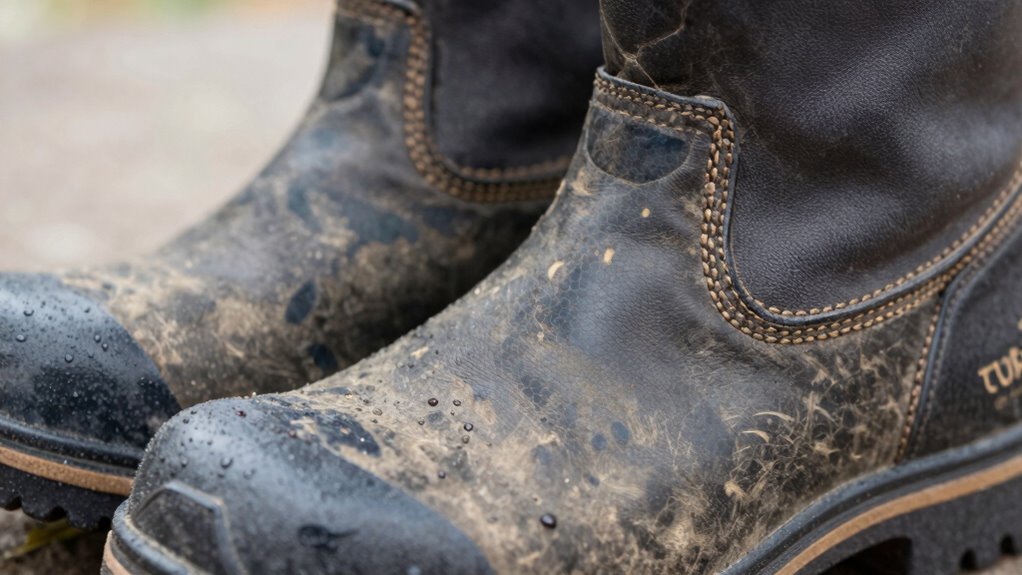
Even with well-constructed seams, leaks can still occur at specific weak points in waterproof boots. These areas are prone to moisture entry due to seam failures or material weaknesses. Common leak points include:
Even high-quality seams can still allow leaks through common weak points like heels, toes, and sole attachments.
- Seam intersections – where two seams meet, increasing the risk of seam failures. Proper sealing techniques at these junctions are essential for maintaining waterproof integrity. Understanding seam sealing techniques can help ensure long-lasting waterproof protection.
- Heel and toe areas – high-stress zones that may develop cracks or gaps over time.
- Eyelet and zipper closures – potential entry points if not properly sealed.
- Sole-to-upper junction – where the sole attaches, which can separate and allow moisture entry. Regular inspections of these weak points can help prevent leaks and extend the lifespan of your waterproof boots. Additionally, understanding material durability can assist in choosing boots that resist wear at these critical areas.
How Do Different Waterproof Technologies Compare for Boots?
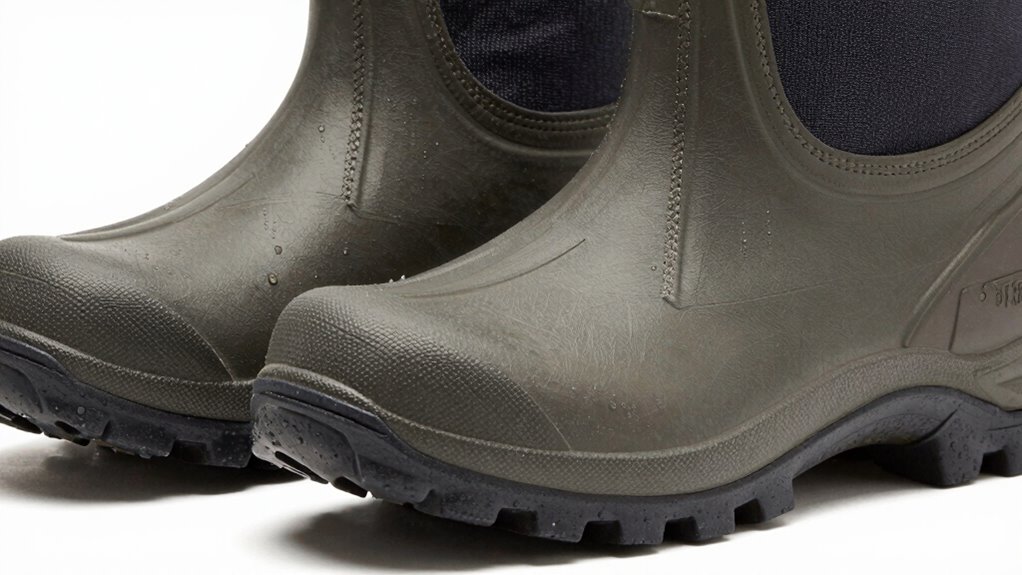
Choosing the right waterproof technology for your boots depends on how you’ll use them and the conditions you’ll face. Gore Tex technology is highly effective, utilizing a breathable membrane that allows moisture to escape while blocking water from entering. It’s ideal for intense activities or prolonged exposure to wet conditions. Hydrophobic coatings, on the other hand, are applied directly to the boot’s exterior surface, causing water to bead and roll off. They’re typically less breathable but can be a good, low-cost option for casual wear or light rain. While Gore Tex offers superior breathability and durability, hydrophobic coatings provide a simpler, more affordable water-resistant solution. Your choice hinges on balancing waterproofing needs, breathability, and activity level. Waterproof technology plays a crucial role in determining how well your boots protect against moisture.
How to Choose the Most Reliable Waterproof Boots?
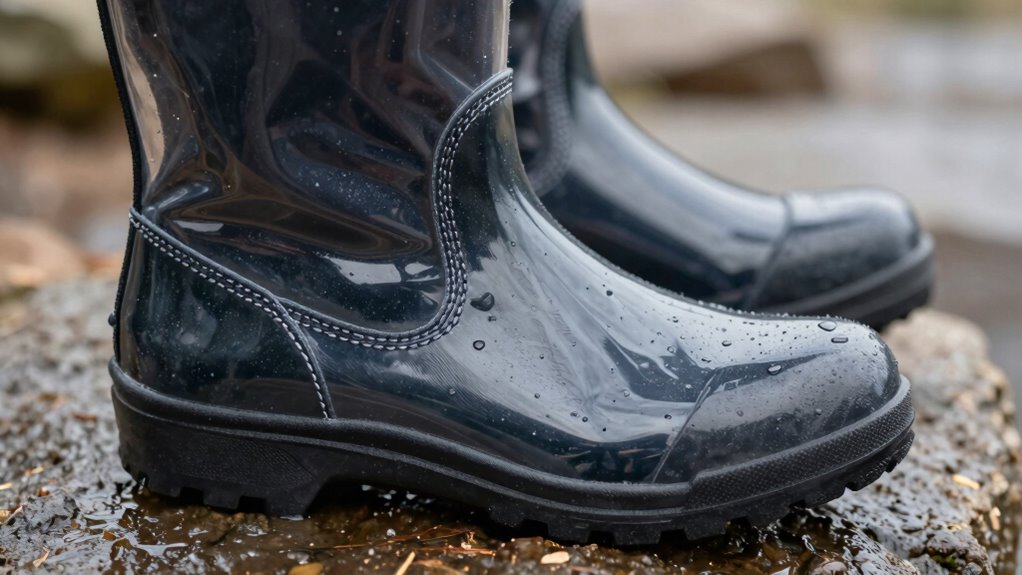
When choosing reliable waterproof boots, you should consider the material’s durability to guarantee they last through tough conditions. Check the seam and seal integrity, since well-constructed joins prevent water from seeping in. Finally, evaluate the membrane performance levels to find boots that provide the right balance of waterproofing and breathability for your needs.
Material Durability Factors
The durability of waterproof boots largely depends on the materials used in their construction. To guarantee longevity, focus on material strength and fabric flexibility.
- High-quality leather offers excellent material strength and natural water resistance, making it durable over time.
- Synthetic fabrics like nylon or polyester provide good flexibility without sacrificing durability, ideal for active use.
- Rubber soles contribute to impact resistance and prevent wear from rough terrains.
- Reinforced stitching and overlays enhance overall strength, reducing the risk of tears or seam failures.
Seam and Seal Integrity
Durability isn’t just about the materials inside waterproof boots; the way their seams and seals are constructed plays a crucial role. Seam integrity is essential because weak or poorly sealed joints can let water in over time. Look for boots with sealed or taped seams, which provide extra protection against leaks. Check how the sealant is applied—high-quality sealant application ensures a continuous, waterproof barrier. Double or sealed stitches add strength and reduce the risk of seam failure. Avoid boots with only glued seams, as they tend to fail faster. When shopping, inspect seams closely for uniformity and consistency. Reliable waterproof boots will feature seams designed for durability, with sealant applied thoroughly to prevent water from seeping through even under tough conditions.
Membrane Performance Levels
How well a waterproof boot’s membrane performs can considerably influence its ability to keep your feet dry in challenging conditions. Membrane classification helps you understand its reliability, while layer performance indicates durability. Choose based on these factors:
- Hydrostatic Head Rating – measures water resistance; higher ratings mean better protection.
- Breathability – ensures moisture from sweat escapes, preventing discomfort.
- Layer Performance – thicker, multi-layer membranes often offer stronger waterproofing.
- Membrane Classification – categories like Gore-Tex or eVent signify proven quality and performance standards.
How to Maintain and Test Your Waterproof Boots for Longevity?
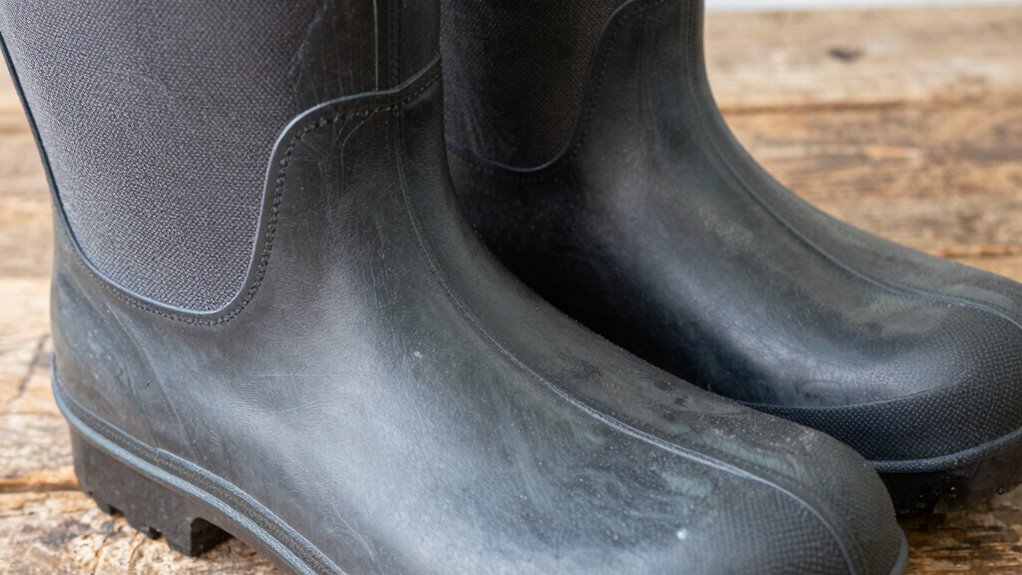
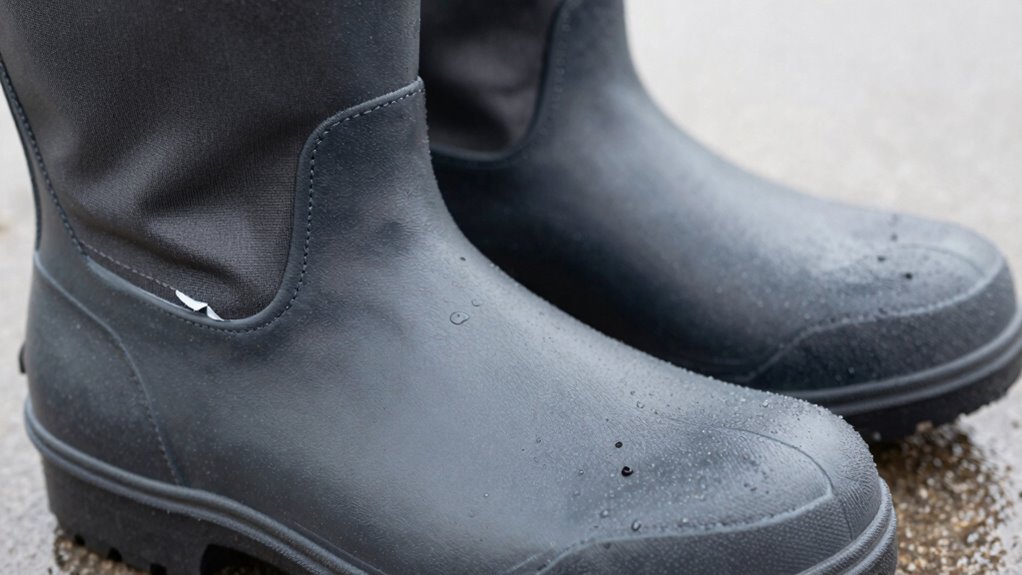
To guarantee your waterproof boots stay effective and last longer, regular maintenance and testing are essential. Start with cleaning techniques: remove dirt and mud promptly using a soft brush and mild soap, avoiding harsh chemicals that can damage waterproof membranes. After cleaning, let them air dry naturally, away from direct heat. Storage tips are equally important; keep your boots in a cool, dry place, away from direct sunlight, and avoid folding or crushing them to preserve their waterproof layers. Periodically test their waterproof integrity by sprinkling water on the surface—if the water beads and rolls off, your boots are still effective. If water soaks in, it’s time to reapply waterproofing treatments or consider repairs. Proper upkeep guarantees your boots stay protective and durable over time.
Frequently Asked Questions
How Do I Identify if My Boots Are Truly Waterproof?
You can identify if your boots are truly waterproof by performing a waterproof testing. Fill them with water or spray water over the surface to see if any leaks occur. Check the material durability; high-quality waterproof boots use sealed seams and water-resistant membranes. If water doesn’t seep in after these tests, your boots are likely genuinely waterproof. Remember, well-constructed boots with durable materials stand up better to water exposure.
Can Waterproof Boots Be Breathable at the Same Time?
Yes, waterproof boots can be breathable at the same time, but there are breathability challenges. Modern designs incorporate advanced membranes like Gore-Tex that manage moisture effectively, allowing sweat to escape while blocking water from entering. You’ll find that good moisture management keeps your feet dry and comfortable during extended wear. Just remember, the more breathable the material, the better it handles moisture, reducing sweat buildup and preventing discomfort.
Are There Specific Activities Where Waterproof Boots Are Essential?
You’ll find waterproof boots essential during outdoor activities like hiking and winter sports. They keep your feet dry and comfortable, especially when traversing muddy trails or snowy terrain. Incorporate them into your hiking essentials and winter gear to prevent discomfort and cold-related issues. Their waterproof features guarantee you stay dry regardless of weather, making them a must-have for any adventure where staying dry is a priority.
How Long Do Waterproof Membranes Typically Last?
Waterproof membranes usually last between 1 to 5 years, depending on use and care. Think of it as balancing durability with your adventures; a durable membrane extends your boot lifespan, keeping you dry longer. If you treat your boots well and avoid harsh conditions, you’ll maximize membrane durability. Conversely, neglecting maintenance shortens their effectiveness, making it essential to monitor and replace them when signs of wear appear.
Can Waterproof Boots Be Repaired if Seams or Membranes Fail?
Yes, waterproof boots can often be repaired if seams or membranes fail. You can consider boot repair to seal leaks or reinforce seams, extending their life. For membrane failure, some brands offer membrane replacement services, which can restore waterproofness without buying new boots. However, if the damage is extensive, replacing the boots might be more practical. Always check with a professional to guarantee proper repair and waterproof integrity.
Conclusion
To keep your boots truly waterproof, focus on quality features, reliable membranes, and sealed seams. Regularly maintain and test your boots, addressing leaks before they worsen. Choose technology that suits your needs, and prioritize craftsmanship that emphasizes durability and protection. By understanding these key points—features, membranes, seams, technology, maintenance—you guarantee your waterproof boots remain effective, reliable, and long-lasting. Stay proactive, stay protected, and enjoy every adventure without worry about water getting in.