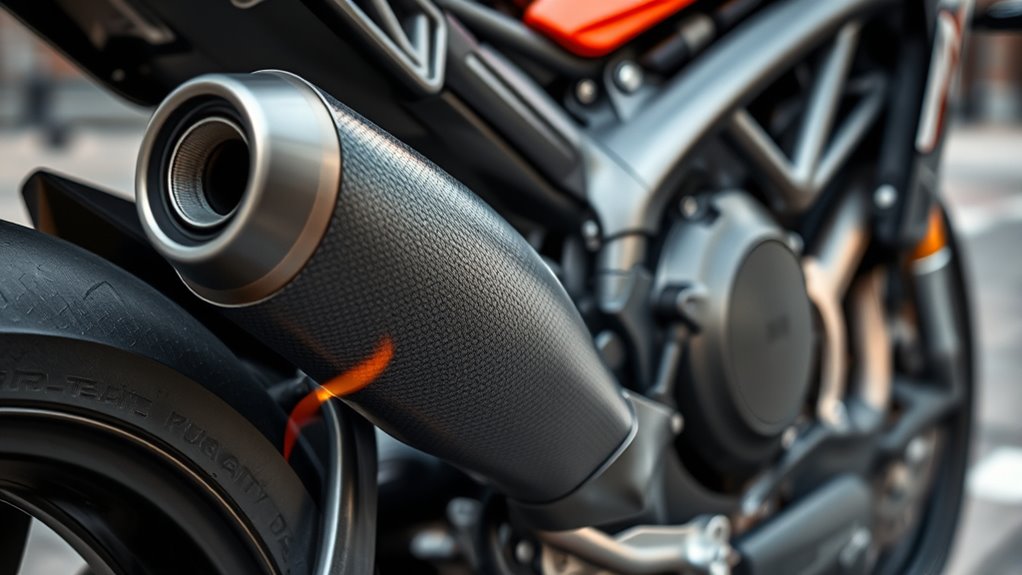

To manage exhaust heat on your Ducati, use high-quality thermal wraps like ceramic or fiberglass around your exhaust pipes. Proper wrapping traps heat, prevents damage to nearby parts, and improves performance. Make sure to follow manufacturer instructions for a secure fit and avoid gaps. Additional heat shields or rerouting can further reduce hotspots. Keep inspecting and maintaining your wrap to guarantee ongoing protection. Continue exploring for more tips on optimizing Ducati exhaust heat control.
Key Takeaways
- Ducati exhaust systems benefit from ceramic wraps to contain heat, improve performance, and protect surrounding components.
- Proper thermal wrapping reduces exhaust heat radiation, enhancing rider comfort and preventing heat-related damage.
- Selecting high-temperature insulation materials ensures durability and effective heat management on Ducati bikes.
- Rerouting or adding heat shields to Ducati exhausts can further dissipate heat and safeguard sensitive parts.
- Regular inspection and correct installation of exhaust wraps optimize heat retention and prolong exhaust system lifespan.
If you’re looking to improve your Ducati’s performance and reliability, managing exhaust heat is crucial. High temperatures from the exhaust system can cause a range of issues, from reducing engine efficiency to damaging surrounding components. That’s where effective exhaust insulation and heat management come into play. By controlling the heat generated by your exhaust, you not only protect essential parts but also enhance your bike’s overall performance.
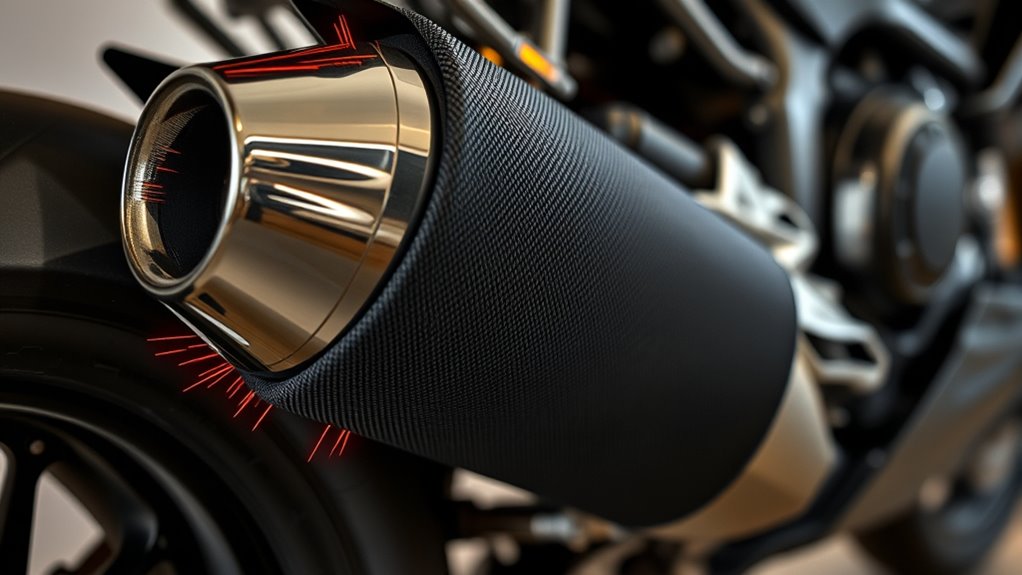
Exhaust insulation is a key factor in heat management. It involves wrapping the exhaust pipes with specialized materials designed to contain heat within the system. These insulating wraps prevent heat from radiating outward, which can otherwise transfer to other parts of your motorcycle, such as the frame, wiring, or even your legs during rides. Using quality exhaust insulation helps maintain ideal operating temperatures, ensuring your Ducati runs smoothly without overheating or experiencing unnecessary stress on components.
Exhaust insulation wraps contain heat, protecting your Ducati and maintaining optimal operating temperatures.
Proper heat management also includes selecting the right materials for insulation. Typically, high-temperature ceramic wraps or fiberglass tapes are recommended because they withstand extreme heat while remaining flexible enough for installation. When wrapping your exhaust, make sure to follow manufacturer instructions for even coverage and secure fitment. Avoid gaps or loose sections that could allow heat to escape or cause the wrap to deteriorate prematurely.
Another aspect of heat management is understanding how to position your exhaust components. Sometimes, rerouting or adjusting the routing of exhaust pipes can help dissipate heat more effectively, reducing hotspots that could lead to performance issues or damage. Additionally, installing heat shields or barriers around sensitive areas can further prevent heat transfer, safeguarding other parts of your bike from excessive temperatures.
Maintaining your exhaust insulation is equally important. Over time, wraps can degrade, loosen, or become clogged with dirt and grime, diminishing their effectiveness. Regular inspections and replacements ensure continuous protection against heat buildup. Properly managed exhaust heat also contributes to better rider comfort—when heat radiates less, you experience a cooler, more enjoyable ride, especially in warmer conditions.
In essence, mastering heat management through exhaust insulation is a simple yet powerful way to enhance your Ducati’s performance and longevity. By wrapping your exhaust with the right materials and maintaining them properly, you reduce heat-related risks and improve overall efficiency. Keeping the exhaust system cool not only protects your bike but also helps it perform at its best, giving you a more reliable and enjoyable riding experience every time.
A high-quality insulation material can make a significant difference in controlling heat transfer effectively.
Amazon Product B0DB8NC269
As an affiliate, we earn on qualifying purchases.
Frequently Asked Questions
Does Thermal Wrapping Affect Engine Performance Long-Term?
Thermal wrapping can affect your engine performance long-term by reducing heat retention around the exhaust system, which helps lower engine temperature. This can prevent overheating and improve efficiency. However, if not installed properly or if it deteriorates over time, it might trap moisture and cause corrosion or damage. Regular checks are essential to confirm it continues to benefit your bike without causing long-term issues.
Can Thermal Wrap Be Used on All Ducati Exhaust Systems?
You can use thermal wrap on most Ducati exhaust systems, but it’s important to consider compatibility. Thermal wrap acts as exhaust insulation, helping with heat management by reducing heat transfer and protecting nearby components. Before applying, check your bike’s specific exhaust material and design to ensure proper fit and avoid damage. Proper installation maximizes benefits like improved performance and heat control, making thermal wrap a versatile option for Ducati owners.
How Often Should Thermal Wrapping Be Replaced?
You should replace thermal wrapping every 2-3 years, especially if it shows signs of cracking or fraying. For example, after a track day, you notice your wrap has become loose; this is a good reminder to verify its condition. During installation, ensure proper fitting and use high-quality materials for durability. Regular inspection helps maintain heat retention and prevents exhaust damage, extending your Ducati’s performance.
Is Thermal Wrapping Safe for Motorcycle Wiring and Components?
Thermal wrapping is generally safe for motorcycle wiring and components when properly installed, as it provides effective electrical insulation and helps prevent heat damage. However, you should regularly inspect the wrap to confirm it remains intact and doesn’t cause wear on wires or nearby parts. Proper installation and maintenance improve component durability, reducing the risk of heat-related failures and ensuring safe operation of your motorcycle.
What Are the Best Practices for Removing Thermal Wrap?
Don’t worry about damaging your bike during thermal wrap removal; with careful steps, you can do it safely. To follow the best practices, gently cut the wrap with scissors or a utility knife, avoiding the exhaust pipe or wiring. Carefully peel back the wrap, pulling it away slowly to prevent damage. Use a cleaner to remove any adhesive residue, ensuring your components stay in top condition for future maintenance.
Amazon Product B016X7EDDI
As an affiliate, we earn on qualifying purchases.
Conclusion
So, when you wrap your Ducati’s exhaust, you’re basically shielding your bike from the fiery depths of hell itself. The heat melts away like butter, keeping your hands cool enough to hold on during a rollercoaster ride through the clouds. Not only does it boost performance, but it transforms your ride into a blazing beast that laughs in the face of scorching temperatures. Get thermal wrapping—because your Ducati deserves to conquer the heat, and so do you.
Amazon Product B0B7JLFHRQ
As an affiliate, we earn on qualifying purchases.
Amazon Product B01K9GN6C8
As an affiliate, we earn on qualifying purchases.